
Bloody Butcher corn is not yellow dent corn. It's an heirloom varietal that predates the Civil War, produces lower yields, demands more from the farmer, and delivers a flavor profile — spicy, nutty, savory — that standard commodity corn simply cannot match. When Jeptha Creed decided to build their entire operation around this grain, grown on their own 64-acre family farm in Shelbyville, Kentucky, they weren't making a marketing decision. They were making a production decision that dictates everything downstream: how the mash cooks, how the fermentation behaves, how the pot stills are run, and ultimately, what the whiskey tastes like in your glass. That single grain choice is the thread that connects every section of this guide. Jeptha Creed is a distillery where the raw ingredient isn't an afterthought sourced from a commodity broker — it's the entire thesis. The Nethery family grows it, distills it, ages it, and bottles it on the same property. In an industry where "grain-to-glass" is often a marketing phrase stretched past the point of accuracy, Jeptha Creed is one of the few operations where the claim holds up under scrutiny. In 2025, they became one of the first distilleries certified by the Estate Whiskey Alliance — a certification introduced by the University of Kentucky that verifies at least two-thirds of the mash bill grains are grown on estate-owned land. Whether that level of agricultural control translates to a flavor profile you'll enjoy is the real question. Here's the production data to help you decide.

Jeptha Creed opened on Veterans Day 2016 in Shelbyville, Kentucky — the first post-Prohibition distillery in Shelby County. The distillery sits at 500 Gordon Lane on 64 acres of working farmland owned by the Nethery family. They aren’t descended from a long line of distillers, and they don’t pretend to be. This is a first-generation operation, and the whiskey reflects that: it’s built on agricultural ambition and chemical engineering, not inherited recipes.
The name “Jeptha Creed” draws from local history and the family motto “Ne Oublie” — Scottish Gaelic for “never forget where you came from.” For a distillery that grows its own grain within sight of the still house, the motto is less philosophical tagline and more operational description.
The Shelbyville location provides the standard Kentucky advantages: limestone-filtered water that’s naturally iron-free and calcium-rich, supporting clean fermentation and healthy yeast activity. The climate delivers the dramatic seasonal temperature swings — hot, humid summers and cold winters — that drive whiskey in and out of barrel wood at the pace Kentucky distillers depend on for maturation. Jeptha Creed ages its barrels in tobacco-style barrel barns that expose the wood to these natural swings without climate control.
The distillery has seen a 28% increase in visitor traffic year-over-year in 2025, and 2026 marks its 10th anniversary — a milestone the operation is celebrating with expanded visitor experiences, new releases, and a full calendar of events.
The defining grain at Jeptha Creed is Bloody Butcher corn — a deep-red heirloom varietal with roots stretching back to the 1800s. Where standard yellow dent corn delivers straightforward sweetness (caramel, vanilla, toasted grain), Bloody Butcher produces a fundamentally different flavor contribution: spicy, nutty, and savory, with a heavier, more complex grain character that carries through distillation and aging. It’s the reason Jeptha Creed’s bourbon doesn’t taste like most bourbon. The corn itself is a different ingredient, and different ingredients produce different results.
Growing Bloody Butcher is harder than growing commodity corn. The yields are lower, the plants are more temperamental, and the harvest is less predictable. The Nethery family grows it on their own farm, which gives them total control over the varietal purity but also means they’re absorbing the agricultural risk that most distillers outsource to grain suppliers.
In April 2026, Jeptha Creed released Bruce’s Blue Kentucky Straight Bourbon Whiskey — made with Bruce’s Blue corn, an entirely new heirloom varietal developed on-farm by Bruce Nethery (Joyce’s husband). The mashbill is 75% Bruce’s Blue corn, 20% malted rye, and 5% malted barley, bottled at 100 proof with a suggested retail of $59.99. It’s the first bourbon made from a corn variety that exists nowhere else on Earth — developed, planted, harvested, distilled, and bottled on the same property.
Beyond the flagship Bloody Butcher expressions, Jeptha Creed produces a four-grain bourbon and a wheated bourbon, each built on the same farm-grown grain philosophy. They use limestone-filtered water from the property for all mashing and fermentation.
Jeptha Creed distills on copper pot stills — not the column stills that dominate Kentucky’s large-scale producers. This is a deliberate choice rooted in what the grain demands. Pot stills are batch-process equipment: slower, less efficient, and more labor-intensive than continuous column stills. But they retain more of the heavy oils, fatty acids, and complex congeners that carry grain character into the finished spirit.
For a distillery built around an unusual, flavor-forward corn like Bloody Butcher, the pot still is essential. The whole point of growing a difficult, low-yield heirloom grain is to taste it in the whiskey. If they stripped those flavors out through high-efficiency column distillation, they’d have eliminated the reason for using the grain in the first place. The pot still preserves the savory, nutty, spicy notes that make Bloody Butcher corn worth the trouble.
Joyce Nethery’s background as a chemical engineer informs how the stills are run. Distillation isn’t guesswork here — it’s monitored with the precision of someone who understands reflux ratios, congener fractionation, and the molecular chemistry of flavor compound retention. The engineering approach extends to fermentation, where the limestone-filtered water and the grain’s own starch profile determine the conditions that produce the distillery’s specific ester and flavor compound signatures.
The production scale is small compared to Kentucky’s major players. This is a family operation, not an industrial facility. The advantage is control — every batch is hands-on. The trade-off is volume: Jeptha Creed will never produce enough whiskey to be available everywhere, which means their bottles can be harder to find outside Kentucky and their expanding distribution footprint.
Jeptha Creed ages its bourbon in new charred American white oak barrels — the legal requirement for bourbon — and stores them in tobacco-style barrel barns on the property. These barns are open-sided structures that allow the barrels to experience the full range of Kentucky’s seasonal temperature swings without any artificial climate control.
The tobacco barn design is a nod to Shelby County’s agricultural heritage and a functional choice. The open construction means barrels on different levels and positions within the barn experience different temperature and humidity conditions, producing natural variation between barrels. During summer heat, the whiskey pushes deep into the charred oak; during winter cold, it contracts and pulls extracted wood sugars, vanillins, and tannins back into the liquid. The more extreme the swing, the more aggressive the maturation.
The distillery’s approach to barrel selection reflects the same hands-on philosophy that defines the rest of the operation. Joyce Nethery personally evaluates barrels, categorizing each by its unique flavor profile. The single-barrel selections and limited releases represent individual barrels chosen for exceptional character — no two are identical. The new Single Barrel Thieving experience, launched in 2026 for the 10th anniversary, invites visitors to participate in this selection process firsthand.
Joyce Nethery serves as Master Distiller and CEO — a combination of titles that reflects the reality of running a family-owned craft distillery where the person making the whiskey is also the person running the business. Her background is in chemical engineering, which means the distillery’s production decisions are driven by scientific understanding of fermentation chemistry, distillation physics, and maturation kinetics rather than inherited tradition or romantic mythology.
Autumn Nethery, Joyce’s daughter, was promoted from Head of Marketing and Sales to Vice President of Operations in March 2026 — a move that reflects both the distillery’s growth and the expanding scope of what “operations” means for a farm-distillery that manages agriculture, production, hospitality, and distribution simultaneously.
Bruce Nethery, Joyce’s husband, manages the farming operation. His development of Bruce’s Blue corn — a proprietary heirloom varietal bred on the family farm — represents the kind of multi-year agricultural research that most distilleries aren’t equipped to attempt. The corn took years to develop and exists exclusively on Jeptha Creed’s property, making it quite possibly the most limited grain source in American whiskey.
The Nethery family dynamic is the operational reality here. This isn’t a distillery that hired a master distiller from another operation. It’s a family that decided to grow its own corn, build its own stills, and make its own whiskey — and brought the chemical engineering credentials to execute the vision at a professional level.
Jeptha Creed Four Grain Bourbon — 100 proof, approximately $45-55. The flagship expression, built on Bloody Butcher corn with rye, wheat, and malted barley. The four-grain mashbill produces a complex, layered bourbon with the signature savory-nutty character from the heirloom corn, balanced by the sweetness of wheat and the spice of rye. This is the bottle that showcases what Bloody Butcher corn actually does to a bourbon’s flavor architecture.
Jeptha Creed Bottled-in-Bond Bourbon — 100 proof, minimum 4 years aged, approximately $50-60. The BiB designation guarantees single distilling season, single distillery, minimum age. At full bond proof, the Bloody Butcher character comes through with more intensity and the barrel influence is more pronounced. Reviewers have noted its wide range of character and complexity.
Jeptha Creed 6-Year Wheated Bourbon — approximately $55-65. This expression replaces rye with wheat as the secondary grain, producing a softer, sweeter profile while retaining the distinctive Bloody Butcher corn base. Won gold medals at both the San Francisco and New York Spirits Competitions in 2025. The six years of aging add depth and oak complexity that the younger expressions don’t reach.
Red, White & Blue Kentucky Straight Bourbon — Batch 4, approximately $74.99. An annual limited release honoring the distillery’s Veterans Day founding. Complex nose of red berry, bread pudding, and baking spice. Rich, buttery palate with caramel, toasted nuts, and dried fruit. A portion of proceeds is donated to veterans’ organizations.
Bruce’s Blue Kentucky Straight Bourbon — 100 proof, approximately $59.99. Released April 2026. Made from Bruce’s Blue corn — a proprietary heirloom varietal developed exclusively on the Jeptha Creed farm. Mashbill: 75% Bruce’s Blue corn, 20% malted rye, 5% malted barley. Tasting notes include clover honey, cocoa, orange marmalade, and toasted clove. This is the rarest grain-sourced bourbon in the market — the corn literally exists nowhere else.
Single Barrel Selections — Barrel proof, varies by selection. Individual barrels chosen by Joyce Nethery for exceptional character. Available through the distillery’s single barrel program and select retailers.
Most bourbon starts with the same commodity corn and differentiates through yeast, barrel treatment, and aging. Jeptha Creed differentiates at the seed. That makes their flavor profile genuinely unlike anything else on the shelf — but it also means that if you’ve only tasted standard bourbon, you have no reliable frame of reference for predicting whether you’ll enjoy what Bloody Butcher corn does to a spirit. The savory, nutty, spicy grain character is a departure from the sweet vanilla-caramel baseline most bourbon drinkers expect.
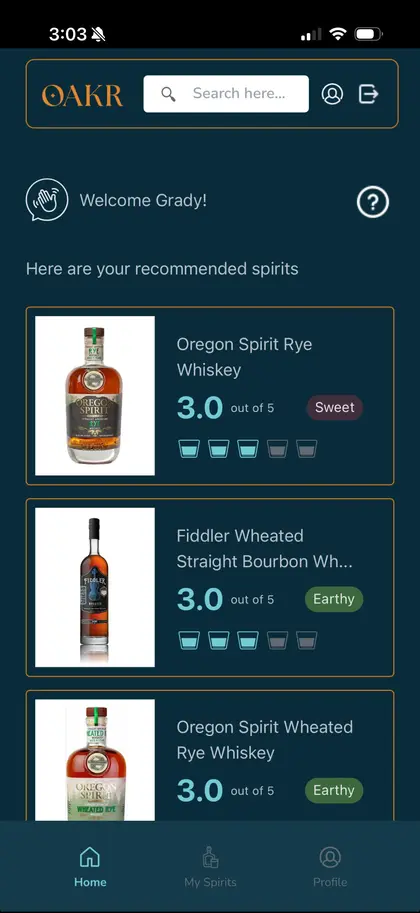
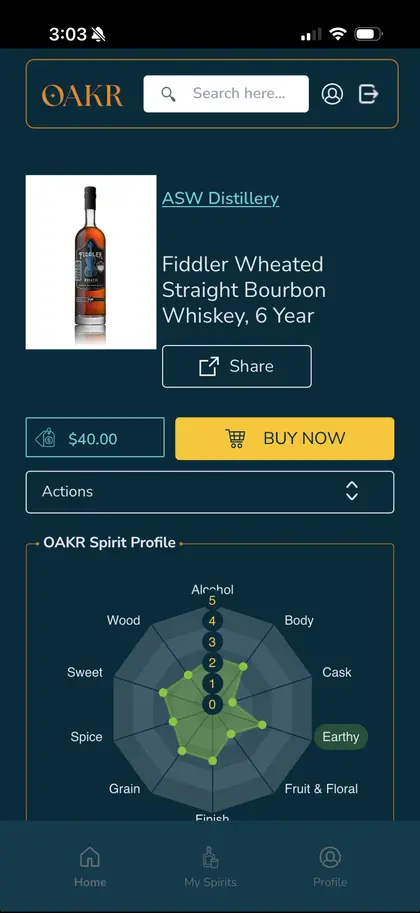
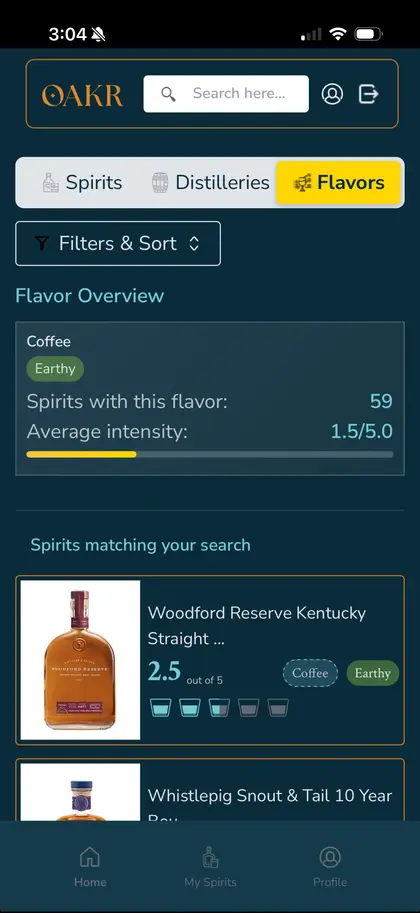
OAKR’s blind tasting panel scores every Jeptha Creed expression across 100+ individual flavor notes in 10 macro categories. Your Spirit Match score maps their distinctive heirloom corn profile against your personal palate preferences — telling you whether the savory-forward, grain-driven character of Bloody Butcher is something you’ll reach for repeatedly or a one-bottle curiosity. For a distillery this different from the norm, that data is the difference between discovering a new favorite and spending $60 on a profile that doesn’t fit your palate.
[Download OAKR free on iOS, Android, or web →]

Bourbon enthusiast, spirits industry analyst, and the voice behind OAKR's distillery guides, brand reviews, and bourbon education content. Visiting distilleries, dissecting mashbills, and translating the craft into data since 2024.



Heirloom corn, pot stills, 64-acre farm. Your Spirit Match score tells you if Jeptha Creed’s grain-driven profile fits your palate.