
The 80-gallon Christian Carl copper pot still at Starlight Distillery was built in Germany and shipped to southern Indiana in 2000. It is the size of a large bathtub. In an industry where major producers run 72-inch column stills capable of filling thousands of barrels a day, Starlight’s original still is almost absurdly small — and it is still in use. That still, and the 500-liter Vendome pot still that joined it a decade later, explain why Starlight’s bourbon tastes the way it does: rich, oily, and fruit-forward in a way that column-still bourbon rarely achieves. The equipment is the story, not the marketing. Starlight Distillery sits on the grounds of Huber’s Orchard, Winery & Vineyards in the unincorporated town of Starlight, Indiana — 20 miles north of Louisville, on a limestone bluff called the Knobstone Escarpment, 900 feet above sea level overlooking the Ohio River Valley. The Huber family has farmed this land since 1843, when German immigrant Simon Huber arrived and planted the first crops. Seven generations later, the family still owns and operates the 850-acre estate. The distillery itself launched in 2001 when sixth-generation Ted Huber and his cousin Jason Heiligenberg purchased that original German pot still. Their first commercial brandy hit shelves in 2004. Bourbon production began in 2013, after years of working with Indiana legislators to create an artisan distillers’ permit for grain spirits.

The Starlight name comes from the town itself — named by a local priest who compared the flickering light in a general store window to the brightest star in the sky. The distillery sits at 19816 Huber Road in Borden, Indiana, on the same rolling hills the family has cultivated for nearly two centuries. The proximity to Louisville means the climate is essentially identical to bourbon country — hot, humid summers and cold winters that drive aggressive barrel interaction. But the elevation on the Knobstone Escarpment adds a variable: rapid temperature and barometric pressure fluctuations that accelerate the push-and-pull of bourbon in and out of barrel staves. The result is a bourbon that often develops complexity faster than its age statement suggests.
The seven rickhouses on the property sit adjacent to the distillery production area. The location is also the family’s commercial farm — the largest sustainable fruit operation in Indiana — which provides the agricultural infrastructure for the grain program. Starlight distributes its bourbon and spirits to 18 states and Alberta, Canada.
Starlight uses multiple mashbills, which is unusual for a distillery this size. The two primary bourbon recipes are a three-grain mashbill (corn, rye, malted barley) and a four-grain mashbill (corn, wheat, rye, malted barley). The four-grain recipe is the differentiator — by including both wheat and rye, the bourbon balances the spice of rye against the softness of wheat in a way that single-secondary-grain mashbills cannot.
The grain sourcing is genuine farm-to-bottle. The majority of Starlight’s agricultural ingredients are grown on the Huber farm or sourced from neighboring farms. The distillery publishes yearly agricultural reports to document its sourcing and sustainability practices. The estate-grown corn and rye give the distillers a relationship with their raw materials that most operations cannot replicate — they know the soil, the growing conditions, and the harvest timing for every batch.
The yeast program is the other critical variable. Starlight uses proprietary yeast strains cultivated for flavor production rather than efficiency. The strains produce high levels of esters — the fruity, floral compounds responsible for the apple, pear, and stone fruit notes that characterize Starlight’s bourbon. More importantly, the distillery uses 100% sweet mash fermentation. Sweet mash means starting each batch with fresh yeast and a clean fermentation vessel, rather than recycling acidic backset from the previous batch (sour mash). Sweet mash is harder to control — it requires fastidious sanitation because bacteria thrive in the same neutral environment that yeast prefers — but the payoff is a cleaner, brighter, more fruit-forward distillate.
Starlight’s distillation system is a hybrid approach. The initial stripping run goes through a column still to efficiently separate alcohol from the fermented grain mash. The resulting low wines are then redistilled in the 500-liter Vendome copper pot still for the spirit run. This second pass is where the distillers make their cuts — separating heads and tails from the desirable hearts — with the precision that pot-still distillation allows.
The pot still retains more of the heavy oils and congeners from the fermented mash than a column still would. This is what gives Starlight’s bourbon its characteristic richness and oily mouthfeel. The original 80-gallon Christian Carl still is still used for brandies and experimental batches. Production takes place daily, but the operation runs in a genuinely small-batch fashion — each distiller uses their own mashbills, fermentation methods, and distillation techniques. Several Master Distillers work the stills, including Ted Huber and his two sons, Christian and Blake. Single barrel bottlings note which distiller ran the batch. Blended releases note who served as master blender.
This multi-distiller model is unusual in American whiskey. Most distilleries aim for uniformity across all production. Starlight embraces individual variation and uses the blending process to create a consistent house style from deliberately different batches.
Starlight works with multiple cooperages and experiments with different char levels, frequently using a #3 char that delivers classic vanilla and caramel without overwhelming smoke. The barrels are aged in the estate’s seven rickhouses on the Knobstone Escarpment. The elevation, the Ohio River Valley humidity, and the seasonal temperature extremes combine to create an aging environment that pushes bourbon hard — extracting color and flavor from the wood at a pace that makes four-year-old Starlight bourbon taste more developed than its age might suggest.
The barrel finishing program is where Starlight’s winery heritage pays direct dividends. Because the distillery operates alongside Huber’s Winery, the team has access to a rotating inventory of used wine, brandy, port, sherry, and rum casks. The Terroir Collection, released in 2025, takes the finishing concept further — bourbon finished in oak from six different European forests (Scandinavian, Papuk, Balkan, Iberian, Carpathian, and German), each imparting distinct flavor characteristics based on the terroir where the trees grew. The finishing program is not a gimmick. It is a systematic exploration of how secondary maturation changes bourbon flavor, executed by people who have been working with wine barrels for decades.
Ted Huber is a sixth-generation farmer and the driving force behind Starlight’s launch. His understanding of grain comes from a lifetime of planting, growing, and harvesting it — not from a textbook. His sons, Christian (seventh generation) and Blake, now run production alongside the broader distilling team. Christian Huber has taken an increasingly central role in blending decisions. The newest addition to the portfolio, Dana Huber’s Bottled-in-Bond release, signals the next generation’s growing authority.
The multi-distiller model means no single personality dominates. Each distiller brings their own approach to mashbill selection, fermentation timing, and cut points. The result is individual barrel variation that the blending team uses as a palette — selecting and combining barrels to build the consistent Carl T. profile for core releases, and flagging exceptional outliers for single-barrel programs.
Carl T. Bourbon Whiskey — Named after fourth-generation Carl T. Huber. A blend of three-grain and four-grain mashbills, 100% sweet mash fermentation, pot-still distilled, aged a minimum of four years. 92 proof. This is the flagship — fruit-driven, sweet, with toasted oak, French vanilla, melted caramel, and light orange notes. The multi-mashbill blend creates a complexity that most single-mashbill bourbons at this price tier cannot match.
Carl T. Bottled-in-Bond Bourbon — Same DNA as the standard Carl T., but aged a minimum of four years, single distillation season, bottled at 100 proof. The higher proof amplifies the oak presence and shifts the caramel toward toffee. The finish is longer and warmer. This is the bottle for drinkers who tried the standard and wanted more structure.
Carl T. Single Barrel Bourbon — Cask strength, proof varies by barrel. Each single barrel notes the Master Distiller who ran the batch. These are the bottles that built Starlight’s reputation among bourbon enthusiasts — individual casks selected for their exceptional character, often finished in exotic wood or former wine casks.
Double Oaked Carl T. Bourbon — The standard bourbon aged a second time in a new, heavily charred American oak barrel. 103 proof. The extra oak time deepens everything — dark vanilla bean, burnt sugar, molasses, dark chocolate, and toasted spice. This is a dessert bourbon with serious weight.
Old Rickhouse Rye — Starlight’s rye whiskey program, named for the aging warehouses on the property. Spice-forward with the estate-grown rye character.
Terroir Collection — Limited releases of bourbon finished in oak from specific European forest regions. Each expression highlights how the origin of the finishing wood affects flavor — a concept borrowed directly from wine and applied to whiskey.
Starlight’s sweet mash fermentation and pot-still distillation produce a bourbon with pronounced ester-driven fruit notes — apple, pear, dried stone fruit — that sit alongside the barrel-derived vanilla and caramel. Some drinkers lock onto the fruit. Others taste primarily the oak. Both are present in the data. The difference is your palate, not the bourbon.
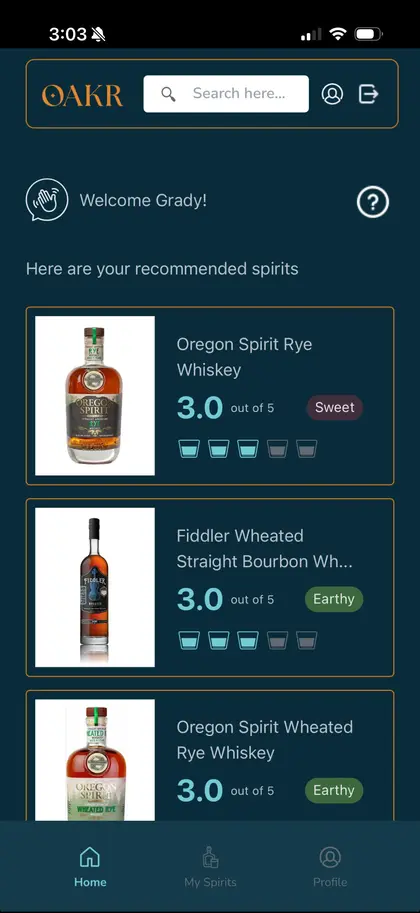
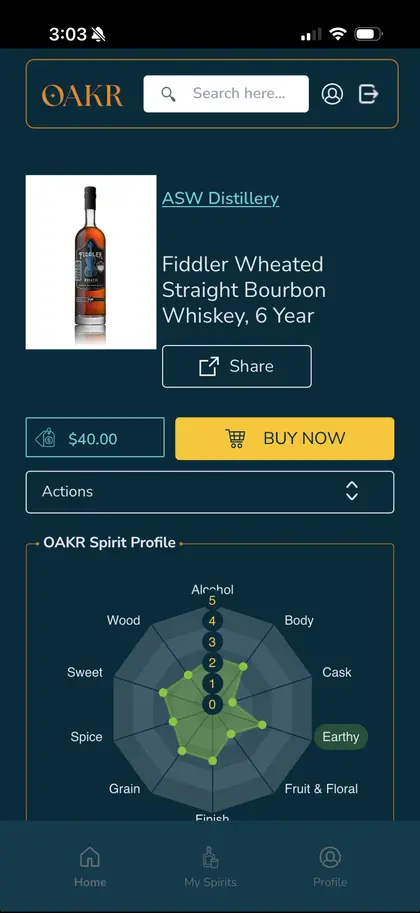
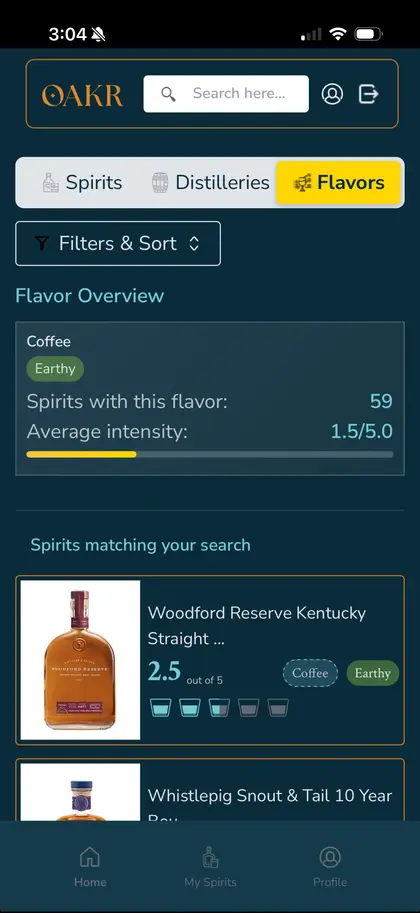
OAKR’s blind tasting panel evaluates every Starlight expression without knowing what is in the glass. The panel scores across 100+ flavor notes in 10 macro categories, which means both the yeast-driven fruit character and the barrel-driven wood character are captured independently. Your Spirit Match score tells you whether Starlight’s specific flavor architecture — the sweet mash brightness, the pot-still richness, the estate-grain depth — aligns with what your palate actually prefers. That is a question no label can answer for you. The data can.

Bourbon enthusiast, spirits industry analyst, and the voice behind OAKR's distillery guides, brand reviews, and bourbon education content. Visiting distilleries, dissecting mashbills, and translating the craft into data since 2024.
Starlight’s Huber family has farmed since 1843 and now makes bourbon with their own grain, sweet mash fermentation, and pot stills. OAKR’s blind tasting data tells you if this estate-driven approach fits your palate.