
The production detail that changes everything about Far North Spirits is this: they grow two different varieties of rye on the same farm and distill each one separately to produce whiskeys with dramatically different flavor profiles. AC Hazlet winter rye — hardy, Minnesota-tough, developed for northern climates — delivers a fat vanilla note, nutty sweetness, and dried fruit. Oklon rye — an older, low-yield variety that farmers generally dislike because it falls over in the wind — produces sandalwood, fresh nutmeg, and caramel. Same farm, same soil, same distillery, same process. Different grain, different whiskey. Most distilleries treat grain as an interchangeable commodity. Far North treats it as the primary variable — the single factor that determines what the spirit tastes like before barrel aging adds its own influence. They call it "field-to-glass," and unlike most distilleries that use the phrase as marketing copy, Far North means it literally. They plant, harvest, mill, mash, ferment, distill, age, and bottle on a fourth-generation family farm 25 miles from the Canadian border. The control is absolute. The terroir is real. This guide covers how two former corporate professionals turned a century-old Minnesota farm into the northernmost estate distillery in the contiguous United States — and why the whiskey tastes like no place else.

Far North Spirits operates on the Swanson family farm near Hallock, Minnesota, in the Red River Valley. The farm has been in the family since 1917. The distillery sits 25 miles from the Canadian border, making it the northernmost in the lower 48 states.
Michael Swanson (fourth-generation farmer) and Cheri Reese (former PR professional) left corporate careers in Minneapolis and Denver in 2013 to return to the farm and build the distillery. Swanson had been doing the MBA circuit — marketing, sales, spreadsheets. Reese worked in public relations. They traded conference rooms for grain fields, and neither looked back.
The soil is the foundation. The Red River Valley was the bed of glacial Lake Agassiz — a body of water larger than the Caspian Sea that covered the region thousands of years ago. When the ice melted, it left behind jet-black, mineral-rich silt that makes for extraordinary farming conditions. This ancient lakebed soil produces grains with distinct starch structures that translate into specific flavor compounds during fermentation. It’s the geological version of terroir, and it’s measurable in the final spirit.
The water comes from a 20,000-year-old glacial aquifer beneath the farm. Clean, cold, and mineral-profiled differently from any other whiskey water source in the country. It’s not limestone-filtered (like Kentucky) — it’s glacial, with its own chemistry. This water is used throughout mashing, fermentation, and proofing.
The climate is the most extreme aging environment in American whiskey. Summers push above 90°F; winters plunge to -30°F and colder. That 120-plus-degree annual temperature range forces the most violent barrel cycling in the industry. The whiskey doesn’t age gently — it’s stressed into maturity by the same weather that stresses the grain into flavor.
Far North’s grain program is the distillery’s most important differentiator. They grow non-GMO, estate-farmed grains and distill them as single-varietal expressions rather than blended mashbills.
AC Hazlet Winter Rye — The workhorse grain. A hardy northern variety that survives Minnesota winters and produces a surprising flavor profile: heavy vanilla, soft nuttiness, and dried fruit. It doesn’t taste like the peppery, aggressive ryes most drinkers expect. At 95% rye / 5% malted rye in many of their expressions, Hazlet is the grain doing all the talking.
Oklon Rye — An older, lower-yield variety developed in the 1990s. It grows tall, falls over in wind, and produces less grain per acre than modern varieties. Farmers hate it. But it tastes remarkable: sandalwood, fresh nutmeg, and caramel. Far North grows it specifically because flavor matters more than yield.
Minnesota 13 Heirloom Corn — Used in the Bødalen Bourbon. This is not the yellow dent commodity corn that drives most American whiskey. It’s a heritage variety with different starch composition, producing an earthier sweetness than standard corn — less syrupy, more complex.
The fermentation approach reinforces the grain focus. Far North uses open-top fermenters and house-selected yeast strains. Fermentation runs four to five days — long enough to stress the yeast into producing complex esters (fruit and floral compounds) that pre-load flavor into the spirit before distillation. The open-top design allows interaction with the farm’s ambient environment. The vanilla note in the Hazlet expressions isn’t just barrel-derived — it’s partly a fermentation product, created by specific ester compounds the yeast generates from the Hazlet rye sugars.
Far North distills on a 500-gallon hybrid pot still with an 8-plate column, custom-built by Vendome Copper & Brass Works. The hybrid design gives them the flexibility to run the still as a traditional pot (retaining heavy oils and flavor compounds) or engage the column plates for a more refined, higher-proof distillate. This isn’t a gimmick — it’s a practical tool for adjusting the spirit’s character based on the specific grain being processed.
The Bødalen Bourbon is double-distilled. The first stripping run separates alcohol from the grain mash. The second spirit run is where the distiller makes cuts — separating heads and tails from the hearts — by nose and palate. They pull the spirit off at 150 proof, which is relatively high for a craft operation. A higher distillation proof creates a cleaner spirit going into the barrel, ensuring that grain and wood character shine through without residual off-notes.
The Bødalen Bourbon mashbill runs 60% corn (Minnesota 13 heirloom), 35% rye (AC Hazlet), and 5% malted barley. That 35% rye is aggressive for a bourbon — well above the industry average — and it gives Bødalen a spicy backbone that pairs with the heirloom corn’s earthy sweetness rather than competing with it. This high-rye approach is a deliberate choice that separates Bødalen from softer, corn-forward bourbons.
The estate-farming model means Swanson controls every variable from soil to bottle. The grain isn’t just “locally sourced” — it’s grown, harvested, and milled on the same property where it’s fermented, distilled, and aged. Very few distilleries in the world can make that claim.
New charred American oak barrels, barreled at 118 proof. The barrels are stored on-site in the farm’s own rickhouses — no outsourced aging, no temperature-controlled warehouses. The Minnesota climate does the work.
The temperature range — 90°F summers to -30°F winters — produces the most aggressive barrel cycling of any distillery covered in this series. The wood expands dramatically in summer heat, pulling the spirit deep into the staves. Winter contraction forces it back out, loaded with vanillins, tannins, and caramelized sugars. This extreme cycling accelerates maturation and produces a spirit with layered complexity: toffee, brown sugar, and a woodsy depth that reflects both the oak and the climate that shaped it.
The char level isn’t publicly specified, but the flavor profiles — heavy vanilla, caramel, significant oak structure — indicate a substantial char. Far North’s approach is traditional (no exotic cask finishes or experimental cooperage in the core lineup) but elevated by the climate’s intensity.
The angel’s share in northern Minnesota runs differently than in Kentucky or Texas. The dry, cold winters may actually slow evaporation during winter months, while hot summers accelerate it. The net effect is a maturation pattern unique to the region — neither the steady loss of humid Kentucky nor the aggressive evaporation of arid Texas, but something in between that the distillery has learned to work with rather than fight. Every barrel on the farm is subject to the full, uncontrolled fury of Minnesota’s weather, and the spirits reflect that exposure in their structure and depth.
Michael Swanson — Co-founder, farmer, and distiller. Fourth-generation farmer on the Swanson homestead. MBA background in marketing and sales before returning to the farm. His obsession isn’t distillation technique — it’s grain. He runs agronomic studies on rye varieties, tracking how different cultivars produce different flavor compounds during fermentation. He’s the person who identified that Hazlet rye produces vanilla and Oklon rye produces sandalwood, then built an entire whiskey portfolio around that agricultural insight. He’s a scientist in flannel, and the whiskey is the proof of concept.
Cheri Reese — Co-founder and business operator. Former PR professional who handles the brand’s commercial strategy and communications. The decision to leave corporate careers in 2013 was joint — and the division of labor reflects their respective skills: Swanson runs the farm and the still, Reese runs the business.
The Scandinavian heritage shows up in the branding — spirit names like Roknar, Solveig, and Gustaf (named after the great-grandfather who founded the farm) — and in the minimalist, no-nonsense production philosophy. There’s a directness to the operation that matches the climate: nothing is wasted, nothing is faked, and nothing is produced that the founders wouldn’t drink themselves.
Roknar Minnesota Straight Rye Whiskey — The flagship. AC Hazlet rye and heirloom corn. Aged in charred oak. Surprisingly soft for a rye — vanilla, brown sugar, cinnamon, and white pepper, wrapped in a creamy mouthfeel. This is the bottle that gets people to reconsider the rye category. If your only experience with rye is the sharp, dill-heavy MGP profile, Roknar will recalibrate your expectations.
Bødalen Straight Bourbon Whiskey — High-rye bourbon. 60% Minnesota 13 heirloom corn, 35% AC Hazlet rye, 5% malted barley. Double-distilled on the Vendome hybrid still at 150 proof, barreled at 118 proof. Earthy sweetness from the heirloom corn, spice from the Hazlet rye, and layered barrel notes of caramel, dried fruit, and nuttiness. This doesn’t taste like Kentucky bourbon — it tastes like Minnesota. For the bourbon drinker who’s bored with standard profiles and wants a challenge.
Hazlet Single Varietal Rye Whiskey — 95% AC Hazlet rye, 5% malted rye. The grain-showcase bottle. By isolating a single rye variety, Swanson lets the agricultural terroir speak without any blending. Heavy vanilla bean, baking spices, and a savory quality that blended mashbills don’t produce. This is the nerd’s bottle — and the one that best demonstrates why Far North’s grain obsession matters.
Oklon Single Varietal Rye Whiskey — The counterpoint to Hazlet. Same 95/5 rye/malted rye ratio, different grain variety. Sandalwood, fresh nutmeg, caramel. Earthier and more complex than Hazlet, with a longer evolution in the glass. For the drinker who wants to taste the difference a grain varietal makes — same farm, same still, same barrels, completely different whiskey.
Far North also produces Solveig (a bourbon expression) and Gustaf (a bourbon named for the founding ancestor), along with seasonal and limited releases. The core lineup is rye-focused, reflecting the distillery’s belief that their farm’s rye is the most distinctive grain they grow.
Whether you taste vanilla or sandalwood in Far North’s rye is a palate question — and it’s the kind of question OAKR was built to answer.
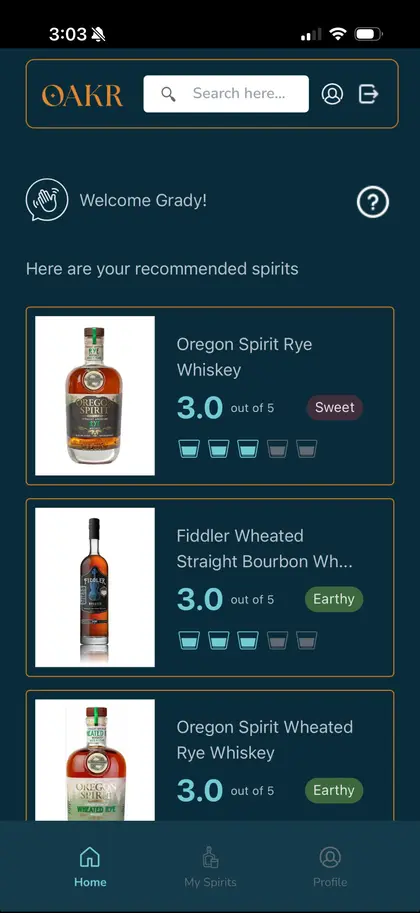
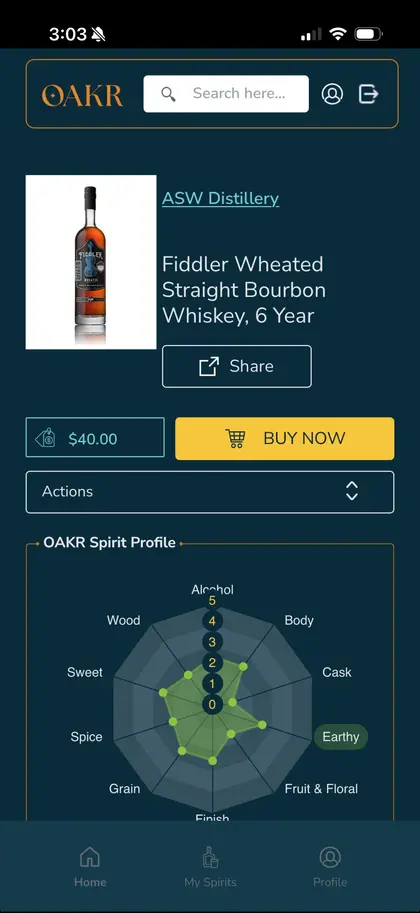
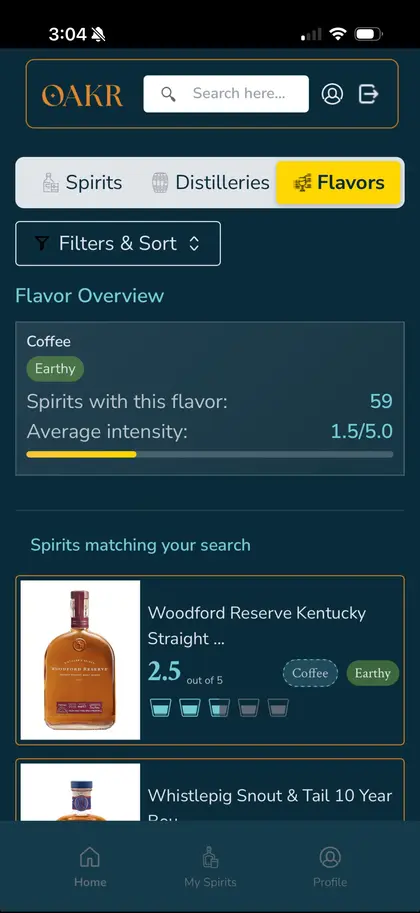
OAKR’s blind tasting panel evaluates every spirit without seeing the label, the farm story, or the Scandinavian branding. The panel scores across 100-plus individual flavor notes organized into 10 macro categories, producing a profile that reflects what’s actually in the glass. When you compare the Hazlet and Oklon expressions in OAKR, you see the agricultural difference in data form — how vanilla intensity shifts between the two varietals, where the spice profiles diverge, and how each one compares to rye whiskeys from other regions and production traditions.
The Spirit Match score personalizes the comparison. Rate a few bottles and OAKR’s AI palate profiling learns whether you’re a Hazlet drinker (vanilla-forward, soft, fruity) or an Oklon drinker (earthy, spicy, complex) — or whether Far North’s entire approach is the right fit for your palate. That subjective question gets an objective answer, built on data instead of guesswork.
Explore Far North Spirits on OAKR to see their full lineup, tasting profiles, and how each expression compares to your palate.
If you’ve ever wondered whether terroir in whiskey is real or just wine-borrowed marketing, Far North Spirits is the test case. Two grains from the same dirt, distilled the same way, producing demonstrably different whiskeys. Your palate is the final judge.
[Download OAKR free on iOS, Android, or web →]

Bourbon enthusiast, spirits industry analyst, and the voice behind OAKR's distillery guides, brand reviews, and bourbon education content. Visiting distilleries, dissecting mashbills, and translating the craft into data since 2024.
Far North proves terroir is real in whiskey. Two rye varieties, same farm, completely different flavors. OAKR’s blind tasting data shows you exactly where each lands — and which one matches your palate.