
There are roughly 2,000 craft distilleries operating in the United States right now, and most of them are telling you a version of the same story. A long-lost family recipe. A barn fire that destroyed the original copy. A great-great-grandfather who definitely existed. The labels start to look the same after a while, and the tasting notes start to read like greeting cards. Boundary Oak is doing something different, and it's worth paying attention to. Not because the marketing is louder than anyone else's — it isn't — but because the story holds up when you check the receipts. A 200-year Kentucky family lineage. The first legal distillery in Hardin County since Prohibition. A founder who taught himself to weld so he could rebuild 1957 copper still parts that nobody makes anymore. A water source older than the state of Kentucky. Single-barrel production runs you can actually find at retail. This is the long read on what makes them different — the location, the recipes, the equipment, the wood, the people, and the bottles. We're not going to tell you it's the best bourbon in America. We're going to tell you what's actually in the bottle, and then we'll show you how to figure out whether your palate is going to agree.

Boundary Oak Distillery opened in Radcliff, Kentucky, in October 2013 — the first legal distillery operating in Hardin County since Prohibition. The name is literal: there was an actual Boundary Oak — a massive white oak that stood on the property line of a farm once owned by Thomas Lincoln, Abraham Lincoln’s father.
Their water comes from a natural limestone spring on the property, the same spring that supplied a one-room schoolhouse in the 1800s. It’s mineral-rich, iron-free, and pulled directly from the source. Hardin County’s climate delivers long, humid summers and properly cold winters, with sharp seasonal transitions that drive aggressive barrel maturation.
Boundary Oak’s “My Old Kentucky Home” Straight Kentucky Bourbon runs a wheated mashbill — reportedly 75% yellow corn, 20% wheat, and 5% malted barley. The high corn percentage delivers the foundational sweetness, and the wheat in place of rye softens the profile considerably. You don’t get the peppery kick of a high-rye bourbon; you get something rounder, with more space for the corn and barrel sugars to express themselves.
The distillery puts more attention into temperature control during fermentation than most operations their size, which results in cleaner, more consistent base spirits headed into distillation.
Boundary Oak runs traditional copper pot stills. Pot distillation is the reason their bourbon comes out with the texture and viscosity it does, and it’s why the grain character survives all the way through to the finished bottle. The early days involved retrofitting and rebuilding old copper still components — including parts dating back to 1957 that nobody manufactures anymore.
Boundary Oak finishes a fully matured straight bourbon in Mizunara (Japanese oak) casks. Mizunara takes around 200 years to mature to the point where it can be harvested for cooperage. Whiskey finished in Mizunara picks up sandalwood, coconut, sweet baking spice, and an almost incense-like character.
They also take a five-year-old Kentucky Straight Bourbon and finish it for six months in used red wine barrels, adding dark fruit notes — cherry, plum, blackberry — along with subtle tannins.
In Hardin County, the temperature differential is high enough — and the seasonal transitions sharp enough — that the cycle is more aggressive than milder climates. The bourbon does more work, picking up more flavor, in less time. The new charred American oak barrels provide the standard bourbon aging, while the specialty finishes add layers on top.
Master Distiller Brent Goodin’s family has been in Kentucky for over 200 years. His ancestor Samuel Goodin established Goodin Fort at the settlement that would eventually become Bardstown. When Goodin set up Boundary Oak, he reopened an industry in a county that had been functionally dry for distilling purposes since Prohibition.
Lincoln Straight Bourbon Whiskey — The wheated bourbon. Softer, sweeter, more approachable. Classic caramel and vanilla with a bready underlying sweetness from the wheat.
G.S. Patton Jr. Bourbon — A more traditional corn-forward bourbon. Less delicate, more oak, more leather, more pepper on the finish.
Wine Barrel Bourbon — Five-year straight bourbon finished in red wine casks. Dark fruit, soft tannin, a more rounded profile.
St. Michael Special Edition — The top-shelf line. Small-batch, often higher-proof or single-barrel, sometimes finished in unusual woods like Mizunara or Amburana.
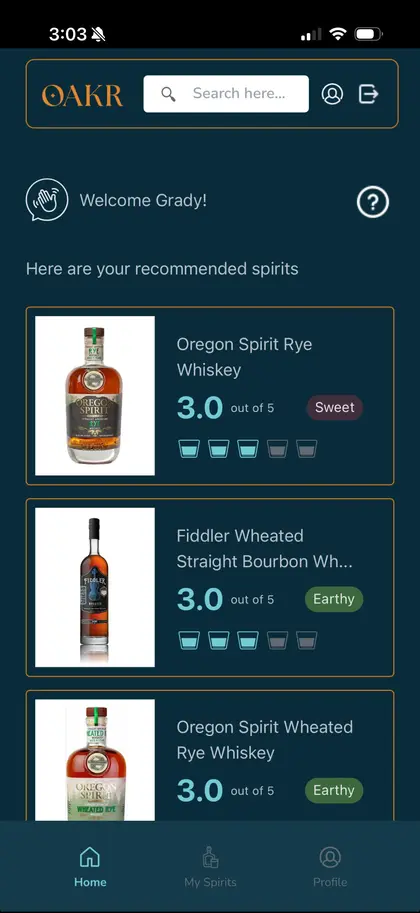
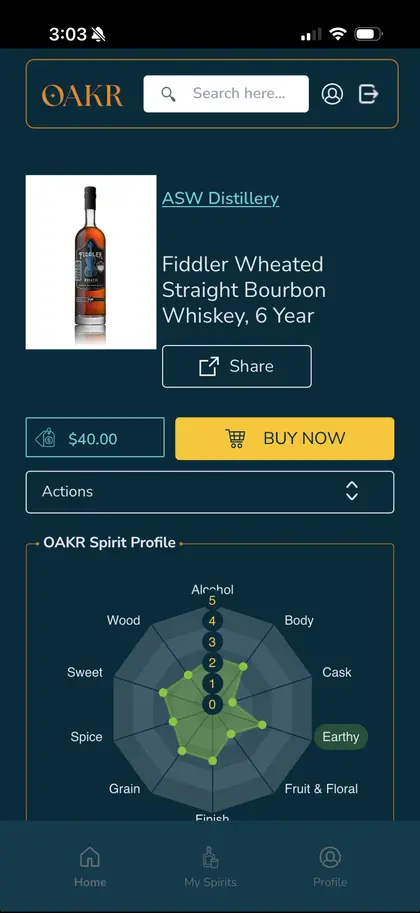
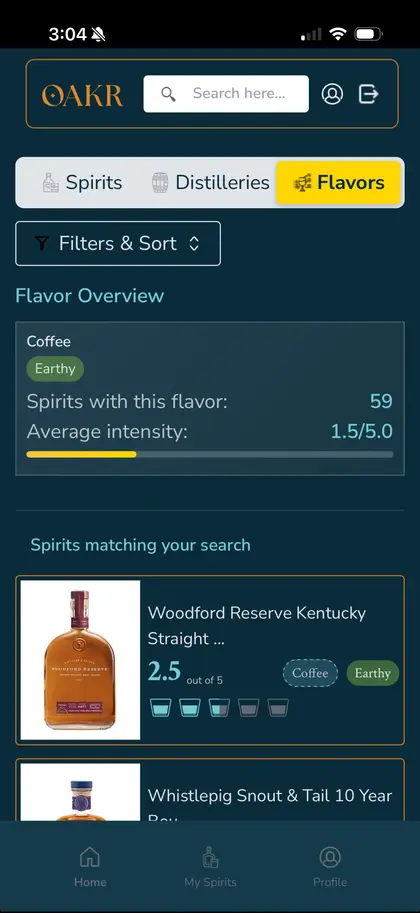
OAKR’s blind tasting panel scores every bourbon across more than 100 flavor notes, organized into 10 macro categories. Spirit Match scores show you which Boundary Oak bottle — Lincoln, Patton, the wine cask, the Mizunara finish — is most likely to land for your specific palate.
[Download OAKR free on iOS, Android, or web →]

Bourbon enthusiast, spirits industry analyst, and the voice behind OAKR's distillery guides, brand reviews, and bourbon education content. Visiting distilleries, dissecting mashbills, and translating the craft into data since 2024.
Wheated bourbon with Japanese oak and wine barrel finishes. Spirit Match tells you which expression fits your palate.