
The Town Branch Distillery building has glass walls. That is not a metaphor. When Pearse Lyons designed his 20,000-square-foot distillery in Lexington, he built it with transparent walls so you could see the twin copper pot stills from the street. The stills themselves were commissioned from Scotland and installed in the heart of Bluegrass bourbon country — an Irish founder’s deliberate nod to his heritage, dropped into a landscape where column stills and Kentucky tradition dominate everything. The building, the equipment, and the choice to put them on display tell you exactly what kind of operation this is: one that is not interested in blending in. Lexington Brewing and Distilling Co. is the only facility on the Kentucky Bourbon Trail that operates as both a functioning brewery and a distillery. That fact gets repeated often, but the production implications are real and specific. Whiskey begins as beer. If you are already an award-winning brewer, your fermented wash — the “distiller’s beer” that goes into the still — starts from a higher baseline than what most bourbon-only operations produce. The knowledge of malts, yeasts, and fermentation science flows between the two operations daily, and the barrels cycle between them in a closed loop that produces spirits, beer, and flavor profiles no single-purpose distillery can replicate.

The operation dates to 1999, when Dr. Pearse Lyons acquired the historic Lexington Brewing Company. Lyons was an Irish scientist with a Ph.D. in yeast fermentation who had already built Alltech into a global leader in animal health and nutrition. His entry into brewing was not a vanity project — it was a lateral move by a fermentation expert who understood grain, yeast, and process at a molecular level.
Brewing came first. Kentucky Bourbon Barrel Ale became the flagship, and the brewery established itself as a legitimate Lexington institution. But this is Kentucky, and the pull toward distilled spirits was inevitable. In 2012, the Town Branch Distillery opened, making Lexington Brewing and Distilling Co. a member of the Kentucky Bourbon Trail. The distillery is named for the Town Branch creek that runs through Lexington, the same waterway that powered the city’s earliest distilleries dating back to 1794.
Lyons passed away in 2018. Today, both Alltech and Lexington Brewing and Distilling are led by his son, Mark Lyons, who represents the seventh generation of the Lyons family in brewing, distilling, and cooperage — a lineage that stretches from Ireland to Kentucky. The scientific rigor and fermentation expertise Pearse Lyons embedded in the culture remain the operational foundation.
The Lexington location sits on the same limestone shelf as every major Kentucky bourbon producer. The water flows through ancient limestone formations that strip out iron and add calcium and magnesium — minerals that feed yeast during fermentation and contribute to cleaner, more complex spirit. The climate delivers hot, humid summers and cold winters, producing the aggressive barrel maturation cycles that define Kentucky bourbon.
Town Branch Bourbon uses a traditional, proven mashbill: 72% corn, 15% rye, 13% malted barley. The high corn content lays down the caramel and vanilla foundation. The 15% rye provides peppery spice that keeps the sweetness from going flat. The 13% malted barley contributes enzymatic conversion and subtle biscuit notes, but its real job is setting the stage for fermentation.
The yeast is where the Alltech connection pays dividends. Pearse Lyons spent his career studying yeast at a level most distillers never approach. While other operations treat their yeast strain as a proprietary secret they inherited and maintain, Lexington’s approach is rooted in scientific mastery of fermentation dynamics. They understand how yeast creates not just alcohol but a suite of flavor compounds — the fruity, floral, and spicy congeners that define the finished bourbon.
Their brewing expertise gives them a unique advantage in managing fermentation conditions. Temperature control, timing, and yeast health are variables that brewers obsess over daily; most bourbon distillers treat fermentation as a step to get through rather than a flavor-building stage. At Lexington, the wash that enters the still is crafted with the same attention a brewery gives its beer. The result is a distillate that carries cherry, dried apricot, and bright fruit notes alongside the expected grain sweetness — flavors generated in fermentation, not extracted from wood.
The twin copper pot stills imported from Scotland are the operational centerpiece. In a state where column stills dominate because they are efficient, continuous, and capable of high-volume output, Lexington chose batch-process pot stills that are slower, require cleaning between runs, and produce a heavier, oilier distillate.
The production difference is not abstract. Column stills strip out many of the heavier flavor compounds (congeners) to produce a lighter, cleaner spirit. Pot stills let more of those compounds through. The result is a bourbon with a thicker mouthfeel, more robust grain character, and a texture that coats the palate differently than column-stilled whiskey. Town Branch Bourbon often reads as maltier and richer than peers at the same proof — a direct consequence of the pot-still choice and the high-quality wash the brewing team produces.
The dual brewery-distillery setup creates a practical advantage beyond fermentation knowledge. The same team that manages yeast propagation for brewing manages yeast for distilling. The same grain-handling infrastructure serves both operations. Equipment, ingredients, and expertise flow back and forth in a way that a standalone distillery cannot replicate. It is not a marketing story — it is a production architecture.
Lexington Brewing and Distilling operates a “Life of the Barrel” philosophy that is genuinely distinctive. New charred American white oak barrels are filled with Town Branch Bourbon. After the bourbon is dumped, those barrels go directly to the brewery side, where they age the Kentucky Bourbon Barrel Ale. After the ale is bottled, the barrels are filled a third time with 100% malted barley mash for the Town Branch Kentucky Single Malt Whiskey.
This is not recycling for its own sake — it is a deliberate flavor strategy. A first-use barrel delivers heavy oak, vanilla, and caramel to the bourbon. A second-use barrel passes residual bourbon character and deep char notes to the ale. A third-use barrel offers the single malt a softer, more nuanced wood influence — biscuit, dried fruit, and gentle oak layered over faint echoes of bourbon and ale. Some barrels even travel to a fourth fill at the Lyons family’s distillery in Ireland.
The Kentucky climate drives the aging itself. Summer heat pushes spirit into the charred staves; winter cold pulls it back out, extracting caramelized sugars, vanilla, and spice with each cycle. Lexington’s humidity and airflow contribute to evaporation rates and the specific evolution of flavor in the rickhouses. The hot summers accelerate extraction, while the cold winters slow the process, creating a push-pull rhythm that deposits flavor in layers over years. The angel’s share — the whiskey lost to evaporation — concentrates what remains.
The char level on new barrels is a deliberate choice. Heavy charring caramelizes the wood sugars more aggressively, delivering strong vanilla and burnt-sugar notes quickly. Lighter char levels allow more of the underlying oak character to come through — coconut, dried fruit, and subtle spice. Lexington’s barrel program, with its multi-use lifecycle, means each fill encounters a different balance of char influence and residual flavor from previous contents. The location is not incidental — it is a production input as consequential as grain or yeast.
The distilling operation at Lexington Brewing and Distilling is a team effort built on the scientific culture Pearse Lyons established. Lyons was not a figurehead — he was a fermentation scientist who understood what was happening at the molecular level in the mash tun. The team he trained and the culture he created are obsessed with getting fermentation right as the foundation for everything downstream.
Mark Lyons, who leads the company today, represents the seventh generation of the family in the brewing and distilling trade. The current distilling team operates at the intersection of brewing science and distillation craft — brewers who understand pot stills, and distillers who respect the art of fermentation. Their high-malt approach to Town Branch Bourbon reflects this cross-pollination: a mashbill influenced by brewing tradition, distilled through equipment chosen for flavor density over efficiency.
The practical result of this team structure is consistency with character. The brewing side maintains rigorous quality control on fermentation — temperature monitoring, yeast cell counts, pH tracking — that many bourbon-only operations do not apply with the same intensity. The distilling side then works with a wash that arrives at the still in better condition than what most operations produce. It is an unglamorous advantage, but it shows up in the glass as a cleaner, more defined spirit with fewer off-notes and more deliberate flavor.
Town Branch Bourbon — 90 proof. The flagship and the best entry point. A Kentucky Straight Bourbon aged in new charred oak with a high-malt character that gives it a slightly creamy texture. Caramel, toffee, and oak on the palate, with a dry, woody finish. Approachable enough for cocktails, interesting enough to sip. The pot-still production gives it more body than many bourbons at this price point. The malt influence from the mashbill’s 13% barley is more apparent here than in most bourbons — a subtle biscuit quality in the mid-palate that sets it apart from the purely corn-sweet Kentucky standard.
Town Branch Rye — Their rye offering balances spice against the malt-forward house style. Pepper, vanilla, and a restrained fruit note on the finish. It works particularly well in an Old Fashioned, where the rye bite cuts through sweetness.
Town Branch Single Barrel — Unblended whiskey from a single cask at full barrel strength, each bottle reflecting the specific conditions of that barrel’s time in the rickhouse. Warehouse location, airflow patterns, and proximity to walls and windows all influence how a barrel ages. One barrel might deliver a vanilla-heavy profile; the next might lean into heavy oak and dried fruit. Store picks and distillery exclusives are worth seeking out as the rawest expression of their production. The higher proof also reveals the pot-still character more clearly — expect more of the oily texture and grain weight that gets softened at the flagship’s 90 proof.
Town Branch Kentucky Single Malt — Aged in third-use barrels (after bourbon and ale), this 100% malted barley whiskey is the most unusual offering in the lineup. Softer wood influence, grain-forward, with biscuit and dried fruit notes that reflect the multi-use barrel strategy. A genuinely different whiskey from anything the Kentucky standard produces.
Bluegrass Sundown — A bourbon-infused coffee liqueur. Not a whiskey, but a useful window into how the team experiments with their bourbon base. Works over ice cream or in coffee.
Bourbon is not one flavor — it is ten macro categories with infinite variation within each. A pot-stilled bourbon from a brewery-distillery hybrid in Lexington is going to land in a different spot on that map than a column-stilled bourbon from Bardstown, even if both are made from corn, rye, and barley on the same limestone water. The mashbill matters, the still type matters, the barrel history matters, and the fermentation expertise matters.
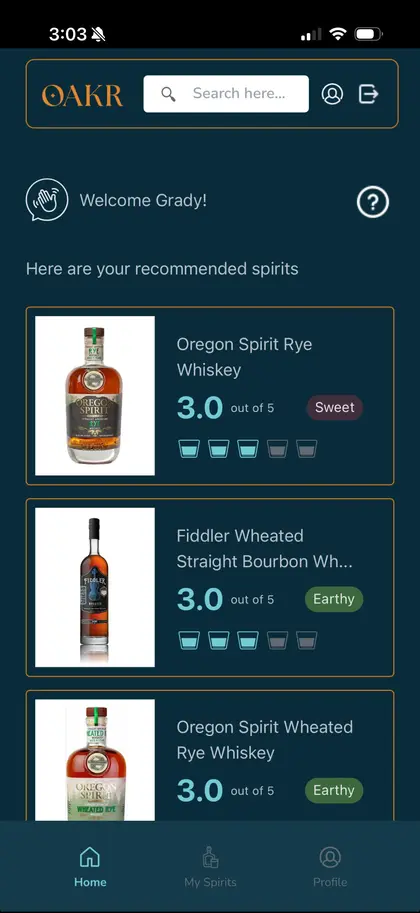
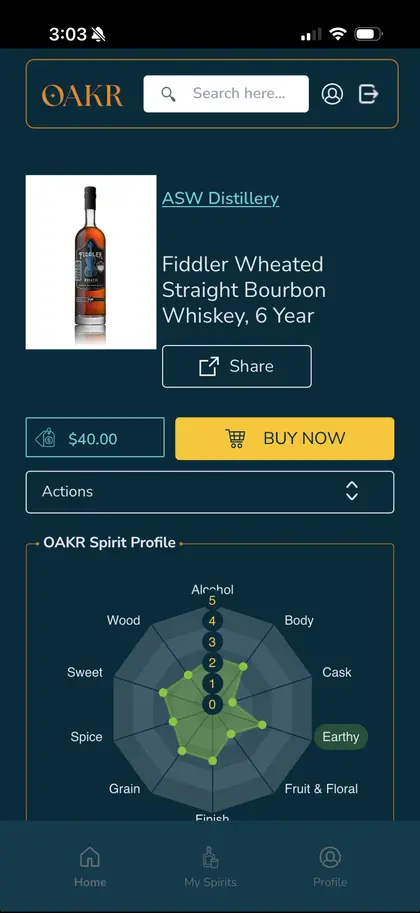
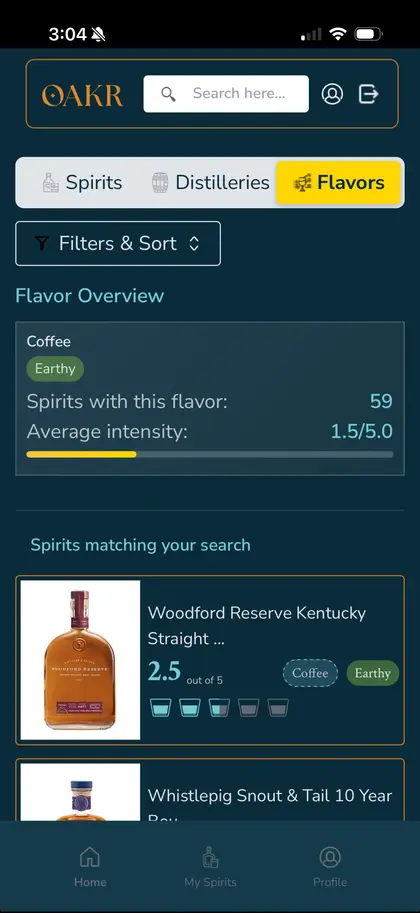
OAKR maps that variation. The blind tasting panel scores every spirit across 100+ flavor notes organized into 10 macro categories, and OAKR’s Spirit Match score tells you how a specific bottle aligns with your palate before you buy. For a lineup as diverse as Town Branch — from pot-stilled bourbon to third-use-barrel single malt to coffee liqueur — that kind of granularity is the difference between finding your bottle and collecting someone else’s.
[Download OAKR free on iOS, Android, or web →]

Bourbon enthusiast, spirits industry analyst, and the voice behind OAKR's distillery guides, brand reviews, and bourbon education content. Visiting distilleries, dissecting mashbills, and translating the craft into data since 2024.


Pot-stilled bourbon from Kentucky’s only brewery-distillery hybrid. Your Spirit Match score maps Town Branch’s malt-forward profile against your palate.