
A bottle of Leather and Oak Bourbon costs roughly $40-50. That’s a price point where you’re paying for the whiskey, not the marketing department. At less than 10,000 proof gallons of annual production, Leather and Oak Spirits is one of the smallest craft distilleries producing bourbon that’s earned recognition at major spirits competitions — including a Gold Medal at the 2025 San Francisco World Spirits Competition. For context, the distilleries winning gold at SFWSC alongside them are typically operations producing hundreds of thousands of gallons per year with decades of brand equity behind them. Leather and Oak showed up with a copper pot still, locally sourced Ohio grain, and a bottle that costs less than most allocated bourbons’ secondary-market shipping fees. That scale-to-quality ratio is the core of what makes this distillery worth examining. Leather and Oak is a micro-operation founded on the premise that bourbon doesn’t need a heritage mythology or a velvet-lined box to be worth drinking. It needs good grain, clean water, the right equipment, and enough patience to let fermentation and aging do their work without cutting corners. The founders — Steve Lambert and Dave Sheppard — started from a shared frustration with overpriced, underaged craft whiskey and built a production process designed to solve that specific problem. Whether their solution matches your palate is the question this guide answers.

Leather and Oak Spirits is located in Hilliard, Ohio — not in Kentucky, not on the Bourbon Trail, and not in a building with a photogenic origin story. The distillery was founded by Steve Lambert and Dave Sheppard, two friends whose shared interest in bourbon evolved from hobby to production. Lambert brings an agricultural background and family memories of distilling on the family farm — practical knowledge about grain, fermentation, and the rhythms of small-scale production.
The name “Leather and Oak” was inspired by a local cigar club — a nod to the robust, full-bodied character the founders wanted their bourbon to embody. It’s a flavor descriptor built into the brand name rather than a historical reference, which is consistent with a distillery that chose to start with a blank slate rather than inventing a heritage narrative.
The Hilliard location sits on Ohio’s limestone shelf, which provides the same geological advantage that Kentucky distilleries promote: naturally iron-free, calcium-rich water. Iron in water produces off-flavors during fermentation and can cause discoloration in the finished spirit. Calcium supports healthy yeast metabolism. The water Leather and Oak uses requires no treatment to meet the chemical profile that good fermentation demands — it arrives that way from the limestone aquifer.
Ohio’s climate provides the seasonal temperature cycling that drives barrel maturation. Hot summers push the spirit deep into charred oak; cold winters pull it back out loaded with extracted wood sugars, vanillins, and tannins. The distillery’s rickhouses are not climate-controlled — the barrels experience the full range of Ohio’s seasonal swings, which produces aggressive flavor extraction over shorter aging periods. For a small distillery that can’t afford to tie up capital in barrels for a decade, this accelerated maturation is both a necessity and a production advantage.
Leather and Oak uses locally sourced grains and maintains control over the planting and harvesting of their grain supply. This level of agricultural involvement is unusual for a distillery this small — most craft producers buy grain from commodity suppliers and focus their hands-on effort on distillation and aging. Lambert’s farming background makes the grain sourcing a natural extension of the production process rather than an outsourced input.
The bourbon’s grain bill is built on the standard bourbon architecture — at least 51% corn, with secondary grains that contribute spice, structure, and enzyme activity for starch conversion. The specific ratios are proprietary, but the flavor profile of the finished bourbon — vanilla, caramel, honey, nuttiness, and a measured black pepper spice — suggests a balanced mashbill that doesn’t lean heavily into any single secondary grain. The corn provides the sweet caramel-vanilla foundation; the supporting grains add enough complexity to prevent the bourbon from reading as one-dimensional.
The yeast and fermentation approach is where Leather and Oak invests more time than the economics would normally allow. They use a traditional sour mash process (recycling spent mash from the previous batch to regulate pH and ensure microbial consistency) but extend their fermentation window beyond the industry standard. Longer fermentation gives the yeast more time to produce fruity esters and complex flavor compounds before distillation. It’s a decision that costs production efficiency — longer fermentation means fewer batches per month — but pays off in a more developed, more complex new-make spirit.
Leather and Oak distills on traditional copper pot stills — the same batch-process equipment used by craft distillers worldwide who prioritize flavor retention over production efficiency. The pot still retains more of the heavy oils, fatty acids, and congeners that carry grain character through to the finished spirit. It’s slower, more labor-intensive, and less economically efficient than the column stills used by large-scale producers, but for a distillery producing less than 10,000 proof gallons annually, the pot still’s flavor advantages outweigh the throughput limitations.
The choice of pot still over column still is particularly significant for the bourbon’s texture. Reviewers have consistently noted that Leather and Oak Bourbon delivers a velvety, full mouthfeel without the sharp edges that many craft bourbons at similar proof points exhibit. That textural smoothness is a direct consequence of the pot still’s ability to retain the heavier compounds that contribute body and mouthfeel — compounds that column distillation would largely strip out in pursuit of a cleaner, higher-proof distillate.
The barrel entry proof is another deliberate production choice. Leather and Oak enters their bourbon into barrels at a lower proof than the 125-proof legal maximum that most large distilleries use for economic efficiency. A lower entry proof means more water in the barrel from day one, which changes how the spirit interacts with the wood over time. Water is a different solvent than alcohol — it breaks down wood sugars and tannins through different chemical pathways, generally producing a richer, sweeter, more viscous whiskey with deeper color extraction. The trade-off is economic: lower entry proof means more barrels needed to store the same volume of alcohol. For Leather and Oak, it’s a quality decision that their small scale makes viable.
Leather and Oak ages its bourbon in new charred American white oak barrels — the legal requirement for bourbon. The barrels are stored in rickhouses that are deliberately left uninsulated and without climate control, exposing the aging whiskey to the full force of Ohio’s seasonal temperature swings.
The aggressive temperature cycling produces rapid, intense interaction between the spirit and the charred wood. During summer heat, the whiskey expands into the wood’s porous structure, dissolving the caramelized sugars created by the charring process and extracting vanillins and tannins from the oak itself. During winter cold, the whiskey contracts, pulling those dissolved compounds back into the liquid. Each cycle deepens the color, builds complexity, and adds layers of vanilla, caramel, toffee, and oak character to the spirit.
For a distillery operating at Leather and Oak’s scale, the climate-driven aging acceleration is essential. They don’t have the capital reserves to age whiskey for 8-10 years the way established Kentucky operations can. But Ohio’s aggressive seasonal swings mean their bourbon develops maturity characteristics in a shorter timeframe — the same kind of accelerated aging that Michigan, Texas, and other non-Kentucky bourbon regions have learned to use as a production advantage rather than a limitation.
The heavy char on the barrels acts as a secondary filtration system, stripping out harsh sulfur compounds from the young distillate while opening up the wood grain for deeper spirit penetration. The result, based on competition judging and independent reviews, is a bourbon that presents the caramelized sugar, vanilla, honey, and oak notes of a well-aged spirit without the tannic bitterness that can come from over-extraction.
Steve Lambert serves as the primary distiller, bringing a background in agriculture that connects the grain-sourcing program directly to the production process. His approach to distillation is hands-on — fermentation timing, still operation, and barrel selection are all driven by direct sensory evaluation rather than standardized protocols. For a distillery this small, every batch represents a significant percentage of annual production, which means quality control is built into the constraint of scale rather than imposed by a separate QA department.
Dave Sheppard co-founded the distillery and shares the operational responsibilities. The partnership reflects a common pattern in successful small distilleries: one partner focused on production and agriculture, the other on the business and distribution side of the operation. Together, they’ve built a brand that’s earned competition recognition while maintaining the micro-scale production that gives them complete control over every variable from grain to glass.
The distillery’s philosophy is straightforward: produce a bourbon that justifies its price through what’s actually in the bottle. No heritage narrative. No allocated artificial scarcity. No custom packaging that costs more than the liquid. The Gold Medal at the 2025 San Francisco World Spirits Competition — a competition where entries are evaluated blind, without knowledge of brand, price, or backstory — validates the approach.
Leather and Oak Bourbon Whiskey — Approximately 90+ proof, approximately $40-50. The flagship and the bottle that earned Gold at the 2025 SFWSC. Handcrafted in small batches from locally sourced Ohio grains and distilled in a traditional copper pot still. The nose opens with caramelized sugar, vanilla, and honey, with a faint nuttiness underneath. The palate delivers toffee, vanilla, and cocoa with a measured black pepper spice. The finish is satisfying — oak and spiced nuts — without the harsh, sharp edge that plagues many craft bourbons at comparable proof. Notably smooth and full-bodied for a small-batch craft product. Works well neat or with a single rock, though proofing it down too aggressively will cause the flavor profile to thin out. The bottle is the entry point, the flagship, and currently the primary expression of what this distillery produces.
Leather and Oak Limoncello — The distillery’s second product, a handcrafted limoncello that demonstrates the versatility of their small-batch approach. Made with traditional Italian technique applied through the lens of a craft spirits operation. It’s a different category entirely from the bourbon, but it signals the distillery’s willingness to apply their hands-on production philosophy across spirit types rather than limiting themselves to a single product line.
The portfolio is deliberately small. At less than 10,000 proof gallons of annual production, Leather and Oak doesn’t have the capacity to run a dozen expressions. The constraint is intentional: every bottle they produce represents a significant percentage of their total output, which means quality control is embedded in the math of production rather than bolted on as an afterthought.
Leather and Oak’s bourbon is built on a production logic that’s transparent enough to evaluate before you buy: locally sourced Ohio grain, limestone-filtered water, copper pot-still distillation, lower barrel entry proof, extended fermentation, and aggressive climate-driven aging in non-climate-controlled rickhouses. Every one of those choices pushes the bourbon toward a specific flavor outcome: rich, full-bodied, sweet, and oak-forward without harsh edges.
The question is whether that flavor outcome maps to your palate — and for a smaller distillery without the brand recognition or the distribution footprint of a Kentucky major, making a confident purchase decision without data is a gamble.
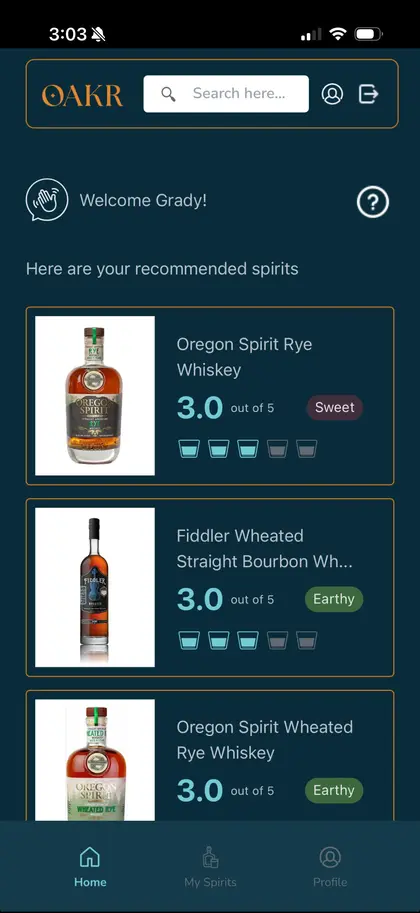
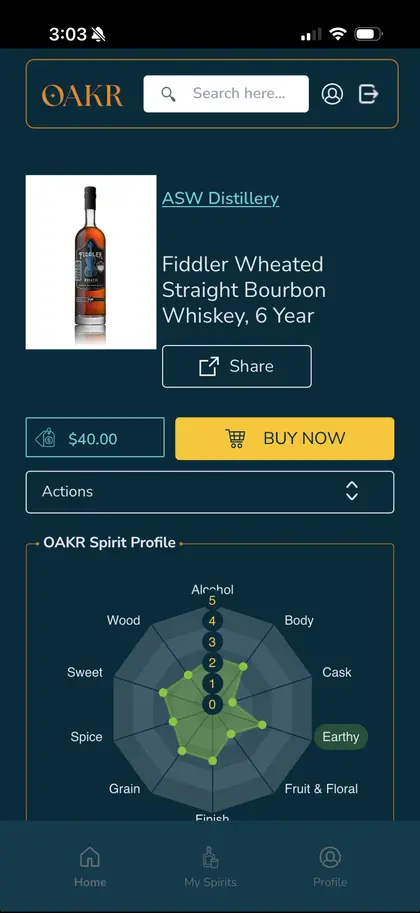
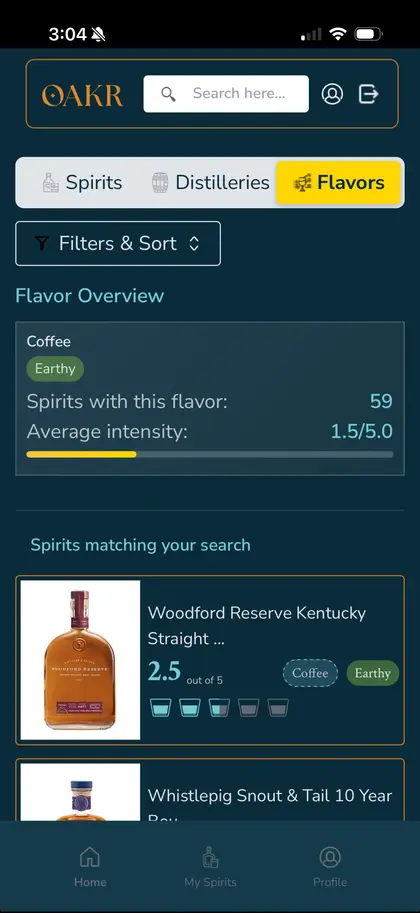
OAKR’s blind tasting panel evaluates every expression across 100+ individual flavor notes in 10 macro categories. Your Spirit Match score tells you whether Leather and Oak’s rich, pot-still-driven, Ohio-matured profile is the kind of bourbon you’ll reach for again — or whether the bottle would sit half-full on a shelf. For a distillery that puts its budget into the distillation column rather than the marketing campaign, the flavor data is the most honest recommendation you can get.
[Download OAKR free on iOS, Android, or web →]

Bourbon enthusiast, spirits industry analyst, and the voice behind OAKR's distillery guides, brand reviews, and bourbon education content. Visiting distilleries, dissecting mashbills, and translating the craft into data since 2024.


Gold Medal bourbon from Ohio’s limestone shelf. Your Spirit Match score tells you if this craft pot-still profile fits your palate.