
The first thing you see inside Neeley Family Distillery is not a still. It is a room full of guns, newspaper clippings about moonshine feuds, and copper pot stills that predate the building they sit in by a century or more. Roy Neeley built the distillery himself — literally, with his own construction crew — in Sparta, Kentucky, half a mile from Interstate 71 and within earshot of the Kentucky Speedway grandstands. The log cabin exterior and low-slung profile make it look more like a rural museum than a production facility. That is not accidental. The Neeleys have been distilling for eleven generations. For ten of those generations, they were doing it illegally in the mountains of Eastern Kentucky. The history room is not a marketing prop. It is an honest accounting of a family that finally went legal in 2015. That transition — from undocumented Appalachian moonshining to a licensed Kentucky Bourbon Trail Craft Tour member — is the detail most coverage skips past on the way to talking about the bourbon. But the physical space tells you everything about the philosophy. The equipment was designed after Royce Neeley's great-grandfather Leonard's still. The building was hand-built by the family. The yeast was propagated from a strain the family has maintained for roughly 150 years. Nothing here was outsourced or focus-grouped. This is a distillery that looks the way it does because the people who built it were already distillers before they were business owners.

Neeley Family Distillery sits in Sparta, Kentucky, on a deep aquifer of limestone-filtered water that feeds into the production process. The location puts them in the Northern Kentucky corridor — accessible from Cincinnati and the I-71 corridor — and within the climate zone that makes Kentucky bourbon aging effective. The dramatic seasonal temperature swings force whiskey in and out of the barrel’s charred wood, extracting color and flavor compounds that define the category.
The family’s distilling lineage traces back to the mid-1700s, when the first Neeley arrived from Ireland with copper pot stills. For generations, the family operated in the mountains and hollows of Eastern Kentucky, running moonshine and occasionally running from the law. The family’s moonshine recipe — corn, cane sugar, and wild Appalachian yeast — remained mostly unchanged across centuries. Roy Neeley, the tenth generation, and his son Royce, the eleventh, made the decision to go legal. Roy used his construction company to build the distillery from scratch. Royce, who had built his first still at 18, became the lead distiller and was one of the youngest distillery owners in the country at the time.
The distillery opened on July 1, 2017, right in time for the annual NASCAR race at the nearby Kentucky Speedway. They joined the Kentucky Bourbon Trail Craft Tour and the B-Line, the official gateway to bourbon country from Northern Kentucky and Cincinnati. The operation is entirely family-owned and operated. They do not sell to outside distributors — if you want Neeley bourbon, you buy it at the distillery or through their online shop.
Neeley runs multiple mashbills in rotation rather than committing to a single house recipe. The lineup includes a wheated bourbon at 64% corn, 28% wheat, and 8% malted barley. A high-rye bourbon uses a traditional 70% corn, 20% rye, and 10% malted barley profile. And a four-grain bourbon built for their Bottled-in-Bond expression uses 63% corn, 17% oats, 8% wheat, and 12% malted barley. The oats are the outlier — they add a creamy, almost biscuit-like sweetness that is rare in the bourbon category. These are old family mash recipes adapted for legal-scale production, not formulas designed by committee.
The yeast is the centerpiece. The Neeley family propagates their own strain in a dedicated dona room at the distillery. This is the same strain — maintained and propagated across roughly 150 years — that their moonshining ancestors used. They cultivated it from wild yeast on a family farm in Warsaw, Kentucky. Most distilleries buy commercial yeast for consistency. The Neeleys keep theirs alive in-house because it produces the specific ester profile they consider the family’s flavor signature.
They pair this proprietary yeast with a sweet mash process. Where most Kentucky distilleries use sour mash — recycling acidic backset from the previous fermentation to control pH and consistency — sweet mashing starts fresh every batch. It is harder to manage, requires obsessive sanitation, and introduces more risk of bacterial contamination. The tradeoff is a cleaner fermentation that allows the yeast’s character to come through without the acidic tang of recycled backset. They ferment in open-top cypress vats for five days, which invites ambient microorganisms from the Kentucky air to interact with the mash. This produces what regulars call the “Neeley funk” — an ester-driven complexity layer that cannot be replicated in a sealed stainless-steel tank.
Neeley is a pot still operation. They do not use column stills. This is a direct inheritance from the moonshining tradition, where pot stills were the only option, but it is also a deliberate flavor decision. Pot stills retain heavier oils and congeners that column stills strip out, resulting in a spirit with more body, a thicker mouthfeel, and more grain character.
They take it further: triple pot distillation. Most pot-still whiskeys are distilled twice. The Neeleys run the spirit through copper pot stills three times. Triple distillation is traditionally associated with Irish whiskey, where it produces a light, floral spirit. Applied to a bourbon mashbill with American oak aging ahead of it, the result is a spirit that is simultaneously clean and heavy — refined without being thin. The stills themselves are custom-built after Royce’s great-grandfather’s design, not purchased from a catalog.
The distillery also houses the only functional pre-ban French absinthe pot still in North America, built in France in 1890. This is not a museum piece — they use it to produce their Wormwood Absinthe Verte from an 1871 recipe. It is a detail that speaks to the operation’s philosophy: if it is old, functional, and makes good spirit, it goes into production.
Current output is approximately two full 53-gallon barrels of triple pot distilled bourbon and rye per day. In the context of Kentucky bourbon production, that is tiny. It is also intentional. Every bottle is non-chill-filtered, preserving the natural oils and texture that the pot stills worked to retain.
Neeley sources barrels from Kelvin Cooperage — air-seasoned American white oak, toasted, with a level-two char. Royce worked directly with the cooperage to develop the specific char profile for their distillate. Air-seasoning (as opposed to kiln-drying) allows the wood to develop more complex tannin structures before charring, which translates to a broader range of flavor extraction during aging.
The barrel program extends well beyond standard aging. Neeley runs an aggressive finishing program that includes secondary maturation in casks that previously held French Cognac, Portuguese Madeira, Barbados rum, apricot brandy, and French Château Rieussec Sauternes. Their French Chateau Rieussec Sauternes Finish takes a wheated bourbon and ages it an additional 14 months in the sweet wine cask, pulling honey and stone fruit notes into the spirit. A Barbados Rum Finish gives a wheated bourbon nine months in rum casks for tropical fruit and molasses character. A Double Barreled New Charred French Oak expression gives a high-rye bourbon an extra 14 months in fresh French oak, intensifying the vanilla and spice.
The rickhouses in Sparta experience the full range of Kentucky’s seasonal extremes. Barrels on upper floors age faster and develop more intense oak character. Lower-floor barrels mature more slowly with softer results. The distillery is currently managing around 1,200 barrels and growing. They also age moonshine and brandy in used 10-year-old Kentucky bourbon barrels, extracting residual bourbon character into those spirits.
Royce Neeley is the eleventh-generation distiller and lead distiller at the operation. He built his first still at 18. His training is not academic — it is generational, learned from the same family that ran moonshine operations for centuries. He makes his cuts by taste alone, a skill passed down through ancestors who had no access to lab equipment. He insists on methods that prioritize flavor over efficiency: sweet mash, open fermentation, triple pot distillation. He is also the driving force behind the finishing program and the collaboration with Jackie Zykan on the Hidden Barn line.
Roy Neeley is the tenth-generation distiller and the builder. He used his construction company to design and construct the entire facility. The equipment layout, the rickhouse design, the visitor center — Roy built it with the same pragmatism his ancestors applied to building stills in hidden hollows.
Rebekah Neeley handles blending for several expressions, including the four-grain bourbon. The operation is a genuine family business — the people who own it are the people who make the product.
The distillery also collaborates with Jackie Zykan, former Master Taster at Old Forester, on the Hidden Barn line. Zykan’s involvement brings a different perspective to the Neeley distillate — her palate and blending approach complement the family’s production philosophy.
Kentucky Single Barrel Straight Bourbon — Barrel proof, non-chill-filtered. This is a rotating series of single barrel expressions that vary by mashbill and barrel. Proof will be high and will vary by barrel. Each release is different — one might lean into caramel and leather, the next into dark fruit and heavy spice. If you see a barrel pick, it is worth grabbing because no two are alike.
Bottled-in-Bond Four Grain Bourbon — 100 proof. Mashbill of 63% corn, 17% oats, 8% wheat, 12% malted barley. The oats give it a creamy, cookie-like sweetness that distinguishes it from standard bourbon profiles. Aged a minimum of four years, produced in a single distilling season. Honey, milk chocolate, and toasted marshmallow on the nose. A strong entry point for exploring what the Neeley yeast and sweet mash process produce.
R.D.R Sweet Thumped Kentucky Straight Rye Whiskey — A rye processed through a proprietarily charged copper thumper on the third pot distillation, which pulls forward the sweeter side of the rye grain rather than the typical spice-forward punch. The result is a rye that is complex and approachable rather than aggressive. For drinkers who think they do not like rye, this is the bottle that may change their mind.
Hidden Barn Organic Wheated Bourbon — Collaboration with Jackie Zykan. Organic grains (70% corn, 25% wheat, 5% rye). Softer profile than the rye-heavy expressions. Clove, fresh tobacco, and spearmint on the nose with caramel on the palate. Award-winning and a demonstration of what happens when the Neeley distillate meets a world-class blender’s palate.
Wormwood Absinthe Verte — Made on the 1890 French pre-ban absinthe still using an 1871 recipe. Wormwood, fennel, and anise. Platinum medal at the San Francisco World Spirits Competition. This is not a bourbon, but it is a window into the distillery’s range and their willingness to use any functional piece of equipment that makes good spirit.
You have probably never seen a bottle of Neeley Family Distillery bourbon on a shelf in your home state. They do not distribute through traditional wholesale channels. If you want to try what eleven generations of distilling knowledge taste like when it finally goes legal, you either visit Sparta or order direct.
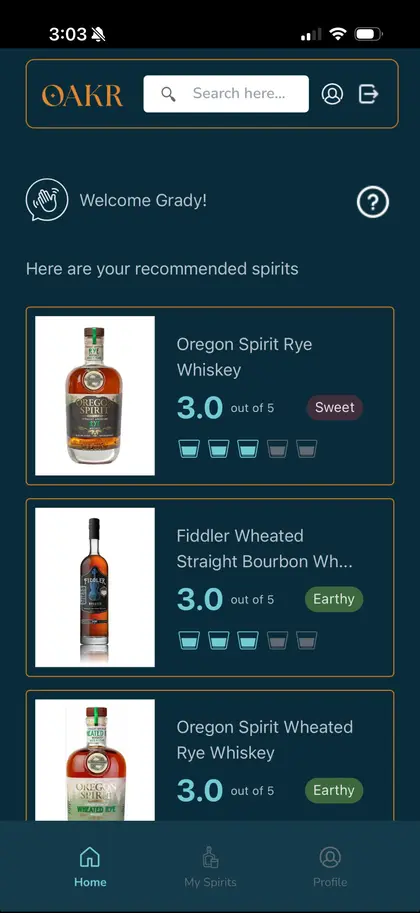
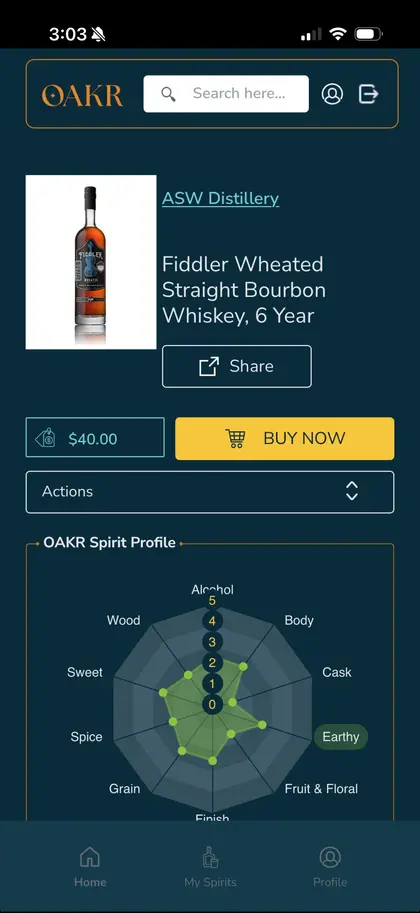
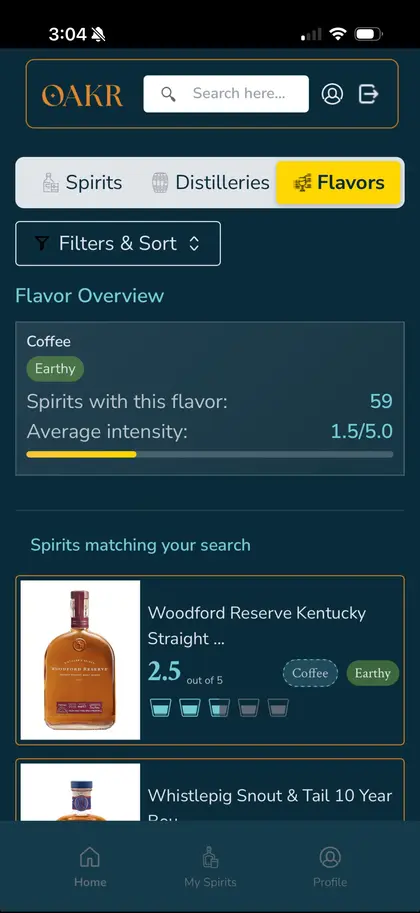
That limited availability makes OAKR’s blind tasting data especially useful. The panel scores every spirit without labels, across 100+ flavor notes in 10 macro categories. For a distillery this small and this hard to find, the data tells you whether the specific flavor profile — the sweet mash cleanness, the pot-still body, the wild-yeast ester complexity — matches what your palate actually prefers before you commit to a purchase you cannot easily repeat. Your Spirit Match score maps your personal taste preferences against the Neeley lineup, so you know which expression to chase. For a family that spent ten generations hiding from the government, the most transparent thing about them now is the data on what their bourbon actually tastes like.
[Download OAKR free on iOS, Android, or web →]

Bourbon enthusiast, spirits industry analyst, and the voice behind OAKR's distillery guides, brand reviews, and bourbon education content. Visiting distilleries, dissecting mashbills, and translating the craft into data since 2024.
Neeley’s pot-still bourbon uses wild yeast maintained for 150 years. Your Spirit Match tells you which of their mashbills fits your palate.