
You've stood in front of the bourbon shelf at 6:47 on a Friday evening and watched a grown adult quietly photograph an empty space where the Eagle Rare used to sit. You've seen the Facebook posts: "Hardin's just got a drop, line forming now." You've maybe even refreshed an Instagram lottery entry while pretending to listen on a work call. Welcome to Buffalo Trace, the most-hunted bourbon brand in America, where the whiskey is genuinely good, the hype is genuinely ridiculous, and the supply chain hasn't made sense to a normal person in roughly fifteen years. We're not going to add to the noise. We're going to walk through what actually makes Buffalo Trace different — the location, the recipes, the equipment, the wood, the people, and the bottles. Then we're going to tell you the part the marketing won't: which ones are worth your money, which ones aren't, and how to figure out whether your palate is going to agree with all the hype before you spend a dollar. That last part matters more than anything else here. Because the truth about bourbon is that an expert's opinion is just one data point. Yours is the one that counts.

Buffalo Trace has been making whiskey on the same Frankfort, Kentucky site since the late 1700s. They kept the lights on during Prohibition by securing one of a handful of federal permits to produce “medicinal” whiskey. That’s why they’re often cited as the oldest continuously operating distillery in the United States.
Buffalo Trace sits on the banks of the Kentucky River, on top of a deep limestone bed that filters the water naturally. Iron-free, calcium-rich water keeps yeast happy and gives the eventual spirit a clean foundation. Franklin County’s temperature swings — sweltering summers, hard winters — push and pull the whiskey through the wood of the barrel year after year.
Mashbill #1: The Low-Rye Workhorse. This is the recipe behind standard Buffalo Trace, Eagle Rare, the entire Colonel E.H. Taylor line, and George T. Stagg. Corn-heavy, with a small percentage of rye and malted barley. Less spice, more sweetness, a creamy backbone.
Mashbill #2: The High-Rye Recipe. This is the juice in Blanton’s, Elmer T. Lee, Rock Hill Farms, and the Ancient Age line. The rye percentage gets bumped up, which translates into more pepper, more baking spice, more dried fruit, and a brighter top note.
The Wheated Mashbill. Wheat replaces rye entirely as the secondary grain. This is the DNA of the W.L. Weller line and the Pappy Van Winkle line — same recipe family, different aging and selection. Softer and rounder than the rye-based mashbills, with caramel, vanilla, and baked bread.
Reporting suggests they use the same proprietary yeast strain across all three main mashbills — a strain they’ve cultivated in-house for decades. That strain is the consistent thread you can taste from one expression to the next.
Buffalo Trace runs a column-still-plus-doubler setup. The mash gets pumped through a four-story column still for the first distillation. The resulting “low wine” then gets a second pass through a doubler — a copper pot-style still that refines the spirit and concentrates the flavor. The column still gives them the volume to keep up with demand. The doubler keeps the character.
Buffalo Trace leans heavily on a #4 char. That deep char filters sulfur compounds from young spirit and breaks down hemicellulose into wood sugars — the source of caramel, vanilla, and toffee notes.
Buffalo Trace has more than a dozen aging warehouses on site, and they’re not interchangeable. Warehouse H, the metal-clad building that’s home to most Blanton’s barrels, runs hotter and more aggressive than the brick warehouses. They also have more than 30,000 experimental barrels aging right now, isolating variables most distilleries don’t bother with.
Master Distiller Harlen Wheatley took over in 2005 — the sixth person to hold the title since the Civil War. He has degrees in chemistry and chemical engineering and joined Buffalo Trace in 1995 as a plant supervisor. The internal motto is “Honor Tradition, Embrace Change.”
Buffalo Trace Kentucky Straight Bourbon — Mashbill #1, 90 proof, MSRP ~$25–30. Vanilla, caramel, a little molasses, a clean finish. One of the best dollar-for-dollar bourbons in the country at MSRP.
W.L. Weller Special Reserve — The entry point to the wheated mashbill. Softer, sweeter, less burn. MSRP ~$25, though often marked up significantly.
Eagle Rare 10 Year — Same mashbill as standard Buffalo Trace, aged at least ten years. More oak, leather, and dark fruit. MSRP ~$40.
Blanton’s Single Barrel — Mashbill #2, 93 proof, MSRP ~$65. Spicy, complex, balanced. The first commercially marketed single-barrel bourbon.
The Antique Collection — George T. Stagg, Eagle Rare 17, William Larue Weller, Sazerac 18, Thomas H. Handy. The annual fall release. MSRPs are reasonable; actual retail prices are not.
Pappy Van Winkle — Wheated mashbill, aged longer than anything else in the portfolio. The legend has eaten the liquid at this point. The bourbon is excellent.
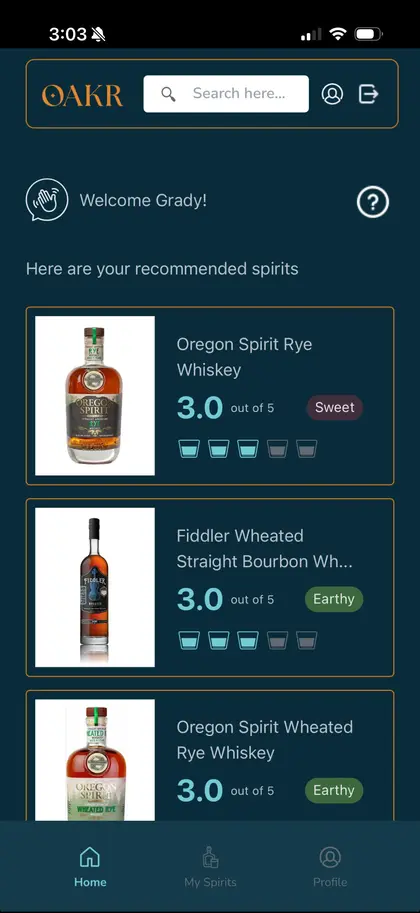
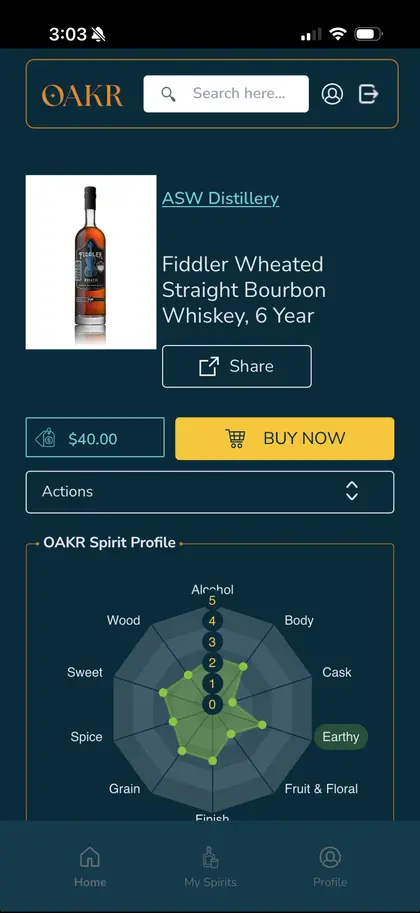
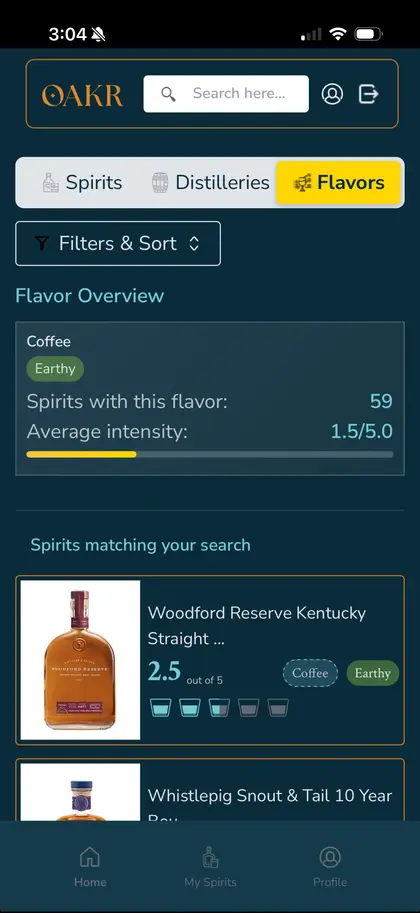
OAKR’s blind tasting panel scores every bourbon across more than 100 flavor notes, organized into 10 macro categories. Spirit Match scores show you which Buffalo Trace expression is most likely to land for your palate — before you overpay for hype bottles that don’t match your taste.
[Download OAKR free on iOS, Android, or web →]

Bourbon enthusiast, spirits industry analyst, and the voice behind OAKR's distillery guides, brand reviews, and bourbon education content. Visiting distilleries, dissecting mashbills, and translating the craft into data since 2024.



Low-rye, high-rye, or wheated? Your Spirit Match score cuts through the hype and shows which Buffalo Trace expression actually fits your palate.