
Beam Suntory doesn't do contract distilling. They'll tell you that. Their lawyers will tell you that. And yet, barrels from their facilities keep showing up in the strangest places. If you've ever wondered how a company that makes Jim Beam, Maker's Mark, Knob Creek, and Booker's could possibly be connected to the NDP world, buckle up. This one's a little different from the rest of my contract distiller series, because Beam's role in the sourced whiskey ecosystem isn't about what they sell on purpose, it's about what escapes through the cracks.

The Beam family has been making bourbon in Kentucky since 1795. Let that sink in. That’s 231 years of continuous whiskey production, minus a little hiccup called Prohibition where everybody had to find a new hobby for a while. Jacob Beam sold his first barrel of Old Jake Beam Sour Mash, and the rest, as they say, is the reason half of Bullitt County smells like angel’s share.
Fast forward through a whole lot of family drama, corporate acquisitions, and one very expensive purchase, and here we are: in 2014, Japan’s Suntory Holdings bought Beam Inc. for $16 billion. Sixteen. Billion. Dollars. That’s not a typo. That’s “I really, really want to own Jim Beam” money. The company rebranded to Beam Suntory, and then again in 2024 to Suntory Global Spirits, because apparently one name change per decade is the corporate minimum.
Today, Suntory Global Spirits is one of the largest premium spirits companies on the planet, with roughly $5.5 billion in annual revenue, 6,000 employees in 30 countries, and a bourbon portfolio that could fill a warehouse by itself. Which, to be fair, it literally does. Multiple warehouses, actually.
Beam operates three major production facilities in Kentucky, and each one has its own personality.
This is home base. The 420-acre campus on Happy Hollow Road in Clermont has been the epicenter of the Beam universe since it was rebuilt after Prohibition. The main distillery is massive, with 45,000-gallon fermenters that could double as swimming pools for a very adventurous (and very drunk) adult. Fun fact: the main distillery is actually paused for all of 2026, partly for facility upgrades, partly because Kentucky is sitting on a record 16.1 million barrels of aging bourbon and nobody needs more right now. Think of it as bourbon taking a gap year.
Also on the Clermont campus is the Fred B. Noe Craft Distillery, a smaller facility built in 2022 as part of a $60 million investment. This is the experimental playground where 8th generation distiller Freddie Noe tinkers with new mashbills, slower fermentation cycles, and ideas that would be way too expensive to test on the big rig. The FBN distillery has a capacity of about 1.2 million proof gallons per year, which sounds like a lot until you realize the main Clermont distillery and the Booker Noe plant together crank out roughly 100 million proof gallons annually. It’s like having a test kitchen next to a factory cafeteria.
Named after Booker Noe, Jim Beam’s grandson and the legendary master distiller who basically invented small batch bourbon as a category, this facility in Boston, Kentucky (Nelson County) is the workhorse. Beam invested $400 million into expanding this plant, and it’s where the bulk of production continues even while Clermont takes its 2026 nap. When people say “Beam doesn’t slow down,” they mean Boston keeps running.
Maker’s Mark operates essentially as its own world. Nestled in Marion County, this is where the Maker’s Mark wheated bourbon recipe has been produced since Bill Samuels Sr. burned the family’s 170-year-old recipe and started fresh in the 1950s. Maker’s runs on its own mashbill (70% corn, 16% red winter wheat, 14% malted barley), its own yeast, and its own production schedule. It’s technically under the Suntory umbrella, but it might as well be a separate country.
Here’s where it gets interesting, and by interesting I mean murky. Beam Suntory does not operate a contract distilling program. They’re not MGP, where half the bourbon aisle traces back to one building in Indiana. They’re not Bardstown Bourbon Company, which literally built a business model around “we’ll make your bourbon for you.” Beam makes bourbon for Beam brands. Period. End of story.
Except it’s not the end of the story, because bourbon has a way of getting around.
The connection that shows up in our sourcing research is Backbone Bourbon. Some of Backbone’s aged Kentucky releases have been labeled as “distilled in Frankfort, KY,” and mashbill analysis points toward a profile consistent with the Old Grand-Dad recipe, which is 63% corn, 27% rye, and 10% malted barley. That’s Beam’s high-rye mashbill. The likely scenario? Barrel brokers. Aged stock gets sold, swapped, or traded through intermediaries, and an NDP brand picks it up on the secondary market. Beam didn’t sell it to Backbone directly, but the liquid started its life in a Beam facility.
You might ask yourself, “Grady, how do you know all of this?” Welp, I’ve been tracking this stuff for a while now, and between DSP numbers, mashbill fingerprints, and the surprisingly chatty bourbon broker community, you can piece together where bottles come from even when the label doesn’t want to tell you. That said, this connection is classified as LIKELY in our research, not confirmed. Beam isn’t going to send me a Christmas card about it.
Beam runs two primary bourbon mashbills across the Clermont and Boston plants, and understanding them unlocks the entire portfolio.
This is the backbone (no pun intended) of the Beam bourbon family. Jim Beam White Label, Knob Creek, Booker’s, Baker’s, Old Crow, and Old Tub all share this same grain recipe. The differences between a $15 bottle of Jim Beam White and a $100+ bottle of Booker’s come down to barrel selection, age, warehouse placement, and proof. Same recipe, wildly different outcomes. It’s like how the same ingredients can make both a gas station sandwich and a five-star entree, depending on who’s in the kitchen.
This is the Old Grand-Dad and Basil Hayden recipe. Nearly double the rye content of the standard bill, which makes these bourbons noticeably spicier, more peppery, and a little more aggressive on the palate. Old Grand-Dad Bonded at 100 proof is one of the best value bourbons in America, and I will die on that hill. The 114 proof expression? Hotter than a dog’s feet on a summer sidewalk, but in the best way possible.
All Beam bourbon ages in new charred American oak barrels, as required by law. But the real magic happens in the rickhouses. Beam’s Kentucky warehouses are traditional multi-story rack houses, and where a barrel sits in that building dramatically affects how the bourbon develops. Top floors run hotter in summer and colder in winter, pushing the spirit deeper into the wood and pulling it back out with more intensity. Bottom floors age more slowly and produce a mellower profile.
Baker’s, for example, is specifically pulled from the top floors. Booker’s gets hand-selected barrels from various positions that Fred and Freddie Noe deem worthy of the name. Knob Creek sits in the barrel for 9 years minimum (the age statement came back in 2019 after a brief NAS period that made bourbon Twitter lose its collective mind). And here’s a fun detail: Kentucky currently holds a record 16.1 million barrels of aging bourbon across the state. The barrel aging tax alone cost Kentucky distillers $75 million in 2025, a 163% increase over five years. So when you see Beam pause production for a year, it’s partly because they literally have too much bourbon aging and the tax man is getting greedy.
I know what you’re thinking. “Grady, if Beam doesn’t do contract distilling, why does this post exist?” Fair question. Here’s the deal.
This contract distiller series exists to map the connections between the bourbon you see on the shelf and the facilities that actually made it. Most of the time, that connection is straightforward: Green River makes bourbon for a bunch of NDPs, Barton 1792 fills barrels for Sazerac’s extended family, and so on. But the bourbon world isn’t that clean. Barrels get sold. Inventory moves. Companies offload excess stock through brokers who then sell it to anyone with cash and a bottling license.
Beam is one of the largest bourbon producers on Earth. When you’re producing at that scale, some barrels are going to find their way into the secondary market, whether it’s through deliberate inventory management, broker relationships, or just the natural flow of a 230-year-old industry. So yes, Beam doesn’t contract distill. But Beam-distilled bourbon absolutely shows up in bottles with other people’s names on them. That’s the reality of the American whiskey market, and pretending otherwise doesn’t help anyone make better buying decisions.
This is where Beam really flexes. The portfolio on OAKR is enormous, and it covers everything from daily drinkers to allocated unicorns.
Jim Beam family: Jim Beam White Label, Jim Beam Double Oak, Jim Beam Black
Small Batch Collection: Knob Creek (9 Year, 12 Year, Single Barrel, and the limited 15, 18, and 21 Year releases), Booker’s (released in named batches, typically 120-130+ proof), Baker’s (single barrel, 107 proof, 7 years), Basil Hayden
The Olds: Old Grand-Dad (80, Bonded 100, 114, and the limited 16 Year), Old Crow, Old Overholt (rye), Old Tub
Innovation and Limited: Little Book (Freddie Noe’s experimental blended whiskey), Legent (a bourbon-meets-Japanese-whisky collaboration), Hardin’s Creek (ultra-aged limited releases)
Maker’s Mark family: Maker’s Mark, Maker’s 46, Maker’s Mark Cask Strength, Maker’s Mark Private Select, and the Wood Finishing Series releases
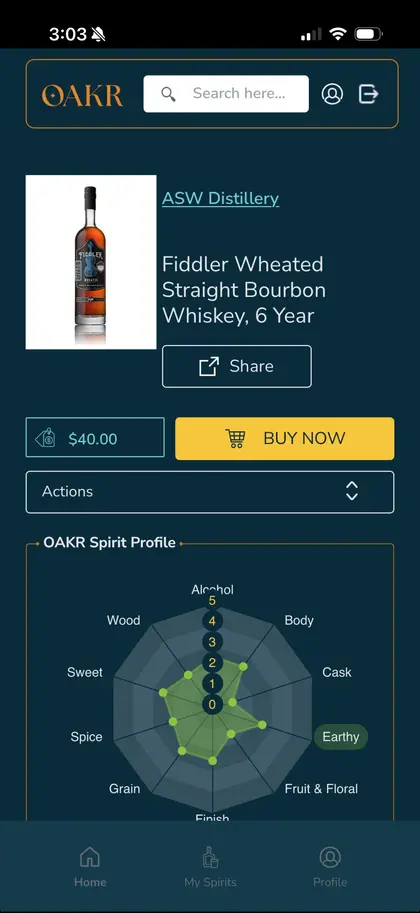
If you want to explore how any of these actually taste based on real panel data, not marketing copy, you can dig into the OAKR spirits database and see flavor scores, mashbill details, and community reviews side by side.
Look, I could have skipped Beam in this series. Nobody would have noticed. But here’s why I didn’t: if you’re trying to understand how bourbon actually moves through the industry, you can’t ignore the 800-pound gorilla in the room. Beam produces more bourbon than most people realize, their aged stock occasionally surfaces in unexpected places, and their two mashbills are fingerprints that show up in sourced products even when the label says nothing about Clermont or Frankfort.
The bourbon industry runs on transparency about 40% of the time and vibes the other 60%. My job is to push that first number higher, one post at a time. And if a barrel of high-rye Beam juice ends up in a bottle with a cool label and no source disclosure, well, that’s exactly the kind of thing OAKR was built to help you figure out.

Bourbon enthusiast, spirits industry analyst, and the voice behind OAKR's distillery guides, brand reviews, and bourbon education content. Visiting distilleries, dissecting mashbills, and translating the craft into data since 2024.
Beam makes the bourbon. Brokers move the barrels. NDPs bottle the results. OAKR tracks all of it, so you always know what you’re actually drinking.