
There is a very good chance you have already had whiskey from Lawrenceburg, Indiana, and never known it. The bottle might have said Kentucky on the label. It might have featured a founder's story set in the rolling hills of Bourbon Country, complete with sepia-toned photography and a heritage narrative stretching back generations. But the liquid inside? Distilled on the banks of the Great Miami River, in a facility most bourbon drinkers have never heard of, by a company that has quietly shaped American whiskey for the better part of two decades.

MGP Ingredients, operating under the Ross & Squibb Distillery name at its Lawrenceburg campus, is the largest contract distiller of bourbon and rye whiskey in the United States. They produce whiskey for an estimated 50+ brands, from household names to limited-release darlings. If you have ever sipped a glass of Redemption, Penelope, Smooth Ambler Old Scout, or Bulleit Rye, you have tasted MGP’s work. Understanding what this distillery does, and how they do it, changes the way you read every label on the shelf.
The distillery sits on roughly 50 acres along the Ohio River border between Indiana and Ohio, split between the towns of Lawrenceburg and Greendale. The site was originally established in 1847 as the Rossville Distillery by George Ross, making it one of the oldest continuously operated distillery sites in America.
Seagram purchased the facility in 1933, immediately after Prohibition, and ran it as the Jos. E. Seagram Lawrenceburg Plant for decades. Under Seagram’s ownership, the distillery developed the mashbill recipes and production techniques that would become the backbone of American rye whiskey. When Seagram collapsed in the early 2000s, the assets bounced through Pernod Ricard’s hands before MGP Ingredients, a Kansas-based grain processing company, acquired the distillery in 2011 for approximately $11 million. That purchase price looks almost absurd in hindsight. MGP inherited a fully operational mega-distillery with world-class stills, stocked rickhouses, and experienced distillers who had been making whiskey at the same facility for decades.
The company moved aggressively into branded spirits. In 2021, MGP completed a $475 million acquisition of Luxco, adding Lux Row Distillers in Bardstown, Kentucky, Limestone Branch Distillery in Lebanon, Kentucky, and a portfolio of established brands including Ezra Brooks, Rebel, Blood Oath, David Nicholson, Daviess County, and Yellowstone. The Ross & Squibb name was restored to the Lawrenceburg distillery that same year, a nod to its pre-Seagram heritage.
As of early 2026, MGP has temporarily idled distilling at its two Kentucky facilities to align production with elevated industry-wide whiskey inventories. The Lawrenceburg plant remains fully operational, continuing to serve both its own brands and contract clients. It is, and has been, the beating heart of the operation.
This is the question that matters most to anyone trying to understand what is actually in their glass. MGP’s client list is not fully public, and confidentiality agreements protect many relationships. But between label disclosures, TTB filings, and industry reporting, the confirmed and widely acknowledged sourcing relationships paint a clear picture of the distillery’s reach.
The following brands have been publicly confirmed, either through label statements, brand acknowledgment, or regulatory filings, as sourcing some or all of their whiskey from MGP’s Lawrenceburg distillery:
Bourbon: Redemption (Deutsch Family), Penelope (now MGP-owned), Smooth Ambler Old Scout, Barrell Craft Spirits (partial), Stellum (partial), Off Hours, High West (partial), Joseph Magnus, and Tincup (Molson Coors).
Rye Whiskey: Bulleit Rye (Diageo), Templeton Rye, George Dickel Rye (Diageo), James E. Pepper Rye, Angel’s Envy Rye (before finishing), WhistlePig (historically), and many others. Some industry estimates suggest that upwards of 70% of rye whiskey sold in the U.S. over the past decade originated from MGP’s stills.
Contract distilling carries a stigma in some corners of bourbon culture, but the practical reasons brands source from MGP are straightforward. First, capacity: the Lawrenceburg facility is one of the largest distilleries in North America, capable of running multiple mashbills simultaneously at massive scale. Second, recipe variety: MGP maintains an extensive library of proven mashbill recipes, giving brands access to flavor profiles they could not create on their own without building a distillery from scratch. Third, aged inventory: MGP has deep stocks of mature whiskey across multiple age ranges, allowing new brands to enter the market with properly aged product rather than rushing young spirit to shelves. And fourth, consistency: decades of production data and institutional knowledge mean MGP can deliver repeatable quality at volume, batch after batch.
What separates MGP from most distilleries is the breadth of their recipe portfolio. Where a typical Kentucky bourbon distillery might run two or three mashbills, MGP maintains a library of recipes spanning bourbon, rye, wheat whiskey, and malt whiskey. Each recipe produces a distinct flavor profile, and contract clients select the recipe (or blend of recipes) that aligns with their brand’s target taste.
High-Rye Bourbon (60% corn, 36% rye, 4% malted barley): The more aggressive of MGP’s two heritage bourbon mashbills. Heavy caramel and vanilla on the nose, with pronounced rye spice, cocoa, and smoke in the body. The 36% rye content pushes this well beyond what most Kentucky distillers would call “high rye” and gives the finished bourbon a bolder, spicier backbone. This is likely the base for many of the barrel-proof and single-barrel sourced bourbons you see on shelves.
Traditional Bourbon (75% corn, 21% rye, 4% malted barley): A more classic, corn-forward profile. Sweet candy notes dominate, with a finish that fades into clean corn grain. This recipe lands closer to what most people picture when they think “bourbon” and serves as the base for brands targeting a more approachable, everyday drinking experience.
Wheated Bourbon (approx. 45% wheat mashbill): Added to the lineup after MGP expanded its recipe portfolio in 2013. Wheat replaces rye as the secondary grain, producing a softer, sweeter, more approachable spirit with less spice and more honey-vanilla character.
95% Rye (95% rye, 5% malted barley): This is the recipe that made MGP famous. Arguably the single most influential mash bill in modern American whiskey, the 95/5 rye became the backbone of the rye whiskey revival. Bold, spicy, with caramel and vanilla forward notes that fade into complex spice. When aged, it develops layers of fruit, leather, and tobacco. If you have had a rye whiskey in the last 15 years, there is a reasonable chance it started here.
51% Rye (51% rye, 49% corn or malt variations): A lighter rye expression that qualifies for the “rye whiskey” designation while leaning into the sweeter corn influence. Less commonly encountered on shelves but used in blending.
MGP also produces a 95% wheat whiskey, a 51/49 corn-malt whiskey, and has the capability to develop custom mashbills for clients willing to commit to volume. The 2013 expansion added six new recipes to the portfolio, and the distillery’s R&D team continues to experiment.
The Lawrenceburg facility operates at an industrial scale that dwarfs most craft operations, but the fundamentals are the same. MGP runs a column still system, standard for large-volume American whiskey production, capable of distilling multiple recipes in rotation. The column still approach allows for efficient, high-volume distillation while maintaining the flavor extraction that bourbon and rye require.
One detail that often gets overlooked: MGP’s fermentation program. The distillery uses a proprietary yeast strain descended from the Seagram’s era, and fermentation takes place in large fermenters that allow for the kind of temperature control and consistency that smaller operations struggle to replicate. Fermentation time, yeast health, and temperature management are where a lot of whiskey’s character is actually determined, and MGP’s institutional knowledge in this area is decades deep.
The distillery also handles its own mashing, cooking, and grain processing on site. This is not a facility that buys pre-processed inputs. Grain comes in, whiskey goes out. That grain-to-glass capability, at contract scale, is a significant part of what makes MGP unique in the sourcing landscape.
MGP ages its whiskey in new charred American white oak barrels, as required by law for bourbon and rye. The company maintains extensive barrel warehousing across its Lawrenceburg campus and surrounding properties, with capacity for hundreds of thousands of barrels. These are traditional racked rickhouses, not the single-story, flat-storage buildings that some operations use.
Barrel entry proof, char level, and warehouse placement all vary by recipe and client specification. This is an important point for understanding sourced whiskey: two brands can buy the same mashbill from MGP but end up with very different products based on the barrel specifications they choose, where those barrels are stored, and how long they age. An 8-year single barrel of the 36% rye bourbon, pulled from a high floor of a rickhouse in Lawrenceburg, will taste substantially different from a 4-year small batch of the same recipe stored at a lower elevation. The contract client’s barrel selection, blending decisions, and finishing choices (if any) are where brand differentiation actually happens.
This is also why age matters with MGP-sourced whiskey. The distillery has been laying down barrels continuously since well before the 2011 acquisition, meaning there are stocks of properly aged whiskey available in ranges that most craft distillers simply cannot match. When you see a sourced bourbon with a 10, 12, or 15-year age statement, MGP’s deep inventory is often how that is possible.
There is a persistent belief in bourbon culture that sourced whiskey is somehow lesser than distiller-produced whiskey. It is worth interrogating that assumption, because it does not hold up under scrutiny.
Consider the facts. MGP has been making whiskey at the same facility, with many of the same people and processes, since the Seagram’s era. Their 95/5 rye is one of the most decorated and celebrated mash bills in American whiskey history. The distillate is world class. What varies between brands is what happens after distillation: barrel selection, age, blending, finishing, and proofing. Those choices are real and meaningful, and they are where an NDP’s expertise (or lack thereof) shows up in the glass.
The better question is not “is this sourced?” but rather “what did the brand do with the sourced whiskey, and did they do it well?” A carefully selected single barrel of MGP bourbon, chosen by an experienced blender and bottled at barrel proof, can be extraordinary. A hastily assembled blend of young MGP stocks, proofed down and packaged with a pretty label, will be mediocre. The distillate is the starting material. The brand’s decisions are the variable.
Transparency matters too. Brands that openly acknowledge their sourcing relationship with MGP, like Redemption, Smooth Ambler, and Barrell Craft Spirits, tend to earn more respect from informed consumers than brands that obscure their sourcing behind vague label language. The industry has moved toward greater transparency over the past decade, and that is a good thing for everyone.
Beyond contract production, MGP has built a growing portfolio of proprietary brands produced at the Lawrenceburg facility and, through the Luxco acquisition, at Lux Row and Limestone Branch.
George Remus Straight Bourbon Whiskey is the flagship house bourbon, named after the legendary Prohibition-era bootlegger who operated in the Cincinnati area. George Remus on OAKR offers a look at what MGP’s master distillers choose when they are putting their own name on the bottle.
Remus Repeal Reserve is the annual limited-edition series, blending select barrels from across MGP’s inventory into single, curated releases. These are the bottles where MGP’s blending team shows what they can do with decades of aged stock at their disposal.
Rossville Union Straight Rye Whiskey showcases MGP’s rye expertise under its own label, using the same mash bills that have supplied the industry for years.
Through Luxco, the portfolio also includes Ezra Brooks, Rebel, Blood Oath, David Nicholson, Daviess County, and Yellowstone, all of which are now produced at MGP-owned distilleries. Penelope Bourbon, acquired by MGP in 2023 for $215.8 million, further expanded the branded portfolio.
Here is the thing about MGP: you have almost certainly had it. It was in that rye Manhattan you ordered last week. It was the “small batch Kentucky bourbon” your friend brought to the tailgate. It is in bottles ranging from $25 to $250, from brands that shout their sourcing from the rooftops and brands that would rather you did not ask.
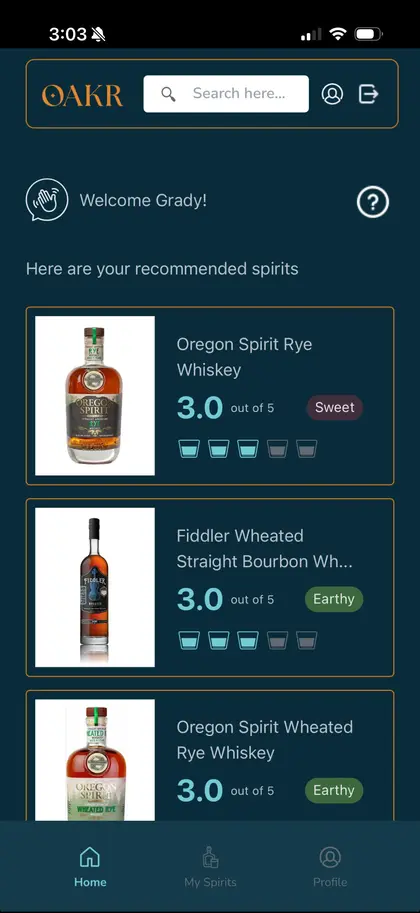
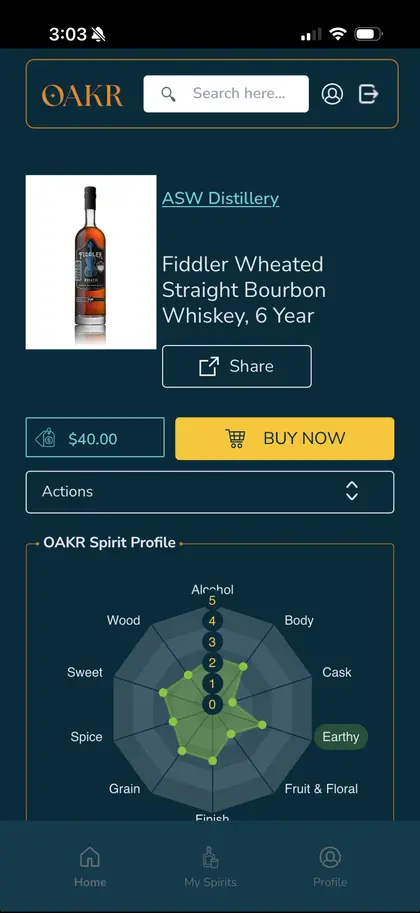
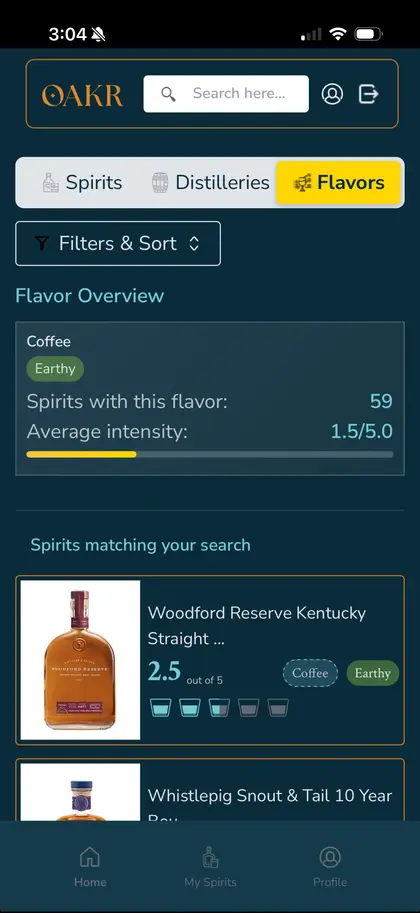
But knowing the source is only half the story. The real question is how any specific bottle lands on your palate. OAKR’s blind tasting panel scores every spirit on 100+ flavor notes across 10 macro categories, completely independent of price, brand story, or label design. No marketing. No hype. Just the liquid in the glass and what it actually tastes like.
With Spirit Match scores tailored to your personal palate profile, OAKR can tell you which MGP-sourced bourbon or rye matches the way you taste, not the way a marketing team wants you to taste. Whether you are exploring Penelope’s wheated expression, comparing George Remus against the brands it supplies, or trying to figure out whether that $80 sourced single barrel is worth it, OAKR gives you the flavor data to decide for yourself.

Bourbon enthusiast, spirits industry analyst, and the voice behind OAKR's distillery guides, brand reviews, and bourbon education content. Visiting distilleries, dissecting mashbills, and translating the craft into data since 2024.

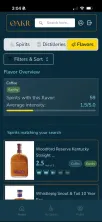
MGP produces whiskey for 50+ brands, but not all sourced bourbon is created equal. OAKR’s blind tasting panel scores every spirit on 100+ flavor notes, completely independent of who distilled it or what the label says. Find out which MGP-sourced bottles actually match your palate with OAKR’s spirits data.