
Tennessee whiskey is not bourbon with an extra step. It is a fundamentally different spirit, shaped by a production process that changes the liquid at a molecular level before it ever touches a barrel. And if you have tasted Tennessee whiskey from any brand other than Jack Daniel's in the past decade, there is a very good chance it was made here: Cascade Hollow Distilling Company in Tullahoma, Tennessee, the Diageo-owned facility that produces George Dickel and quietly supplies whiskey to a growing list of outside brands. Under the leadership of Nicole Austin, one of the most acclaimed distillers working in American whiskey today, Cascade Hollow has become the defining production facility for Tennessee whiskey, both for its own portfolio and for the contract clients who need the real thing.

Cascade Hollow Distilling Company sits tucked into a wooded valley near Tullahoma, Tennessee, about 75 miles southeast of Nashville. The hollow itself, fed by Cascade Springs, has been the production site for whiskey since the 1870s. George A. Dickel, a German immigrant who had built a successful Nashville liquor trade, purchased a controlling interest in the distillery in 1884. His conviction that whisky made in winter tasted smoother than summer production led to the signature innovation that still defines the operation today: chilling the spirit before charcoal mellowing.
The distillery survived Tennessee’s early statewide prohibition in 1910 by temporarily relocating production to Kentucky, then shut down entirely during national Prohibition. It was reconstructed about a mile from the original site in 1958 by Schenley Industries, with the first new mash produced on July 4, 1959, and the George Dickel Tennessee Whisky brand hitting shelves in 1964. Various corporate transactions eventually landed the operation under Diageo, the world’s largest spirits company, which owns it today.
In 2018, Diageo made a pivotal decision. Nicole Austin, a chemical engineer with experience at Kings County Distillery in Brooklyn and Tullamore D.E.W. in Ireland, was named General Manager and Distiller. The distillery itself was rebranded from “George Dickel Distillery” to Cascade Hollow Distilling Co., signaling a broader ambition beyond a single brand. Austin’s mandate was to establish the vision for what the facility could become, including innovation, new brands, and expanded production beyond the George Dickel line.
The results have been significant. Under Austin’s leadership, George Dickel Bottled in Bond was named Whisky Advocate’s “Whisky of the Year” in 2019. Austin herself was named Artisan Spirit Magazine’s first-ever “Distiller of the Year” in 2020 and won the “Distillery Manager” award from Icons of Whisky in 2021. Cascade Hollow is now the second-largest distillery in Tennessee, behind only Jack Daniel’s.
Cascade Hollow’s contract distilling story is different from Kentucky’s contract operations. Tennessee whiskey has a much smaller production footprint than bourbon, with only a handful of distilleries capable of producing at scale. For brands that want Tennessee whiskey specifically, the options are limited: Jack Daniel’s (Brown-Forman, not a contract distiller), Cascade Hollow (Diageo), and a small number of craft operations. That scarcity gives Cascade Hollow a unique position in the contract market.
Heaven’s Door Spirits, the Bob Dylan-associated whiskey brand, sources its Tennessee bourbon and whiskey expressions from Cascade Hollow. The Diageo connection runs through both brands, and Heaven’s Door’s Tennessee products carry the hallmarks of Dickel production, including charcoal mellowing.
Sweetens Cove, the premium Tennessee bourbon associated with Peyton Manning, sources its 13-year Tennessee straight bourbon from Cascade Hollow. Breaking Bourbon and Bourbon Culture both confirmed the Dickel source. Marianne Eaves, former Master Distiller at Castle & Key, serves as the blender. The Kennessee expression blends this Tennessee stock with undisclosed Kentucky bourbon.
Bib & Tucker, owned by Deutsch Family Wine & Spirits (the same parent as Redemption), is widely believed to source from a Tennessee distillery. The brand specifies Tennessee-made, double-distilled bourbon with a 70/26/4 mashbill and Char #1 barrels. Only three Tennessee distilleries could supply aged bourbon at this volume, and Cascade Hollow is the most likely candidate.
Lonehand Whiskey, a Dynasty Spirits/Total Wine Spirits Direct brand, is widely believed to be a Cascade Hollow product. The charcoal-filtered, 4-year, 80-proof Tennessee sour mash profile is consistent with Dickel production, and industry sources have indicated a Dickel partnership.
Here is an important detail that connects Cascade Hollow to the broader sourcing map. George Dickel’s core rye whiskey is not distilled in Tennessee. It is sourced from MGP in Lawrenceburg, Indiana, using the famous 95/5 rye mashbill, and then charcoal mellowed at Cascade Hollow before bottling. Nicole Austin has been transparent about this: the rye undergoes light charcoal mellowing to round out the spice and bring forward more subtle fruit notes, creating a product that is distinct from the same base spirit bottled by other MGP clients.
This means Cascade Hollow functions as both a source distillery (producing Tennessee whiskey for its own brands and contract clients) and a finishing facility (taking MGP rye and applying the Lincoln County Process to create a differentiated product). It is a two-way relationship that illustrates how interconnected the American whiskey supply chain really is.
What makes Cascade Hollow’s production fundamentally different from every Kentucky bourbon distillery is the Lincoln County Process, Tennessee’s legally required charcoal mellowing step. All Tennessee whiskey must be filtered through sugar maple charcoal before going into the barrel. But Cascade Hollow adds a twist that no other Tennessee distillery uses: they chill the white spirit to 40°F before it enters the charcoal mellowing vats.
This is not the same as chill filtration of a finished whiskey (which is a cosmetic process to prevent hazing). Cascade Hollow’s chill charcoal mellowing happens to the raw distillate, before it has ever seen a barrel. Nicole Austin explains it as a continuation of the distillation process rather than a post-production step. Chilling the spirit to a consistent temperature improves consistency (eliminating seasonal variation between January and July production) and allows the charcoal to work more effectively on the spirit’s chemical compounds.
The charcoal vats themselves are filled with 10 to 12 feet of sugar maple charcoal. The chilled spirit passes through this bed over several days, a process that strips harsh compounds while allowing the grain and fermentation character to come through. The result is a spirit that starts its barrel aging with a smoother, more refined profile than uncharcoal-mellowed bourbon.
The core George Dickel Tennessee whisky mashbill is 84% corn, 8% rye, and 8% malted barley, which is similar to a “low rye” bourbon mashbill (comparable to Buffalo Trace’s recipe). The spirit is double distilled through a column still, chilled, charcoal mellowed, and then entered into new charred American white oak barrels with heavy char (often called “alligator char” for the cracked, scale-like surface it produces).
Cascade Hollow ages its whiskey in traditional rickhouses on the Tullahoma property. The distillery uses both multi-story racked warehouses and distinctive single-story vintage-style rickhouses that produce what Austin describes as a “uniquely temperate and sophisticated maturation.” The lower, more even temperature profile of single-story warehousing produces slower, more controlled barrel interaction compared to the extreme temperature swings of tall rickhouse upper floors.
This aging character is particularly relevant for the Cascade Moon limited release series, which showcases how different barrel and warehouse variables affect the final product. The single-story rickhouses have become a key part of the Cascade Hollow identity, offering an aging environment that is difficult to replicate elsewhere.
Tennessee’s climate, with its hot summers and relatively mild winters compared to further northern states, produces aggressive barrel interaction. Combined with the smoother starting distillate from charcoal mellowing, this creates a flavor profile that is recognizably different from Kentucky bourbon, even when the grain ratios are similar.
Cascade Hollow occupies a unique niche in the contract distilling landscape. In Kentucky, brands have multiple contract options: MGP, Bardstown Bourbon Company, Green River, Barton, and others. In Tennessee, for brands that want genuine Tennessee whiskey with charcoal mellowing, the options narrow dramatically. Cascade Hollow is essentially the only large-scale Tennessee distillery that does contract work.
This matters for consumers trying to understand what they are drinking. If you see “Tennessee whiskey” on a label from a brand that does not own a distillery, and the liquid has been charcoal mellowed, there is a strong chance it originated at Cascade Hollow. The limited number of Tennessee-based production facilities means the sourcing trail is shorter and more traceable than in Kentucky’s crowded contract landscape.
Nicole Austin’s leadership has also brought a transparency to Cascade Hollow that extends beyond just its own brands. The open acknowledgment that Dickel Rye is sourced from Indiana, the detailed explanations of the chill charcoal mellowing process, and the willingness to discuss production variables in interviews and on tours all contribute to a culture of openness that benefits the entire Tennessee whiskey category.
George Dickel Bottled in Bond is the expression that put Cascade Hollow back on the whiskey map. Whisky Advocate’s 2019 Whisky of the Year, each release is a single distilling season at 100 proof, showcasing the distillery’s best work in a given year.
George Dickel 8 Year Bourbon is notable because it is labeled as bourbon rather than Tennessee whiskey, despite being produced at the same facility with the same charcoal mellowing. Tennessee distillers can choose to label as bourbon if they meet the legal requirements, and this expression highlights the overlap between the two categories.
George Dickel Barrel Select is the everyday drinking expression, offering floral and honeyed notes at an accessible price point.
The Cascade Moon limited release series represents Austin’s creative laboratory, including sourced and aged ryes, experimental finishes, and single-season expressions that push the boundaries of what Tennessee whiskey can be.
If you have ever wondered why Tennessee whiskey tastes different from Kentucky bourbon, even when the mashbills are nearly identical, Cascade Hollow is the place to understand that distinction. The chill charcoal mellowing step changes the spirit at a molecular level before it ever enters a barrel, creating a smoother baseline that ages differently than raw distillate.
For brands sourcing from Cascade Hollow, that mellowing step is baked into the product whether they highlight it or not. A Heaven’s Door Tennessee bourbon and a Sweetens Cove 13-year both went through the same charcoal mellowing vats, the same chill process, the same sugar maple filtration. What differs is the barrel selection, the age, and the blending choices made by each brand after that shared foundation.
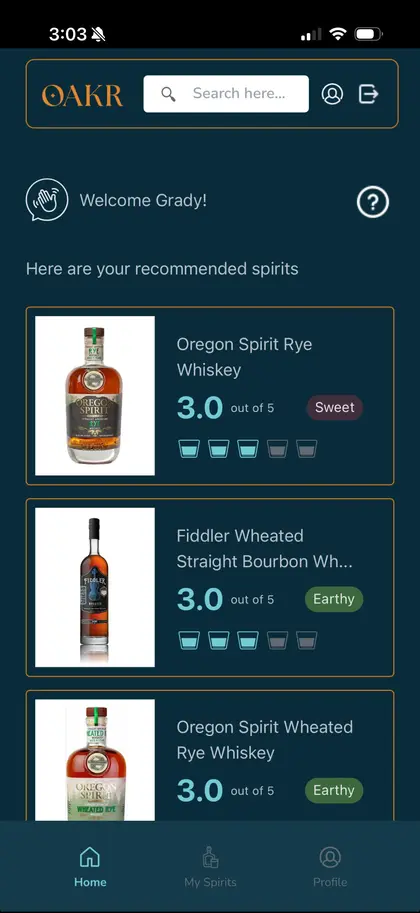
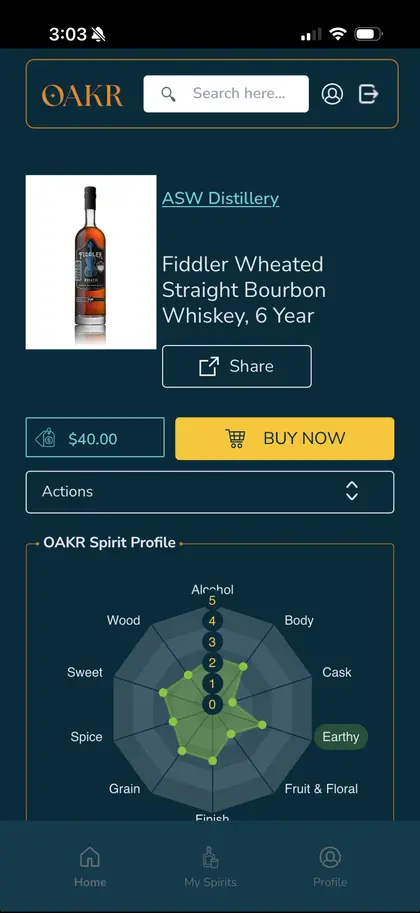
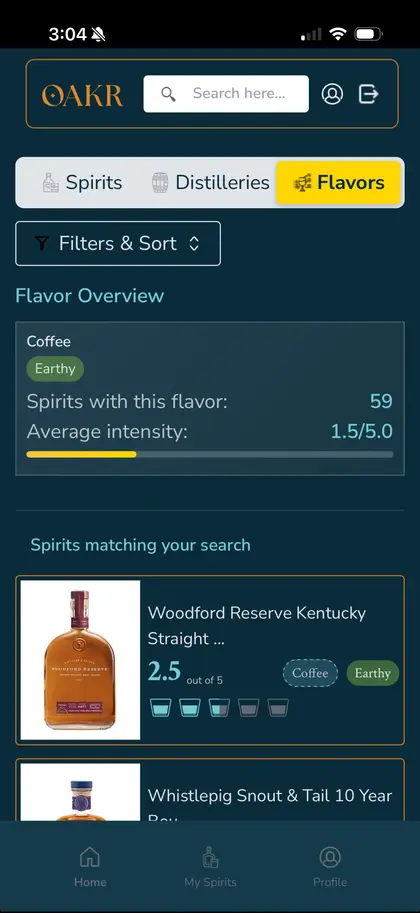
OAKR’s blind tasting panel captures those differences in measurable flavor data. Whether you are comparing Dickel’s own Bottled in Bond against the Tennessee whiskey NDPs that source from the same stills, or benchmarking Tennessee whiskey against Kentucky bourbon to understand the charcoal mellowing effect on your personal palate, OAKR’s spirits data gives you the objective flavor map to navigate the category.

Bourbon enthusiast, spirits industry analyst, and the voice behind OAKR's distillery guides, brand reviews, and bourbon education content. Visiting distilleries, dissecting mashbills, and translating the craft into data since 2024.


Charcoal mellowing changes everything before the bourbon even hits the barrel. OAKR’s blind tasting panel measures the difference in 100+ flavor notes so you can see exactly how Tennessee whiskey compares to Kentucky bourbon on your palate.