
There's a building in Shively, Kentucky that bourbon nerds talk about the way architecture nerds talk about the Parthenon. Stitzel-Weller Distillery, the place where Pappy Van Winkle built his empire, hasn't actively distilled bourbon since 1993. But its warehouses still hold barrels, its corporate owner Diageo still bottles from them, and the legacy of what was made there still echoes through the entire American whiskey market. This is the story of a global spirits giant, a legendary dead distillery, and the orphan barrels caught in between.
Let me set the scene. It’s Derby Day, 1935. Prohibition just ended, America wants a drink, and three guys named Julian “Pappy” Van Winkle Sr., Alex Farnsley, and Arthur Phillip Stitzel decide to build a distillery in Shively, a suburb of Louisville. They combine the W.L. Weller & Sons distribution house with the A. Ph. Stitzel Distillery, and Stitzel-Weller is born. The place opens on the same day as the Kentucky Derby because, well, that’s the most Kentucky thing you can possibly do.
For the next 57 years, Stitzel-Weller becomes one of the most important distilleries in American whiskey history. This is the birthplace of wheated bourbon as a category, the place where Pappy Van Winkle, W.L. Weller, Old Fitzgerald, Rebel Yell, and a host of other legendary brands were distilled. At its peak, the facility ran a workforce of 220 people, cranked out 800,000 cases annually, and stored bourbon in 18 warehouses capable of holding 300,000 barrels.
Then, in January 1993, distillation stopped. The stills went quiet. The facility changed hands through a series of corporate deals, and eventually wound up in the lap of Diageo, the London-based global drinks giant. And here’s where the story gets weird, because Diageo didn’t restart the stills. They inherited one of the most hallowed bourbon production facilities in history and turned it into something else entirely: a tourism site, an aging facility, and a place to bottle whatever aged stock was still sitting in those legendary rickhouses.
If you don’t know Diageo by name, you definitely know them by bottle. They’re the company behind Johnnie Walker, Guinness, Smirnoff, Don Julio, Captain Morgan, Crown Royal, and about a hundred other brands you’ve seen at every bar you’ve ever walked into. Diageo is listed on both the New York and London stock exchanges, employs roughly 30,000 people, and sells products in 180+ countries. They are, in the nicest possible terms, absolutely massive.
In the bourbon world specifically, Diageo’s Kentucky footprint includes three key locations:
Today, Stitzel-Weller is primarily a bottling and aging operation with a visitor center that’s one of the most popular stops on the Kentucky Bourbon Trail. There are still 18 rickhouses aging bourbon on the property. A tiny micro-still produces about a barrel per week of Blade & Bow for R&D purposes, but this is not a production distillery in any meaningful scale. What it is, is a time capsule. You can walk through a recreation of Pappy Van Winkle’s office (but you can’t buy any Pappy, because that’s made by Buffalo Trace now). You can see the original doubler, which was later reclaimed and installed at the Bulleit distillery. It’s like visiting a retired Hall of Famer who still shows up to the ballpark every day.
In 2025, Diageo launched Stitzel Reserve, a new distillery-exclusive series pulling from the remaining archival barrels in the warehouses. The inaugural release was a 24-year-old bourbon, just 191 bottles, hand-selected by Nicole Austin, Diageo’s Director of American Whiskey Liquid Development. At 24 years old and 61.7% ABV, that’s bourbon that was barreled in 1999 and has been sitting in those legendary warehouses ever since. If these barrels could talk, they’d probably charge admission.
This is where Diageo’s bourbon actually gets made in 2026. Opened in 2017 after a $115 million investment, the 300-acre campus features a 52-foot Vendome copper column still, nine 20,000-gallon fermenters, and six barrel houses each holding 55,000 barrels. Capacity: 1.8 million proof gallons per year. The Bulleit mashbill runs 68% corn, 28% rye, and 4% malted barley, making it one of the higher-rye bourbons in the mainstream market. The doubler here was actually reclaimed from the original Stitzel-Weller still setup, which is a nice touch. Fun fact: Bulleit Bourbon was originally contract-distilled at Four Roses under the Seagram’s umbrella before Diageo built this facility. So yes, one of America’s most popular bourbons was an NDP product for decades before it finally got its own distillery.
Opened in 2021, this is Diageo’s carbon-neutral production facility. It’s a 72,000-square-foot operation capable of producing up to 10 million proof gallons per year, powered by 100% renewable electricity. The Lebanon plant produces Bulleit and supplements Shelbyville’s output. Between the two sites, Diageo has gone from having zero active bourbon production in Kentucky (pre-2017) to having serious capacity in under a decade.
Here’s where Diageo fits into the sourced whiskey conversation, and honestly, it’s one of the more interesting stories in the whole series.
Orphan Barrel is Diageo’s aged whiskey brand, launched in 2013 with the explicit mission of bottling old barrels that had been aging independently across Diageo’s various warehouses. These aren’t barrels from a production run that Diageo planned. These are barrels that got forgotten, inherited, shuffled between facilities, or simply sat so long that nobody knew what to do with them. The name says it all: orphan barrels. Bourbon without a home.
The lineup has included some remarkable releases: Barterhouse (20 year), Forged Oak (15 year), Rhetoric (a series that aged an additional year with each release, reaching 24 years), and most recently, Orphan Barrel Fanged Pursuit, a 17-year-old Kentucky straight bourbon that hit shelves in March 2025 at $200. Fanged Pursuit is the first non-chill filtered bourbon in the Orphan Barrel collection, bottled at 92 proof with a grain range disclosed instead of a specific mashbill, which tells you Diageo themselves might not be 100% sure exactly which facility originally distilled it.
And that’s the thing about Orphan Barrel. The bourbon in these bottles could come from old Stitzel-Weller stock, from old Bulleit contract runs when Four Roses was making their bourbon, from broker purchases, or from barrels acquired through Diageo’s various corporate deals over the years. Some of the earlier Rhetoric releases were confirmed as aged at Stitzel-Weller from barrels distilled between 1990 and 1993, right before the stills went silent. That means you were drinking the literal last batches of Stitzel-Weller bourbon, aged for two decades in the same warehouses where Pappy’s crew once worked. If that doesn’t give you chills, check your pulse.
To be clear about what Diageo’s current production setup looks like:
The Shelbyville distillery runs a 52-foot Vendome copper column still with a reclaimed Stitzel-Weller doubler. Fermentation happens in nine 20,000-gallon tanks. The mash is fermented to about 8% ABV beer before distillation. Each day, the facility fills roughly 720 barrels. Those barrels are palletized and stacked 25 feet high in single-story rickhouses, which is a modern approach compared to the traditional multi-story rack houses you see at older Kentucky distilleries.
The Lebanon distillery uses electrode boilers powered by renewable electricity, sources 100% non-GMO corn locally, and can produce up to 10 million proof gallons per year. Combined with Shelbyville’s 1.8 million, Diageo has nearly 12 million proof gallons of annual bourbon capacity in Kentucky.
The Stitzel-Weller micro-still produces about one barrel per week, primarily for Blade & Bow R&D. This is not a commercial production operation. It’s a laboratory with really good vibes.
All Diageo bourbon ages in new charred American oak barrels, same as every other bourbon producer. But the aging environment at Stitzel-Weller deserves special mention. Those 18 rickhouses have been sitting on the same property since the 1930s, and the micro-climate created by 90 years of bourbon evaporation, the famous “angel’s share,” has essentially seasoned the very walls and floors of these buildings. Bourbon enthusiasts who’ve had old Stitzel-Weller aged stock consistently describe a particular character to it: a depth, a complexity, a certain something that modern facilities haven’t quite replicated. Whether that’s science or folklore depends on who you ask, but I’ll say this: I’ve never met anyone who tasted a well-aged Stitzel-Weller barrel and said “meh.”
The newer Shelbyville warehouses use a palletized single-story design, which ages bourbon more uniformly than traditional multi-story rick houses. There’s less variation between barrels on the top and bottom because, well, there is no top and bottom. It’s a tradeoff: less drama in barrel selection, but more consistency across large batches. For a brand like Bulleit that needs to taste the same whether you buy it in Louisville or Los Angeles, that consistency matters.
Diageo occupies a strange space in the bourbon sourcing ecosystem. They’re simultaneously one of the largest spirits companies in the world and relative newcomers to actually making their own bourbon in Kentucky. Before 2017, every drop of Bulleit was contract-distilled. Before Diageo bought the Seagram’s assets in 2001, Bulleit was being made at Four Roses. Before that, it was made at Buffalo Trace in the mid-1990s. The brand spent its first 30 years as a wandering NDP before finally getting a permanent home.
Meanwhile, Diageo inherited the Stitzel-Weller property and all the aged stock that came with it. This gives them a position no other company in bourbon really has: they own the physical warehouses where some of the most coveted bourbon in history was aged (Pappy, Weller, Old Fitzgerald), but they don’t actually make those brands anymore. Those brands were sold off to other companies like Buffalo Trace and Heaven Hill over the years. What Diageo kept was the real estate, the remaining barrels, and the right to sell whatever liquid was still aging in those buildings.
That’s what Orphan Barrel is: Diageo selling the remnants. And when the Stitzel-Weller barrels are gone, they’re gone. No new bourbon has been distilled there at scale since 1993. Every Orphan Barrel release from those warehouses is one batch closer to the end of an era. If that doesn’t make you want to track one down, I can’t help you.
Diageo’s bourbon portfolio on OAKR includes:
Bulleit: Bulleit Bourbon (the flagship, 90 proof, high-rye), Bulleit Bourbon 10 Year, Bulleit Barrel Strength, Bulleit Rye
Historic Brands: I.W. Harper (revived in 2015 after being pulled from the US market for years), Blade & Bow (paying homage to the five keys of Stitzel-Weller craftsmanship)
Orphan Barrel: Orphan Barrel Fanged Pursuit 17 Year (the most recent Kentucky bourbon release)
Also worth noting: Diageo owns Cascade Hollow / George Dickel in Tullahoma, Tennessee, which we covered earlier in this series. Several Orphan Barrel releases over the years have been Tennessee whiskey sourced from Cascade Hollow, not Kentucky bourbon, so pay attention to the label.
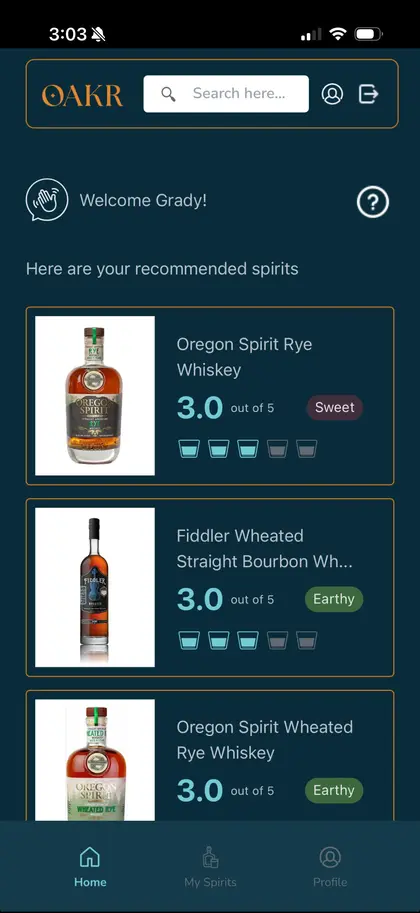
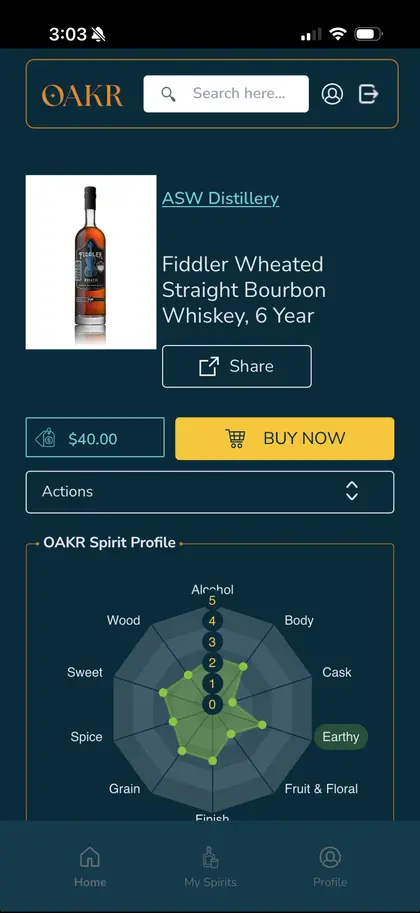
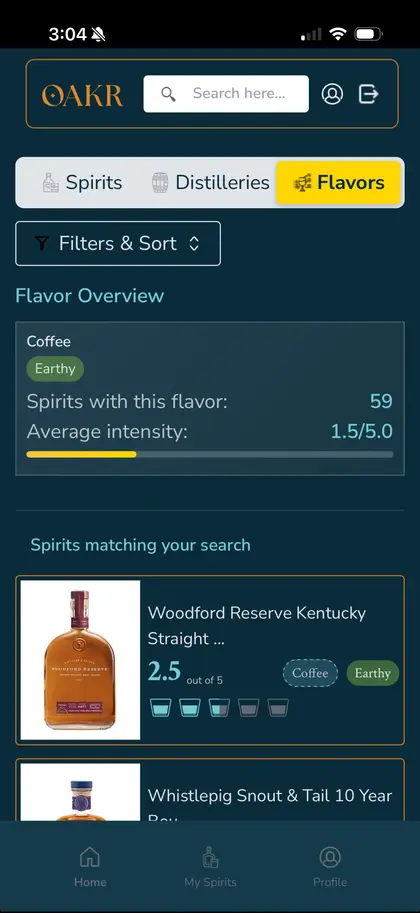
Want to compare these bottles side by side with real tasting panel data? The OAKR spirits database lets you dig into flavor scores, mashbill breakdowns, and community reviews for every expression in the portfolio.
The Diageo story is, in a lot of ways, the bourbon industry in miniature. You’ve got heritage (Stitzel-Weller), corporate consolidation (Diageo buying everything in sight), a former NDP going self-sufficient (Bulleit’s journey from contract-distilled to owning two distilleries), aged stock treasure (Orphan Barrel mining decades-old barrels), and a sustainability push (Lebanon’s carbon-neutral facility). If you only read one post in this series to understand how the modern bourbon industry actually works, this might be the one.
The bottom line is this: when you see a bottle with a Diageo connection, the liquid inside could have originated from any number of facilities across multiple decades. Some of it was distilled in the same building where Pappy Van Winkle himself walked the floors. Some of it was made at a brand-new carbon-neutral plant in Lebanon. And some of it, especially the Orphan Barrel releases, was distilled by someone else entirely and acquired through a chain of corporate deals that would make your head spin. Welcome to bourbon in 2026.

Bourbon enthusiast, spirits industry analyst, and the voice behind OAKR's distillery guides, brand reviews, and bourbon education content. Visiting distilleries, dissecting mashbills, and translating the craft into data since 2024.
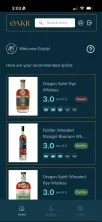

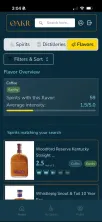
Diageo’s bourbon comes from decades of history and multiple facilities. OAKR maps the connections so you can drink smarter, not harder.