
New Riff does not release anything below 100 proof. Every flagship expression is Bottled-in-Bond and non-chill-filtered. That is not a marketing position — it is a production constraint they imposed on themselves before they had a single barrel to sell. Most distilleries treat the Bottled-in-Bond Act of 1897 as an occasional flex, a special release they roll out when they want to signal seriousness. New Riff treats it as the floor. If the whiskey cannot meet BiB standards — single distillery, single season, minimum four years, 100 proof — it does not go in a bottle with their name on it. The non-chill-filtration commitment is equally stubborn. Big distilleries chill-filter their whiskey to remove fatty acids that cause cloudiness when you add ice. Those fatty acids are also flavor and texture. They give whiskey its oily mouthfeel and weight. New Riff leaves them in. If your glass gets hazy over ice, that is not a defect — it is the confirmation that nobody stripped the character out of the liquid before it reached you. These are expensive decisions. Bottling at 100 proof means you need more barrels to produce the same volume. Skipping chill filtration means accepting that some consumers will think something is wrong with their whiskey. New Riff made both calls before they sold their first bottle in 2018, and they have not walked either one back.

New Riff Distilling sits in Newport, Kentucky, directly across the Ohio River from downtown Cincinnati. The location is a stone’s throw from the Roebling Suspension Bridge, and the distillery’s glass tower showcasing its 60-foot column still is visible from the riverfront. Newport and the broader Northern Kentucky region have deep distilling roots that predate the modern Bourbon Trail — the Ohio River made it a natural hub for shipping barrels in the 19th century.
The distillery was founded in 2014 by Ken Lewis, who spent decades running The Party Source, one of the largest independent spirits retailers in the country. Lewis watched customers buy bourbon for 30 years. He saw what they reached for, what they returned disappointed by, and what they wished existed. When he decided to build a distillery, he sold The Party Source to his employees and used his retail knowledge to inform every production decision. The insight was straightforward: consumers wanted bourbon with genuine flavor, honest labeling, and no corporate shortcuts. New Riff was built to deliver exactly that.
The distillery is 100% family-owned, and Lewis has stated publicly that it will stay that way. There is no parent company, no private equity, and no pressure to dilute the product to meet quarterly targets.
New Riff’s bourbon mashbill is 65% corn, 30% rye, and 5% malted barley. In bourbon terms, 30% rye is aggressive. Most heritage brands sit in the 10-15% range. The high-rye content drives the house style — spicy, assertive, full of black pepper and baking spice, with a fruity ester layer underneath. This is not a soft, wheated bourbon profile. It demands your attention.
Their rye whiskey pushes further: 95% rye, 5% malted rye. Functionally a 100% rye mashbill. Most commercial rye whiskeys legally only need 51% rye and pad the rest with corn to sweeten the profile. New Riff does not pad anything. The result is savory, earthy, and deeply grain-forward — rye that tastes like the grain it came from rather than a bourbon with extra spice.
Beyond the core mashbills, New Riff experiments with heritage grains. Their Balboa Rye uses an heirloom rye variety popular before Prohibition but largely abandoned since. The Balboa strain produces a floral, fruity, earthy character distinct from modern commercial rye. They also produce a 100% malted rye, where the malting process converts the grain’s starches into sugars before fermentation, yielding a softer, rounder, more chocolate-and-bread-forward profile than their standard rye.
The yeast and fermentation program reflects the influence of Brian Sprance, who came from the craft beer world (Sam Adams) rather than a traditional bourbon background. Sprance treats fermentation with the obsessiveness of a brewer — controlling yeast health, monitoring bacterial risk, and optimizing the conditions under which esters develop. New Riff uses the sour mash method, recycling acidic backset from the previous distillation to control pH and prevent bacterial contamination. The combination of Sprance’s fermentation discipline and the high-rye grain bill produces a distiller’s beer that is cleaner and more complex than what many larger operations generate. That complexity carries through distillation into the final spirit.
New Riff’s distillation setup is a full-size copper column still paired with a copper doubler. The column still runs continuously, stripping alcohol from the fermented mash. The doubler — essentially a large pot still — refines the spirit a second time, polishing off harsh alcohols while retaining the flavorful oils and esters.
The entire system is copper. Copper catalyzes a chemical reaction that strips sulfur compounds from the spirit. Sulfur in whiskey tastes metallic and unpleasant, so all-copper construction is a meaningful quality investment, not just an aesthetic choice.
New Riff distills to a lower proof than many large-scale operations. By not pushing the distillate to the legal maximum, they retain more grain character in the spirit. The result is a bourbon that tastes more like its ingredients and less like pure ethanol with wood flavoring added. It costs more — lower distillation proof means the spirit takes up more barrel space — but it preserves the flavor that the high-rye mashbill and careful fermentation worked to create.
The operation also benefits from an alluvial aquifer directly beneath the distillery. This underground water source provides naturally cold, limestone-filtered water year-round. The water cools the condensers on the stills and feeds the mashing process. Limestone filtration removes iron (which blackens whiskey and adds metallic flavors) and enriches the water with calcium and magnesium, both of which support healthy fermentation.
New Riff enters its bourbon into new charred American oak barrels at 110 proof — significantly lower than the industry-standard 125 proof. The lower entry proof means more water in the barrel, which extracts sweet, water-soluble wood sugars more effectively. Whiskey barreled at lower proof tends to develop deeper vanilla, caramel, and toffee character at a younger age. It also means New Riff needs more barrels to store the same volume of alcohol, which is an expensive choice made purely for flavor.
The barrels carry a No. 4 char — 55 seconds of flame, producing the deep “alligator skin” cracking on the interior surface. This heavy char acts as a carbon filter, removing sulfur compounds from the spirit while caramelizing wood sugars deep in the staves. New Riff sources barrels from Independent Stave Company and Kelvin Cooperage, using a mix that includes barrels with extended air-dried staves. Air-drying (as opposed to kiln-drying) mellows tannins in the wood, producing a less astringent oak interaction during aging.
The rickhouses in Northern Kentucky experience the full four-season climate cycle. Summer heat forces whiskey deep into the charred wood, extracting color and flavor compounds. Winter cold contracts the wood and pushes the spirit back out. This breathing cycle is aggressive in the Ohio River corridor, and New Riff’s barrels get the full effect. The angel’s share — evaporation loss — concentrates the remaining liquid, adding richness with each passing year.
Ken Lewis is the founder and the reason New Riff exists. His 30 years in spirits retail gave him an uncommon perspective: he built a distillery informed by what consumers actually want rather than what a production team finds convenient. The decision to go all-in on Bottled-in-Bond, non-chill-filtered whiskey from day one came directly from watching customers react to bourbon across thousands of transactions.
Brian Sprance is the head of production and brought a craft-brewing sensibility to bourbon fermentation. His background at Sam Adams means he treats yeast management and fermentation chemistry with a level of precision that traditional bourbon operations often skip past. The quality of New Riff’s distiller’s beer — the fermented mash that feeds the still — is a direct result of Sprance’s approach.
Jay Erisman served as the early production manager and was instrumental in establishing New Riff’s operational philosophy during the startup years. The distillery’s team has grown, but the core philosophy remains: respect the traditional Kentucky process, execute it with obsessive precision, and refuse to take shortcuts that compromise the liquid.
New Riff Bottled-in-Bond Bourbon — 100 proof. The 65/30/5 high-rye mashbill in its purest expression. Caramel and vanilla up front, followed by a wave of cinnamon, black pepper, and dark fruit. Buttery mouthfeel with a spicy finish that lingers. Around $40, it is one of the strongest values in Kentucky bourbon. This is the bottle that made New Riff’s reputation.
New Riff Bottled-in-Bond Rye — 100 proof. 95% rye, 5% malted rye. Baking spice, mint, dark fruit, with a rich, chewy texture. This is not a subtle rye — it announces itself. It makes a commanding Old Fashioned or Manhattan, cutting through sweetness with peppery authority. For rye fans, this is a benchmark.
New Riff Single Barrel Bourbon — Barrel proof, non-chill-filtered. Same high-rye mashbill as the BiB, but from a single cask with no water added. Proof varies by barrel. Each release is unique — one might lean into dark chocolate and heavy oak, the next into citrus and baking spice. The single barrel program is where the treasure hunting happens, and it is increasingly competitive to find specific picks.
New Riff 8 Year Bourbon — A newer addition to the lineup that ages the house bourbon to eight years. The extended aging deepens the oak influence and rounds out the high-rye spice into a more integrated, complex profile. This expression is becoming genuinely allocated in many markets.
New Riff Balboa Rye — 95% Balboa heirloom rye, 5% malted rye. A heritage grain experiment that produces a floral, fruity, earthy rye profile entirely unlike modern commercial rye. This is whiskey as a history lesson, and it is a limited release.
New Riff 100% Malted Rye — 100% malted rye grain. Malting softens the aggressive spice of raw rye into chocolate, baked bread, and subtle fruit. This is the rye for people who find standard rye too sharp but still want complexity and grain character.
New Riff’s single barrels and the 8 Year bourbon are getting harder to find. What started as a readily available craft bourbon is becoming a hunt. If you are spending time tracking down specific barrel picks or waiting for the 8 Year to hit shelves, knowing your preference before you commit to the purchase saves both money and frustration.
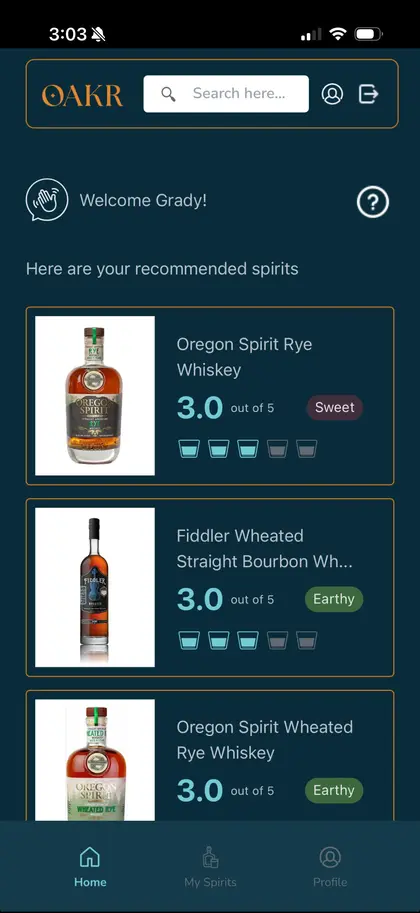
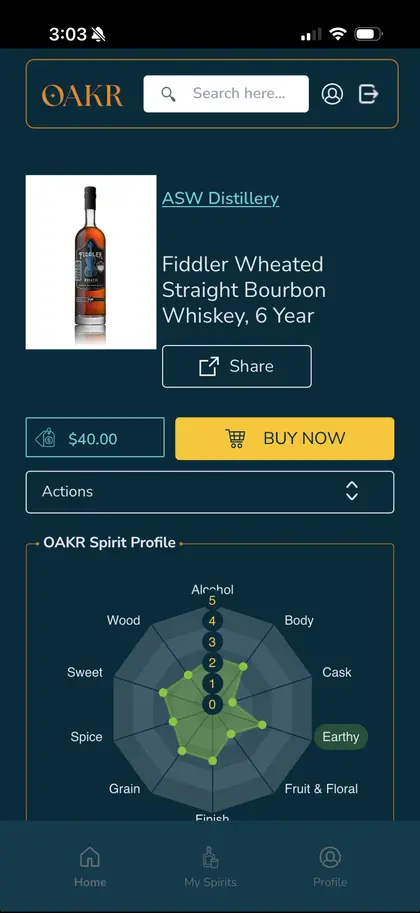
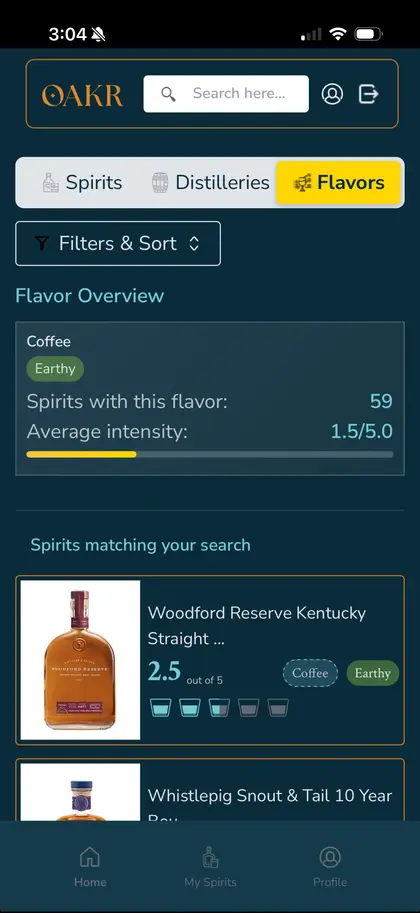
OAKR’s blind tasting panel evaluates every spirit without knowing what is in the glass. The panel scores across 100+ flavor notes in 10 macro categories, which means the high-rye spice, the non-chill-filtered texture, and the specific ester profile of New Riff’s fermentation program are all captured in the data. Your Spirit Match score tells you whether this particular flavor architecture — aggressive rye, full body, minimal filtration — aligns with what your palate actually prefers. For an increasingly hunted bourbon, the data is the difference between a discovery and a $60 experiment that sits on your shelf.
[Download OAKR free on iOS, Android, or web →]

Bourbon enthusiast, spirits industry analyst, and the voice behind OAKR's distillery guides, brand reviews, and bourbon education content. Visiting distilleries, dissecting mashbills, and translating the craft into data since 2024.
New Riff doesn’t release anything below 100 proof. Your Spirit Match tells you whether their high-rye, non-chill-filtered style fits your palate.