
Oregon Spirit Distillers uses a four-grain bourbon mashbill — corn, rye, wheat, and malted barley — in a state that grows more wheat than almost anything else. That grain choice is the single production fact that most bourbon coverage ignores on the way to talking about age statements and proof. Most bourbons are three-grain recipes: corn plus one flavor grain (rye or wheat) plus malted barley. By using both rye and wheat in the same mashbill, Oregon Spirit creates a bourbon that has the spicy bite of a high-rye recipe and the soft, creamy body of a wheated one, simultaneously. It is a balancing act that reflects the agricultural reality of where they are — the Pacific Northwest grows exceptional wheat, and founder Brad Irwin built the recipe around what the land produces. The four-grain approach also means the bourbon does not fit neatly into the categories bourbon drinkers use to sort their shelves. It is not a wheater. It is not a high-rye. It is both, and neither, which makes it difficult to compare to Kentucky standards and easy to overlook. That is exactly why it is worth finding.

Oregon Spirit Distillers operates out of Bend, Oregon, in the high desert of Central Oregon. The distillery was founded in 2009 by Brad and Kathy Irwin, making it one of the earliest craft whiskey operations in the state — roughly the fourteenth distillery licensed in Oregon at the time. Brad came to distilling without a family legacy or an industry pedigree. He was convinced that wheat whiskey was going to be the next big thing. It was not. But bourbon was, and the distillery pivoted into what has become the largest bourbon production operation in Oregon.
Bend sits at roughly 3,600 feet in an arid climate with dramatic daily temperature swings — hot days and cold nights — and dry air. This is a fundamentally different aging environment than the humid river valleys of Kentucky or Tennessee. The low humidity means water evaporates from the barrel faster than alcohol, which can cause proof to rise during aging rather than fall. The aggressive day-night temperature cycling pushes the whiskey in and out of the charred wood rapidly, extracting color and flavor with an intensity that mirrors the seasonal cycling of Kentucky compressed into daily rhythms.
The water comes from Cascade Mountain snowmelt, filtered through volcanic rock. It is low in minerals, clean, and provides a neutral foundation for fermentation — the grain and yeast do the talking, not the water chemistry. Oregon Spirit sources approximately 95% of its grain from Oregon farmers, with the remaining 5% from Idaho and Washington. This is not a locality marketing play — it is a supply chain decision that ties the flavor profile to the specific agricultural character of the Pacific Northwest.
The flagship bourbon mashbill is a four-grain recipe: 64% corn, 18% rye, 9% wheat, and 9% malted barley. The corn provides the sweet foundation required by law (minimum 51% for bourbon). The rye at 18% adds dry spice, black pepper, and cinnamon on the finish. The wheat at 9% softens the texture and adds a creamy, almost jammy quality. The malted barley provides the enzymes for starch conversion and contributes a subtle biscuity note.
The combination produces a bourbon that opens with floral notes and caramel apple sweetness, moves through a mid-palate with rye-driven spice and earthiness, and finishes with the gentle warmth that wheat brings. It is a more complex grain interaction than a standard three-grain recipe allows.
Oregon Spirit also produces a 100% rye whiskey — no corn, no filler grains. Pure rye is notoriously difficult to work with. The grain turns into a sticky, gluey paste during mashing that clogs equipment and frustrates distillers. Most commercial rye whiskeys legally only need 51% rye and pad the rest with corn to make production manageable and the flavor approachable. Oregon Spirit’s commitment to 100% Oregon-grown rye produces a spirit that is savory, herbal, and crisp — rye that tastes like the grain itself rather than a bourbon with extra pepper.
Their wheat whiskey uses 70% Oregon White Winter Wheat as the primary grain, with rye and malted barley rounding out the bill. This is not a wheated bourbon (which is still corn-dominant). It is a wheat whiskey — a distinct category with a softer, lighter, more fruit-forward character.
Oregon Spirit uses a sweet mash process rather than the sour mash standard in Kentucky. Sweet mashing starts every batch fresh without recycling acidic backset from the previous fermentation. It is harder to manage, requires obsessive sanitation, and introduces more risk. The payoff is a cleaner, brighter fermentation that allows the yeast to produce higher levels of fruit and floral esters without the muting effect of sour mash acidity. The result is a house style that is grain-forward, bright, and crisp rather than deep, funky, and barrel-dominated.
Oregon Spirit is a grain-to-glass operation. They mill, mash, ferment, distill, age, and bottle everything on-site in Bend. There is no sourced whiskey in the core lineup.
Brad Irwin designed the spirits to participate in cocktails rather than hide behind them. The decision to include rye in every mashbill — even the wheat whiskey — was deliberate: rye provides enough finish and spice that the whiskey holds its own in mixed drinks rather than disappearing behind the mixer. This cocktail-forward philosophy influenced the distillation approach, which aims for a spirit with enough body and flavor intensity to stand up to dilution and ice.
The distillery uses copper pot stills, which retain heavier oils and congeners than column stills. Pot distillation produces a spirit with more texture and grain character — the oily, rich mouthfeel that distinguishes pot-still whiskey from the lighter, cleaner output of continuous column distillation. It is slower and less efficient, but it preserves the flavor complexity that the four-grain mashbill and sweet mash fermentation work to create.
Oregon Spirit ages its bourbon in new American white oak barrels for a minimum of four years on-site in Bend. The barrels are standard 53-gallon size — no small-barrel shortcuts to fake accelerated aging.
The high-desert aging environment is the critical variable. Bend’s dry climate and extreme diurnal temperature swings create a barrel interaction that differs meaningfully from traditional Kentucky aging. The low humidity drives higher water evaporation, which can concentrate the spirit and increase proof over time. The rapid daily temperature cycling — hot afternoons pushing whiskey deep into the char, cool nights pulling it back — extracts color and flavor aggressively. A four-year-old bourbon aged in Bend may develop flavor density comparable to longer-aged whiskeys matured in more moderate climates.
After four years of maturation, the barrels are married — blended together — and a small amount of water is added to bring the bourbon to 94 proof for the flagship expression. The 7-Year Cask Strength release skips the water addition entirely, bottling at whatever proof the barrel reached after seven years of high-desert aging. The Bottled-in-Bond expressions are bottled at exactly 100 proof after a minimum of four years.
Brad Irwin is the founder and has run the operation since 2009. He came to distilling without a traditional background in the spirits industry. His initial conviction that wheat whiskey would be the breakout category was wrong, but it led him to build a distillery capable of working with multiple grain types — a versatility that became the foundation of Oregon Spirit’s multi-mashbill approach. Brad’s philosophy is pragmatic: use what the land provides, do not take shortcuts on grain quality or aging time, and design spirits that work in real drinking contexts rather than just tasting competitions.
Kathy Irwin co-founded the distillery and has been part of the operation from the beginning. Oregon Spirit remains family-owned and operated, with no outside investors or corporate parent.
Straight American Bourbon Whiskey — 94 proof. The four-grain mashbill (64/18/9/9) aged four years in new American white oak. Caramel apple sweetness, floral notes, earthy rye spice, and wisps of smoke on the finish. This is the entry point and the bottle that defines the house style. SFWSC Double Gold in 2017 and named Best Craft Distiller Whiskey the same year.
Straight American Rye Whiskey — 90 proof. 100% Oregon-grown rye. Savory, herbal, peppery, with floral notes and a hint of mint. Complex and unapologetically grain-forward. This is the rye for drinkers who want to taste rye as a grain, not as a bourbon additive.
Straight American Wheat Whiskey — 90 proof. 70% Oregon White Winter Wheat with rye and malted barley. Sweet mint, fruit jam, vanilla, and a soft finish. The gentlest expression in the lineup, but the rye component keeps it from becoming one-dimensional. An excellent alternative for drinkers who find bourbon too aggressive.
7-Year Bourbon Cask Strength — Barrel proof, varying by batch. The flagship bourbon aged an additional three years and bottled without water addition. Deep, concentrated oak, caramel, and dark fruit. The extended high-desert aging creates a significantly more intense and tannic profile than the four-year expression.
Bottled-in-Bond Series — 100 proof. Available in bourbon, rye, and wheat whiskey expressions. Minimum four years, single distiller, single season. The BiB bourbon in particular is a more structured, robust version of the flagship that shows what the four-grain recipe does with additional proof.
Oregon Spirit is not a brand you will find on every shelf. Distribution is concentrated in the Pacific Northwest and select national accounts through Total Wine. If you have not encountered it before, you are discovering a distillery that has been making grain-to-glass whiskey for over 15 years in a state that most bourbon drinkers do not associate with the category.
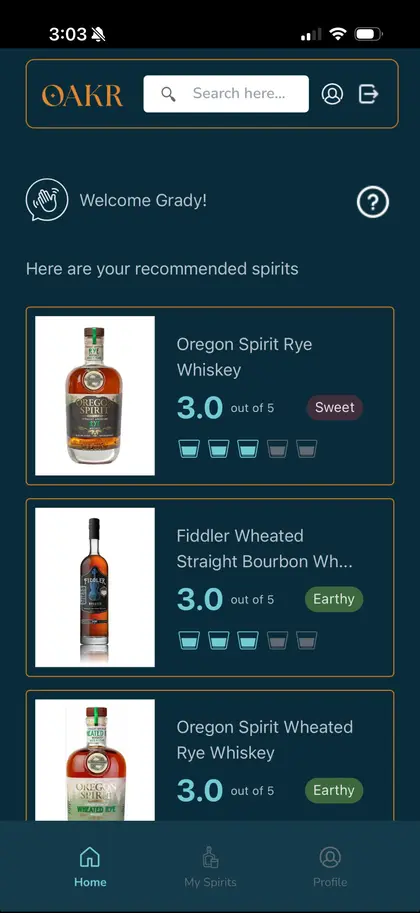
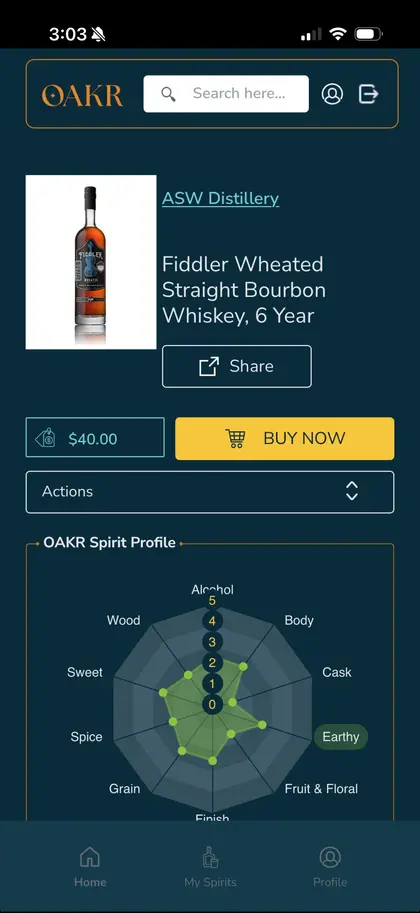
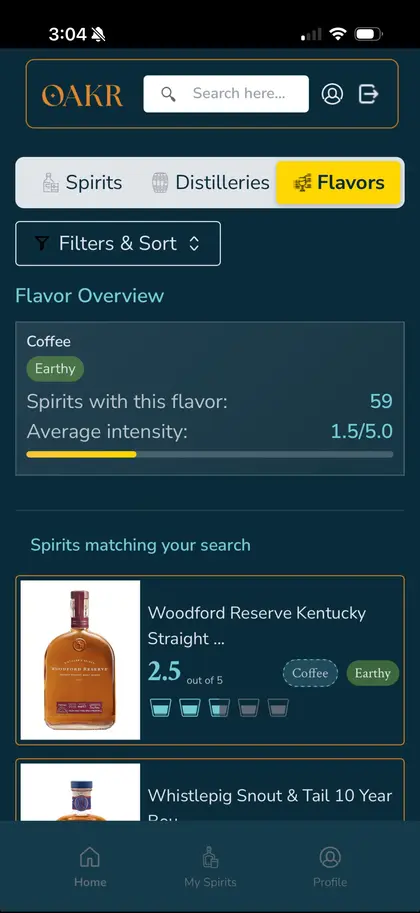
OAKR’s blind tasting panel scores every spirit without knowing what is in the glass, across 100+ flavor notes in 10 macro categories. For a four-grain bourbon made in the Oregon high desert with sweet mash fermentation, the flavor architecture is genuinely different from anything in the Kentucky mainstream. Your Spirit Match score tells you whether that specific combination — the rye-wheat tension, the sweet mash brightness, the volcanic-water cleanness — aligns with what your palate actually prefers. For a brand this unfamiliar, the data is the shortest path between curiosity and confidence.
[Download OAKR free on iOS, Android, or web →]

Bourbon enthusiast, spirits industry analyst, and the voice behind OAKR's distillery guides, brand reviews, and bourbon education content. Visiting distilleries, dissecting mashbills, and translating the craft into data since 2024.
Oregon Spirit’s four-grain bourbon combines rye spice and wheat softness in one mashbill. Your Spirit Match tells you if this unique profile fits your palate.