
Joe Henry made one decision that separates J. Henry & Sons from virtually every other bourbon producer in the country: he refused to ship his corn. The Henry family has farmed the same land in Dane, Wisconsin, since 1946 — growing seed corn, not whiskey. For decades, they sold their carefully cultivated heirloom grain to other people's distilleries and watched someone else turn it into bourbon. When Joe decided to stop selling the raw material and start making the finished product himself, alongside his sons Joe and Jack, the logic was simple: if the grain is this good, why let someone else take the credit? That decision created a true farm-to-bottle operation — not as a marketing tagline, but as a literal description of the supply chain. J. Henry & Sons grows its own proprietary Red Heirloom Corn (a variety developed at the University of Wisconsin in 1939), along with Glacier Winter Wheat and Spooner Rye, on the family farm. They mill, mash, distill, and age the bourbon in a rustic barn on the same property where the grain grows. The barrels sit in non-climate-controlled storage, exposed to the full violence of Wisconsin's seasons — hot, humid summers and winters that make Kentucky look temperate. This guide covers why a corn farmer's pivot to distilling produced a bourbon that French Cognac houses now want to finish, and whether the Wisconsin-aged spirit justifies a spot on your shelf.

J. Henry & Sons operates on the Henry Family Farm in Dane, Wisconsin — South Central Wisconsin, near Madison. The farm has been in the family since 1946, originally as a seed corn operation. The transition to distilling was driven by Joe Henry’s realization that his heirloom corn was too good to sell as a commodity.
The specific grain — proprietary Red Heirloom Corn, originally developed at the University of Wisconsin in 1939 — is the foundation of the entire operation. This isn’t the yellow dent commodity corn that feeds the bourbon industry at scale. It’s a heritage variety with higher oil content and a different starch structure, producing a spirit with a richer, creamier mouthfeel and a sweeter, more complex corn character than standard bourbon.
The farm also grows Glacier Winter Wheat and Spooner Rye. All three grains go into the mashbill, keeping the supply chain entirely on-property. The water is sourced locally — naturally filtered Wisconsin water with its own mineral profile distinct from Kentucky’s limestone system.
Wisconsin’s climate is the aging program’s defining variable. The barrels age in a rustic barn with no climate control, subject to the full seasonal cycle: hot, humid summers push the spirit deep into the wood, and brutally cold winters pull it back out loaded with wood sugars and tannins. The temperature range in Wisconsin exceeds Kentucky’s in both directions — hotter summer peaks in the barn and colder winter lows — creating more dramatic barrel cycling. The result is a bourbon that often tastes older than its age statement, with deep color and robust oak influence that the aggressive climate forces into the spirit faster than gentle Kentucky seasons would.
The mashbill is a four-grain formula: 64% Red Heirloom Corn, 14% Wheat, 14% Rye, and 8% Malted Barley. All four grains are estate-grown on the Henry Family Farm.
The 64% Red Heirloom Corn is the primary differentiator. The higher oil content of this heritage variety produces a richer, creamier base spirit than commodity corn. The sweetness reads differently — less syrupy, more complex, with nutty undertones that you don’t find in standard bourbon. The corn’s starch structure also affects fermentation, potentially producing different ester profiles than generic corn varieties.
The 14% wheat softens the spirit and adds a bready, creamy texture. The 14% rye adds spice and pepper to prevent the wheat and corn from making the bourbon too one-dimensional on the sweet side. The 8% malted barley provides enzymatic conversion and a subtle biscuit character.
This four-grain approach is unusual in bourbon. Most producers choose either wheat or rye as the secondary flavor grain, not both. Using all four creates a broader flavor foundation — sweetness from corn, softness from wheat, spice from rye, and nuttiness from barley — that gives the distiller more complexity to work with before barrel aging adds its own layer.
The barrels are no afterthought: the wood is seasoned for two years before coopering, then lightly toasted and charred. Two years of stave seasoning is significantly longer than industry standard (which can be as short as six months) and reduces harsh tannins while developing more nuanced wood sugar character in the finished barrel.
J. Henry & Sons distills on-site on the family farm. The operation is small-scale and meticulous — batch production where each run is managed individually rather than through automated, continuous processes. The distilling approach prioritizes clean spirit production that preserves the grain character of the heirloom corn and the flavor contributions of the wheat, rye, and barley.
The farm-to-bottle model means the same family that selects the grain variety, plants it, harvests it, and mills it is also managing fermentation, distillation, and aging. There are very few distilleries in the world with this level of vertical integration. Most “grain-to-glass” claims involve buying grain from a regional supplier. J. Henry & Sons is literally growing the bourbon’s primary ingredient in the dirt next to the building where it’s distilled.
This control has a practical implication for consistency: because the grain genetics are constant year over year (same proprietary variety from the same soil), the base flavor profile of the new-make spirit is remarkably stable. The primary variable in the final product is barrel selection and aging duration — which is exactly where the Henrys focus their energy.
New charred American oak barrels with two years of stave seasoning, light toast, and char. The extended seasoning period is a significant investment — each barrel costs more and takes longer to prepare than industry-standard cooperage. The payoff is in the wood’s contribution: less harshness, more nuanced sweetness, and a cleaner interaction with the spirit during aging.
The barn aging in Wisconsin’s climate is the production factor most responsible for the bourbon’s character. The seasonal cycling in South Central Wisconsin is extreme enough to accelerate maturation significantly. A four-to-six-year-old J. Henry bourbon has undergone more dramatic expansion-contraction cycles than a bourbon aged the same duration in a more moderate climate. This produces deep caramel and oak character, rich color, and a barrel influence that reads as more mature than the age statement alone would suggest.
The non-climate-controlled barn also introduces natural variance between barrel positions. Barrels near the barn’s peak — where heat accumulates — age differently than barrels stored at ground level. This variation gives the blending team (in this case, the Henry family) a range of barrel characters to work with when composing the small-batch blends.
Joe Henry is the patriarch and founder — a fourth-generation farmer who decided to control the value chain from seed to bottle. His sons, Joe and Jack, work alongside him. This is a family operation in the most literal sense: the people making the bourbon are the same people who grew the corn.
The family’s expertise is agricultural, not industrial. They understand grain varieties, soil chemistry, and growing conditions at a level that career distillers typically don’t. That agricultural knowledge directly informs production decisions — which corn variety to plant, when to harvest for optimal starch content, how the growing season’s weather affected the grain’s character. The bourbon is an agricultural product first and a spirits product second, and the family’s farming pedigree is the genuine competitive advantage.
The willingness to experiment with French cask finishes — Cognac, Armagnac, Calvados — shows a distillery that isn’t content to produce a single expression forever. These finishing programs introduce European wine and brandy character to a Wisconsin-grown bourbon, creating crossover products that appeal to drinkers outside the traditional bourbon audience.
Small Batch 92 Proof — The core expression. Four-grain mashbill (64/14/14/8), blended from 4-to-6-year-old barrels. 92 proof. Sandalwood, brioche, stewed figs, cherries, vanilla, cinnamon. The daily-drinker and the place to start. Versatile enough for cocktails, interesting enough to sip neat.
Patton Road Reserve (Cask Strength) — Unfiltered, uncut, straight from the barrel. Variable proof (typically high). Rich caramel, toasted oak, spice. The purest expression of the Henry grain program and the Wisconsin aging. For drinkers who want the bourbon at full intensity without proof reduction.
Bellefontaine Reserve (Cognac Finished) — Small Batch bourbon finished for eight months in French Cognac casks. Stone fruit, honey, nuts, a dessert-like sweetness from the Cognac barrel influence. The bottle that demonstrates J. Henry’s ambition beyond straight bourbon — French finishing on Wisconsin grain.
La Flamme Reserve (Armagnac Finished) — Finished in Armagnac casks. Cinnamon, baked pear, spiced plum. Spicier and more opulent than the Cognac finish. For drinkers who want the French cask influence with more assertive spice.
Pomme D’Or (Calvados Finished) — Finished in Calvados (French apple brandy) casks. Baked apple pie, mocha, cinnamon spice cake. The most overtly dessert-like expression. The Calvados influence transforms the bourbon’s corn sweetness into something that reads as baked fruit and pastry.
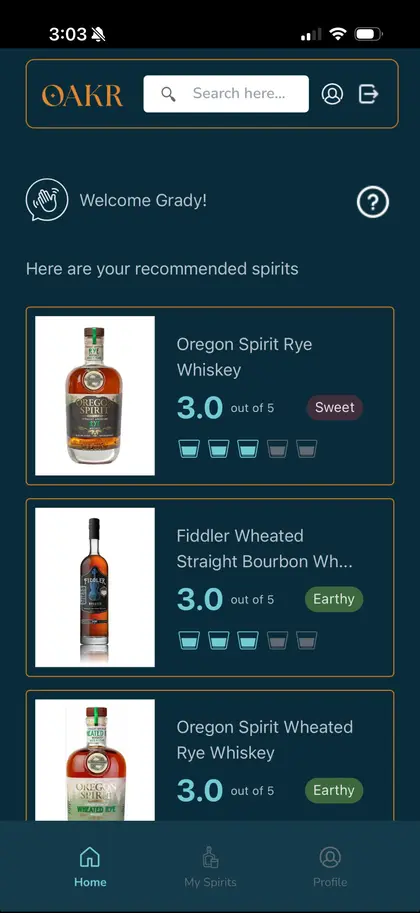
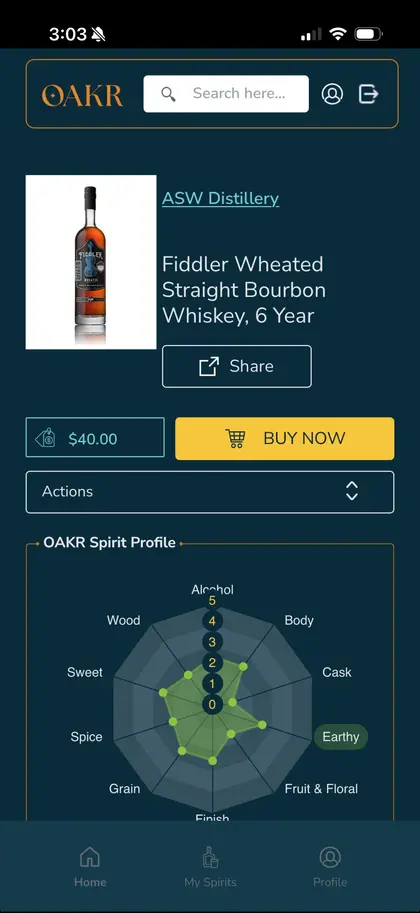
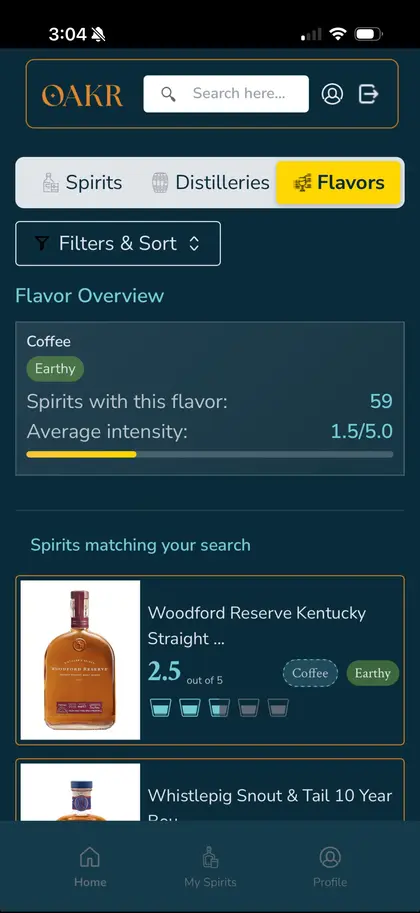
OAKR’s blind tasting panel evaluates every spirit without knowing the farm, the grain variety, or the family story. The panel scores across 100-plus individual flavor notes organized into 10 macro categories. Your Spirit Match score personalizes the comparison — telling you whether you gravitate toward the unfinished four-grain bourbon or the French-cask-finished variants before you spend a dollar.
[Download OAKR free on iOS, Android, or web →]

Bourbon enthusiast, spirits industry analyst, and the voice behind OAKR's distillery guides, brand reviews, and bourbon education content. Visiting distilleries, dissecting mashbills, and translating the craft into data since 2024.
Red Heirloom Corn, four-grain mashbill, French cask finishes. Your Spirit Match score tells you which J. Henry expression fits your palate.