
Ten years. That's the age statement on Finger Lakes Distilling's oldest single malt whiskey — one of the longest-aged American single malts on the market from any craft distillery. Ten years of New York climate beating against charred oak. Ten years of a farm distillery in wine country proving that patience and local grain can produce spirits that compete with operations twenty times their size. In an industry where most craft distilleries bottle at two to four years and call it done, that decade-old single malt is a statement about what Finger Lakes is actually building. The distillery overlooks Seneca Lake from a hillside on New York's wine trail — one of the oldest and largest distilleries in the state, operating as a New York Farm Distillery using locally grown fruits and grains. Their McKenzie whiskey line runs from corn whiskey to bottled-in-bond bourbon to an Irish-style pot still whiskey, all distilled on-site from regional ingredients. The breadth of the portfolio and the depth of the aging program set Finger Lakes apart from the typical craft narrative of "we started two years ago and here's our bourbon." This guide covers the distillery, the production, and every bottle in the McKenzie line.

Finger Lakes Distilling sits on the east shore of Seneca Lake in the heart of New York’s Finger Lakes wine country. The region is known for Riesling and cool-climate viticulture — an agricultural environment built around grape growing, fruit orchards, and the deep glacial lakes that moderate the local climate. The distillery was the first standalone distillery in the Finger Lakes region.
Founder Brian McKenzie built the operation as a farm distillery, sourcing grains and fruits from local New York farms. The distillery holds a New York State Farm Distillery license, which requires using a minimum percentage of New York-grown agricultural products. This isn’t a marketing label — it’s a legal commitment to regional sourcing that connects the spirit directly to the land.
The Seneca Lake location provides two production advantages. First, the microclimate: the deep lake moderates temperatures year-round, but the region still experiences significant seasonal variation — warm summers and cold, snowy winters. This drives the barrel cycling that develops complexity during aging. Second, the surrounding agricultural economy: grain farmers and orchardists in the Finger Lakes supply the raw materials that define the distillery’s portfolio, from corn and rye for whiskey to apples and pears for brandy and grapes for grappa.
The distillery has been operating long enough to accumulate meaningful aged inventory. The McKenzie Straight Bourbon is aged four to seven years. The Bottled-in-Bond Bourbon carries a minimum four-year age statement at 100 proof. The 10-Year Single Malt is exactly what it says. These aren’t aspirational timelines — the barrels are in the rickhouse, and the whiskey is on the shelf.
The portfolio’s breadth reflects the agricultural diversity of the region. In addition to whiskey, Finger Lakes produces apple brandy (from New York apples, finished in bourbon barrels with local maple syrup), grape brandy (from Finger Lakes vinifera and native grapes), grappa, pear brandy, gin, vodka, and fruit liqueurs. This isn’t a distillery that makes one product and markets it sixteen ways — it’s an operation that uses the full range of what the Finger Lakes grows to produce spirits across multiple categories. The farm distillery model isn’t a label here; it’s the operational philosophy.
Finger Lakes works with New York-grown grains across multiple mashbill programs.
McKenzie Bourbon uses a high-rye mashbill: 70% local corn and 30% rye. At 30% rye, this is firmly in high-rye territory — enough to push noticeable spice, baking spice, and grassy notes through the corn sweetness. The local corn variety contributes a character that reads differently from standard commodity corn — less syrupy, more nuanced.
McKenzie Rye uses local rye grain distilled on its own. The rye character is assertive — pepper, herbal notes, and the dry spice that defines the category.
McKenzie Small Batch Bourbon uses a four-grain mashbill, all locally grown, adding wheat and malted barley to the corn and rye for a more balanced, refined profile. The four-grain approach produces a bourbon with broader flavor dimensionality — sweetness from corn, softness from wheat, spice from rye, and biscuit character from malt.
McKenzie Single Malt uses 100% malted barley, distilled in their pot still. The 10-year age statement reflects a long commitment to a category (American single malt) that most craft distilleries entered only recently.
McKenzie Pure Potstill Whiskey uses a blend of malted and unmalted barley with oats — an Irish-style approach that produces a creamy, complex spirit distinct from both bourbon and single malt.
Specific yeast information isn’t published, but the distillery’s use of open-top fermenters for some expressions suggests a deliberate fermentation approach that prioritizes flavor development.
Finger Lakes operates two copper stills — a pot still and a continuous column still with a thumper. The dual-still setup gives the distillery flexibility to produce different spirit styles: pot-distilled single malt and Irish-style whiskey alongside column-distilled bourbon and corn whiskey.
The McKenzie Bourbon is distilled in small batches using what the distillery describes as “old-fashioned” pot still techniques — hands-on, batch-by-batch production with manual cuts. The pot still approach retains more of the grain’s oils and heavier flavor compounds, producing a spirit with a denser, more textured mouthfeel than column-distilled bourbon.
The column still and thumper handle higher-volume production for expressions like Glen Thunder corn whiskey and the Mac’s American Blended Whiskey, which is 75% straight McKenzie whiskey blended with neutral spirit for an approachable, cocktail-friendly product.
A distinctive production choice: the McKenzie Bourbon is finished in local chardonnay casks from Finger Lakes wineries. This cross-pollination between the wine and spirits industries is a natural advantage of operating in established wine country. The chardonnay-barrel finish adds a round, buttery quality to the bourbon that sets it apart from standard bourbon finishes.
Spent grains from fermentation are returned to local farmers as animal feed — closing the agricultural loop that the farm distillery model is built on.
New charred American oak barrels for the bourbon and rye, as required by law. The McKenzie Straight Bourbon ages four to seven years — a meaningful range that allows the blending team to select barrels at different maturation points for the final product.
The Bottled-in-Bond Bourbon carries a minimum four-year age statement and is bottled at 100 proof (50% ABV), meeting the strict requirements of the 1897 Bottled-in-Bond Act: distilled at one distillery, by one distiller, in one distilling season, aged at least four years in a federally bonded warehouse, and bottled at exactly 100 proof. That designation is a quality signal — it guarantees specific production standards that most bourbon on the market doesn’t meet.
The chardonnay cask finishing on the standard McKenzie Bourbon is a barrel program feature unique to the Finger Lakes location. Local wineries provide used chardonnay barrels, and the bourbon spends additional time in those casks after initial aging in new charred oak. The wine-barrel influence adds stone fruit, butter, and cream notes that complement the bourbon’s corn sweetness and rye spice.
The 10-Year Single Malt ages entirely in used bourbon and rye barrels — a patient maturation program that produces one of the oldest American single malt expressions available from a craft distillery. The New York climate contributes character during that decade: warm summers develop fruit and vanilla notes from the oak, while cold winters slow extraction and preserve delicacy.
The McKenzie Rye is finished in sherry barrels from local sources, adding dried fruit and nuttiness to the rye’s natural spice.
Brian McKenzie is the founder and the driving force behind the operation. His approach reflects the farm distillery philosophy: use what grows locally, control the process from grain to glass, and let the region’s agricultural character define the spirits. The distillery’s portfolio breadth — bourbon, rye, single malt, Irish-style whiskey, corn whiskey, brandy, grappa, gin, vodka, liqueurs — reflects both McKenzie’s ambition and the agricultural diversity of the Finger Lakes region.
The team is trained in-house and works across production, with the small staff handling everything from mashing through bottling. The connection to the local farming community is genuine — grain sourcing relationships with Finger Lakes farmers are the foundation of the farm distillery license, and the spent-grain-to-animal-feed loop keeps the agricultural cycle intact.
The McKenzie family name on the whiskey line isn’t a marketing invention — it’s the founder’s identity, which ties the brand directly to the person making the decisions about grain selection, distillation, barrel management, and bottling.
The distillery’s position in wine country isn’t incidental to the whiskey program. The relationships with local winemakers provide the chardonnay and sherry barrels used for finishing. The agricultural network that supports the region’s vineyards also supports the grain farms that supply the distillery. And the tourism infrastructure built around the Finger Lakes wine trail brings visitors to the distillery who might never have sought out a New York whiskey on their own. The location creates a virtuous cycle: wine country credibility introduces the whiskey, the whiskey quality converts curious visitors into buyers, and the farm distillery model keeps the supply chain rooted in the same soil that grows the grapes next door.
McKenzie Straight Bourbon Whiskey — 70/30 corn/rye mashbill. Aged 4-7 years in new charred oak, finished in local chardonnay casks. 91 proof. Toffee, apricot, vanilla, cinnamon, with a round, buttery finish from the wine cask. Rich but delicate — surprisingly nuanced for a high-rye bourbon. The chardonnay finish is the differentiator.
McKenzie Bottled-in-Bond Bourbon — Same grain program, minimum 4 years, 100 proof. Broad-shouldered and balanced, with more intensity and oak structure than the standard expression. The BiB designation is a quality guarantee. For the drinker who wants McKenzie bourbon at full strength with legal accountability behind the age statement.
McKenzie Small Batch Bourbon — Four-grain mashbill (corn, rye, wheat, malted barley), all locally grown. Limited annual production. Vanilla, caramel, oak, with a defined sweetness balanced by spice. The most refined bourbon in the McKenzie line.
McKenzie Rye Whiskey — Local rye, aged in new charred oak, finished in sherry barrels. Spicy, herbal, with dried fruit and nut from the sherry influence. A rye that reflects both the grain and the barrel program.
McKenzie 10-Year Single Malt — 100% malted barley, pot-distilled, aged 10 years in used bourbon and rye barrels. One of the oldest American single malt expressions from a craft distillery. A rare offering that demonstrates what patience and New York climate can do to malted barley.
McKenzie Pure Potstill Whiskey — Irish-style, malted and unmalted barley with oats. Pot-distilled, aged in used bourbon and rye barrels. 90 proof. Complex, creamy, and approachable. A bridge between bourbon and single malt for drinkers who want something genuinely different.
The distillery also produces Glen Thunder Corn Whiskey, Mac’s American Blended Whiskey, apple brandy (finished in bourbon barrels with NY maple syrup), grape brandy, grappa, gin, vodka, and fruit liqueurs. Explore the full Finger Lakes lineup on OAKR to see tasting profiles and spirit data.
Whether the chardonnay-finished bourbon reads as buttery or fruity to your palate is a question only your taste buds can answer — and it’s the kind of subjective distinction that makes whiskey either fascinating or frustrating, depending on how you navigate it.
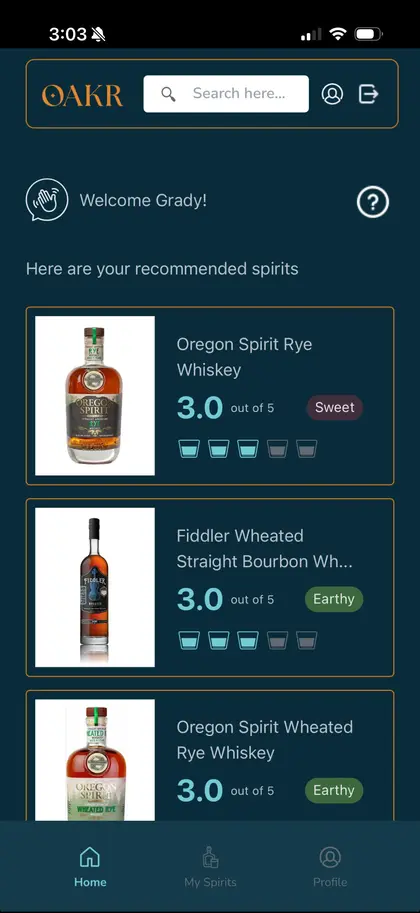
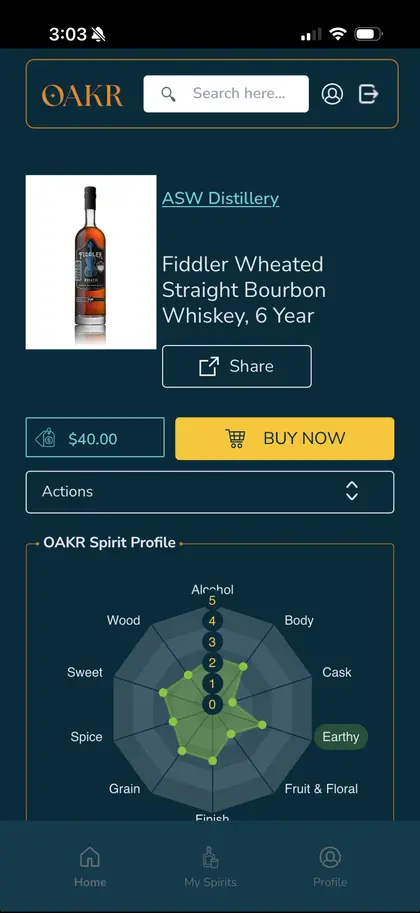
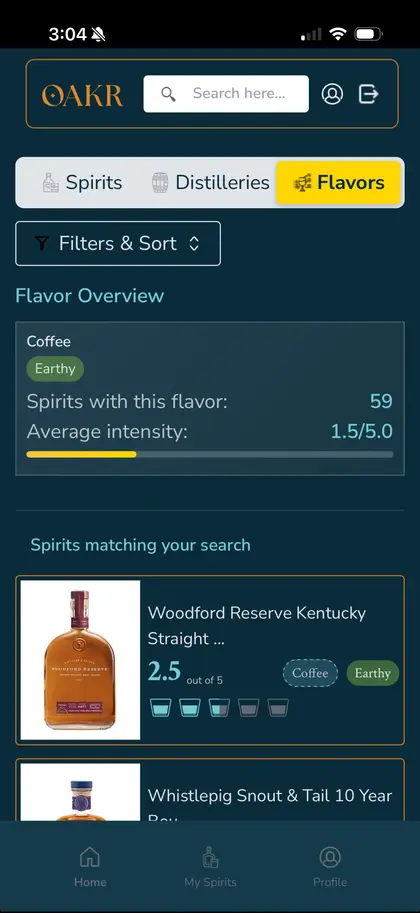
OAKR’s blind tasting panel evaluates every spirit without seeing the label, the wine country backdrop, or the age statement. The panel scores across 100-plus individual flavor notes organized into 10 macro categories, producing a profile built entirely on what’s in the glass. When you compare the McKenzie Bourbon to the Bottled-in-Bond to the 10-Year Single Malt in OAKR, you see how the chardonnay finish, the proof difference, and the grain change map to measurably different flavor territories — data that helps you pick the right expression for your palate.
The Spirit Match score personalizes the comparison. Rate a few bottles, and OAKR’s AI palate profiling identifies whether you gravitate toward the wine-cask-influenced bourbon, the full-proof BiB, or the decade-aged single malt. That’s the kind of information that turns a lineup this diverse from overwhelming to navigable.
Your palate is the final variable. OAKR provides the data to make it a confident call.
[Download OAKR free on iOS, Android, or web →]

Bourbon enthusiast, spirits industry analyst, and the voice behind OAKR's distillery guides, brand reviews, and bourbon education content. Visiting distilleries, dissecting mashbills, and translating the craft into data since 2024.
Chardonnay-finished bourbon. 10-year single malt. Irish-style pot still. Finger Lakes’ lineup is as deep as Seneca Lake itself. Let OAKR’s blind tasting data guide you to the right pour for your palate.