
In 2014, Ryan Thompson made a decision that most startup distillery founders dodge: he refused to source. No contract whiskey from Indiana. No "finished" barrels relabeled with a Colorado mountain logo. Every drop of spirit that left 10th Mountain Whiskey & Spirit Company would be distilled, aged, and bottled by his own crew, in his own facility, at 6,312 feet above sea level in the Colorado Rockies. That choice cost him years of revenue while barrels sat aging. It also built a distillery with nothing to hide. Thompson's co-founder, Kerry Roach, brought something more personal to the project. Roach is the grandson of a 10th Mountain Division soldier — one of the ski troopers who trained at Camp Hale, just south of Vail, before fighting in the Italian Alps during World War II. The distillery isn't named after a geographic feature. It's named after the men who came back from that war and built 57 ski resorts across Colorado, turning the Vail Valley into what it is today. Every bottle carries that lineage, and a portion of proceeds supports at least 24 charities, the majority of them veterans' causes. The decision to distill everything in-house, at altitude, with no shortcuts, is the thread that runs through every section of this guide. It explains why the bourbon tastes the way it does, why the barrel aging behaves differently than in Kentucky, and why the product lineup stays small and deliberate.

The public-facing tasting room sits at 227 Bridge Street in Vail Village — ski-town foot traffic, cocktail flights, and a retail shop selling bottles and mountain lifestyle gear. The actual production happens 30 miles west in Gypsum, Colorado, inside a 7,000-square-foot facility tucked into the Rocky Mountains at 6,312 feet elevation.
Thompson came to Vail as a self-described “ski bum” in 2002, worked as a bartender, and eventually opened a restaurant with two friends. The hospitality years sharpened his palate and his understanding of what people actually want to drink. When he and Roach launched 10th Mountain in 2014, they chose Gypsum for the space and the water — Rocky Mountain snowmelt, mineral-rich and clean, unfiltered through city treatment plants.
The distillery celebrated its 10th anniversary in September 2024 with a three-day event in Vail, including the release of a collaboration with Metallica’s Blackened Whiskey and former Stranahan’s Colorado Whiskey Master Distiller Rob Dietrich. That partnership — a set of special Bourbon, Rye, and Single Malt releases — signaled the kind of distillery 10th Mountain has become: small enough to be personal, established enough to attract serious collaborators.
Two primary grain recipes drive the lineup.
The bourbon mashbill runs 75% corn, 20% rye, and 5% malted barley. That 20% rye content is higher than many bourbons on the market — enough to push noticeable spice through the corn sweetness without turning the pour into a rye whiskey. The corn delivers the expected vanilla and caramel base; the rye adds black pepper and baking spice that cuts through any cloying sweetness; the malted barley provides the enzymes for starch conversion and contributes a faint biscuit character.
The rye whiskey mashbill flips the ratio: 69% rye, 27% corn, 4% malted barley. At 69% rye, this is assertive territory — cinnamon, dark fruit, and oak dominate, with just enough corn to round out the edges and prevent the spirit from becoming astringent.
All grains are non-GMO, sourced regionally. The water used throughout mashing and proofing is Rocky Mountain snowmelt.
On yeast, 10th Mountain keeps their specific strain proprietary. What’s observable in the final product is a fermentation character that leans toward toasted nut, vanilla, and restrained fruit — the kind of ester profile that complements grain-forward distillation rather than competing with it. They aren’t using a generic commercial strain; the consistency of their flavor profile across batches suggests a house culture they’ve maintained and selected for over the years.
The heart of the Gypsum facility is a 500-gallon combination pot/column hybrid still from Vendome Copper & Brass Works — one of the most respected still manufacturers in American whiskey. The hybrid design gives the distillers flexibility: they can run it as a pot still for heavier, more flavorful spirit, or engage the column for additional refinement when a cleaner cut is needed. For more on how still design shapes flavor, see our guide on stills and distillation.
The still is 100% copper, which matters for sulfur removal. Copper reacts with sulfur compounds during distillation, stripping out the harsh, eggy notes that would otherwise carry into the final spirit. More copper contact generally means a cleaner, more drinkable new make.
Six 500-gallon open-top stainless steel fermentation tanks feed the still. Open-top fermenters allow the distillers to monitor fermentation visually and manually — checking the cap, smelling the wash, adjusting temperature. It’s a hands-on approach that doesn’t scale easily but produces more nuanced fermentation character.
The operation runs two distillers across two shifts, producing six to eight barrels per week. That’s small. For context, a major Kentucky distillery might fill hundreds of barrels in a single day. At 10th Mountain’s pace, the distillers make cuts — separating heads, hearts, and tails — by taste and smell rather than by automation. Tight heart cuts mean less volume but a cleaner, more character-dense spirit.
One critical production note: distilling at 6,312 feet means water boils at a lower temperature than at sea level. This shifts the balance of flavor compounds that vaporize and carry over during distillation. The result tends to retain more grain character and produce a slightly different ester profile than the same mashbill distilled at lower elevations.
This is where 10th Mountain’s location does its most visible work.
Standard practice: new charred American oak barrels, as legally required for straight bourbon. But the aging environment is anything but standard. For the full science behind barrels and aging, we have a dedicated guide. At 6,312 feet, barometric pressure is significantly lower than in Kentucky or Tennessee. The dry mountain air means water evaporates from the barrel faster than alcohol — the reverse of what typically happens in humid climates like central Kentucky. The practical effect is that 10th Mountain’s whiskey can actually increase in proof during aging, concentrating both alcohol and flavor.
Temperature swings in the Rockies are dramatic. A sunny afternoon can hit 80°F while the same night drops below freezing. These rapid cycles force the spirit in and out of the wood aggressively, accelerating the extraction of vanillins, tannins, and caramelized wood sugars. The whiskey interacts with the barrel at a pace that would take years longer in a mild, stable climate. Barrels at 10th Mountain tend to punch above their age statement — a three-year whiskey from Gypsum can drink like something considerably older from a more temperate warehouse.
The angel’s share runs high in this dry environment, meaning the distillery loses more liquid to evaporation per year. That’s a real cost, but it also concentrates what remains.
Beyond standard bourbon barrels, 10th Mountain experiments with finishing. Their most notable move is finishing whiskey in barrels that previously held maple syrup. These aren’t gimmick releases — the maple-saturated wood adds a layer of viscosity and a specific earthy sweetness that corn alone can’t achieve. It softens rye spice without masking it and creates a velvety mouthfeel that separates these finished releases from the standard lineup.
The rickhouse was reported full as of late 2024, with plans for expansion.
Ryan Thompson remains the driving force behind the distillery’s direction — from grain sourcing to charity partnerships to the decision to never source whiskey. His background in hospitality, not distilling, informs an approach that’s consumer-facing rather than production-obsessed. He thinks about what people want to drink, not just what’s efficient to make.
Master Distiller Shawn Hogan runs the day-to-day production. Hogan oversees the two-shift operation, manages the cuts, and maintains consistency across batches — no small task when you’re working with a hybrid still at altitude and dealing with fermentation variables that change with the mountain weather.
Melissa Friel, who previously worked as a distiller, serves as Communications Director. The team is small enough that everyone touches multiple parts of the operation.
Thompson’s strategy includes what he calls engagement-driven experiences. The Vail tasting room offers a “Fantasy Whiskey Experience” — a day-long event where a small group learns to make whiskey, shares a catered lunch, and goes home with cocktails and swag. They also sell custom barrel aging: a customer can purchase their own barrel of new make (five to thirty gallons) and have it aged to specification. These aren’t typical distillery programs, and they reflect Thompson’s hospitality instinct — the product is the whiskey, but the experience is what builds loyalty.
10th Mountain Bourbon — The flagship. 75/20/5 mashbill (corn/rye/barley). Approachable but not simple. Expect vanilla and caramel from the corn base, a toasted quality from the charred oak interaction at altitude, and a rye-driven spice that keeps the sweetness honest. Medium body. Good neat, excellent in an Old Fashioned. This is the bottle to buy first if you’re trying 10th Mountain for the first time.
10th Mountain Rye Whiskey — 69/27/4 mashbill (rye/corn/barley). This one has teeth. Cinnamon and black pepper hit up front, followed by dark fruit and a finish that lingers with oak and dry spice. Bolder and drier than the bourbon. If you find standard bourbon too sweet, or if you want a Manhattan that actually tastes like whiskey, this is the bottle. Customers and reviewers frequently call it the standout of the lineup.
American Single Malt Whiskey — 100% malted barley, distilled and aged in Colorado. No peat, no smoke — this isn’t trying to be Scotch. Clean, malty, biscuity, with fruit notes (stone fruit and orchard fruit) that don’t appear in the bourbon or rye. Complex without being challenging. A genuinely interesting expression and one of the better American single malts from a small-production distillery.
Alpenglow Cordial — A sage-infused peach vanilla liqueur built on a brandy base. This is the gateway product for non-whiskey drinkers and a surprisingly versatile cocktail ingredient. Sweet, herbal, and dangerously drinkable over ice. Unique to the region and unlike anything else in 10th Mountain’s portfolio.
Barrel Aged Honey — Not a spirit, but worth noting. Raw honey aged in used bourbon barrels, picking up whiskey and oak character without any alcohol. Useful in cocktails, cooking, or just on a biscuit.
The distillery also produces potato vodka (gluten-free), corn moonshine, and brandy. The full lineup reflects Thompson’s philosophy: make everything in-house, keep the portfolio diverse, and let each product stand on its own grain and process.
You probably haven’t heard of 10th Mountain Whiskey. They don’t have a national distribution deal. They don’t have a celebrity endorser (Metallica collaboration aside). They’re making six to eight barrels a week in a 7,000-square-foot facility in Gypsum, Colorado, and selling most of it through their Vail tasting room and regional accounts.
That’s exactly the kind of distillery OAKR was built to help you find.
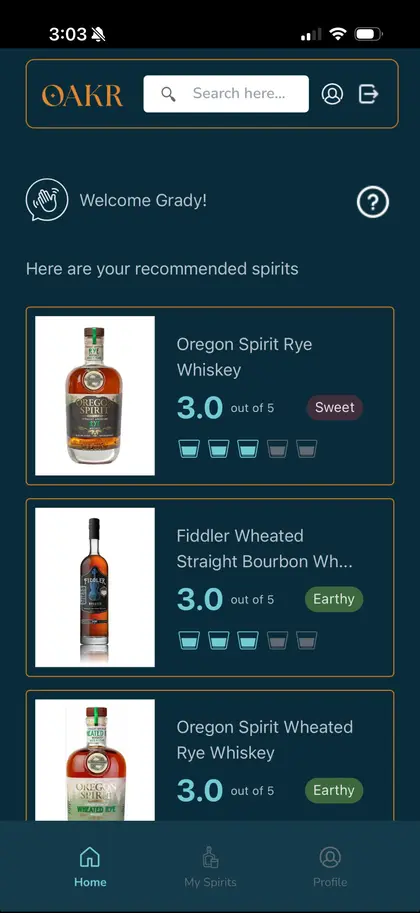
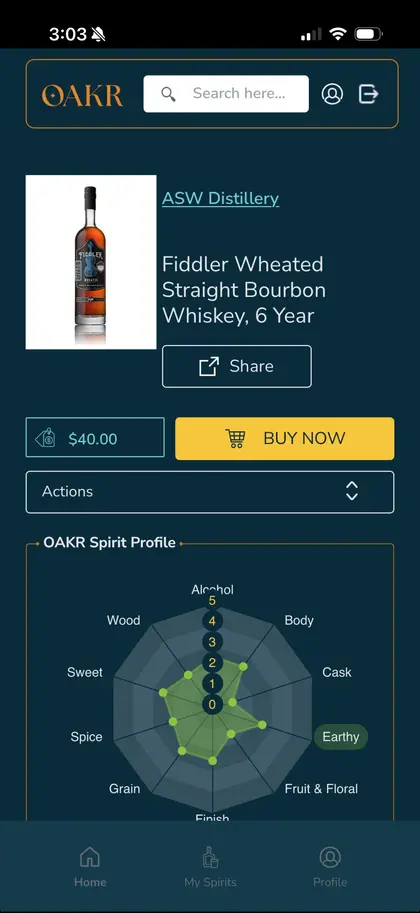
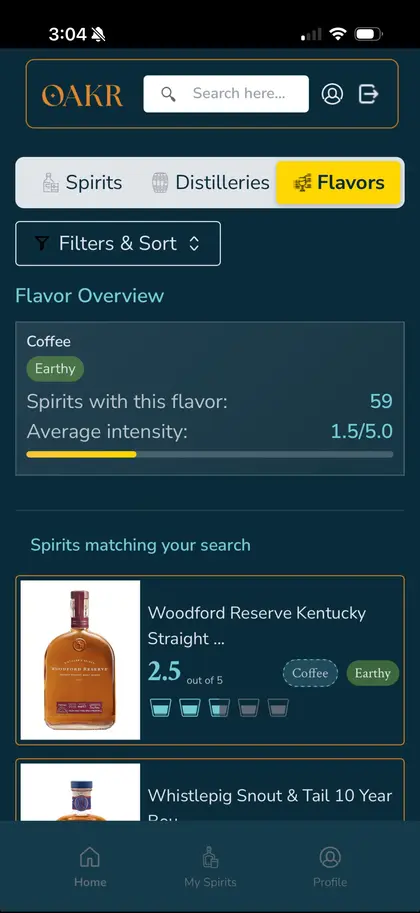
OAKR’s blind tasting panel scores every spirit without seeing the label, the price, or the backstory. The result is a flavor profile built on data — 100-plus flavor notes organized across 10 macro categories — not marketing copy. When you pull up a 10th Mountain expression in OAKR, you see where it actually lands on the flavor map: how much spice, how much sweetness, how the oak character compares to other bourbons at similar price points.
More useful: OAKR’s AI palate profiling learns what you like. Rate a few bottles, and the Spirit Match score tells you whether 10th Mountain’s high-rye, altitude-aged profile fits your preferences — before you spend the money. If you’re the kind of drinker who hunts for small-production distilleries that do things differently, the discovery tool is built for exactly this.
The question isn’t whether 10th Mountain makes good whiskey. They do. The question is whether their specific flavor profile — spice-forward, grain-dense, shaped by thin air and wild temperature swings — is the right fit for your palate. OAKR answers that question with data.
[Download OAKR free on iOS, Android, or web →]

Bourbon enthusiast, spirits industry analyst, and the voice behind OAKR's distillery guides, brand reviews, and bourbon education content. Visiting distilleries, dissecting mashbills, and translating the craft into data since 2024.
10th Mountain distills at 6,312 feet — where altitude changes the chemistry of every barrel. Wondering if their Rocky Mountain profile fits your taste? OAKR’s AI palate matching gives you the answer before you buy.