
Bulleit Bourbon contains 28% rye in its mashbill. Bulleit Rye contains 95% rye. Both sit next to each other on the shelf, both wear the same frontier-style label, both cost about the same, and they taste almost nothing alike. The bourbon — 68% corn, 28% rye, 4% malted barley — is spicy, dry, and peppery, with enough corn sweetness to keep it in bourbon territory. The rye — 95% rye, 5% malted barley — is a different spirit entirely: lean, herbal, almost savory, with a bite that the bourbon only hints at. The gap between them is the clearest illustration on any liquor store shelf of what the secondary grain actually does to whiskey. And for a buyer standing in front of both bottles with $30 to spend, the question is not which one is better. It is which grain architecture your palate prefers. The label cannot answer that question.

Tom Bulleit, a Kentucky-born lawyer and the great-great-grandson of Augustus Bulleit, launched the modern Bulleit brand in 1987. Augustus Bulleit had produced a high-rye bourbon in Louisville in the 1830s until his unexplained disappearance in the 1860s. Tom spent years reconstructing what he believed that original recipe to be, eventually arriving at the 68/28/4 mashbill that defines Bulleit Bourbon today. The first commercial batch was a 4,000-case contract distillation run at the Leestown Company Distillery in Frankfort — now known as Buffalo Trace — in 1989. The bourbon reached retail in 1995. Seagram acquired the brand in 1997. Diageo acquired Seagram’s assets in 2001. Today, Bulleit is one of the top-selling bourbon brands in America, driven largely by its adoption by the craft cocktail industry.
Bulleit now operates two distillery facilities. The primary production site is the Bulleit Distilling Company in Shelbyville, Kentucky — a $115 million, 300-acre facility that opened in March 2017. The distillery produces approximately 6.7 million liters of alcohol annually, filling roughly 720 barrels per day. Four warehouses on-site hold approximately 220,000 barrels. A second facility in Lebanon, Kentucky, handles additional production. Diageo also maintains the former Stitzel-Weller Distillery in Louisville as a visitor experience and tourism anchor for the brand.
The sourcing history is worth understanding directly. Before the Shelbyville distillery opened, Bulleit Bourbon was produced under contract at other facilities — initially at Leestown/Buffalo Trace, then at Four Roses in Lawrenceburg, Kentucky. The Bulleit Rye was (and in many cases still is) produced at MGP Ingredients in Lawrenceburg, Indiana, the prolific contract distillery that supplies rye whiskey to dozens of brands. This is not a secret, but it is not prominently marketed either. Since 2017, Bulleit Bourbon has been increasingly distilled at the Shelbyville facility, including the 2025 release of the brand’s first-ever Bottled-in-Bond Bourbon — distilled and aged entirely at Bulleit Distilling Company. The Bottled-in-Bond designation requires that the bourbon be the product of a single distillery and a single distillation season, aged a minimum of four years, and bottled at exactly 100 proof. This release marks the clearest statement yet that Bulleit’s Shelbyville operation is producing liquid that can stand on its own pedigree.
Two mashbills define the brand:
The bourbon mashbill is 68% corn, 28% rye, and 4% malted barley. The 28% rye content is roughly double what most bourbon producers use — standard bourbon mashbills typically run 8-15% rye. Four Roses, which previously distilled for Bulleit, uses a high-rye recipe at 35%, but among major nationally distributed brands, Bulleit’s 28% represents one of the most rye-forward bourbon profiles available at the sub-$30 price point. The high rye content is responsible for the dry, spicy, peppery character that bartenders identified early as ideal for cocktail work — the spice cuts through sugar, citrus, and bitters in ways that sweeter, corn-heavy bourbons cannot.
The rye mashbill is 95% rye and 5% malted barley. This is produced at MGP in Indiana, which runs one of the most widely used 95/5 rye recipes in the industry. The same base distillate appears under numerous brand labels, but the final product varies based on barrel selection, aging duration, and blending decisions. Bulleit Rye is aged a minimum of four years and bottled at 90 proof.
The comparison between these two products is the most useful framework for understanding the brand, because it isolates the single most important variable in whiskey: the grain.
Bulleit Bourbon leads with corn sweetness — caramel, vanilla, honey — but the 28% rye intervenes immediately with baking spice, black pepper, and a dry finish that prevents the bourbon from ever feeling cloying. The oak influence from a minimum of six years in barrel adds depth without overwhelming the grain. The profile is assertive and clean, with a dryness that separates it from the round, sweet, soft style of wheated bourbons like Maker’s Mark. This dryness is exactly what made Bulleit the bartender’s bourbon: in an Old Fashioned, the rye spice holds its own against the sugar cube and bitters. In a Whiskey Sour, the dry backbone keeps the cocktail from becoming a fruit drink.
Bulleit Rye replaces corn almost entirely with rye grain, and the result is a spirit that has more in common with an herbal liqueur than with a corn-based bourbon. The 95% rye mashbill produces a lean, sharp, almost mentholated profile — dill, caraway, black pepper, clove, and a grassy, vegetal undertone that some drinkers love and others find challenging. There is no corn sweetness to fall back on. The barrel aging softens the edges, adding vanilla and caramel from the charred oak, but the rye grain character dominates from nose to finish.
The comparison reveals a production truth: mashbill is not a marketing detail. It is the single most consequential decision a distillery makes. The difference between 68% corn and 5% corn — between 28% rye and 95% rye — is not a subtle flavor shift. It is a different category of flavor experience. Choosing between them without tasting both is guessing.
The Shelbyville distillery operates a column still that stands nearly 16 meters (52 feet) tall, feeding into a doubler for the second distillation. The operation is modern and high-capacity — designed from the ground up for efficiency and volume. The facility incorporates sustainable practices including water recycling, energy-efficient systems, and local grain sourcing. In 2020, Bulleit received the Highly Commended award for Sustainable Distillery of the Year at the Icons of Whisky Awards.
The production philosophy is scale-oriented but quality-controlled. The 720 barrels filled daily represent significant volume, but the high-rye mashbill ensures that the flavor profile remains distinctive rather than generic. The rye grain does the work of differentiation that marketing alone cannot accomplish.
Bulleit Bourbon is aged a minimum of six years in new charred American oak barrels. The 10 Year expression extends aging to a minimum of a decade, building deeper oak, vanilla, and caramel on top of the high-rye spice. The Barrel Strength expression is bottled directly from barrels aged five to eight years without water addition — proof varies by batch, typically ranging from 118 to 125.
The 2025 Bottled-in-Bond release represents seven years of aging, all at the Shelbyville facility. The BiB designation adds a layer of regulatory transparency that standard Bulleit releases do not carry: single distillery, single season, minimum four years, exactly 100 proof.
In 2025, Bulleit also released a limited Mesquite Smoke Malt Bourbon — the first time in the brand’s history that rye was removed from the mashbill entirely, replaced with mesquite wood-smoked malted barley. Distilled in November 2018 and aged a minimum of six years, the expression was bottled at 93 proof and signals a willingness to experiment beyond the established high-rye identity.
Tom Bulleit served as the public face of the brand for decades, personally building the bartender relationships and on-premise presence that drove Bulleit’s growth from cult whiskey to mainstream category leader. The production team at the Shelbyville facility oversees daily operations. Diageo’s global spirits expertise provides the distribution and marketing infrastructure, while the Kentucky team manages the liquid. The brand does not prominently market a single Master Distiller personality — the recipe and the rye content are positioned as the stars.
Bulleit Bourbon — 68/28/4 mashbill, 90 proof, aged minimum six years. The flagship. Spicy, dry, peppery, with vanilla and oak underneath the rye assertiveness. Typically $25–30. The cocktail bartender’s bourbon — designed for mixing but drinkable neat. The high rye content makes this bourbon work in applications where sweeter bourbons get lost.
Bulleit Rye — 95/5 rye mashbill (produced at MGP, Indiana), 90 proof. Lean, herbal, peppery, with dill, caraway, and clove. Typically $25–30. A true rye — not a bourbon with extra rye, but a rye whiskey that tastes like rye grain from start to finish. Excellent in Manhattans and Sazeracs.
Bulleit 10 Year Bourbon — Same bourbon mashbill, aged minimum 10 years, 91.2 proof. The extra four years in barrel build richer oak, deeper caramel, and a longer finish. The rye spice is still present but more integrated. Typically $35–40. Double Gold at the 2021 San Francisco World Spirits Competition.
Bulleit Barrel Strength — Same bourbon mashbill, barrel proof (118–125 proof, varies by batch), aged five to eight years. No water added. Every aspect of the high-rye character amplified. For drinkers who want the Bulleit profile at full volume. Typically $50–60.
Bulleit Bottled-in-Bond Bourbon — Released 2025. Seven years old, 100 proof. Distilled and aged entirely at Bulleit Distilling Company in Shelbyville. The first expression to carry the BiB designation and the most transparent proof that the Shelbyville distillery is producing stand-alone liquid. Limited availability.
Bulleit Mesquite Smoke Malt Bourbon — Limited 2025 release. Rye replaced entirely with mesquite wood-smoked malted barley. 93 proof. Distilled November 2018, aged minimum six years. A deliberate departure from the high-rye identity — smoky, savory, barbecue-adjacent. One-time release.
Bulleit Bourbon and Bulleit Rye both cost about $25–30. Neither purchase is financially risky. But buying the wrong one is a different kind of waste — you end up with a bottle that sits on the shelf because the flavor profile does not match what your palate actually wants. The bourbon is spicy but still fundamentally a bourbon — corn-sweet at its core, rye-spicy at its edges. The rye is a different animal entirely — grain-forward, herbal, dry, and unapologetically rye. At this price point, the cost of the bottle is not the issue. The cost of the wrong choice is drinking something you do not enjoy.
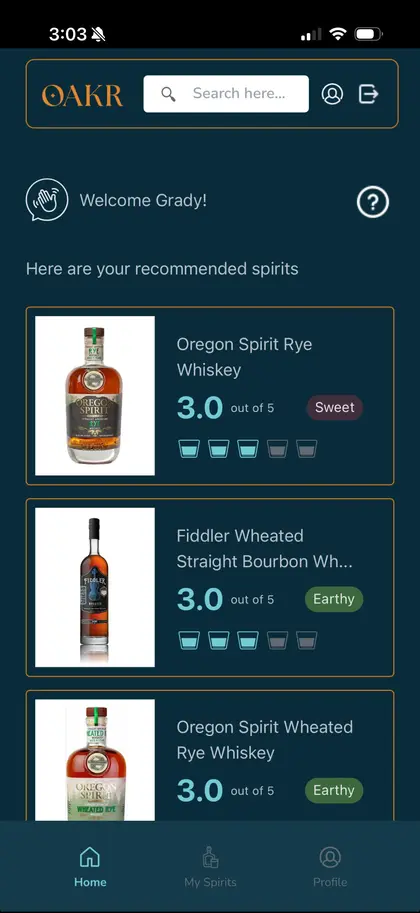
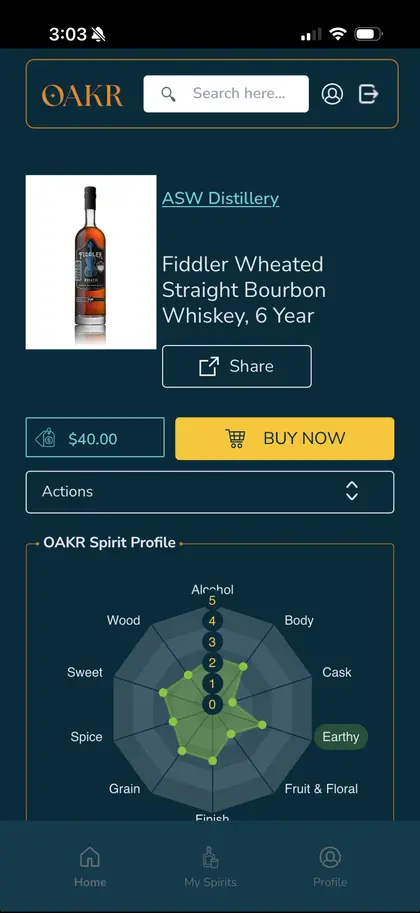
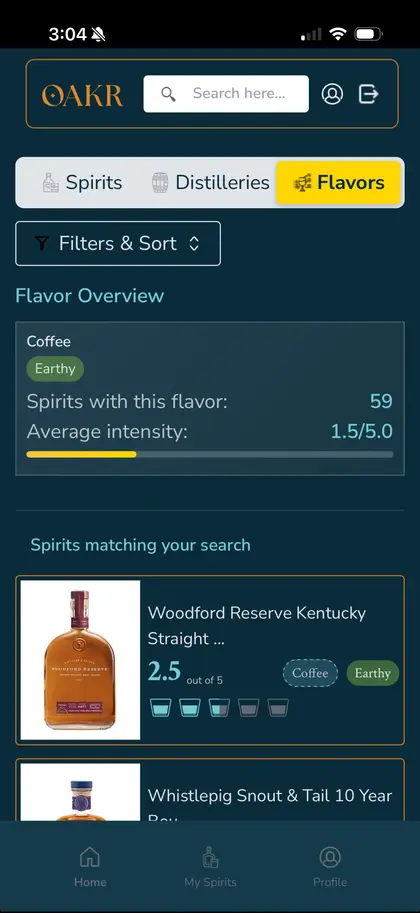
OAKR’s blind tasting panel evaluates both Bulleit expressions without knowing what is in the glass. The panel scores across 100+ flavor notes in 10 macro categories, capturing the high-rye bourbon spice and the 95% rye herbal character independently. Your Spirit Match score tells you whether your palate leans toward the bourbon’s corn-and-rye balance or the rye’s grain-forward intensity — before you choose the wrong bottle off the shelf.
[Download OAKR free on iOS, Android, or web →]

Bourbon enthusiast, spirits industry analyst, and the voice behind OAKR's distillery guides, brand reviews, and bourbon education content. Visiting distilleries, dissecting mashbills, and translating the craft into data since 2024.



Bulleit Bourbon and Bulleit Rye sit side by side at the same price. One is a spicy bourbon. The other is an entirely different spirit. OAKR’s blind tasting data and AI palate matching tell you which grain architecture your palate actually prefers — before you grab the wrong bottle.