
Seventy percent corn. Twenty-five percent rye. Five percent malt. Aged 36 months in Number 4 char, 53-gallon barrels. Double distilled. Bottled at 94 proof. That's the entire spec sheet for 8th Day Distillery's Straight Bourbon Whiskey — and the fact that they publish it without hesitation tells you everything about how this operation thinks. No secret recipes, no mythologized grain bills, no "our yeast strain has been in the family for seven generations." Just the numbers, printed plainly, because the founders believe execution matters more than mystique. Those numbers also explain why the bourbon tastes the way it does. A 25% rye charge is aggressive for a bourbon — high enough to push serious black pepper and baking spice through the corn sweetness without tipping the spirit into rye whiskey territory. The Number 4 char (alligator char) on full-size 53-gallon barrels pulls deep caramel and leather from the oak. And the double distillation refines the spirit enough to drink clean while keeping enough grain character to remind you this wasn't made in a column still the size of a grain elevator. This guide covers every angle of 8th Day — from the chemist who founded it to the urban warehouse where it ages — and tells you which bottles are worth your money.

8th Day Distillery operates inside the Circle City Industrial Complex at 1125 E. Brookside Avenue on the near east side of downtown Indianapolis. It’s an urban distillery in every sense: no rolling hills, no heritage rickhouse, no spring-fed creek. The facility sits in a revitalized industrial building that houses artists, makers, and small businesses — and a cocktail bar and bottle shop that opened in 2018.
Matt and Jaime Lamping founded 8th Day in 2015. Matt is a chemist and engineer by training who spent years in corporate America before deciding that making spirits was a better use of his analytical mind. The name “8th Day” reflects the idea that if there were one more day in the week, they’d spend it distilling. After five years of running the distillery alongside his corporate job, Matt went full-time in 2020.
The engineering background matters. Matt approaches distillation as a set of controllable variables — temperature, cut points, grain ratios, fermentation conditions — rather than as inherited tradition. The result is a production process built on measurement and consistency rather than feel and folklore. The distillery sources its grains from a farm in Lebanon, Indiana, keeping the supply chain local, and fills approximately 1,000 barrels per year.
The distillery started with gin and rum while waiting for whiskey to age — a common survival strategy for craft startups that need revenue before their bourbon is ready. But the whiskey program was always the goal, and once those first 53-gallon barrels hit 36 months, the bourbon and rye became the primary focus.
The tasting room at Circle City Industrial Complex has become a neighborhood fixture, hosting burlesque shows, pop-up events with local businesses, private dinners, and rotating artist displays alongside cocktail service and bottle sales. The distillery also produces canned cocktails and absinthe, reflecting a willingness to experiment across categories rather than running a single product on repeat.
Two grain bills anchor the whiskey lineup, and both are published transparently.
The Straight Bourbon Whiskey uses a 70% corn, 25% rye, and 5% malted barley mashbill. At 25% rye, this is firmly a high-rye bourbon. Most standard bourbons run 10-15% rye; 8th Day nearly doubles that. The corn provides the expected caramel and vanilla base, but the rye dominates the mid-palate — black pepper, baking spice, a citrus zestiness the distillery describes as orange marmalade. The malted barley handles enzymatic conversion and contributes a faint biscuit undertone without competing with the corn-rye interplay.
The Rye Whiskey runs 58% rye and 42% corn. At 58%, it barely clears the legal minimum for rye whiskey (51%), but that massive 42% corn content is deliberate. It bridges the gap between rye and bourbon — delivering the herbal, peppery character rye drinkers want while retaining enough corn sweetness that bourbon drinkers won’t recoil. The distillery calls it a rye for people who think they hate rye.
On yeast, 8th Day doesn’t publish their strain details but the flavor profile offers clues. Subtle fruit esters — the orange marmalade note in the bourbon, a stone-fruit character in certain batches — suggest a carefully selected strain rather than a generic commercial culture. Matt’s chemistry background points toward deliberate yeast management: controlled fermentation temperatures and timing designed to maximize specific ester production while keeping the spirit clean and grain-forward.
8th Day uses pot distillation, not continuous column stills. The distinction matters for texture and flavor. Column stills produce a lighter, cleaner spirit efficiently and at volume. Pot stills operate in batches — fill, heat, collect, clean, repeat — retaining more of the heavy oils and flavor compounds (congeners) from the grain. The result is a spirit with noticeable weight on the palate, a viscous mouthfeel that clings rather than disappears.
The Straight Bourbon is double distilled. The first run (the stripping run) separates the alcohol from water and solids, producing rough low wines. The second run is where the distiller’s skill shows: making precise cuts to isolate the hearts — the middle portion of the run that carries the most desirable flavors — from the heads (harsh volatiles) and tails (heavy, oily compounds). 8th Day’s approach is meticulous here, refining the spirit enough to drink cleanly while preserving the grain character that pot distillation is designed to retain.
The combination of a high-rye mashbill run through pot stills naturally amplifies the spice notes. Pot stills don’t strip out the heavier rye oils the way a column still would, which means you taste more of the grain’s inherent pepper and herbal character in the final product.
Matt’s engineering mindset shows in the consistency of the output. Despite being a craft operation making batch-by-batch spirits, the flavor profile across releases holds together — the result of precise measurement and controlled conditions rather than the happy-accident variability that defines some small distilleries.
Standard 53-gallon American oak barrels with Number 4 char for the Straight Bourbon. Full-size cooperage is a deliberate choice — smaller barrels (used by many craft startups to accelerate aging) tend to produce a “wood chip” flavor from excessive surface-area-to-volume ratios. At 53 gallons, the liquid-to-wood contact is slower and more balanced, producing a more integrated oak influence.
Number 4 char — alligator char — creates a thick carbon layer on the barrel’s interior. This layer filters sulfur compounds while the toasted wood beneath releases vanillins, tannins, and caramelized sugars. Heavy char on a pot-distilled, high-rye spirit is an aggressive combination that produces deep caramel, smoky leather, and toasted oak.
The Rye Whiskey goes into Number 5 char barrels — an even more intense burn that adds heavy charcoal filtration and emphasizes vanilla extraction to counterbalance the rye’s natural assertiveness. Number 5 char is uncommon; it signals a distillery that wants the barrel to work hard and fast.
Aging happens on-site in Indianapolis. The urban environment at Circle City Industrial Complex creates a distinct microclimate — concrete and steel surrounding the warehouse produce temperature dynamics different from a rural rickhouse in a Kentucky valley. Indianapolis weather swings between humid summers and freezing winters, forcing the spirit in and out of the wood aggressively. The result is a whiskey that extracts flavor faster than it would in a milder, more stable climate.
The Straight Bourbon ages a minimum of 36 months (three years). That’s young by Kentucky standards, but the heavy char, volatile Indiana climate, and full-size barrels produce a spirit that drinks with more weight and depth than the age statement suggests.
Matt Lamping runs the operation with an engineer’s precision. His background in chemistry means the production process is built on data — temperature logs, specific gravity readings, precise cut points — rather than intuition. He’s the co-founder, owner, and business integrator, managing everything from grain sourcing to barrel inventory to the cocktail bar menu. His path to distilling started during corporate business travel, when he spent free evenings visiting breweries and distilleries across the country. What began as hobbyist curiosity became an obsession with process — understanding why one distillery’s spirit tasted cleaner, heavier, or more grain-forward than another’s.
Phil joined in 2021 as Distiller and Barrel/Warehouse Manager, overseeing the day-to-day distillation runs and the maturation program. He monitors barrel inventory, makes cut decisions during distillation, and manages the physical work of moving and sampling barrels. He brings a detail-oriented, family-man sensibility to a job that requires both brute physical labor and nuanced sensory judgment. The team is small enough that both are hands-on in production daily.
Jaime Lamping, Matt’s wife and co-founder, manages the business and community side — the tasting room events, local partnerships, and the growing retail presence. The distillery’s tagline, “No Regrets,” reflects both the founders’ decision to leave corporate life and their approach to the product: make spirits you’re proud of, sell them at a fair price, and don’t hide behind manufactured stories. The brand is built on the idea of “Honestly Local” — local grains, local production, and a transparent relationship with the drinker about what’s in the bottle and how it got there.
Straight Bourbon Whiskey — 70/25/5 mashbill (corn/rye/malt). Double distilled. 36 months in Number 4 char, 53-gallon barrels. 94 proof. The flagship and the bottle to start with. Brown sugar, smoky leather, orange marmalade, and toasted oak. The 25% rye delivers a spice kick that cuts through the corn sweetness and keeps the finish interesting. Works neat, works in an Old Fashioned. Not a dessert bourbon — this one has edges.
Rye Whiskey — 58/42 mashbill (rye/corn). Aged at least 36 months in Number 5 char barrels. Bold, peppery, and dry, but the 42% corn provides a sweet backbone that keeps it accessible. Black pepper and vanilla up front, with a warm, lingering finish. A strong choice for Manhattans or anyone who wants rye character without the astringency of a 95% rye.
Navy Strength Gin — 115 proof. Genever-style, meaning it’s maltier and heavier than a London Dry. Finished with barrel oak for a savory, woody note that makes it the most bourbon-adjacent gin you’ll find. Not for the faint of heart at that proof, but a genuine crossover spirit for whiskey drinkers curious about gin.
Queens Share Rum — 119 proof, cask strength. Made by redistilling the tails (the heavy, oily end of the distillation run), which produces an exceptionally dense, flavorful rum. Barrel-aged. Complex, oily, and high-octane. This is a sipping rum you pour an ounce of and think about for an hour.
The broader lineup also includes standard gin, absinthe, and canned cocktails. Everything is distilled on-site in Indianapolis.
8th Day Distillery isn’t distributed nationally. You’ll find their bottles in Indianapolis-area liquor stores, bars, and restaurants, and at the tasting room in Circle City Industrial Complex. If you’re not local, you’re hunting — and that’s the kind of distillery OAKR is designed to help you discover.
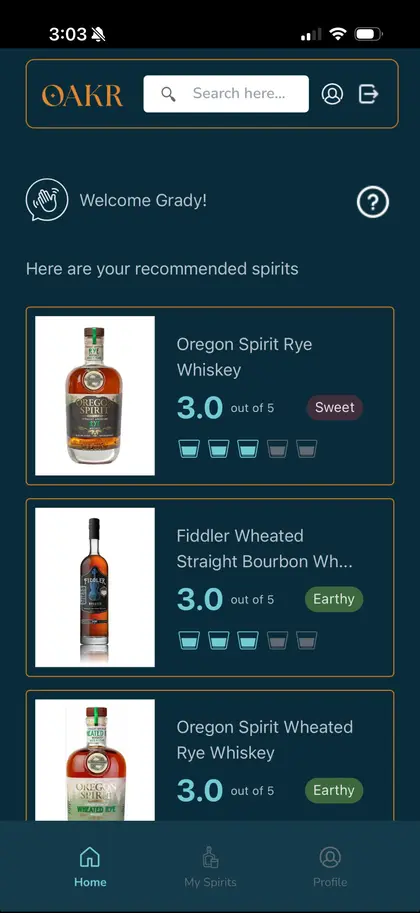
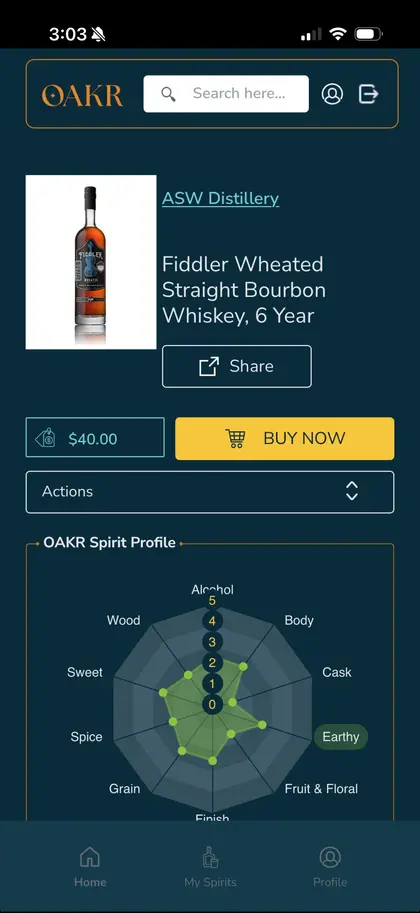
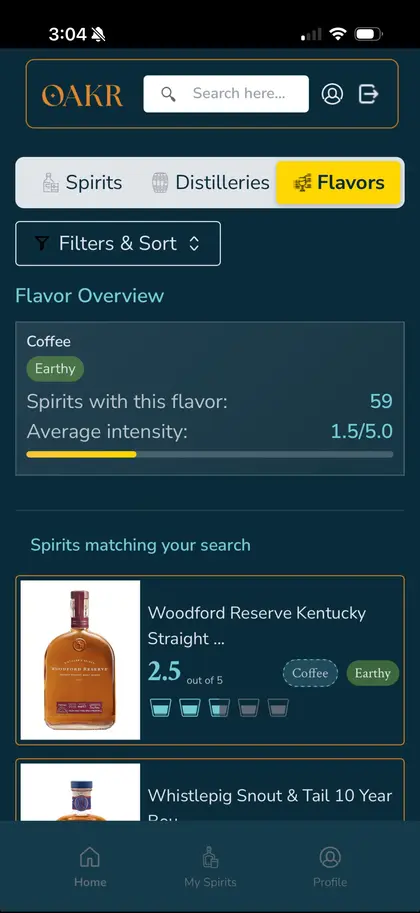
OAKR’s blind tasting panel scores every spirit without knowing the brand, the price, or the city of origin. The result is a flavor profile built on 100-plus individual notes across 10 macro categories — data, not marketing. When you look up an 8th Day expression, you see exactly where it falls on the spectrum: how much spice relative to sweetness, how the oak influence compares to other bourbons at the same price point, whether the high-rye character matches your preferences.
The Spirit Match score takes it further. OAKR’s AI palate profiling learns from every bottle you rate, building a map of what you actually enjoy. It can tell you whether 8th Day’s grain-forward, high-rye, pot-distilled profile is a fit — or whether you’d be happier elsewhere. That kind of information saves you from gambling on an unfamiliar bottle, especially one you may have to seek out.
If you’re a drinker who looks past the big brands and cares about what’s actually in the glass, OAKR’s discovery tools exist for exactly this moment.
[Download OAKR free on iOS, Android, or web →]

Bourbon enthusiast, spirits industry analyst, and the voice behind OAKR's distillery guides, brand reviews, and bourbon education content. Visiting distilleries, dissecting mashbills, and translating the craft into data since 2024.
8th Day’s high-rye, pot-distilled bourbon is built for drinkers who want edges, not sweetness. Find out if it matches your palate with OAKR’s AI-powered flavor profiling — 100+ tasting notes, zero guesswork.