
Barrell Craft Spirits does not distill a single drop of whiskey. They say so directly. Every barrel in their inventory is sourced from established distilleries — in Kentucky, Indiana, Tennessee, Wyoming, Canada, and elsewhere — shipped to their Louisville facility, and then blended, finished, and bottled. No column still. No pot still. No fermentation tanks. The product is the blending, and the blending is the product. This is not a secret they manage around. It is the business model. Joe Beatrice, a former marketing and technology entrepreneur, founded Barrell Craft Spirits in 2013 after a transformative experience tasting whiskey straight from a barrel. Instead of building a distillery, he questioned the conventional wisdom and took a different path: source exceptional casks from producers he trusted, blend them with the precision of a Scottish independent bottler, bottle everything at cask strength with no chill filtration, and print every detail — age, origin, mashbill, proof, batch number — on the label. The transparency was deliberate. In an industry where "small batch" can mean anything and age statements are disappearing, Barrell publishes the data. Batch 036, for example, listed that it combined barrels with black cherry and oak-forward profiles from multiple states, with specific age ranges and a 20% rye mashbill. You know exactly what you are buying. The model was inspired by Scotland's independent bottling tradition — companies like Gordon & MacPhail, Signatory, and Compass Box that do not distill but have built reputations entirely on barrel selection and blending expertise. In American whiskey, that approach was virtually nonexistent when Barrell launched. A decade later, Barrell has produced over 100 unique blends, won Double Gold at the San Francisco World Spirits Competition for Seagrass, earned a Chairman's Trophy at the Ultimate Spirits Challenge for Dovetail, and been ranked in Whisky Advocate's Top 20 multiple times. Forbes called them one of America's best non-distilling producers. The blending is the craft.

The most useful way to understand Barrell Craft Spirits is to compare two products that represent opposite ends of their approach.
Barrell Bourbon Batch releases (numbered sequentially — Batch 035, 036, 037, and counting) are straightforward cask-strength bourbon blends. Each batch combines barrels from different distilleries, states, and age ranges into a single expression. No finishing. No exotic casks. The bourbon is the statement. Every batch is different — different source barrels, different ages, different blend ratios — which means no two batches taste alike. The batch number is the only continuity. What holds the series together is the blending team’s palate: Chief Whiskey Scientist Tripp Stimson and Head Blender Nic Christiansen select and combine barrels to achieve a specific flavor architecture for each release. Proof varies by batch, typically 110-120. Prices run $70-90.
Barrell Seagrass takes the same sourced whiskey and applies a triple-cask finishing program that transforms the base material. Seagrass is a blend of American and Canadian rye whiskeys, with each component finished separately in three different cask types: Martinique rhum casks, Madeira casks, and apricot brandy casks. The components are then blended together. The result is a rye whiskey that tastes like an intersection of the Caribbean, Portugal, and Kentucky — tropical fruit from the rum casks, dried fruit and nuttiness from the Madeira, stone fruit from the apricot brandy, all layered on top of rye grain’s natural herbal spice. Bottled at cask strength, proof varies. The standard Seagrass runs about $80. The Grey Label (16-year rye) runs about $250. The Gold Label (20-year rye) runs $500.
The comparison reveals Barrell’s dual thesis: great bourbon can be made by blending alone (the Batch series), and blending combined with creative finishing can produce flavors that no single distillery can achieve on its own (Seagrass, Dovetail, Vantage, Armida).
Barrell Craft Spirits operates from Louisville, Kentucky. The facility handles blending, finishing, and bottling — not distillation. Barrels are sourced from distilleries across the United States and internationally, shipped to Louisville, and stored for additional aging, finishing, or immediate blending. The company’s relationships with source distilleries are cultivated over years and are central to the operation — access to high-quality aged barrels is Barrell’s most valuable asset.
Tripp Stimson, the Chief Whiskey Scientist, joined in 2017 after working in research and development at Brown-Forman, where he gained experience in fermentation, distillation science, and operations for Jack Daniel’s, Woodford Reserve, and Old Forester. He met Joe Beatrice at Kentucky Artisan Distillery. Nic Christiansen, the Head Blender, joined in 2019 after running a nationally recognized beverage program in Louisville. She has created over 100 unique blends and oversees the private barrel program.
Barrell’s blending process is laboratory-grade. Stimson and Christiansen evaluate individual barrels by nose and palate, then build blends by layering components — starting with a base profile (typically the oldest or most structured barrels), adding complexity (younger barrels with different flavor characteristics), and then fine-tuning with accent barrels that contribute specific notes. For finished expressions like Seagrass and Dovetail, individual components are finished in different cask types before blending, which means the blending team is combining not just different whiskeys but different finishing influences.
Everything is bottled at cask strength. This is non-negotiable across the entire Barrell lineup (except Foundation, their first 100-proof expression). No water is added at bottling. No chill filtration. The proof on the label is the proof in the barrel. This commitment means that every expression varies slightly in proof from batch to batch — Seagrass might be 130 proof in one release and 128 in the next. The variation is the point: it reflects what the barrels actually produced, not what a target proof demanded.
Barrell Bourbon (Batch Series) — Cask-strength blended bourbon, sequentially numbered. Each batch uses different source barrels from different states and age ranges. Proof varies, typically 110-120. SRP $70-90. No two batches are alike. The batch number is all that connects them. This is the purest expression of Barrell’s blending philosophy — bourbon as blending art.
Barrell Seagrass — Blend of American and Canadian rye whiskeys, each component finished separately in Martinique rhum, Madeira, and apricot brandy casks. Cask strength, proof varies. SRP ~$80. One of the most-searched finished whiskeys in America. Double Gold at San Francisco World Spirits Competition. Tropical, fruity, spicy, and unlike anything else on the rye shelf.
Barrell Dovetail — Blend of straight bourbon and rum cask-finished bourbon, with some of the blend additionally finished in Dunn Vineyards cabernet sauvignon barrels from Napa Valley and port barrels from Portugal. Cask strength. SRP ~$80. Chairman’s Trophy at the Ultimate Spirits Challenge. Dark fruit, chocolate, wine tannins layered on bourbon sweetness.
Barrell Vantage — Blend of straight bourbons finished in three types of virgin oak: Mizunara (Japanese), French, and toasted American. Cask strength. SRP ~$80. The three oak types each contribute different flavors — sandalwood and incense from the Mizunara, fine-grained spice from the French, and additional caramel and vanilla from the American.
Barrell Foundation — 100 proof. The first non-cask-strength Barrell expression. A blended bourbon designed for accessibility and versatility — drinkable neat, on ice, or in cocktails. SRP ~$40. The same blending expertise applied to an approachable price and proof point.
BCS Grey Label Series — Extra-aged versions of Seagrass, Dovetail, and Bourbon, with components aged up to 16 years. Cask strength. SRP $160-250. The Grey Label represents the team’s work with older, rarer barrels.
BCS Gold Label Series — Ultra-aged expressions with components up to 20 years old. The Gold Label Seagrass — 20-year Canadian rye finished in Martinique rhum, Malmsey Madeira, and apricot brandy — is the apex of the entire portfolio. Cask strength, 128.12 proof. SRP $500.
New Year Bourbon — Annual special blend released each fall, celebrating the coming year. Blends change annually.
Barrell Bourbon Mizunara Finish — Bourbon finished 1.5 years in rare Mizunara Japanese oak casks. A blend of Kentucky, Indiana, and Tennessee bourbon aged 6 to 14 years. Extremely limited.
Barrell’s model means that the product lineup is never static. Every numbered batch is a new blend. Every Seagrass release has subtle proof variations. Every Grey Label and Gold Label is a one-time expression. For a whiskey drinker who gravitates toward exploration — who wants to try something different every time — Barrell’s approach is designed for exactly that. But “different every time” also means that finding your preferred expression requires knowing whether your palate leans toward the straightforward bourbon batches, the triple-finished rye of Seagrass, or the wine-cask complexity of Dovetail.
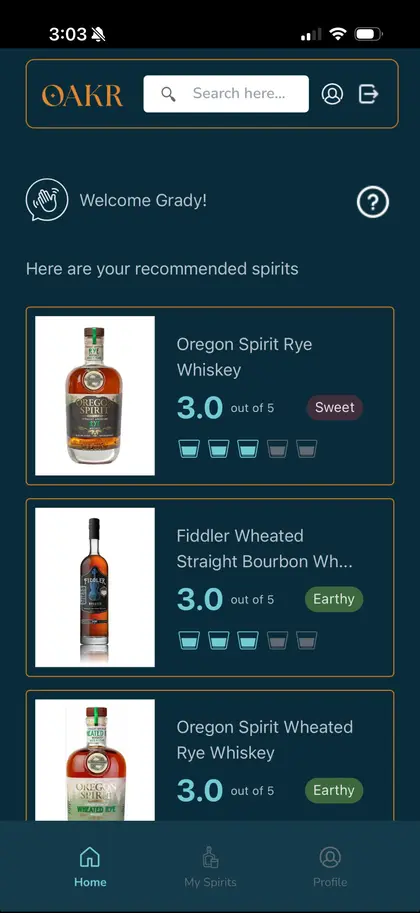
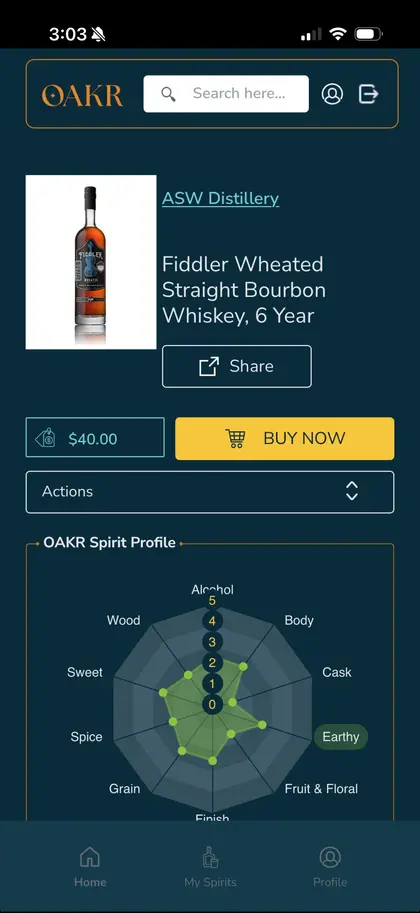
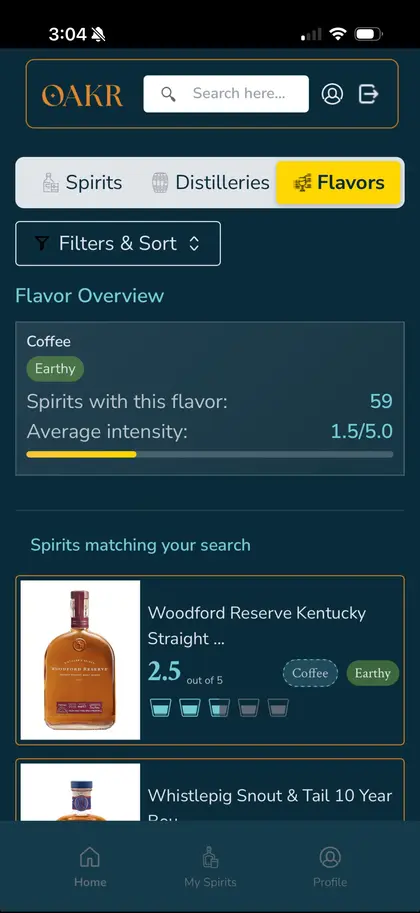
OAKR’s blind tasting panel evaluates Barrell’s expressions without knowing what is in the glass. The panel scores across 100+ flavor notes in 10 macro categories, capturing the bourbon batch profiles, the triple-finished rye character of Seagrass, and the wine-cask influence of Dovetail independently. Explore Barrell Craft Spirits on OAKR to find your Spirit Match score and see which corner of the ever-expanding portfolio aligns with what your palate prefers — before you commit to a specific batch, a specific finish, or a specific price tier.
[Download OAKR free on iOS, Android, or web →]

Bourbon enthusiast, spirits industry analyst, and the voice behind OAKR's distillery guides, brand reviews, and bourbon education content. Visiting distilleries, dissecting mashbills, and translating the craft into data since 2024.
With a new batch dropping constantly, navigating Barrell’s lineup takes data. OAKR’s AI palate profiling maps your taste preferences and matches you to the right expression — whether it’s a bourbon batch, Seagrass, or Dovetail.