
Woodford Reserve triple-distills its bourbon in copper pot stills. This is not how bourbon is supposed to be made. Nearly every bourbon producer in America runs a column still — a tall, continuous apparatus that strips alcohol from fermented grain efficiently and at volume. Some add a pot-still doubler for the second pass. Nobody triple-distills in pot stills. The technique comes from Irish whiskey, where triple distillation produces a lighter, fruitier, more refined spirit than the heavier double-distilled Scottish method. Brown-Forman’s decision to install Scottish-made Forsyths copper pot stills at the Versailles, Kentucky, distillery and run them in an Irish triple-distillation process was a conscious choice to sacrifice throughput for flavor. The result is a bourbon with more fruity esters, more copper contact, and a cleaner spirit than column-still bourbon can achieve — which is exactly why Woodford Reserve tastes different from virtually everything else on the shelf.

The distillery sits on Glenn’s Creek in Versailles, Woodford County, Kentucky — a site where distilling has been documented since 1812, when Elijah Pepper built a farm distillery in a log cabin on the creek bank. His son Oscar Pepper upgraded the operation in 1838 and hired Dr. James C. Crow, a Scottish chemist credited with introducing sour mash fermentation and the systematic use of charred oak barrels to bourbon production. Those two innovations, sour mash and barrel cha, became the foundation of the entire bourbon industry. They were developed at what is now the Woodford Reserve Distillery. The site was designated a National Historic Landmark in 2000.
The distillery is located at 7855 McCracken Pike in Versailles, approximately an hour east of Louisville and midway between Frankfort and Lexington. The property sits on a limestone shelf that provides naturally filtered spring water from Glenn’s Creek — iron-free, mineral-rich water that is critical to both fermentation and proofing.
The facility changed hands multiple times. Leopold Labrot and James Graham purchased the distillery in 1878. Brown-Forman acquired it in 1940, operated it until 1968, then sold the property to a neighboring farmer in 1971 as bourbon demand collapsed. Brown-Forman repurchased the site in 1994 and invested $10 million to renovate and reconstruct the distillery. Woodford Reserve bourbon launched in 1996. The Labrot & Graham name was retired in 2003 — though the faded L&G initials are still visible on the three black smokestacks above the stillhouse.
In 2021, Brown-Forman announced a major expansion, doubling distillation capacity by adding three new Forsyths copper pot stills to the existing three. The original distillery building was designed with six concrete pads for stills but had only been fitted with three since 1996. Twenty-five years later, the remaining pads finally hold copper. The expansion also added fermentation tanks, a new boiler plant, and barrel storage.
The bourbon mashbill is 72% corn, 18% rye, and 10% malted barley. This is a high-rye recipe — the 18% rye content delivers more spice and complexity than the standard 8-12% rye that most bourbon producers use. Woodford Reserve also produces a straight rye whiskey (53% rye, 33% corn, 14% malted barley), a straight malt whiskey (51% malted barley, 33% corn, 16% rye), and a wheat whiskey.
The grain is milled on-site and combined with limestone-filtered spring water in cypress wood fermentation vats — the same type of century-old vessels that many Kentucky distilleries use. Each vat holds 7,500 gallons. The smaller vat size matters: heat dissipates faster from smaller fermenters, keeping temperatures lower and allowing a slower fermentation that produces more esters — the fruity, floral compounds that show up as complexity in the finished bourbon.
The yeast is a proprietary strain designated 72B, developed specifically for Woodford Reserve. It drives a slow fermentation lasting approximately six days — significantly longer than the three-to-four-day fermentation at most bourbon distilleries. The extended fermentation time allows the yeast to produce a broader range of flavor compounds before the mash is distilled.
The stillhouse contains six Forsyths copper pot stills imported from Rothes, Scotland. The triple-distillation process works in three stages. The first distillation — the beer still — takes the fermented mash (solids included, unlike Scottish practice) and produces a low-proof spirit called “low wines.” The second distillation — the high wine still — redistills the liquid only, concentrating the alcohol and refining the flavor. The third distillation — the spirit still — redistills once more, producing a final spirit at approximately 158 proof (79% ABV).
Each still includes a reflux bowl — a bulge in the copper neck that forces some of the rising vapor to condense and fall back into the pot for redistillation. This increases copper contact, which removes sulfur compounds and produces a cleaner, fruitier spirit. The three-pass process combined with the reflux bowls gives Woodford Reserve more copper interaction than virtually any other bourbon on the market.
However — and this is a detail most coverage omits — the bourbon in the standard Distiller’s Select bottle is a blend of pot-still distillate and column-still distillate. Brown-Forman also produces bourbon at its main production facility in Louisville (the Brown-Forman Distillery on Dixie Highway, formerly known as the Early Times Distillery). Column-still bourbon from that facility is blended with the pot-still bourbon from Versailles to create the final Woodford Reserve product. The pot stills provide the fruity complexity and oily texture; the column still provides the cleaner, lighter backbone. The ratio is not publicly disclosed, but the pot-still character is what distinguishes Woodford Reserve from other Brown-Forman brands like Old Forester, which is entirely column-distilled.
Master Distiller Chris Morris, who joined Brown-Forman in 1976 and oversaw Woodford Reserve since its 1996 launch, organized the production philosophy around what he calls the “Five Sources of Flavor”: grain, water, fermentation, distillation, and maturation. Each source is treated as an independent variable that can be manipulated. The Master’s Collection limited releases are designed as controlled experiments — changing one variable at a time (different grain, different wood, different fermentation) to demonstrate its impact on flavor.
Elizabeth McCall succeeded Morris as Master Distiller in February 2023, with Morris moving to Master Distiller Emeritus. McCall had been with Brown-Forman since 2009 and served as Assistant Master Distiller before her appointment. She is one of a small number of women serving as Master Distiller at a major American whiskey operation.
Brown-Forman owns its own cooperage in Louisville — one of only two major bourbon companies to manufacture its own barrels. The staves are seasoned outdoors for nine months before assembly, the same extended weathering process used for Maker’s Mark (also a former Brown-Forman cooperage client, though Maker’s Mark now sources from Independent Stave Company). The seasoning removes bitter tannins that would otherwise dominate the finished bourbon.
The aging warehouses at the Versailles distillery are stone and brick rickhouses — not the metal-clad industrial buildings used by many large producers. More importantly, Woodford Reserve operates one of the few heat-cycled barrelhouses in Kentucky. Steam pipes run through the rickhouses to artificially manipulate temperature during the aging process, accelerating the expansion and contraction of bourbon in the barrel staves. Colonel E.H. Taylor Jr. is credited with inventing this technique in the 19th century. Most Kentucky distilleries abandoned it. Woodford Reserve did not.
The Double Oaked expression — one of the most searched finished bourbons in America — ages the standard bourbon for five to seven years in its first barrel, then transfers it to a second new American oak barrel that has been heavily toasted (40 minutes, four times longer than standard) but lightly charred (5 seconds, one-fifth of standard). The longer toasting breaks down more lignin in the wood, releasing sweeter flavor compounds. The lighter char avoids the bitter, smoky notes that heavy charring can produce. The bourbon spends approximately one year in this second barrel. The Double Double Oaked expression extends the second-barrel finish to approximately two years.
Elizabeth McCall is the current Master Distiller. Chris Morris, who created the brand and built its production philosophy over 27 years, serves as Master Distiller Emeritus. The “Five Sources of Flavor” framework that Morris established is now the organizing principle for the entire product lineup — each limited release isolates one source and explores what happens when you change it.
Woodford Reserve Distiller’s Select — 72/18/10 mashbill, 90.4 proof, blend of pot-still and column-still distillate. The flagship. Dried fruit, vanilla, toasted oak, baking spice, chocolate, and a rich mouthfeel from the pot-still component. The Official Bourbon of the Kentucky Derby. Typically $35–40. This is one of the most versatile bourbons on the market — it works neat, on ice, or in cocktails without losing its identity.
Woodford Reserve Double Oaked — Same base bourbon, finished approximately one year in a second heavily toasted, lightly charred barrel. 90.4 proof. Dark chocolate, burnt sugar, dark fruit, roasted coffee, and a thicker mouthfeel than the standard. Typically $50–55. This is the expression that drives the most search traffic — “Woodford Reserve Double Oaked” is one of the highest-volume bourbon search queries in America. The second barrel amplifies sweetness and body dramatically.
Woodford Reserve Rye — 53/33/14 rye-forward mashbill, 90.4 proof. Peppery, spicy, with clove, cinnamon, tobacco, and a long fruity finish. The rye character is assertive but balanced by the corn sweetness.
Woodford Reserve Straight Malt Whiskey — 51% malted barley, 33% corn, 16% rye. 90.4 proof. A distinctly different animal from the bourbon — rich, malty, chocolatey, with a heavier body. One of a small number of American malt whiskeys from a major producer.
Woodford Reserve Wheat Whiskey — 52% wheat, 20% malted barley, 20% corn, 8% rye. Soft, sweet, floral — the wheat grain dominates entirely.
Woodford Reserve Batch Proof — Annual limited release. Cask strength, proof varies by year. The standard Distiller’s Select without dilution. More intense across every dimension.
Double Double Oaked — The Distillery Series expression that extends the Double Oaked finish to approximately two years in the second barrel. 90.4 proof. SRP $200. Maple syrup, dark butterscotch, bittersweet chocolate, burnt marshmallow. The most expensive core-adjacent release. Extremely limited — lines form at the distillery on release day.
Master’s Collection — Annual experimental releases. Each isolates one of the Five Sources of Flavor. The 2025 release, Sweet Oak Bourbon, uses Chinkapin oak (a species rarely used in bourbon) and was bottled at 110.4 proof. Previous releases have explored chocolate malt, cherry wood smoke, oat grain, and other variables. These are where the distillery’s R&D work is most visible.
Chocolate Whisper Redux — Limited 2025 release. 139.4 proof — the highest proof bourbon Woodford Reserve has ever released. A chocolate malt barley-driven expression.
Bourbon, rye, malt whiskey, wheat whiskey, Double Oaked, Chinkapin oak finish, chocolate malt. The Woodford Reserve portfolio is not a line of products — it is a systematic exploration of how changing one production variable changes everything in the glass. The Distiller’s Select and the Double Oaked are different bourbons. The rye and the malt whiskey are different categories. The Master’s Collection releases are different experiments. Choosing among them is not a quality question. It is a question of which combination of grain, wood, and distillation your palate responds to most strongly.
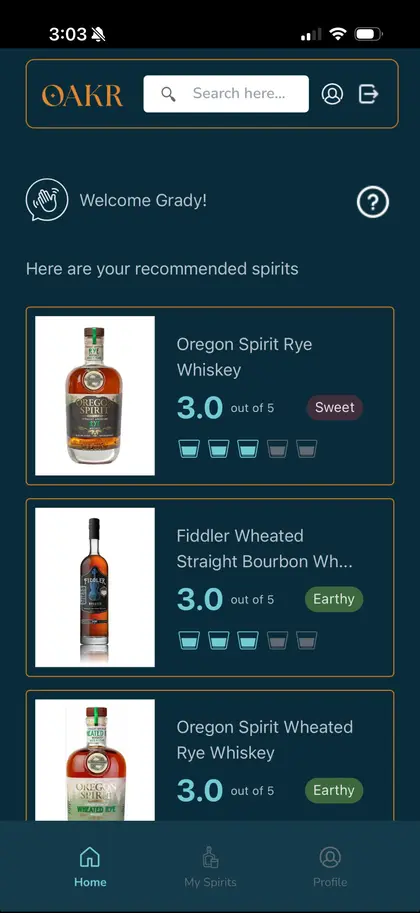
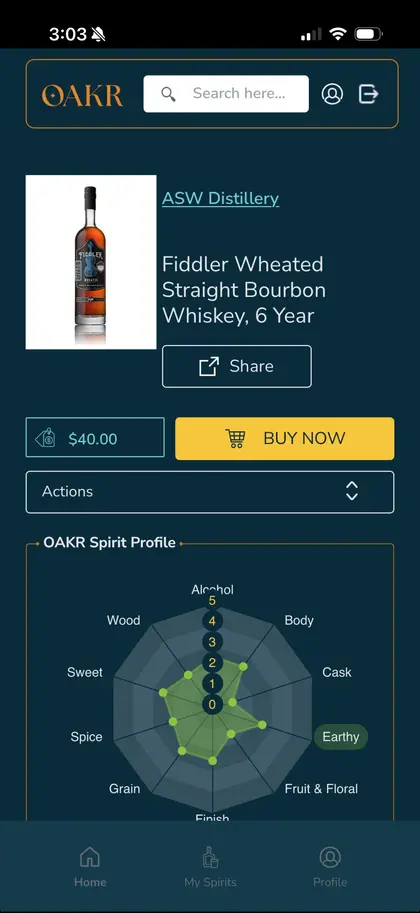
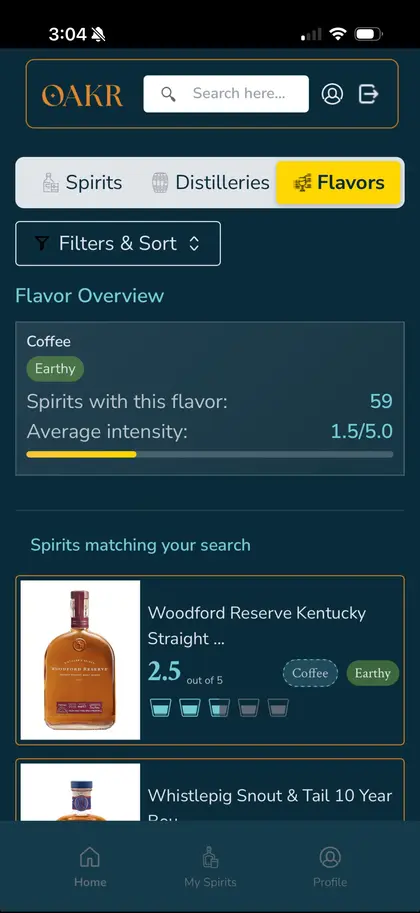
OAKR’s blind tasting panel evaluates every Woodford Reserve expression without knowing what is in the glass. The panel scores across 100+ flavor notes in 10 macro categories, which means the pot-still fruitiness of the standard bourbon, the heavy-toast sweetness of the Double Oaked, and the malt-driven chocolate of the Malt Whiskey are all captured in the same data framework. Your Spirit Match score tells you which end of the Woodford Reserve lineup your palate actually prefers — and for a portfolio this wide, that data saves you from buying the wrong bottle in a lineup of good ones.
[Download OAKR free on iOS, Android, or web →]

Bourbon enthusiast, spirits industry analyst, and the voice behind OAKR's distillery guides, brand reviews, and bourbon education content. Visiting distilleries, dissecting mashbills, and translating the craft into data since 2024.
Bourbon, Double Oaked, rye, malt whiskey, wheat whiskey — Woodford Reserve isn’t a lineup, it’s a flavor laboratory. OAKR’s blind tasting panel scores every expression independently so your Spirit Match tells you exactly which experiment your palate responds to.