
Uncle Nearest 1856 Premium Aged Whiskey sits on the shelf at about $55-60. It is 100 proof. It is a blend of Tennessee whiskeys aged eight to fourteen years. The name references 1856 — the year Nathan "Nearest" Green is believed to have perfected the Lincoln County Process, the sugar maple charcoal filtering method that defines Tennessee whiskey and distinguishes it legally from bourbon. Green, an enslaved man, taught a young neighbor named Jasper "Jack" Daniel everything he knew about making whiskey. When Daniel opened his own distillery, he made Green — now a free man after the Civil War — his first master distiller. Green's contribution to American whiskey was largely uncredited for over a century. The 1856 bottle carries his name, his year, and his process. Whether the whiskey inside justifies $55 is a production question. Whether the story behind it matters is a historical question. Both deserve honest answers.

The brand was founded in 2017 by author and entrepreneur Fawn Weaver after a 2016 New York Times article revealed that Jack Daniel’s had begun acknowledging Green’s role in teaching Daniel to distill. Weaver launched a twelve-month research project involving more than 20 historians, archivists, archaeologists, and genealogists to document Green’s full story. She then built a whiskey company around it, raising $40 million from investors and opening the Nearest Green Distillery in Shelbyville, Tennessee, in September 2019 — the first distillery in the United States named after a Black person. By 2021, Uncle Nearest was the fastest-growing American whiskey brand and the most awarded American whiskey or bourbon for three consecutive years.
In 2025, the company entered financial distress. After defaulting on over $100 million in loans, a federal court placed Uncle Nearest in receivership. The legal and financial situation remains in flux. The whiskey, however, continues to be produced, distributed, and sold.
The Nearest Green Distillery occupies a 323-acre historic Tennessee Walking Horse farm at 3125 Highway 231 North in Shelbyville, Tennessee, approximately 60 miles south of Nashville. The campus includes a welcome center, a bottling house where every bottle is hand-labeled, tasting rooms, a working horse and cattle farm, and the Humble Baron — a 202-seat entertainment venue featuring a 518-foot horseshoe bar that Guinness World Records certified as the longest in the world.
The distillery operates in phases. Phase 1, opened in 2019, included the welcome house, bottling house, and tasting facilities. The Still House — the on-site production facility — was planned as part of a subsequent phase. Uncle Nearest built its brand on sourcing: identifying exceptional Tennessee whiskeys from other distilleries and applying its own post-aging processes to create the final products. The sourcing partners have not been officially disclosed, though industry observers have noted similarities to products from George Dickel’s Cascade Hollow operation.
Uncle Nearest’s mashbill uses approximately 90% corn with rye and malted corn, all sourced from Tennessee farms. The specific ratios are not published for all expressions.
The defining production technique is the Lincoln County Process — the charcoal filtering step that makes Tennessee whiskey legally distinct from bourbon. Before aging, new make spirit is dripped slowly through a tall column of sugar maple charcoal. The charcoal removes harsh congeners and adds a subtle smoothness and sweetness. The process was developed and refined by enslaved distillers in Tennessee, and Nathan Green is credited with perfecting it in the mid-1800s. This is not a marketing claim — it is the documented historical basis for the brand’s existence.
Uncle Nearest applies a double filtration process. After the whiskey has been aged, it undergoes a second charcoal filtering before bottling. This post-aging filtration further refines the whiskey’s texture, removing any remaining harshness that the aging process may not have addressed. The company also uses non-temperature-controlled aging — the warehouses are not climate-managed, allowing Tennessee’s seasonal temperature extremes to drive natural barrel interaction without artificial heat cycling.
Uncle Nearest ages its whiskey in new charred American oak barrels. The aging program spans a wide range: the 1884 Small Batch uses whiskey aged a minimum of seven years. The 1856 Premium blends whiskeys aged eight to fourteen years. The 1820 Single Barrel uses whiskey aged a minimum of eleven years. The extended aging for the core expressions is a deliberate choice — Uncle Nearest positions itself in the aged Tennessee whiskey category, where time in barrel is the primary differentiator.
The non-temperature-controlled warehouses allow Tennessee’s hot summers and cool winters to drive natural expansion and contraction cycles. The resulting whiskey tends toward rich, full-bodied profiles with pronounced oak, caramel, and spice — tempered by the smoothness that the double Lincoln County Process charcoal filtration provides.
Victoria Eady Butler is the Master Blender — and she is Nathan “Nearest” Green’s great-great-granddaughter. Her appointment carries both symbolic and practical weight. She was named Master Blender of the Year by Whisky Magazine, VinePair, and The Spirits Business in 2021, and became the first person to win the Whisky Magazine honor in consecutive years in 2022. She is the first known African-American female whiskey master blender.
Eady Butler’s role is blending and barrel selection — choosing which aged whiskeys from the sourced inventory meet the target flavor profiles for each expression. In a sourcing model, the blender’s palate is the primary quality control tool. Every barrel decision — which to include, which to hold, which to reject — flows through her assessment.
Fawn Weaver, the founder and CEO, built the brand, the distillery campus, and the cultural narrative. Regardless of the company’s financial challenges, the historical research and community investment she drove — including the Nearest Green Foundation, the Nearest & Jack Advancement Initiative with Jack Daniel’s, and the $50 million Uncle Nearest Venture Fund for minority-owned spirits brands — represent a material contribution to the American whiskey industry’s reckoning with its own history.
Uncle Nearest 1884 Small Batch — 93 proof. Aged a minimum of seven years. The entry point. Named for the estimated year of Nearest Green’s last batch of whiskey. Caramel, vanilla, light maple sweetness, gentle oak, and the characteristic smoothness from the Lincoln County Process charcoal filtration. Typically $40-45. Approachable, easy-drinking, and a good introduction to the brand.
Uncle Nearest 1856 Premium Aged Whiskey — 100 proof. A blend of whiskeys aged eight to fourteen years. Named for the year Green perfected the Lincoln County Process. The flagship. Richer and deeper than the 1884 — molasses sweetness, earthy charcoal, nutmeg, grass, and maple, with a longer finish and more barrel influence from the extended aging. Typically $55-60. The higher proof gives it enough structure to stand up neat without overwhelming the palate.
Uncle Nearest 1820 Single Barrel — 110 proof. Aged a minimum of eleven years. Named for the estimated year of Nearest Green’s birth. Individual barrel selection by Victoria Eady Butler. Each bottle varies. The oldest, most intense expression in the core lineup. Deeper oak, darker fruit, more pronounced spice, with the charcoal-mellowed smoothness that defines the house style. Typically $100-120. Limited availability.
Uncle Nearest Master Blend Edition — Ultra-premium blend. Victoria Eady Butler’s personal selection of exceptional barrels. Limited release. Proof and age vary by edition. This is the expression where Butler’s blending palate is most visible.
The Lincoln County Process is the line that separates Tennessee whiskey from bourbon. The charcoal filtration adds a smoothness and subtle maple-charcoal character that bourbon — which skips this step — does not have. Some drinkers taste the charcoal filtration as a defining positive: a mellow, gentle quality that makes the whiskey more approachable. Other drinkers taste it as a subtraction: the filtration removes some of the rough, bold, grainy character that they prefer in bourbon. Neither perception is wrong. They are different palates responding to the same production decision.
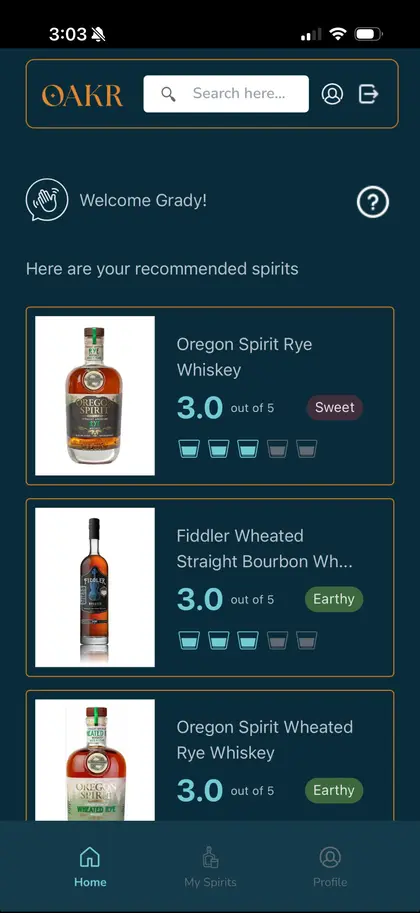
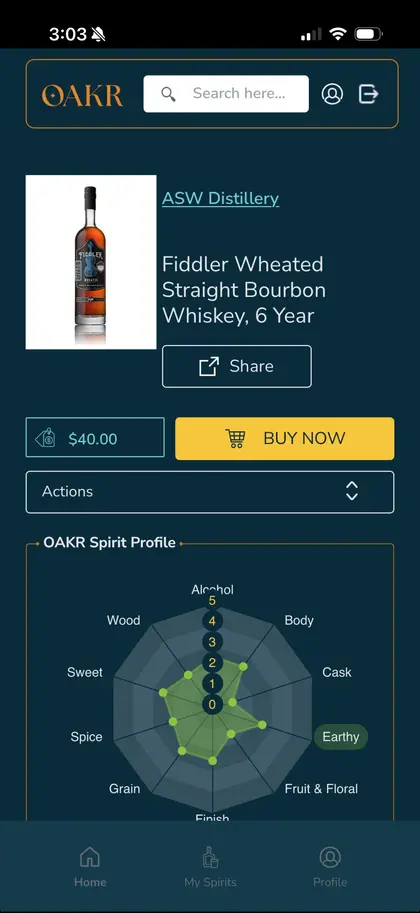
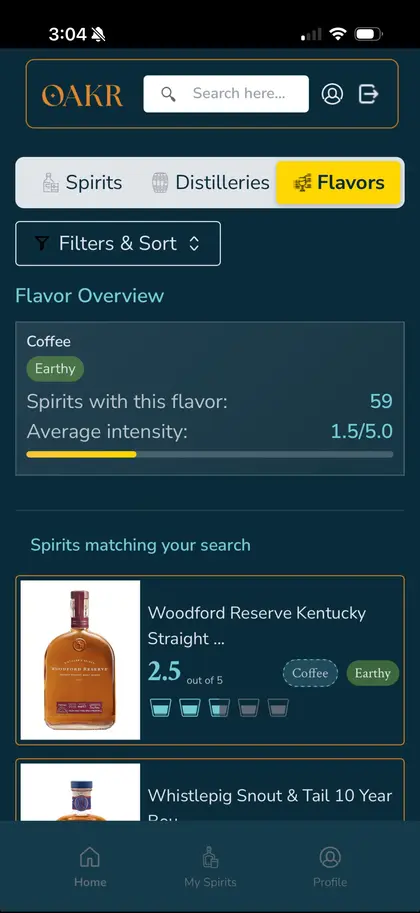
OAKR’s blind tasting panel evaluates Uncle Nearest’s expressions without knowing what is in the glass. The panel scores across 100+ flavor notes in 10 macro categories, capturing both the charcoal-filtered smoothness and the barrel-aged depth independently. Explore Uncle Nearest on OAKR to find your Spirit Match score — it tells you whether the Tennessee whiskey profile aligns with what your palate actually prefers. That is not a question the label can answer. It is a question your palate answers, and the data captures.
[Download OAKR free on iOS, Android, or web →]

Bourbon enthusiast, spirits industry analyst, and the voice behind OAKR's distillery guides, brand reviews, and bourbon education content. Visiting distilleries, dissecting mashbills, and translating the craft into data since 2024.
The Lincoln County Process creates a flavor profile unlike bourbon. Find out if it’s your style — OAKR’s blind tasting data and AI matching cut through the guesswork.