
Clyde May went to federal prison for eight months in 1973 for making whiskey. The recipe his son legalized in 2001 is the same one that put him there. That's the origin story of Conecuh Ridge Distillery and the Clyde May's brand — not a marketing fable about a recipe found in an attic, but a real criminal conviction, a real recipe, and a real family decision to take something illegal and turn it into Alabama's official State Spirit. The Alabama Legislature made that designation in 2004, three years after Kenny May began selling his father's whiskey legally. The governor vetoed the resolution. The House and Senate overrode the veto. Clyde May's whiskey is the only spirit in the country with that particular legislative pedigree. Understanding what's in the bottle requires understanding the man who made it, the specific production choice that defines the brand, and the complicated modern reality of a whiskey that's now distilled in Kentucky and owned by a New York holding company but still finished and bottled in Alabama. None of that is hidden. All of it matters.
Understanding what’s in the bottle requires understanding the man who made it, the specific production choice that defines the brand, and the complicated modern reality of a whiskey that’s now distilled in Kentucky and owned by a New York holding company but still finished and bottled in Alabama. None of that is hidden. All of it matters.
Lewis Clyde May was a Bullock County, Alabama farmer and a decorated World War II veteran. He was also, for most of his adult life, a moonshiner operating illegal stills in the woods around Conecuh Ridge in south-central Alabama. This wasn’t a hobby. It was a business, and Clyde ran it with a perfectionist’s attention to detail that his neighbors and customers recognized even at the time.
What separated Clyde’s whiskey from typical Alabama moonshine was a specific finishing technique: he placed oven-dried apple slices into the aging barrels. The apples didn’t make the whiskey taste like apple juice — they contributed a subtle baked-fruit sweetness and a smoother finish that became Clyde’s signature. He called the result his “Christmas Whiskey,” because the best batches were reserved for friends and family during the holidays.
Clyde’s operation eventually caught the attention of federal authorities. He served eight months at Maxwell Air Force Base federal prison in 1973. According to the historical record, he shared prison time with Attorney General John Mitchell, who was convicted the following year on Watergate charges. When Clyde got out, he set up a new still. He never stopped making whiskey until he died in 1990.
Clyde’s son Kenny May spent the decade after his father’s death working to legalize the recipe. The challenge was considerable — Alabama didn’t legalize distillation of spirits until 2013, so Kenny had to produce the whiskey elsewhere. The first legal production run of Conecuh Ridge whiskey was distilled in Bardstown, Kentucky by Kentucky Bourbon Distillers, Ltd., using Alabama spring water hauled up from Conecuh Ridge. Four thousand bottles came off that first run in 2002.
The brand built momentum quickly. The Alabama Legislature designated Conecuh Ridge as the official State Spirit of Alabama in 2004 — a designation that survived the governor’s veto. Kenny expanded distribution, but the path wasn’t clean: he was later charged with Alabama liquor law violations, pleaded guilty, and lost control of the company. He died in 2016.
The brand is now owned by Conecuh Brands, a holding company headquartered in Garden City, New York, led by chairman James Ammeen. Clyde’s grandson, L.C. May, joined the company as National Brand Ambassador in 2017, keeping the family connection alive in a public-facing role. The company announced plans to build a distillery in Troy, Alabama — about 20 miles from where Clyde originally made his whiskey — though production continues to be centered in Kentucky.
The signature product — Clyde May’s Alabama Style Whiskey — uses Clyde’s original finishing technique: oven-dried apple slices placed into the barrel during aging. The apples interact with the whiskey over time, contributing baked-fruit sweetness, a hint of cinnamon, and a smoother mouthfeel than the base spirit would have on its own.
This is a real production decision with a real consequence: because the apple constitutes an added flavoring, the TTB classifies Alabama Style as a “distilled spirit specialty” rather than a “straight bourbon whiskey.” It’s bourbon-based whiskey finished with apple, not apple-flavored bourbon. The distinction matters legally but less so in the glass — the apple influence is subtle enough that many drinkers don’t identify it as apple until they’re told what it is. It reads more as baked fruit and warm spice than as a distinct apple flavor.
The technique itself is genuinely historical. Appalachian and Deep South moonshiners commonly added dried fruit to their barrels or jars to mellow the spirit and add complexity. Clyde didn’t invent the practice, but he refined it to a specific, repeatable result that became his calling card. The legal version replicates that result using the same method.
Conecuh Ridge’s current production is centered on sourced whiskey — distilled in Bardstown, Kentucky, then finished and bottled in Alabama. This isn’t unusual for a brand at this scale, and it’s been the model since Kenny May’s first production run. What matters is what they select and how they finish it.
The flagship bourbon uses a traditional mashbill — corn-dominant with rye and malted barley providing spice and enzyme activity. The exact percentages aren’t published, but the profile reads as a classic American bourbon: caramel and vanilla from the corn and barrel, with enough rye spice to keep the sweetness from going flat. It’s typically aged four to five years and bottled at 92 proof. The sourcing from Kentucky means the base whiskey benefits from Kentucky’s limestone water and established distilling infrastructure.
The Alabama Style starts from a reported high-rye mashbill — 55% corn, 30% rye, 15% malted barley — which gives the base spirit a spicier backbone than the Straight Bourbon. The apple finishing then layers baked-fruit sweetness on top of that spice, creating a push-pull between the rye’s heat and the apple’s softness. The combination is what makes Alabama Style genuinely unique in the American whiskey landscape — it’s not a flavored whiskey in the modern sense, and it’s not a straight bourbon. It’s its own category, built on a specific historical practice.
The age-stated expression, bottled at 100.6 proof — a number that reportedly references one of Clyde’s old moonshining aliases. The extra year of aging and the higher proof both contribute to more complexity than the standard Straight Bourbon: toasted nuts, mint, richer toffee notes, and a longer finish. This is the bottle that shows what the sourced whiskey can do when it gets more time in wood and isn’t proofed down to be approachable.
Periodic batch releases, typically aged 8-12 years, bottled straight from the barrel at proofs north of 115. These are the most concentrated expressions of the sourced whiskey — dark chocolate, leather, dark fruit, heavy oak — and the most expensive. Limited availability, high proof, not for beginners.
Conecuh Ridge sources its whiskey from Kentucky. This has been true since 2002 and is not hidden. The Troy, Alabama distillery has been announced but production capacity there is still developing. When you buy a bottle of Clyde May’s today, you’re buying Kentucky-distilled whiskey that’s been selected, finished (in the case of Alabama Style), and bottled under the Conecuh Ridge banner.
Whether that bothers you depends on what you’re buying the bottle for. If you want whiskey distilled and aged entirely in Alabama, Conecuh Ridge doesn’t offer that yet. If you want whiskey that tastes like what Clyde May made — the apple-finished Alabama Style in particular — the sourced version faithfully replicates a specific flavor profile with a specific technique. The technique is the brand, not the geography of the still.
Bourbon must age in new charred American oak barrels. That’s federal law. But the barrels are only half the equation — the climate where those barrels sit determines how aggressively the whiskey and the wood interact.
Alabama’s aging environment is hot and humid. Summer temperatures in the Troy area regularly push into the mid-90s with significant humidity, and winters are mild by national standards — cold enough to contract the barrels, but without the deep freezes of Northern Kentucky or Iowa. The result is a maturation cycle that’s heavy on the expansion side: the heat pushes whiskey deep into the wood for long stretches, extracting caramel sugars, vanillin, and tannins aggressively. The milder winters don’t pull it back out as dramatically.
This heat-heavy cycle produces bourbon that develops dark caramel, toffee, and vanilla faster than the same whiskey would in a cooler climate. It also increases the angel’s share — the evaporation that happens through the barrel — which concentrates the remaining liquid. Alabama-aged bourbon tends to run darker in color and richer in body than comparable whiskey aged the same number of years further north.
For Conecuh Ridge, this matters specifically in the Alabama Style finishing. The apple slices are in the barrel during this heat-accelerated aging, meaning the interaction between the dried fruit, the whiskey, and the charred oak is happening under conditions that push all three together more intensely than they would in a cooler warehouse. The signature baked-apple quality of the Alabama Style isn’t just from the apples — it’s from apples plus Alabama heat plus charred oak, all working at an elevated temperature over several years.
Because Conecuh Ridge’s bourbon starts as sourced Kentucky whiskey, the barrel selection is where the brand exerts the most control over flavor. Master distillers at the Kentucky production facility distill and barrel the whiskey, but the selection of which barrels carry the Clyde May’s name — and which get the Alabama Style apple treatment versus being bottled as Straight Bourbon — is a Conecuh Ridge decision.
The Cask Strength releases demonstrate this most clearly. Batches aged 8-12 years at barrel proof show the full range of what selective barrel picking can produce: some barrels run heavy on dark chocolate and leather, others lean toward dried fruit and baking spice. The variation between batches is the proof that barrel selection isn’t automated — someone is tasting, choosing, and deciding which barrels represent the brand.
The yeast story at Conecuh Ridge is genuinely unfinished. Because the current production is sourced from Kentucky, the yeast strain in every bottle of Clyde May’s today belongs to the Kentucky contract distillery, not to Conecuh Ridge. That’s the reality of sourced whiskey — you get the partner’s fermentation character, not your own.
The announced Troy, Alabama distillery changes this equation. When (and if) Conecuh Ridge begins distilling their own whiskey in Alabama, they’ll need a proprietary yeast strain — and the strain they choose will define the ester profile of every bottle going forward. Given the brand’s apple-forward identity, the smart bet is a yeast that naturally produces green apple and pear esters, creating a house character that complements the barrel-finishing technique rather than fighting it.
This is worth watching because it represents a genuine identity shift for the brand. Sourced-and-finished is how Conecuh Ridge has operated since 2002. Distilled-in-Alabama would be a new chapter, and the yeast strain selection is the most consequential production decision they’ll make when it happens. The Troy distillery, roughly 20 miles from Clyde’s original illegal operation, would give the brand something it’s never had: whiskey made from the same water, in the same climate, in the same county where the original moonshine was produced.
Clyde May made the original whiskey. Kenny May legalized it. L.C. May (Clyde’s grandson) now serves as the brand’s public face. But Conecuh Ridge is not a family-run distillery in the way that term usually implies — it’s a brand owned by Conecuh Brands, a holding company that also manages other spirit brands. The actual distillation is contracted to established Kentucky producers.
This is worth being clear about because the Clyde May story is compelling enough that you might assume you’re buying from a small family operation in rural Alabama. You’re not. You’re buying from a well-capitalized brand company that owns a genuinely interesting story and a genuinely distinctive product — the Alabama Style finish — and executes both at a consistent level. The moonshiner heritage is real. The corporate structure is modern.
Beyond the bourbon and Alabama Style core, Conecuh Ridge produces a Straight Rye Whiskey under the Clyde May’s label. The rye provides a spicier alternative to the bourbon offerings — herbal, peppery, with the dry-grain character that rye fans look for. It’s a smaller part of the lineup but worth noting for drinkers who prefer rye-forward profiles and want to see how the brand handles a different base spirit.
The portfolio strategy makes sense in context: the Straight Bourbon is the accessible daily pour, the Alabama Style is the signature differentiator, the 5-Year and Cask Strength are the depth offerings for experienced drinkers, and the Rye rounds out the range for a different palate type. Each product serves a different drinker without diluting the brand’s central identity around the Alabama Style finish.
Clyde May’s Alabama Style Whiskey (~$38, 85 proof). This is the reason to try the brand. The apple finish is the signature, the historical hook, and the production decision that no other major whiskey brand replicates. If you’ve never had it, start here. You’ll either love the baked-fruit-meets-rye combination or find it confusing — either way, you’ll have tried something genuinely different.
Clyde May’s Straight Bourbon Whiskey (~$30, 92 proof). The no-apple option. Classic bourbon profile, well-selected sourced whiskey, approachable proof point. This is the bottle that works in an Old Fashioned or as a daily pour. Not remarkable, but reliable.
Conecuh Ridge 5-Year Straight Bourbon (~$45, 100.6 proof). More age, more proof, more complexity. The step-up from the standard Straight Bourbon is meaningful — this is where the sourced whiskey shows genuine depth. The 100.6 proof is warm but not aggressive.
Clyde May’s Cask Strength (varies, $70+, 115+ proof). The limited releases for experienced drinkers. High proof, long-aged, barrel-strength concentration of flavor. Don’t start here.
The Alabama Style is a polarizing pour by design. Some drinkers taste the baked apple and find it fascinating — a flavor they’ve never encountered in a whiskey before. Others taste it and want something more conventional. Two people with the same bottle and different palates will have genuinely different experiences, and there’s no way to predict which camp you’ll fall into from a label description.
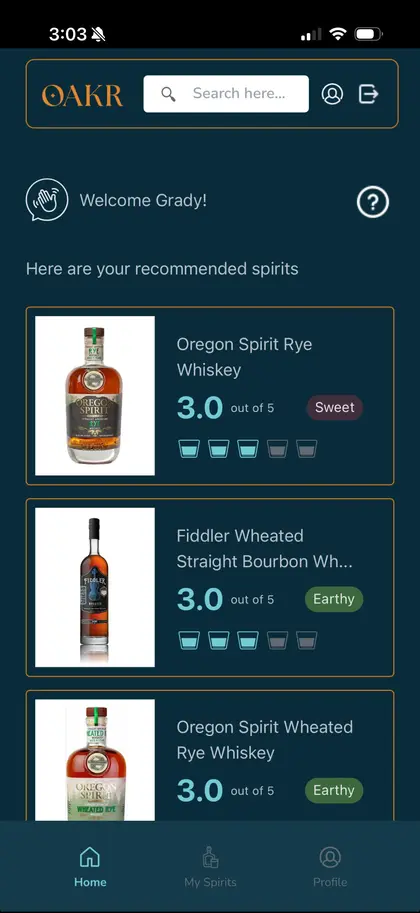
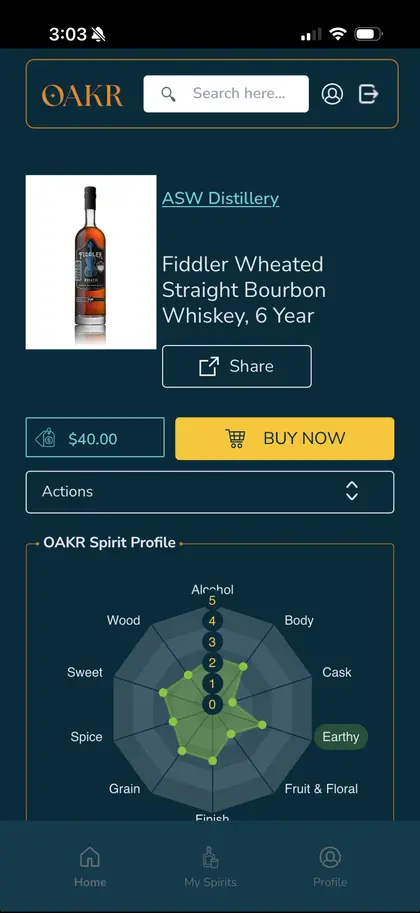
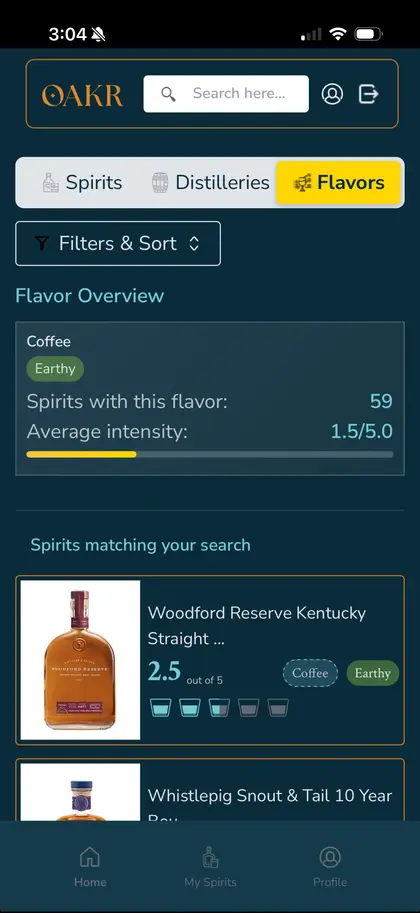
OAKR is built to answer that question before you spend the money. Our blind tasting panel scores every whiskey across more than 100 flavor notes, organized into 10 macro categories — no labels visible, no marketing influence, just the liquid and an honest read on what’s in it. The Alabama Style’s apple finish, the rye backbone, the baked-fruit sweetness — all of that shows up in the data as specific, measurable flavor characteristics that either match your palate profile or don’t.
Add a few bottles you already know you love, and the AI builds a map of your taste that gets sharper every time. Spirit Match scores tell you whether Clyde May’s Alabama Style is likely to land for you, or whether the Straight Bourbon or the 5-Year is actually the better entry point for your specific palate.
You stop buying bottles because the story is interesting. You start buying bottles because the flavor is right.
[Download OAKR free on iOS, Android, or web →]

Bourbon enthusiast, spirits industry analyst, and the voice behind OAKR's distillery guides, brand reviews, and bourbon education content. Visiting distilleries, dissecting mashbills, and translating the craft into data since 2024.



Why waste 5 minutes reading a blog post when you could get all the juicy flavor data OAKR has to offer? Signup for your free account and pinpoint your next favorite pour.