
Heaven Hill makes Evan Williams and Elijah Craig. One costs $15. The other costs $35. They come from the same distillery, the same water, and the same type of barrel. The difference between them is what Heaven Hill knows about blending, barrel selection, and age that most drinkers don't — and that difference is the key to understanding the largest family-owned bourbon producer in the United States. Most distillery guides lead with a single bottle or a single production technique. Heaven Hill requires a different approach because the scale is different. This is a company that runs two core mashbills across a portfolio spanning from the second-best-selling bourbon in the world (Evan Williams, ~$15) to allocated limited editions that collectors fight over (Parker's Heritage Collection, $150+). The mashbills are nearly identical. The yeast hasn't changed since 1935. What changes is time, proof, barrel selection, and warehouse placement — the variables that turn the same raw materials into products that taste like they came from different distilleries. Understanding those variables is more useful than memorizing tasting notes, because once you understand how Heaven Hill differentiates within its own portfolio, you can navigate the entire lineup with precision.

Heaven Hill has been owned by the Shapira family since its founding in 1935, immediately after Prohibition’s repeal. While virtually every other major American distillery has been bought, sold, merged, or acquired by a multinational spirits conglomerate, Heaven Hill has remained family-owned for nine decades. That independence is meaningful because it means production decisions — what to age, how long, what to release, what to hold back — are made by the family rather than by corporate shareholders optimizing quarterly returns.
The distillery is headquartered in Bardstown, Kentucky — the self-proclaimed “Bourbon Capital of the World” — and operates one of the largest bourbon inventories on the planet. They produce more bourbon than any other single-site operation in Kentucky, filling over 1,400 barrels per day and aging roughly 1.9 million barrels at any given time.
On November 7, 1996, a fire destroyed the original Heaven Hill distillery and seven rickhouses full of aging bourbon. An estimated 90,000 barrels were lost — a river of burning whiskey that made international news. The financial loss was catastrophic.
But the yeast survived. Heaven Hill’s proprietary yeast strain — the living culture that had been continuously maintained since 1935 — was stored in a separate building and escaped the fire. Because the yeast survived, the flavor profile survived. Heaven Hill contracted with Jim Beam’s Bernheim distillery in Louisville to continue production while they rebuilt, using their own yeast strain in Beam’s facility. The bourbon made during this period tastes like Heaven Hill, not like Jim Beam, because the yeast was Heaven Hill’s.
The current Bernheim distillery in Louisville (which Heaven Hill later purchased outright) is now their primary production facility. The Bardstown campus serves as the aging and bottling headquarters.
The main bourbon mashbill is roughly 78% corn, 10% rye, 12% malted barley. This is the recipe behind Evan Williams, Elijah Craig, Henry McKenna, and most of the Heaven Hill bourbon portfolio. It’s a high-corn, moderate-rye recipe that produces the foundational bourbon profile: sweet, caramel-forward, with enough rye spice to keep it from going flat.
The wheated mashbill is approximately 68% corn, 20% wheat, 12% malted barley. Wheat replaces the rye, producing a softer, sweeter bourbon — less spice, more bread and honey. This mashbill powers Larceny and Old Fitzgerald.
The 1935 yeast strain is the single most important production fact at Heaven Hill. The same proprietary yeast strain has been continuously maintained since the distillery’s founding. It survived the 1996 fire. It’s been producing the same ester profile for nine decades. The Heaven Hill yeast is deliberately neutral — it produces a consistent, unobtrusive fermentation character that lets the grain and the barrel do the talking. Because the yeast doesn’t impose a strong signature, the differences between Heaven Hill products come primarily from aging time, proof, barrel selection, and warehouse position.
Heaven Hill runs a standard Kentucky column-and-doubler distillation system at the Bernheim distillery in Louisville. The column still handles first distillation; the doubler provides second distillation, retaining heavier oils and grain character.
The scale is the differentiator. Heaven Hill fills over 1,400 barrels per day — one of the highest production rates in American bourbon. What Heaven Hill does differently from many competitors is the degree of control they exercise over warehouse placement and barrel selection. With 1.9 million barrels aging at any given time, the inventory is deep enough to support extremely selective blending.
Heaven Hill ages in traditional multi-story rickhouses in Bardstown. The top floors can be 20-30 degrees hotter than the ground floor during summer. Barrels on the top floors age faster, develop more wood character, and produce bolder, more intense bourbon. Barrels on lower floors age more slowly and retain more grain character.
This is where the Evan Williams / Elijah Craig comparison becomes concrete. Both products start from the same 78/10/12 mashbill, fermented with the same 1935 yeast, distilled on the same equipment. Evan Williams Black Label ages roughly 4-7 years, blended from barrels across multiple warehouse positions, bottled at 86 proof. Elijah Craig Small Batch ages roughly 8-12 years, blended from barrels selected for more complexity, bottled at 94 proof. Henry McKenna 10-Year is a specific single barrel from a specific warehouse position, aged exactly 10 years, bottled at 100 proof (Bottled-in-Bond).
Same recipe. Same yeast. Same stills. Different time, different barrels, different warehouse positions, different products. That’s the Heaven Hill system.
Parker Beam served as Master Distiller from 1975 until his retirement in 2013. Parker was diagnosed with ALS in 2010, and the annual Parker’s Heritage Collection is released in his honor, with proceeds supporting ALS research.
The current Master Distiller is Conor O’Driscoll, who took the role in 2014. O’Driscoll is the first non-Beam to hold the title, which represents a transition from family lineage to professional expertise.
Every few weeks someone asks me which sneaky non-distiller producer brand is really Heaven Hill juice wearing a fancier jacket. My honest answer: fewer than you’d hope, and a whole lot fewer than there used to be.
Here’s the fun wrinkle. Heaven Hill started life partly as a bulk house, selling barrels and whiskey futures to other folks back when nobody was hollering for Evan Williams by name. For a good stretch, plenty of sourced bourbon really did roll out of these rickhouses under somebody else’s label. Then their own brands took off, demand blew past supply, and the family did the sensible thing and kept the good stuff for themselves. Ask a broker for Heaven Hill barrels today and you’ll get about the same answer as asking your neighbor to borrow his smoker on the 4th of July. Technically possible, realistically good luck. Most of the “mystery” sourced bourbon you bump into is MGP, Dickel, Barton, or Beam, not Heaven Hill.
The one rumor worth watching: Redemption, a longtime Indiana (MGP) brand, has reportedly started shifting some of its bourbon toward Heaven Hill. I’ll be straight with you: that’s industry chatter, not gospel. The label and the public record still point to Indiana, so we’ve got it filed under “likely” until somebody prints it on a bottle.
Bottom line, when you’re drinking Heaven Hill, you’re almost always drinking it with the family’s own name on the front.
Evan Williams Black Label — ~$15, 86 proof. The second-best-selling bourbon in the world. Classic 78/10/12 mashbill, aged 4-7 years. The best value in American bourbon, full stop.
Elijah Craig Small Batch — ~$32, 94 proof. Same mashbill as Evan Williams, aged longer (8-12 years), bottled at higher proof. Caramel, vanilla, oak char, rye spice, and genuine complexity. If you buy one Heaven Hill bourbon, buy this one.
Larceny Small Batch — ~$25, 92 proof. The wheated mashbill flagship. Butterscotch, honey, baked bread, soft finish. The gateway for drinkers who find rye-based bourbons too spicy.
Henry McKenna 10-Year Single Barrel — ~$40, 100 proof, Bottled-in-Bond. Single barrel, 10-year age statement, 100 proof. The most transparent expression in the lineup.
Heaven Hill Bottled-in-Bond 7-Year — ~$40, 100 proof. Cherry, caramel, vanilla, with a spicier, nuttier finish than Elijah Craig. One of the best values in aged bourbon.
Old Fitzgerald Bottled-in-Bond — varies, ~$50-150. The wheated mashbill at various age statements (9, 11, 13, 15 years), released biannually in decanter bottles. Allocated, collector-focused.
Parker’s Heritage Collection — annual, ~$150+. The annual limited release honoring Parker Beam. Different expression every year.
Bernheim Original Wheat Whiskey — ~$30, 90 proof. Not bourbon — a wheat whiskey with a mashbill that’s at least 51% wheat.
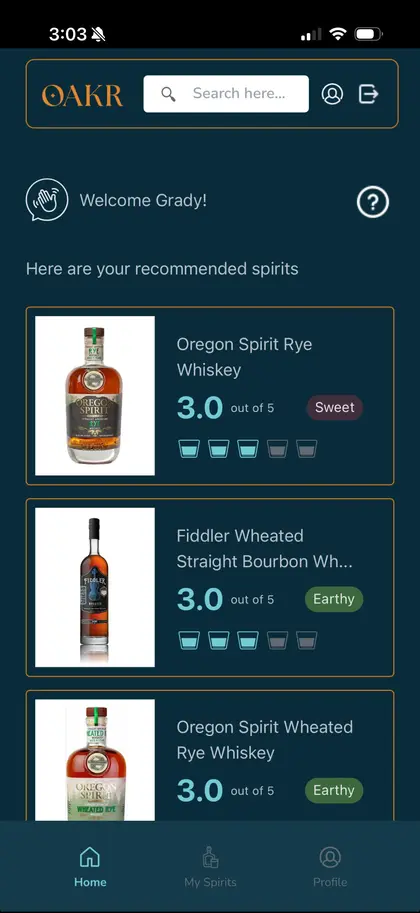
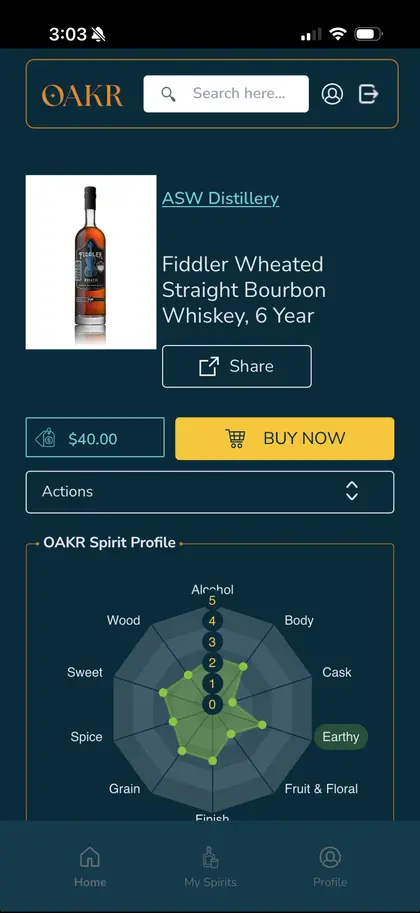
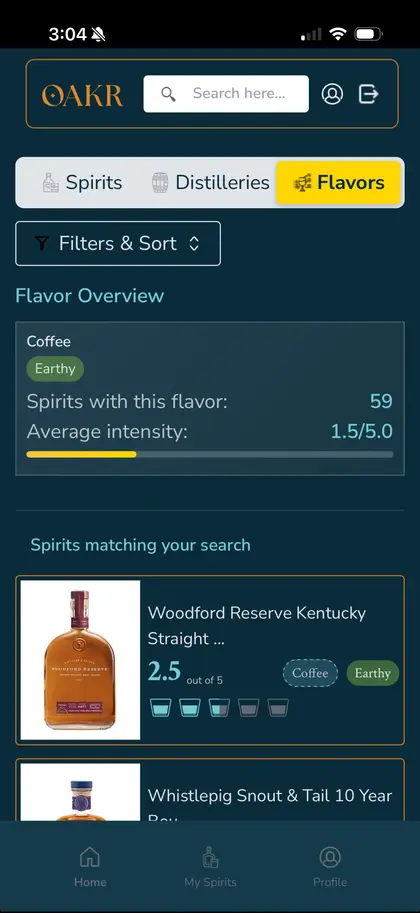
OAKR’s blind tasting panel scores every bourbon across more than 100 flavor notes, organized into 10 macro categories. If you’ve tried Evan Williams and loved it, OAKR can show you exactly how Elijah Craig, Henry McKenna, and Heaven Hill BiB compare on the flavor dimensions that matter to your specific palate. You stop buying bourbon by price point. You start buying bourbon by palate match.
[Download OAKR free on iOS, Android, or web →]

Bourbon enthusiast, spirits industry analyst, and the voice behind OAKR's distillery guides, brand reviews, and bourbon education content. Visiting distilleries, dissecting mashbills, and translating the craft into data since 2024.


Two mashbills power everything from $15 Evan Williams to $150 Parker’s Heritage. Your Spirit Match score tells you which expression fits your palate.