
Before Shane Baker and Pat Heist built a distillery, they built a laboratory. Ferm Solutions, founded in 2006, was a fermentation consulting company that sold proprietary yeast strains and provided lab analysis to breweries and distilleries worldwide. Baker is a mechanical engineer. Heist holds a Ph.D. in plant pathology and spent years as a medical microbiology professor. Together, they became the people that other distilleries called when their fermentation went wrong — troubleshooting yeast health, bacterial contamination, pH imbalances, and enzyme performance for approximately 600 breweries and distilleries across the country. They earned the industry nickname "the science guys of bourbon." In 2012, after six years of solving everyone else's fermentation problems, they decided to build their own distillery and apply everything they had learned. The result is Wilderness Trail — a 168-acre campus in Danville, Kentucky, that produces 215 barrels a day using 100% sweet mash fermentation, proprietary yeast strains, and a production philosophy that treats bourbon-making more like controlled microbiology than folk art. The location matters. Danville is known locally as "the City of Firsts" — Kentucky's first capital, home to the state's first courthouse, and the birthplace of bluegrass music. It sits along the Wilderness Trace, the historic region through which Daniel Boone blazed his trail into Kentucky in the 1770s. Wilderness Trail Distillery became Danville's first legal distillery since Prohibition. In 2020, it was named the 18th official stop on the Kentucky Bourbon Trail. In November 2022, the Campari Group — owners of Wild Turkey — purchased a 70% stake in Wilderness Trail for $420 million, valuing the distillery at $600 million, with an option to acquire the remaining 30% in 2031 for $180 million. At the time, it was the second-largest acquisition in Campari's history.

The distillery operates on 168 acres at 4095 Lebanon Road in Danville. The campus includes the production facility, multiple rickhouses holding over 100,000 barrels, and the Ferm Solutions laboratory that still serves external clients. The offices are housed in a restored brick Italianate mansion — once home to the sisters credited with composing “Happy Birthday to You.” Baker and Heist started the distillery in a small downtown Danville location in 2012, producing one to two barrels a day. They moved to the current property in 2014, built the first rickhouse, and had the distillery operational on-site by 2016.
Shane Baker has distilling in his family’s blood. His grandmother, Doris Ballard, retired from the famed Stitzel-Weller Distillery after more than 50 years in the bourbon industry. His father worked at Canada Dry Distillery, which later became the Old Fitzgerald Distillery at Camp Nelson, Kentucky.
Wilderness Trail operates two bourbon mashbills and a rye mashbill. The wheated bourbon uses 64% corn, 24% wheat, and 12% malted barley — one of the highest wheat ratios in any Kentucky bourbon. The high-rye bourbon uses 64% corn, 24% rye, and 12% malted barley. The rye whiskey uses 56% rye, 33% corn, and 11% malted barley.
All grain is locally sourced from Kentucky — seed grain corn, wheat, and rye varieties grown in the surrounding region. The grain is processed through a proprietary infusion mashing system that Baker and Heist developed and that remains unique to Wilderness Trail. The system manipulates temperature and grain contact to optimize starch conversion and flavor extraction.
The yeast program is the beating heart of the operation. Ferm Solutions develops and manufactures proprietary yeast strains specifically engineered for flavor production — not fermentation speed. Baker and Heist understand yeast at the molecular level because they have spent two decades studying, isolating, and troubleshooting yeast for hundreds of other producers. The strains they use at Wilderness Trail are designed to produce specific ester profiles — the fruity, floral compounds that show up as apple, pear, citrus, and stone fruit in the finished bourbon.
This is the production decision that most defines Wilderness Trail. Every batch of bourbon, rye, and rum produced at the distillery uses 100% sweet mash fermentation. Wilderness Trail claims to be the first distillery in Kentucky to use sweet mash as its sole fermentation method since Prohibition.
The industry standard is sour mash. In sour mash fermentation, acidic backset — the spent mash left over from the previous distillation — is added to each new batch. The backset lowers the pH, inhibits bacterial growth, and provides consistency from batch to batch. It is safe, reliable, and efficient. It is also, by design, repetitive: each batch carries a chemical echo of the previous one.
Sweet mash starts clean. Fresh yeast, fresh water, fresh grain, no backset. The pH stays higher (less acidic), which creates a more hospitable environment for both desirable yeast and unwanted bacteria. If sanitation is not meticulous, the batch spoils. The tradeoff is flavor: sweet mash fermentation produces a cleaner, brighter, more fruit-forward distillate. The higher pH carries through to the finished bourbon, producing what Baker describes as a softer drinking experience without the “Kentucky hug” — the acidic burn that sour mash bourbon can produce.
Most distilleries avoid sweet mash because the bacterial risk is too high for their sanitation capabilities. Baker and Heist can manage it because they are literally the scientists that other distilleries hire to fix contaminated fermentations. The Ferm Solutions lab on the Wilderness Trail campus provides real-time microbiological analysis of every batch — yeast health, bacterial counts, pH monitoring, molecular identification of any organisms present. The lab does not just support the distillery; it is the reason the distillery can do what it does.
The distillery runs three Vendome copper stills — a configuration that provides flexibility across mashbills and production volumes. The original setup was a 250-gallon pot-hybrid still. As production scaled, Baker and Heist added a 40-foot, 18-inch-diameter column still with a 250-gallon doubler, followed by a larger column still with a 500-gallon doubler. The current setup can produce up to 216 barrels per day running 24 hours.
The still proof runs approximately 137 — moderate by industry standards. The bourbon is entered into barrels at 110 proof, and the rye is entered at 100 proof — the lowest rye entry proof Baker is aware of in Kentucky. The lower rye entry proof is a deliberate choice to preserve more grain character and allow the barrel to interact with a more hydrated distillate.
All Wilderness Trail whiskeys are bottled unfiltered. The distillery does not chill-filter. Baker’s position is direct: the fatty oils that cause cloudiness at cold temperatures are flavor compounds that the bourbon spent years developing in the barrel. Chill-filtering removes them for cosmetic reasons. Wilderness Trail leaves them in for taste reasons.
Wilderness Trail uses Independent Stave Company barrels with a #4 char — the deep “alligator” char that creates a thick carbon filter and aggressive caramelization. The barrels are cooper-select grade with 18-month air-dried staves and a toast applied before charring — a step that, like Michter’s, concentrates wood sugars into a caramelized red line.
The rickhouses on the 168-acre campus include traditional multi-story warehouses. Barrels are rotated between floors during aging — moved from upper floors (hotter, faster aging) to lower floors (cooler, slower aging) to achieve the target flavor profile. Core expressions are aged a minimum of four years to meet Bottled-in-Bond requirements. The 6-year and 8-year age-stated releases represent barrels that the team held back because the additional aging improved the bourbon.
Shane Baker — Co-founder, President, CEO, and Master Distiller. Mechanical engineer. Ferm Solutions co-founder. Named EY Entrepreneur of the Year 2020 East Central Finalist.
Dr. Pat Heist — Co-founder and Chief Science Officer. Ph.D. in plant pathology. Medical microbiology professor. Ferm Solutions co-founder. The scientist behind the yeast program and fermentation protocols.
The two met as students at the University of Kentucky, played in a rock band together, went their separate ways for a decade, reunited to start Ferm Solutions, then built a distillery that applies everything they learned from solving 600 other producers’ problems.
Small Batch Bottled-in-Bond Wheated Bourbon — 64/24/12 (corn/wheat/barley), 100 proof, sweet mash, minimum 4 years. The flagship wheated expression. Soft, fruity, with the sweet mash brightness and a creamy wheat-driven mouthfeel. Small batches of up to 12 barrels. The first bottled-in-bond, wheated, sweet mash bourbon released in Kentucky since Prohibition.
Small Batch Bottled-in-Bond High Rye Bourbon — 64/24/12 (corn/rye/barley), 100 proof, sweet mash, minimum 4 years. The rye expression. Spicier, more structured, with baking spice and black pepper balanced against the sweet mash fruit character. Small batches of up to 12 barrels.
6 Year Bottled-in-Bond Bourbon — Available in both wheated and high-rye versions. 100 proof. Two additional years of aging deepen the oak influence and develop more complexity. These releases signal the distillery’s transition from young craft expressions to genuinely aged bourbon.
8 Year Bottled-in-Bond Bourbon — The oldest current release. The sweet mash fruit character, after eight years of barrel interaction, integrates with deep vanilla, caramel, and oak notes. Limited availability.
Settlers Select Kentucky Straight Rye Whiskey — 56/33/11 (rye/corn/barley), cask strength, sweet mash. Entered at 100 proof — the lowest rye barrel entry in Kentucky. Unfiltered. Spice-forward with herbal, floral character and the sweet mash brightness.
Harvest Rum — Made from sweet sorghum molasses, barrel-finished in used bourbon barrels for two years. An outlier in the lineup, but an award-winning spirit that demonstrates the team’s fermentation expertise extends beyond grain.
Wilderness Trail joined the Kentucky Bourbon Trail in 2020 and was acquired by Campari at a $600 million valuation in 2022. The 8-year age-stated releases are arriving. Distribution is expanding nationally. Single-barrel selections are increasingly hunted by enthusiasts. But most bourbon drinkers — even serious ones — have not yet tried a Wilderness Trail expression. The name recognition lags behind the quality of the liquid, and the sweet mash distinction means the bourbon tastes measurably different from the sour mash bourbon that dominates 99% of the market.
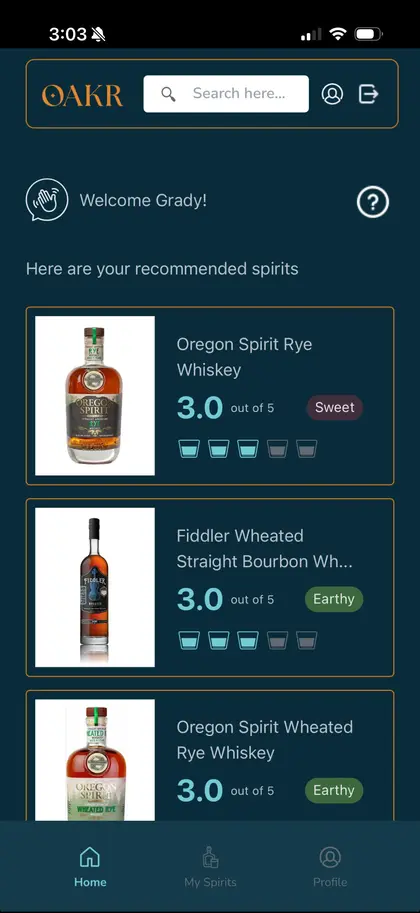
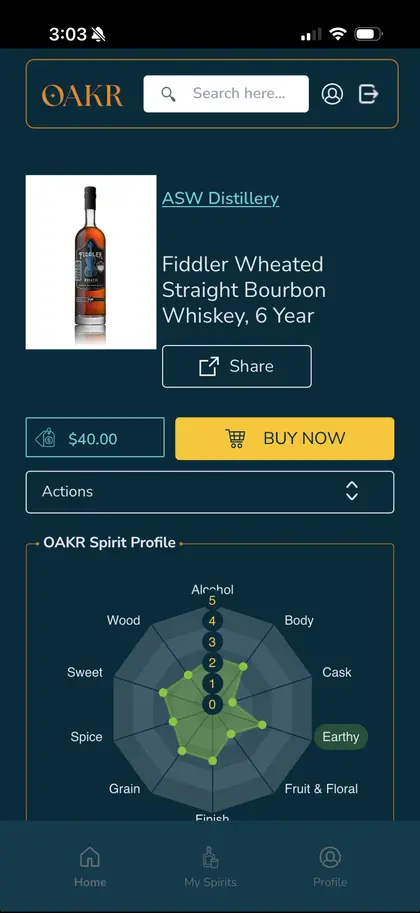
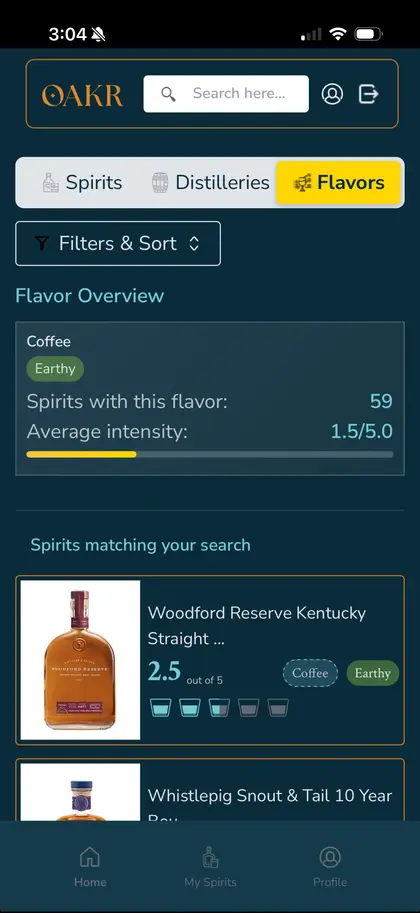
OAKR’s blind tasting panel evaluates Wilderness Trail’s expressions without knowing what is in the glass. The panel scores across 100+ flavor notes in 10 macro categories, capturing the sweet mash brightness, the proprietary yeast-driven fruit character, and the wheated or rye grain profile independently. Explore Wilderness Trail on OAKR to find your Spirit Match score and see whether this production approach — sweet mash fermentation, science-first yeast management, unfiltered bottling — aligns with what your palate prefers.
[Download OAKR free on iOS, Android, or web →]

Bourbon enthusiast, spirits industry analyst, and the voice behind OAKR's distillery guides, brand reviews, and bourbon education content. Visiting distilleries, dissecting mashbills, and translating the craft into data since 2024.
Wilderness Trail’s 100% sweet mash process creates a bourbon unlike anything from sour mash country. Curious if it matches your palate? OAKR’s AI flavor matching has the answer.