
The yeast strain that ferments every barrel of TX Whiskey was captured from the shell of a Texas pecan tree on a friend's ranch in Glen Rose, Texas. That's not a marketing story invented to give a tasting-room tour guide something colorful to say. It's a production fact with a direct, measurable consequence for what TX Whiskey tastes like. Most distilleries buy their yeast from a commercial supplier — a safe, consistent, boring approach that produces safe, consistent, boring fermentation. Firestone & Robertson spent months collecting samples from plants, fruits, and nuts across Texas, testing hundreds of wild strains for fermentation performance and flavor output, until they isolated one from a pecan shell that produced the specific ester profile they wanted: dark fruit, baking spice, and a richness that reads as distinctly not-Kentucky. That pecan-derived yeast is the production detail that separates TX Whiskey from every other bourbon on the shelf. The Texas-grown grain, the Whiskey Ranch facility, the Pernod Ricard acquisition — all of that is context. The yeast is the fingerprint.

Firestone & Robertson Distilling Co. was founded in 2010 by Leonard Firestone and Troy Robertson in Fort Worth, Texas. In 2016, F&R moved into Whiskey Ranch — a 112-acre facility on the western edge of Fort Worth that includes the distillery, barrel warehouses, a visitors’ center, and event spaces.
In 2022, Pernod Ricard — the French spirits conglomerate that owns Jameson, Absolut, The Glenlivet, and dozens of other global brands — acquired Firestone & Robertson. The production team is the same, the yeast is the same, the grain sourcing is the same, and the Whiskey Ranch facility is the same. What’s changed is reach — TX Whiskey is now available in markets that a Fort Worth startup couldn’t have accessed independently.
Firestone & Robertson uses a wheated mashbill for their core expressions — corn, soft red winter wheat, and malted barley, all sourced from Texas farms. The choice of wheat over rye as the secondary grain produces a softer, sweeter base spirit than a rye-forward bourbon would.
The proprietary yeast strain was isolated from a Texas pecan shell after an extensive sampling program across the state. Wild yeast capture is rare in bourbon production — most distilleries use commercial lab-cultured strains. The pecan strain produces a specific ester profile heavy on dark-fruit and baking-spice compounds. The yeast doesn’t make the bourbon taste like pecans — that’s not how fermentation works. What it does is produce a set of flavor compounds during fermentation that no commercial yeast strain replicates, which is why TX Whiskey has a recognizable character in blind tastings that doesn’t map to any Kentucky profile.
Master Distiller Rob Arnold manages the yeast program. Arnold is a trained biochemist and brewing scientist — his background is in fermentation science rather than in traditional distilling apprenticeship.
Firestone & Robertson runs Vendome hybrid pot–column stills at Whiskey Ranch. The hybrid configuration gives them flexibility: the column component provides volume and efficiency, while the pot-still component retains the heavier oils and grain character that give the bourbon its body.
F&R uses a sweet mash process rather than the sour mash process dominant in Kentucky. Sweet mash means each fermentation batch starts fresh without backset. The result is a slightly sweeter, more grain-forward fermentation character.
Fort Worth summers routinely exceed 100°F, and the barrel warehouses at Whiskey Ranch are not climate-controlled. During peak summer heat, the bourbon is pushed deep into the charred oak — deeper and faster than it would be in a milder climate. The extraction of vanillin, tannins, and caramel compounds from the wood is accelerated.
The practical consequence is that a 4-year-old TX bourbon has had more intense wood interaction per year than a 4-year-old Kentucky bourbon. The color is darker, the oak influence is heavier, and the flavor profile is bolder.
The evaporation rate in Texas heat runs significantly higher than in Kentucky. F&R loses more bourbon per barrel per year to the angel’s share, which concentrates the remaining liquid but also drives up the cost per bottle.
Rob Arnold serves as Master Distiller. His scientific orientation shows in how F&R approaches production: the pecan yeast program, the sweet mash process, and the distillation targets are all calibrated with a biochemist’s precision. Leonard Firestone and Troy Robertson remain involved with the brand in strategic and public-facing roles.
TX Blended Whiskey — ~$28, 82 proof. The entry point. Extremely approachable — vanilla, caramel, honey, minimal burn. The tailgate bottle, the mixer, the “I’m new to whiskey” recommendation.
TX Straight Bourbon — ~$38, 90 proof. The flagship bourbon. Dark fruit, fig, baking spice, heavy oak influence, oily mouthfeel. This is where the pecan yeast’s ester production shows up most clearly. The bottle that justifies the brand’s existence.
TX Bottled-in-Bond — ~$45, 100 proof. Single distilling season, minimum four years aged, 100 proof. The concentrated version of the Straight Bourbon — everything amplified. The enthusiast’s bottle.
TX Straight Bourbon Sherry Finish — ~$50. Four-year-old bourbon finished in Pedro Ximénez sherry casks. Raisin, molasses, chocolate layered on top of the bourbon’s existing dark-fruit profile. A dessert pour.
TX Experimental Series — Rotating limited releases — rye whiskey, port finishes, single-barrel selections. Availability and pricing vary.
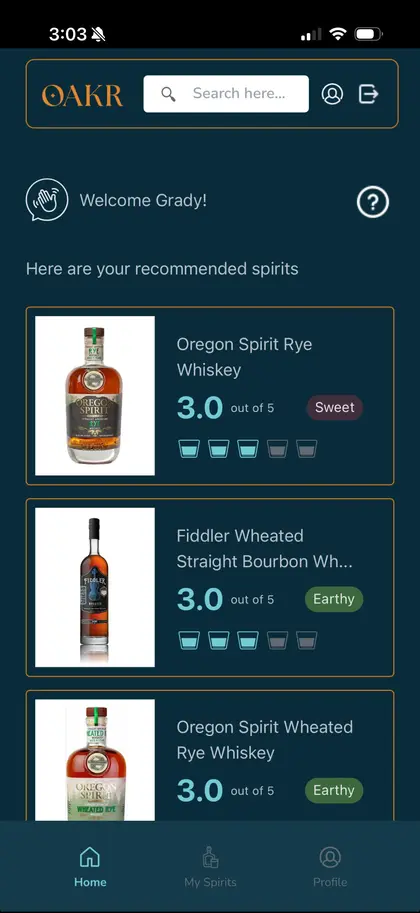
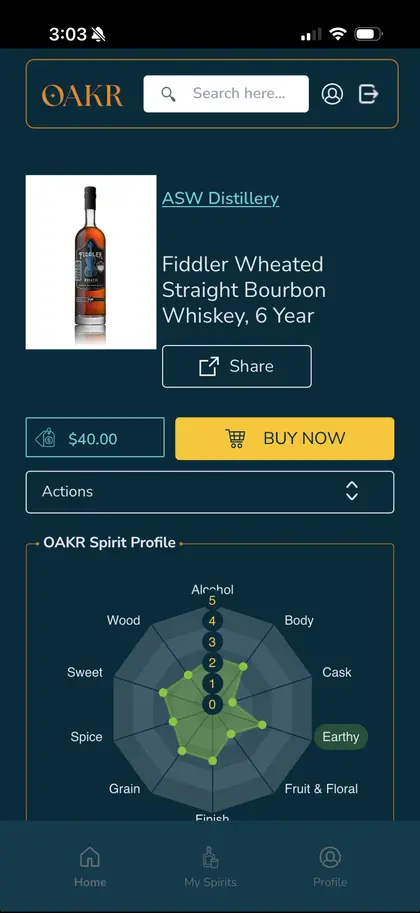
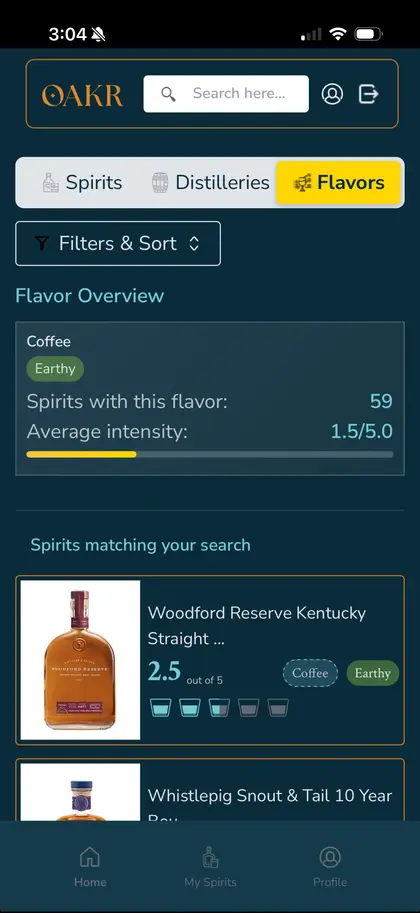
OAKR’s blind tasting panel scores every bourbon across more than 100 flavor notes, organized into 10 macro categories. No labels, no leather bottle caps, no Whiskey Ranch tour influencing the scores — just the liquid. Add a few bottles you already know you love, and the AI builds a palate profile that tells you whether TX’s dark-fruit, spice-heavy, oak-forward character is going to land for you or whether you’d be better served by something lighter and more restrained.
[Download OAKR free on iOS, Android, or web →]

Bourbon enthusiast, spirits industry analyst, and the voice behind OAKR's distillery guides, brand reviews, and bourbon education content. Visiting distilleries, dissecting mashbills, and translating the craft into data since 2024.
Pecan-yeast bourbon from Fort Worth. Dark fruit, baking spice, nothing like Kentucky. Does it match your palate? Spirit Match knows.