
Robert Likarish was one semester from finishing law school when he announced at the family Christmas dinner that he was not going to practice law. He wanted to make whiskey. His brother Jonathan, a biomedical engineer, had been entertaining the same idea. Their mother Marcia, a retired speech pathologist and volunteer EMT, responded the way any reasonable parent would: she planned a road trip to Kentucky distilleries to see if this was a real plan or a holiday delusion. The family visited Huber's Starlight Distillery in Indiana, where Ted Huber told them to go see Vendome Copper & Brass Works in Louisville. They ordered a still. By 2014, the Likarish brothers had converted a former boat dealership on Loy Lake Road in Denison, Texas, into Ironroot Republic Distilling. That founding decision — two professionals walking away from conventional careers to distill whiskey in a North Texas town with zero whiskey heritage — defines everything that followed. They had no family recipe to fall back on, no regional tradition to replicate. What they had was Jonathan's engineering training, Robert's appetite for risk, Marcia's operational discipline, and a hometown with an unlikely connection to Cognac, France. They built a distillery from that.

Harbinger 115 Straight Texas Bourbon — 115 proof. This is the bottle that won World’s Best Bourbon at the 2020 World Whiskies Awards, beating entries from Four Roses, 1792, and John J. Bowman. It is built on heirloom corn — Bloody Butcher, purple corn, and Floriani flint corn — rather than commodity yellow dent. The result is a bourbon with massive maple syrup, red fruit, and baking spice notes, delivered at a proof that makes you pay attention. The texture is oily and rich, coating the mouth in a way that reveals the grain character underneath the barrel influence. If you can handle the heat, start here. If 115 proof is more than you want, a single ice cube opens it up without destroying it. The heirloom corn is what separates this from every other high-proof bourbon on the market — you are tasting agricultural variety, not just barrel extraction.
Assemblage Bourbon — The daily driver. A blend of different corn varietals and barrel ages, Assemblage is designed to be approachable without being boring. Caramel chews, vanilla bean, and dried fruit in a balanced profile that works neat or in a cocktail. This is the entry point if you want to understand the Ironroot house style without committing to a barrel-proof experience. The blending across different corn distillates and barrel ages is where the élevage philosophy shows up most clearly — it is not random; it is directed.
Hubris Straight Corn Whiskey — This expression has won World’s Best Corn Whiskey at the World Whiskies Awards six times (2017, 2019, 2021, 2022, 2023, and 2024). Aged in used oak barrels rather than new charred oak, it lets the grain speak without heavy wood influence. Sweet corn, buttered popcorn, and honey in a profile that is impossibly approachable for its proof. If you think corn whiskey is moonshine in a plastic jug, Hubris is the bottle that will change your mind. The six-time World’s Best designation is not a fluke — this is the most consistently awarded corn whiskey on the planet.
Apotheosis VII — The French influence at full volume. Finished in Palo Cortado Sherry casks (other releases use Armagnac or Cognac casks), Apotheosis blends multiple heirloom corn distillates — purple, red, and flint — into a whiskey of genuine complexity. Dark fruit, raisins, earthy notes, and layered spice. This is the bottle you pour when you want to demonstrate that Texas whiskey is not a novelty category.
Saints Alley Port & Cognac — A separate brand under the Likarish umbrella. Sourced whiskey finished in Port and Cognac casks. Jammy, fruity, and dessert-forward — chocolate-covered berries in liquid form.
Denison, Texas, sits on the Red River about an hour north of Dallas. It is not bourbon country. The weather is extreme — scorching summers, dramatic daily temperature swings of 40 degrees or more, and low humidity that strips moisture from everything, including barrels. The angel’s share in Texas is not a polite tithe; it is aggressive evaporation that concentrates flavor but eats into production volume.
The Likarish family leaned into that climate rather than fighting it. The connection point was local: Denison is the hometown of T.V. Munson, the viticulturist whose Texas grape rootstock saved the French wine industry from phylloxera in the late 1800s. Because of Munson, Denison and Cognac, France, are sister cities. The Likarish brothers saw that history and drew a direct line from it to their production philosophy: French brandy techniques, applied to Texas corn, in a climate that forces rapid barrel interaction.
The distillery opened in 2014 in the converted boat dealership. The front showroom houses the distilling equipment; the back warehouse stores barrels. A Vendome copper pot still anchors the production floor, with a hybrid Kothe still system providing additional distillation options. The original Vendome still was designed to be taller, but building constraints required a last-minute modification — a large onion was added at the base of the hat to compensate for the reduced height. The family celebrated their tenth anniversary in November 2024 with a ribbon-cutting for a new building that houses blending and bottling. Expansion plans include a larger Vendome still to increase production capacity and two to three times more barrel storage. There are about fourteen employees, including family members — father John Likarish also works on-site daily.
The defining innovation at Ironroot Republic is using heirloom corn as a flavoring grain. Where Kentucky distillers use rye or wheat alongside the required 51% corn to shape flavor, Ironroot uses different corn varietals for the same purpose. The base is yellow dent corn for its yield, but the character comes from the specialty grains.
Bloody Butcher corn is deep red, savory, spicy, and sometimes fruity. Purple corn brings earthiness and depth. Floriani flint corn, an Italian variety, adds a rich, polenta-like creaminess. These are not commodity grains — they are difficult to source, expensive, and low-yield. Local North Texas and Southern Oklahoma farmers grow them specifically for Ironroot.
The yeast strategy follows the French brandy model. Rather than prioritizing speed and alcohol tolerance (the standard bourbon approach), Ironroot selects strains that maximize ester production — the chemical compounds responsible for fruity and floral complexity. The fermentation targets notes of apricot, fig, and marmalade that are more common in Cognac or Armagnac than in bourbon. Cool fermentation temperatures keep the yeast working slowly, which increases ester formation and reduces harsh alcohol production. The result is a distillate with fruit-forward character before it ever touches wood.
The primary still is a large Vendome copper pot still with an intentionally shortened height and a large onion at the base of the hat. The lyne arm angle was set steep to allow heavier congeners to carry over during distillation — a deliberate choice to produce a richer, oilier spirit. A hybrid Kothe still on the other side of the room handles different distillation styles and smaller batches.
The French brandy influence is most visible in the multi-pass distillation approach. Like Cognac producers, they run spirit through the still multiple times, making precise cuts between heads, hearts, and tails at each pass. This captures the robust, grain-forward flavors while removing undesirable compounds. The process is labor-intensive and inefficient compared to continuous column distillation, but it produces a spirit that is simultaneously intense and refined before barrel aging begins. The steep lyne arm angle on the main Vendome still is a specific choice to carry heavier congeners into the distillate — the oily, flavor-dense compounds that give Ironroot’s whiskey its characteristic weight and mouthfeel. Most distilleries angle the lyne arm to reject those compounds. Ironroot wants them.
The barrel program borrows directly from the French élevage tradition — active management of the maturation process rather than passive aging. The Likarish brothers constantly monitor barrels, move them within the warehouse, transfer spirit between different cask types, and sometimes add water to barrels or to the concrete warehouse floor to manage evaporation rates.
The barrel inventory includes former brandy barrels, European oak casks, Cognac casks, Sherry butts, and custom barrels designed specifically for Ironroot with wave-notched American oak staves and European oak heads. These custom barrels are slightly larger than the standard 53-gallon format. Different char levels are used depending on the product — heavier char to manage the aggressive Texas heat extraction, lighter char where the goal is grain expression.
The Texas climate makes barrel management non-negotiable. The intense heat forces spirit deep into the wood violently and frequently, extracting flavor at rates that would take Kentucky distilleries years to match. Two years in a Denison barrel can produce extraction levels comparable to a decade in a mild-climate warehouse. But without careful management, that aggressive extraction produces a tannic, over-oaked mess. The élevage approach — pulling spirit at the right moment, blending across barrel types, monitoring constantly — is what prevents the climate from ruining the whiskey. Sometimes water is added to barrels during aging, and sometimes water is sprayed on the warehouse floor to slow evaporation. Every barrel is tracked individually, and the decision to bottle, blend, or continue aging is made barrel by barrel rather than by formula.
Jonathan Likarish is the Head Distiller. He holds degrees in Industrial Engineering from Texas Tech and Biomedical Engineering from St. Louis University. The engineering background is not decorative — he applies systematic process control to fermentation and distillation in a way that pure tradecraft distillers do not. He studied brandy production under Hubert Germain-Robin and spent years in hands-on distilling classes before Ironroot opened.
Robert Likarish handles business development and sales. After finishing law school at St. Louis University, he redirected entirely into the spirits business. He is the public face of the distillery, handling sales, marketing, and the tours where visitors hear the Ironroot story firsthand. His official bio notes a fondness for practical sedans and Nintendo Switch — a self-awareness that tracks with a brand that does not take itself too seriously while taking its whiskey very seriously.
Marcia Likarish, known as the “Mother of Texas Whiskey,” manages day-to-day operations. She came out of retirement to run the business her sons launched, bringing operational discipline from careers in speech pathology, education, and volunteer emergency medicine. She participates in blending, leads the first part of most distillery tours, and by all accounts is the organizational force that keeps the operation functional. Father John Likarish handles on-site logistics. The family dynamic is not a branding exercise — all four Likarishes work in the building daily, and the operation reflects the intensity that comes from having the owners’ names and reputations directly on every bottle.
Ironroot Republic is not distributed nationally. Finding their bottles requires some effort — distillery visits, Texas retailers, or limited online availability. For a distillery that has won World’s Best Bourbon and World’s Best Corn Whiskey six times, the gap between reputation and shelf presence is wide.
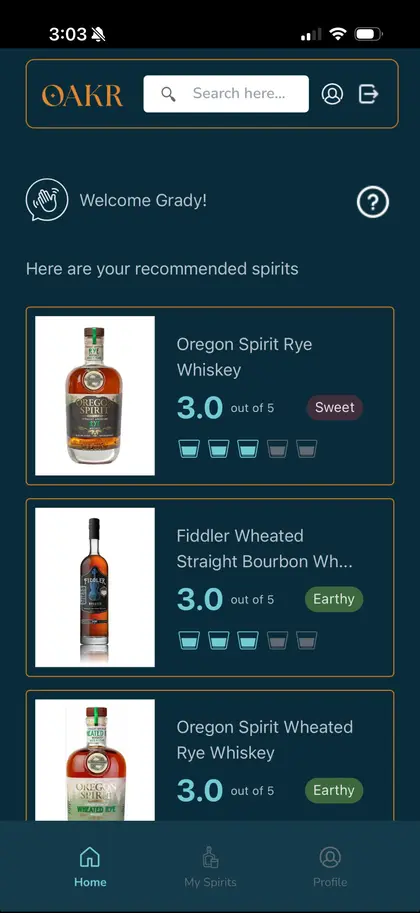
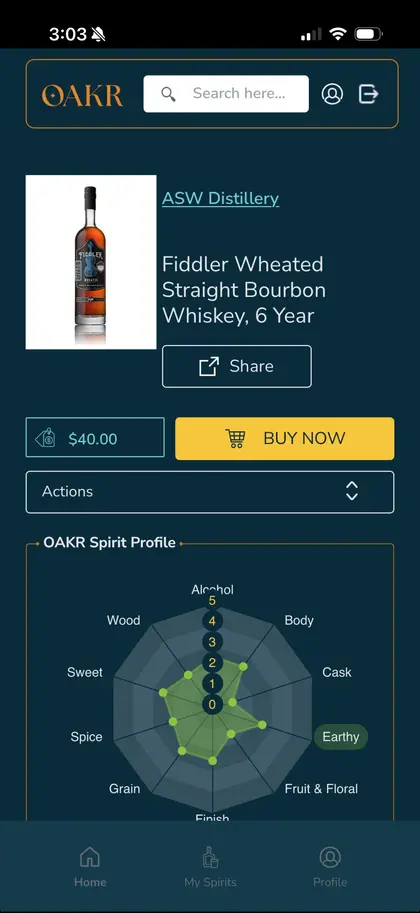
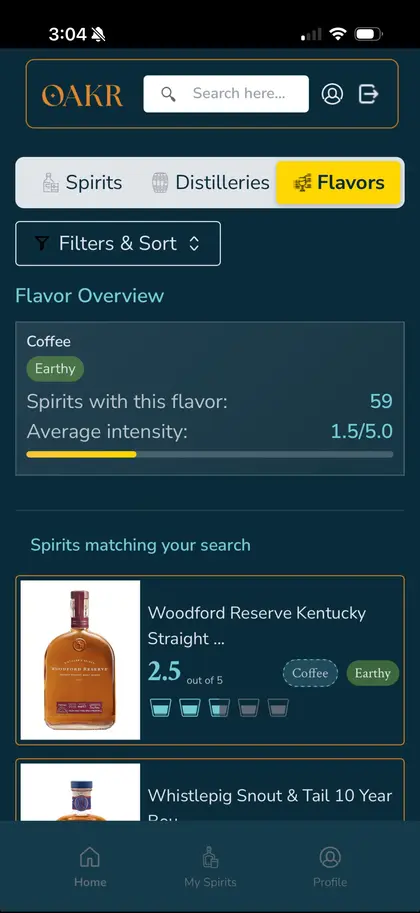
That gap is exactly what OAKR’s discovery tools are built for. OAKR’s blind tasting panel has scored Ironroot’s lineup across 100+ flavor notes, and the Spirit Match algorithm can tell you whether their heirloom-corn, French-technique profile aligns with your palate before you invest the effort to track a bottle down. For spirits this distinctive and this scarce, knowing your match score in advance turns a hunt into a decision. The data cuts through the award hype and the Texas mystique to answer the only question that matters: will you like it?
[Download OAKR free on iOS, Android, or web →]

Bourbon enthusiast, spirits industry analyst, and the voice behind OAKR's distillery guides, brand reviews, and bourbon education content. Visiting distilleries, dissecting mashbills, and translating the craft into data since 2024.
World’s Best Bourbon. Six-time World’s Best Corn Whiskey. Your Spirit Match score tells you if Ironroot’s heirloom-corn profile is worth the hunt.