
MB Roland's Dark Fired Kentucky Straight Bourbon uses dark-fired corn as a flavoring grain. Not smoked malt, not peated barley, not liquid smoke injected post-distillation — actual dark-fired corn, cured using the same process that Christian County tobacco farmers have used for generations. The corn is fired over smoldering hardwood in barns built for tobacco, absorbing smoke at the grain level before it ever enters the mash tun. The result is a smoky bourbon that gets its character from the agricultural raw material itself rather than from a barrel treatment or finishing trick. No other bourbon on the American market does this, because no other distillery sits in the middle of dark fired tobacco country with the infrastructure and stubbornness to pull it off. That bottle — uncut, unfiltered, barrel proof, between 105 and 115 proof depending on the barrel — is the expression that tells you everything about MB Roland. This is a distillery that chose difficulty at every decision point: local white corn instead of commodity yellow dent, pot stills instead of column stills, converted tobacco barns instead of climate-controlled rickhouses, and barrel proof bottling instead of proofing down to 80 for easy drinking. The dark fired expression is the most extreme version of those choices, but the philosophy runs through every bottle they make.

Paul and Merry Beth (the “MB”) Tomaszewski founded MB Roland Distillery in 2009 on a former Amish dairy farm at 6534 Pembroke Oak Grove Road in Pembroke, Kentucky. Paul was ex-Army — no distilling lineage, no inherited recipes, no family yeast jug from the 1800s. The distillery is named for Merry Beth’s grandparents, M.B. and Mary Roland.
Pembroke is in Christian County, Western Kentucky, about a mile off I-24. It is not Bardstown. It is not on the main Kentucky Bourbon Trail corridor. The area is historically dark fired tobacco country — the agricultural tradition that defines the region is curing tobacco in barns over smoldering hardwood fires, not distilling bourbon. Paul and Merry Beth didn’t fight that heritage; they absorbed it into their production. The dark-fired corn, the tobacco barns repurposed as aging warehouses, the local white corn from surrounding farms — all of it ties the distillery to the specific geography of Christian County rather than to the bourbon industry’s standard playbook.
The water source is hard, calcium-rich, and iron-free — standard Kentucky limestone filtration that supports robust fermentation. The Western Kentucky climate delivers extreme temperature swings: brutally hot and humid summers followed by freezing winters. In the converted tobacco barns, which are black, heat-absorbing structures with no climate control, those temperature swings are amplified. The barns get incredibly hot in summer and drafty in winter, which forces aggressive spirit-wood interaction. A four-year-old bourbon aged in these conditions develops color, depth, and tannin structure that more temperate aging environments take longer to produce.
MB Roland has never sourced outside whiskey. Every drop has been made on-site since 2009 — distilled, aged, and bottled in Pembroke. They are grain-to-glass in the literal, operational sense, not as a marketing claim applied to a partially sourced operation.
MB Roland uses local white corn as the primary grain. White corn is sweeter and creamier than the yellow dent corn most bourbon producers use, and it creates a lighter, more delicate distillate that shows grain character more clearly. The white corn is sourced from farms in Christian County, tying the spirit directly to the agricultural output of the surrounding area.
For the Dark Fired expressions, dark-fired corn is added as a flavoring grain alongside the white corn. This corn has been cured over smoldering hardwood in the same type of barns used for dark fired tobacco — absorbing smoke at a cellular level that carries through mashing, fermentation, and distillation into the final spirit. The smoke character is not superficial; it is embedded in the grain itself.
The mashbill also includes rye and malted barley in proportions that support the pre-Prohibition style the distillery targets. The rye adds spice that cuts through the corn sweetness, while the malted barley provides the enzymatic conversion and a biscuit-like undertone. The yeast and fermentation conditions are managed to produce a robust, grain-forward distillate that prioritizes character over neutrality. MB Roland does not filter their spirits — the oils, fats, and congeners that many distilleries strip out through chill filtration are deliberately retained, contributing to the viscous mouthfeel that defines their house style. When you drink an MB Roland bourbon, you are tasting everything the grain, yeast, and still produced — nothing has been removed for the sake of visual clarity or market-tested smoothness.
MB Roland distills on pot stills. Pot stills operate in batches rather than continuously, and they leave more of the heavy oils and flavor compounds in the distillate than column stills. The result is a heavier, chewier spirit with a mouthfeel that coats the tongue — the opposite of the light, clean profile that column distillation produces.
They distill at a lower proof than the industry standard. Most distilleries push for higher distillation proof because it is more efficient — you get more alcohol per run. MB Roland distills lower to preserve the grain oils, fats, and flavor compounds that higher proofs would strip out. It is inefficient, it costs more per gallon, and it produces a spirit with more character.
All whiskeys are bottled above 100 proof. The barrel-proof expressions — including the Single Barrel Bourbon and the Dark Fired — go into the bottle at whatever proof the barrel delivers, typically between 105 and 115. No water is added to cut the proof down. No chill filtration is used. What comes out of the barrel goes into the bottle, unmanipulated.
MB Roland ages bourbon in converted tobacco barns — the same black, heat-absorbing structures that were originally built for curing dark fired tobacco. These barns are not climate-controlled. They are not insulated. They are exposed to the full force of the Western Kentucky climate.
This matters because the barrel-aging environment directly shapes the whiskey. In summer, the barn temperatures spike, driving spirit deep into the charred oak and extracting aggressive caramel, vanilla, and tannin. In winter, the cold contracts the wood and pulls the spirit back out. The uncontrolled temperature extremes accelerate this cycle beyond what a standard, insulated rickhouse produces. The angel’s share is higher — more whiskey evaporates in the heat — but what remains is concentrated and intense.
The barrels are new charred American white oak, as required for bourbon. The char level interacts with the aggressive aging environment to produce deep color and bold wood influence. The barrels are fired using wood, consistent with the distillery’s reliance on fire-based processes throughout production — from dark-firing corn to charring barrel interiors. The barrel entry proof is low, typically around 110 proof, which means more water relative to alcohol goes into the barrel. Lower entry proof extracts different flavors from the wood — more nuanced, less harsh — than the higher entry proofs (up to 125 proof) used by most of the industry. It is another inefficiency that MB Roland accepts because the flavor difference justifies the cost.
Paul Tomaszewski is the founder and distiller. His background is military, not spirits industry — which means the production choices at MB Roland reflect personal conviction rather than inherited tradition. He and Merry Beth built the operation from a dairy farm into a functioning distillery without outside investors or corporate backing. The distillery remains family-owned and independent, which gives them the freedom to make economically irrational decisions like distilling at low proof, refusing to chill-filter, and aging in non-climate-controlled barns. No corporate board would approve the MB Roland production philosophy; it only works because the people making the decisions are the same people whose name is on the bottle.
The operation hosts tours and tastings seven days a week and runs live music events on select Saturdays from May through August. The visitor experience reflects the same no-frills philosophy as the production: you are visiting a working farm-distillery on a former Amish dairy property, not a polished tourism operation. The gift shop stocks their full lineup, and because MB Roland is not an allocated or hype-driven brand, you can generally buy what you want when you visit. That accessibility is deliberate — they want people drinking their bourbon, not hoarding it.
MB Roland Single Barrel Bourbon — Barrel proof, typically 105-115 proof. Uncut, unfiltered. Local white corn, pot-distilled, aged in the tobacco barn warehouses. Each barrel delivers a different profile — one might emphasize dark fruit and caramel, the next leather and tobacco. This is the core expression and the best introduction to the house style. The barrel-proof bottling means you taste the full weight of the pot-still distillate and the aggressive barn aging without dilution. A splash of water opens up the grain sweetness and calms the proof heat if you need it, but the spirit is designed to be experienced at full strength. The white corn foundation gives it a sweeter, creamier base than the yellow-dent bourbon standard, and the pot-still production adds an oily weight that stays on the palate long after the swallow.
Dark Fired Kentucky Straight Bourbon — The signature expression. Dark-fired corn as a flavoring grain delivers campfire smoke, charred corn, and burnt oak alongside the standard caramel and vanilla. Bottled at barrel proof, unfiltered. This is the bottle that no other distillery can replicate — the dark-fired corn process is unique to the region and to MB Roland’s production.
Old 2nd District Bottled-in-Bond Bourbon — 100 proof, aged at least four years. Named for the pre-Prohibition Kentucky tax district that covered Western Kentucky. This expression applies the Bottled-in-Bond Act requirements (one distillery, one season, four years, 100 proof) to the MB Roland house style. More structured than the single barrel releases, with the consistency that the BiB designation requires.
Kentucky Azul — 100% blue agave spirit, distilled in Kentucky and rested in used MB Roland bourbon barrels. Not tequila (wrong country), but made from the same base ingredient. Earthy agave notes with vanilla and oak influence from the bourbon barrels. Uncut and unfiltered. A genuinely unusual product that demonstrates the distillery’s willingness to experiment beyond bourbon.
Black Dog Whiskey — A robust whiskey expression. Mint Julep Spirit — made with 100% natural spearmint leaves infused into the spirit. Apple Pie Moonshine — a cult favorite built on MB Roland’s unaged corn spirit base. The non-bourbon lineup shows range, but bourbon is the main event.
MB Roland is not a bourbon for everyone. The pot-still weight, the barrel-proof heat, the dark-fired smoke, the unfiltered texture — these are polarizing characteristics. Some drinkers taste dark chocolate, tobacco, and campfire and call it transcendent. Others taste grain funk and aggressive oak and reach for something gentler.
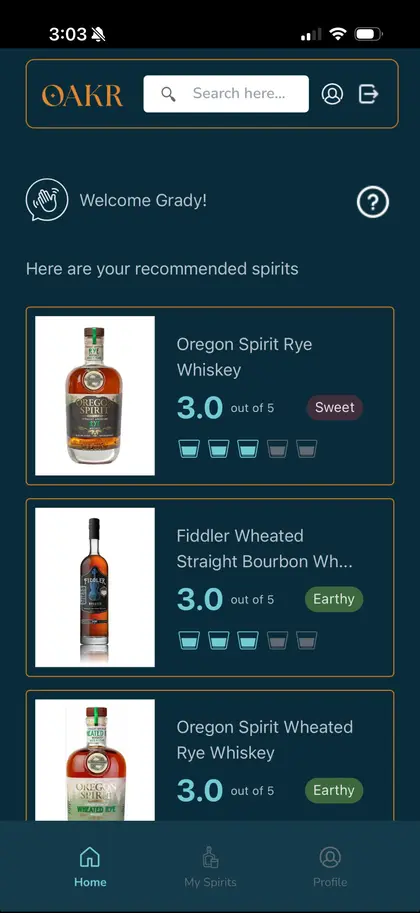
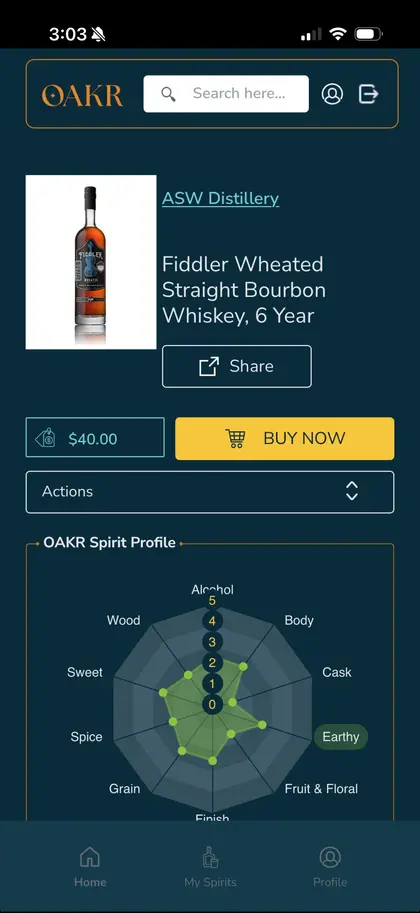
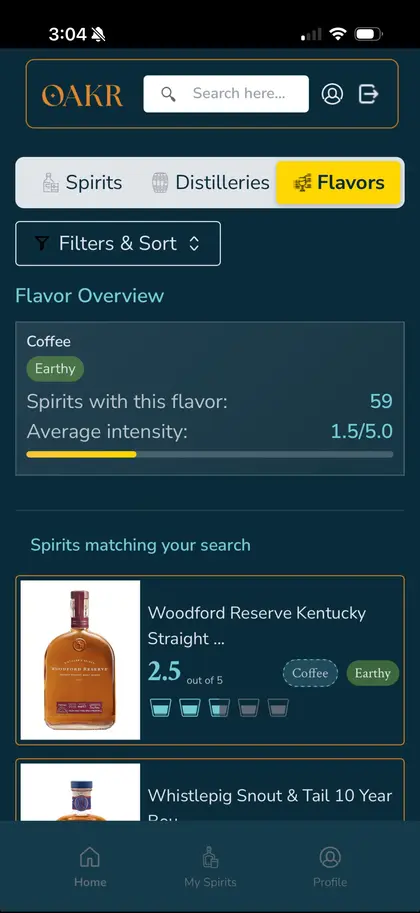
That polarization is exactly why blind tasting data matters. OAKR’s panel scores every spirit without labels — they do not know if they are tasting a $20 farm distillery bourbon or a $200 allocated release. The flavor profile that emerges is purely about what is in the glass: the smoke, the grain oils, the barrel char, the proof heat. Your Spirit Match score against MB Roland’s lineup tells you whether your palate is built for this kind of intensity or whether you belong in gentler territory. For a bourbon this distinctive, knowing before you buy is worth more than any label description.
[Download OAKR free on iOS, Android, or web →]

Bourbon enthusiast, spirits industry analyst, and the voice behind OAKR's distillery guides, brand reviews, and bourbon education content. Visiting distilleries, dissecting mashbills, and translating the craft into data since 2024.
MB Roland’s dark-fired corn bourbon is unlike anything else on the market. Your Spirit Match tells you if your palate is ready for it.