
Leopold Bros. floor-malts their own barley. That single fact tells you more about this distillery than any origin story. They spread wet grain across a concrete floor, rake it by hand for days, and kiln it on-site in the largest traditional malting floor of any distillery in the United States. Almost nobody does this anymore because the labor cost is absurd. Leopold Bros. does it because the flavor difference is not subtle — and because Todd Leopold trained in Munich, where they taught him that shortcuts in grain preparation are shortcuts in the glass. That obsession with doing the expensive thing is the thread that runs through everything this Denver operation produces. From a three-chamber still resurrected from pre-Prohibition blueprints to dunnage-style warehouses with dirt floors at 5,280 feet of elevation, Leopold Bros. is an exercise in choosing difficulty at every decision point. The result is a portfolio of spirits that tastes like nothing else on the American market — for reasons that are entirely traceable to specific production choices.

The Leopold Bros. story starts in Ann Arbor, Michigan, in 1999, where Todd and Scott Leopold opened a brewpub in a renovated brake factory. Todd had graduated from the Siebel Institute of Technology in Chicago and apprenticed at breweries and distilleries across Germany. Scott, an environmental engineer with degrees from Northwestern and Stanford, designed the operation as a near-zero-pollution facility. They brewed beer and distilled spirits side by side, which was unusual for the time.
In 2008, they closed Michigan and relocated to Denver. The reason was water. Todd, the engineer-distiller, identified the Denver Basin Aquifer as the foundation he wanted — pristine, naturally filtered, and providing a neutral mineral canvas for their grain flavors. They didn’t move for tax breaks or real estate prices. They moved for the water, and then built a purpose-designed distillery around it at 5285 Joliet Street in northeast Denver.
The Denver location brought a second advantage they couldn’t have replicated in Michigan: altitude. At a mile above sea level, the low atmospheric pressure and dry climate create an aging environment that is fundamentally different from Kentucky’s humid river valleys. The whiskey matures faster in some respects — the temperature swings push spirit deep into oak and pull it back out aggressively — but the interaction is qualitatively different from what happens in a Bardstown rickhouse.
Leopold Bros. has grown steadily since the move. They now produce over twenty spirits — whiskeys, gins, vodka, absinthe, liqueurs, amari — all distilled, aged, and bottled at their single Denver facility. Distribution covers more than twenty states and parts of Europe. They are proud descendants of Aldo Leopold, the conservationist whose writings shaped modern wildlife and land management, and sustainability is embedded in the operation: gravity-fed processes, water recycling, composting.
Leopold Bros. uses heritage grains where the industry uses commodity grain. Their Three Chamber Rye is built on Abruzzi rye, an heirloom varietal that is oily, rich, and floral — nothing like the generic rye grown for yield and efficiency. When you drink it, you taste the actual grain character, not just barrel char covering a neutral spirit.
Their bourbon mashbill follows the legal requirement of 51% corn minimum, but the remaining grain bill reflects their obsession with flavor over efficiency. The malted barley they use is their own — floor-malted on-site, raked by hand, kilned in-house. This preserves nutty, biscuit-like flavors that industrial malting destroys. The result is a grain backbone in their American whiskeys that has a depth the big Kentucky operations cannot replicate at scale.
Yeast is where Leopold Bros. gets genuinely technical. Todd selects specific yeast strains depending on the product, and he ferments at cooler temperatures than most bourbon producers. Cool fermentation slows the yeast down, which reduces harsh alcohol production and increases ester formation — the compounds responsible for fruit and floral aromas. Their spirits often carry a distinct fruitiness (peach, pear, apple) that is not artificial or barrel-derived. It comes from yeast working slowly on high-quality grain.
For the Three Chamber Rye, the yeast selection is particularly critical. The mash is thicker and more complex than a modern sour mash, and the yeast has to survive that environment while producing the dense flavor profile — peach marmalade, cacao, lavender — that defines the expression. These are not barrel flavors. They are fermentation flavors, which is the whole point.
Leopold Bros. operates eight stills of several different styles. For bourbon, they use a multi-step pot-still process rather than the industry-standard continuous column still. The initial stripping run happens in a pot still, which captures a wider, richer array of flavor compounds (congeners) than a column still would. That low-proof spirit then moves to a separate doubler — essentially a second pot still — for the spirit run, where final proof and character are achieved.
This double pot-still method is deliberately inefficient. A column still can run continuously, pumping out high-proof spirit at volume. Pot stills work in batches, require cleaning between runs, and are slower by every metric. But they let more of the heavy, oily, flavor-dense compounds through. The resulting distillate is viscous and rich in a way that column-stilled bourbon is not.
The three-chamber still is the centerpiece of the operation, though it is used for rye rather than bourbon. Todd Leopold had this nearly extinct piece of equipment recreated from pre-Prohibition blueprints — the first three-chamber still built in over half a century. It produces a spirit that is heavy, oily, and dense with fruit and spice character straight off the still. No other operating distillery in the world has one.
Beyond the stills, the production philosophy extends to every step. They mill their own grain. They use open wooden fermenters rather than stainless steel tanks. They do not add enzymes to speed up cooking. They do not chill-filter. They do not add caramel coloring. The spirit in the bottle is exactly what came out of the barrel.
Leopold Bros. uses barrels with precise char levels designed to complement the spirit rather than dominate it. Where many mass-market producers use a heavy alligator char to blast whiskey with vanilla and caramel quickly, Leopold Bros. treats the barrel as a partner. The char level is calibrated so you taste grain character alongside wood influence — cocoa nibs, hazelnut, maple syrup — rather than just burnt sugar.
They also barrel at a lower entry proof than most of the industry. More water and less alcohol going into the barrel means the spirit pulls different, more nuanced flavors from the wood over time. It is an old-school technique that most distilleries abandoned because higher entry proof is more efficient (you fit more alcohol per barrel). Leopold Bros. chose flavor.
The aging warehouses are dunnage-style — low buildings with earthen floors. The dirt naturally regulates humidity, creating a moister environment than a standard heated metal rickhouse. This matters because humidity affects evaporation rates: in a dry, hot warehouse, water evaporates faster than alcohol, driving proof up and extracting harsh tannins. The dunnage humidity encourages a gentler interaction that preserves delicate floral and fruit notes — lavender, rose, elderflower — that aggressive aging would destroy.
Denver’s mile-high altitude adds another variable. The low atmospheric pressure, combined with dramatic daily temperature swings, pushes whiskey into and out of oak aggressively. The dry air increases evaporation (angel’s share), which raises production cost but concentrates flavor. Leopold Bros. manages this tension deliberately: the dunnage floors fight to keep humidity in while the altitude tries to pull it out.
They also use a foeder — a massive wooden vat sourced from a brewery — for blending. Instead of marrying barrels in an inert steel tank before bottling, they blend in this giant vessel where the whiskey maintains wood contact. The flavors integrate slowly, smoothing rough edges without adding excessive new-oak spice. It is a technique borrowed from wine and beer, and it works.
Todd Leopold is the distiller. He graduated from the Siebel Institute of Technology in Chicago in 1996, then trained at breweries and distilleries across Germany, studying malting, fermentation, and distillation techniques that most American producers had long abandoned. His European education is the foundation of Leopold Bros.’ production philosophy — the floor malting, the open fermenters, the historical still designs, the cool fermentation temperatures.
Scott Leopold is the engineer. With degrees in industrial and environmental engineering from Northwestern and Stanford, he designed the distillery’s physical systems: the gravity-fed processes, the water recycling, the zero-waste composting. He spent the early part of his career designing sustainable manufacturing for large corporations before applying those principles to spirits production.
The combination is specific and consequential. Todd knows what the spirit should taste like based on historical methods and grain quality. Scott knows how to build systems that achieve those results sustainably and consistently. One brother is the palate; the other is the infrastructure. Neither could produce what Leopold Bros. makes without the other.
Maryland-Style Rye Whiskey — 100 proof (50% ABV). This is their most approachable whiskey and a good starting point. It is an homage to a pre-Prohibition Maryland rye style — fruity, floral, and far less aggressive than the peppery ryes that dominate the market. Expect peach, jam, and buttered toast. If you think you don’t like rye, this bottle might change your mind. The approachability is the point; the complexity reveals itself on repeated pours.
Straight Bourbon — Their straight bourbon showcases the floor-malted barley and pot-still process. It is grain-forward with a texture that coats the mouth — oily and viscous in a way that sets it apart from column-stilled bourbon. Notes tend toward dark grain, fruit, and deep caramel. This is not a sweet corn bomb; it is a bourbon that wants you to taste the production.
8 Year Old Cask Strength Bourbon — Approximately 55% ABV, unfiltered. This is the heavy hitter. Finished in barrels that previously held their Three Chamber Rye, it picks up additional texture and complexity from the rye residue in the wood. Dense cocoa, dark grains, and graham cracker, with an oily mouthfeel that hangs around. It stands up to ice or a splash of water without falling apart. The price runs high, but you are paying for eight years of Colorado aging with its elevated angel’s share.
Three Chamber Rye — The magnum opus. Distilled in that one-of-a-kind recreated still using Abruzzi rye. Heavy, oily, savory, with stone fruit, heavy spice, and a mouthfeel that no modern column still can replicate. This is a whiskey that demands your attention. Production is limited by the nature of the equipment — you cannot rush a three-chamber still.
Rocky Mountain Blackberry Whiskey — Real whiskey blended with Rocky Mountain blackberry juice, then aged in used bourbon barrels. This is not the neon-colored fruit whiskey from your college years. It tastes like whiskey first, blackberries second, with vanilla and oak from the barrel and a tart, genuine-fruit finish. Worth trying over a big ice cube in summer.
Leopold Bros. makes spirits that are polarizing by design. The floor-malted grain, the pot-still distillation, the cool fermentation, the dunnage aging — every production decision prioritizes complexity over familiarity. Some drinkers taste peach marmalade and lavender in the Three Chamber Rye. Others taste oily grain and heavy spice. Both are right. The question is which profile matches what you actually enjoy drinking.
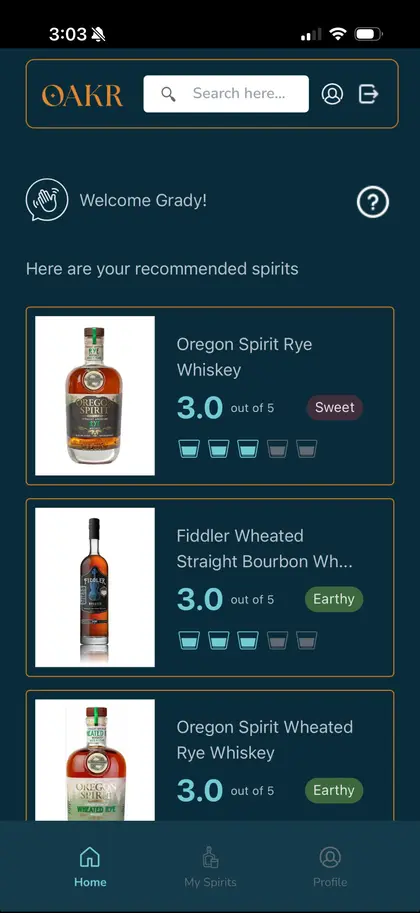
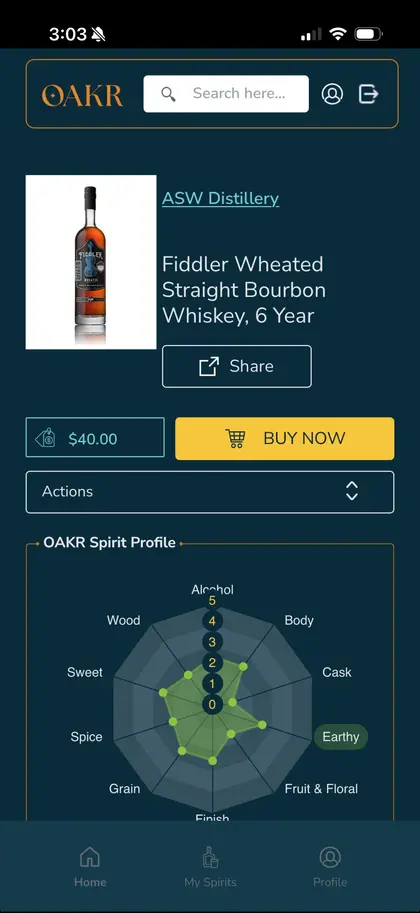
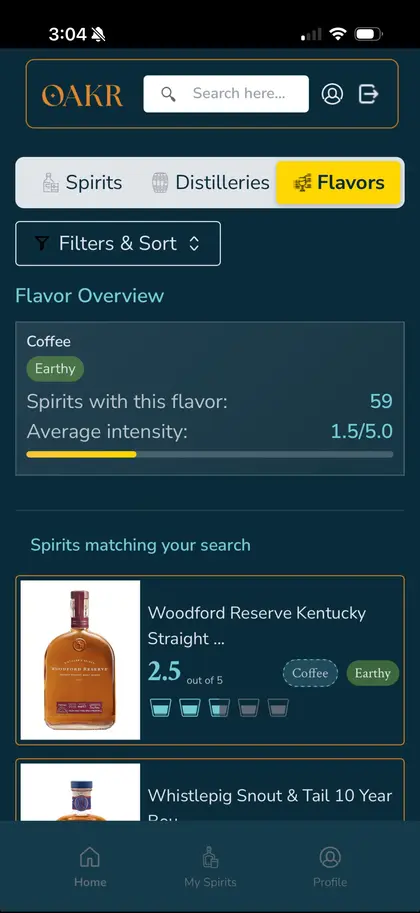
That is a palate question, not a quality question. OAKR’s blind tasting panel scores over 100 flavor notes across 10 macro categories for every spirit in the database, including Leopold Bros.’ lineup. The panel tastes without labels, which means the data reflects what is in the glass, not what is on the bottle. OAKR’s AI palate profiling learns from the bottles you rate and builds a taste map that gets sharper over time. For a distillery this technically distinctive, knowing your Spirit Match score before you spend $60-$100 on a bottle is the difference between a discovery and a regret.
[Download OAKR free on iOS, Android, or web →]

Bourbon enthusiast, spirits industry analyst, and the voice behind OAKR's distillery guides, brand reviews, and bourbon education content. Visiting distilleries, dissecting mashbills, and translating the craft into data since 2024.
Floor-malted grain, dunnage aging, a one-of-a-kind still. Your Spirit Match score tells you if Leopold Bros.’ complexity matches your palate.