
Pick up a bottle of Balcones Baby Blue Corn Whisky. It's made from 100% roasted Texas blue corn — not the yellow dent corn that drives 99% of American whiskey production. The grain is oilier, nuttier, and more complex. Run it through custom Forsyths copper pot stills with helical lyne arms, age it in used oak in the punishing Waco heat, and you get a spirit that tastes like nothing else on the shelf. Baby Blue was the first legal Texas whisky sold after Prohibition. It launched a distillery that would go on to redefine what American whisky can be — and it remains the easiest entry point into a lineup that gets progressively bolder, stranger, and more rewarding from there. That lineup now includes single malts made from Scottish Golden Promise barley, a 100% Texas Elbon rye, a corn whisky smoked with sun-baked scrub oak, and experimental barrel finishes that rotate through the portfolio. Balcones isn't making bourbon in the traditional sense — they're making Texas whisky, and the distinction isn't just geographic branding. The grains, the stills, the climate, and the people behind the operation produce spirits that share more DNA with Scottish single malts than with Kentucky bourbon, even when the mashbill says "corn." This guide covers every angle of Balcones — from the welding-shop origins to the Diageo acquisition, the production pause, and every bottle worth your attention.

Balcones started in 2008 in an old welding shop under a bridge in Waco, Texas. Founder Chip Tate, a homebrewer with a background in engineering, built his first stills by hand — welded them himself because importing custom copper from Scotland wasn’t in the budget. The operation was scrappy, underfunded, and driven by a specific kind of Texas stubbornness that said: if it doesn’t exist here, build it.
The distillery eventually moved into the historic Texas Fireproof Storage Company building at 225 S. 11th Street in downtown Waco — a century-old structure that survived one of the largest tornadoes in U.S. history. The building now houses all distilling operations, a visitor center and tasting room, and some of the tallest copper pot stills in the world.
Tate’s departure from the company he founded is part of the Balcones story. Ownership disputes led to his exit, and the distillery eventually came under the umbrella of Diageo, the global spirits conglomerate. That corporate backing brought distribution scale but also raised questions from the craft community about independence. In practice, the production team — led by Head Distiller Jared Himstedt, a founding member — has maintained the distillery’s distinctive approach.
In September 2025, Diageo paused distilling operations at Balcones (along with George Dickel and Teaninich in Scotland) as part of a broader efficiency review. Seventeen production workers were laid off. The pause is expected to last through June 2026. The tasting room and visitor center remain open. Existing inventory continues to flow to market — the barrels are aging, the bottles are on shelves, and the core lineup is available.
Waco’s climate remains the distillery’s most distinctive production asset. Summers are brutal — extended heat with dramatic daily temperature swings. Balcones’ own research found that their barrels experience extreme temperature fluctuations on 213 days per year. That’s nearly 60% of the time. The result is accelerated maturation: spirits that develop deep, complex wood character in a fraction of the time it would take in a cooler climate.
The water comes from the Trinity Aquifer — hard, mineral-rich water that contributes a distinct local signature to the mash. It’s a different canvas than the soft limestone water of Kentucky, and it shows in the final product.
Balcones treats grain sourcing as a creative act, not a commodity purchase.
Blue corn drives Baby Blue and Brimstone. Texas-grown, roasted before mashing, this corn is fattier and more flavorful than standard yellow dent. It produces a spirit with a nutty, oily, toasty maize character — nothing like a typical corn whisky.
Golden Promise barley is imported from Scotland for the single malts (Texas 1 and Lineage). This is the same heritage barley variety that legendary Scotch distilleries used before switching to higher-yield, less-flavorful modern strains. It brings honeyed, toasty character. Balcones also grows barley in Texas and blends the two sources in Lineage, creating a transatlantic grain bill that marries old-world malt character with Texas terroir.
Elbon rye, developed for Texas ranchers as a cover crop, drives the Texas Rye 100. At 100% rye, the spirit is spicy, grassy, and citrusy — a complex rye profile that reflects a grain never originally intended for distillation.
On yeast, Balcones takes an aggressive, experimental approach. They practice open fermentation — tanks left open to Waco’s ambient air, inviting wild yeast and local microflora to join the cultured strains. Fermentation runs a full seven days, significantly longer than the three-to-five-day industry standard. For single malts, they use a dual yeast pitch: dry malt whisky yeast combined with dry brewer’s ale yeast. Pitching two starved, competing strains creates stress that forces the organisms to produce more complex flavor precursors — the heavy alcohols and esters that become stone fruit, banana, and floral notes in the finished whisky. It’s fermentation as controlled chaos.
The stillhouse holds four custom copper pot stills from Forsyths in Scotland — two wash stills, two spirit stills. These are among the tallest pot stills in the world, and they’re fitted with Balcones’ signature feature: helical lyne arms.
The lyne arm is the pipe that carries vapor from the still to the condenser. Most lyne arms are straight or slightly angled. Balcones’ are coiled — copper spirals (10-turn on one spirit still, 4-turn on the other) that dramatically increase copper contact during distillation. More copper contact strips sulfur and produces a cleaner spirit; the different arm lengths give the distillers two distinct spirit profiles from the same equipment. The 10-turn arm yields a brighter, more refined distillate. The 4-turn arm produces a heavier, oilier spirit. This built-in versatility is a genuine production advantage.
For grain whiskies (corn and rye), Balcones distills on-grain — meaning the solid mash stays in the pot during the first distillation. This is a logistical challenge in pot stills, which are bottom-heated and prone to scorching solids. Balcones solved it with an external reboiler that heats the liquid indirectly. On-grain distillation adds earthy, nutty complexity that off-grain methods can’t replicate.
The stills run low and slow — low steam levels that give the vapor extended contact with the helical copper arms. Cuts are made by nose and palate, not automation. In Waco’s volatile climate, where temperature and pressure shift throughout the day, this hands-on approach is essential for capturing the most flavorful hearts.
Balcones breaks from the standard 53-gallon barrel in both directions. They frequently use larger casks — 240 to 500 liters (roughly 63 to 132 gallons) — because a larger barrel has a lower surface-area-to-volume ratio, slowing the aggressive Texas oak extraction and reducing the enormous angel’s share that Waco’s heat demands. They spend two to three times the industry average on their new oak barrels, hand-selecting wood by species, toast and char levels, and stave yard-aging time. They char the barrel heads — a costly step many producers skip.
Beyond new oak, the barrel program includes used Kentucky bourbon barrels, tequila and mezcal casks, and wine barrels. This diversity gives the blending team (Gabriel RiCharde and Emma Crandall) a wide palette for constructing the final expressions.
The climate does the rest. Those 213 days of extreme temperature swings per year push the spirit past the easy surface-level sugars in the oak. Balcones’ own comparative aging study confirmed it: the same spirit aged in identical barrels across Texas, Kentucky, Washington, and Scotland produced dramatically different results. The Texas version pulled less of the shallow caramel and nutty notes and amplified deeper, more complex core flavors — vanilla, aggressive spice, fresh oak, and smoke. The angel’s share runs two to three times higher than in mild-climate regions, which drives up cost but concentrates what remains.
The warehouses are not temperature-controlled. Barrels bake in summer and contract in winter. This is intentional — the violent cycling is the mechanism that produces Balcones’ signature depth and intensity.
Jared Himstedt — Head Distiller and founding member. His background includes social work, ceramic arts, punk bands, and bicycle repair. He learned distilling through home brewing and trial-and-error, not formal education. His philosophy of “relational discovery” — figuring things out by doing — produced a production approach that doesn’t follow Scottish or Kentucky conventions. He treats whisky making as an art practice, not an industrial process.
Gabriel RiCharde — Blending Manager. Graduate degree in geology. Previously worked as a geologist overseas and distilled on apartment stoves in Spain and Germany. He oversees maturation, blending, and R&D, curating the barrel selection that defines each expression.
Emma Crandall — Blender. Joined the industry in 2017, trained through the Whisky Marketing School and distillery management in Austin before arriving at Balcones in 2021. She views blending as painting on a shared canvas — layering complexity across barrel types and ages.
This team works because none of them came from the bourbon establishment. They have no inherited assumptions about what American whisky should taste like, which freed them to build something that genuinely reflects the Texas climate and their own creative instincts.
Baby Blue Corn Whisky — 100% roasted Texas blue corn. Aged in used oak. The most approachable bottle in the lineup. Melted butter, corn sweetness, vanilla. Intentionally youthful. The entry point and the first legal Texas whisky post-Prohibition.
Texas Pot Still Bourbon — Balcones’ take on bourbon, distilled through their Forsyths pot stills. Rich, grain-forward, and shaped by Waco’s climate. A bridge between their single malt program and traditional bourbon expectations.
Texas 1 Single Malt — 100% malted barley aged in new oak. Robust, full-flavored, intense. Fruit, toffee, oak, leather. The flagship that launched Balcones’ reputation and the American Single Malt category conversation. Not shy.
Lineage Texas Single Malt — Blends Texas-grown malted barley with Scottish Golden Promise barley. Aged in a mix of new and used oak. Softer and more nuanced than Texas 1, with fruit, honey, and cream. Award-winning balance between old-world tradition and Texas terroir.
Brimstone — Blue corn whisky smoked with sun-baked Texas scrub oak (not peat). Campfire smoke, chili, chocolate. Polarizing and unforgettable. If you like Islay Scotch or want the most adventurous pour in the lineup, this is it.
Texas Rye 100 — 100% Elbon rye from Northwest Texas. Bottled-in-Bond. Pepper, baking spice, chocolate, dark fruit. A rye that reflects its Texas grain origin rather than replicating a Kentucky or Indiana profile. Strong neat, exceptional in a Manhattan.
Note: production paused August 2025 through June 2026 (Diageo efficiency review). Existing inventory continues to sell. The tasting room at 225 S. 11th St. in downtown Waco remains open.
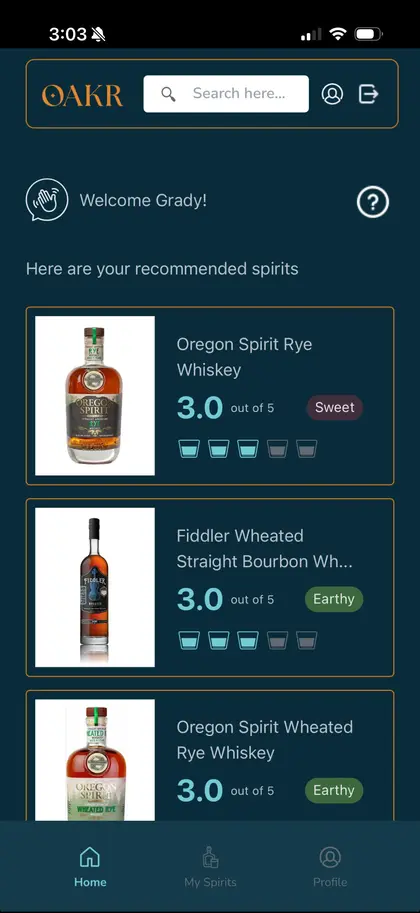
Balcones makes blue corn whisky, peated single malt, scrub-oak-smoked spirits, and 100% rye from a Texas cover crop grain. The lineup spans so many categories and flavor territories that “what does Balcones taste like?” isn’t a useful question. The better question is which Balcones expression fits your palate — and that’s a question built for data, not guesswork.
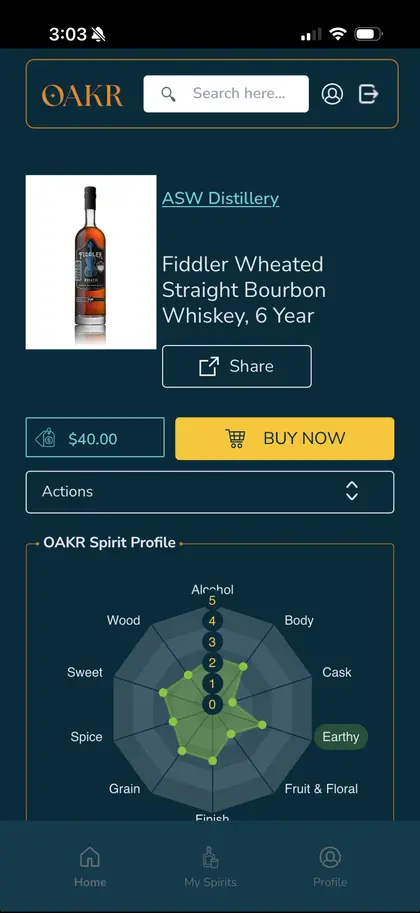
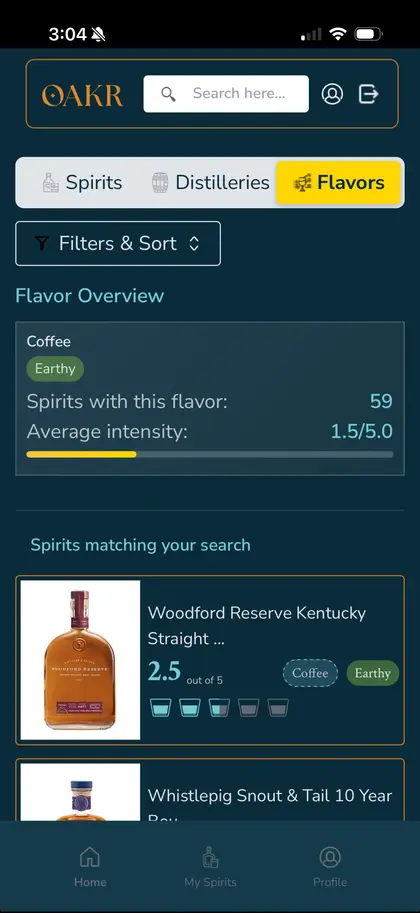
OAKR’s blind tasting panel evaluates every spirit without seeing the label or the price. Each expression gets scored across 100-plus individual flavor notes organized into 10 macro categories — producing a profile that shows you exactly where Baby Blue, Texas 1, Brimstone, and the rest land on the flavor map. The differences between those expressions are dramatic. A tool that can compare them to each other and to the thousands of other spirits in your consideration set is the difference between an informed purchase and a $60 gamble.
The Spirit Match score takes it further. Rate a few bottles, and OAKR’s AI palate profiling builds a map of your preferences. It can tell you whether you’re a Lineage drinker (softer, more balanced) or a Brimstone drinker (aggressive, smoky) — or whether the entire Balcones approach is too far from your comfort zone. Explore our spirits data to see how each expression maps across ten flavor categories.
[Download OAKR free on iOS, Android, or web →]

Bourbon enthusiast, spirits industry analyst, and the voice behind OAKR's distillery guides, brand reviews, and bourbon education content. Visiting distilleries, dissecting mashbills, and translating the craft into data since 2024.

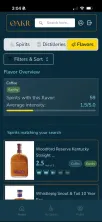
Baby Blue or Brimstone? Lineage or Texas 1? With a lineup this diverse, guessing costs money. OAKR’s AI palate profiling maps your taste preferences and matches you to the right expression — backed by blind tasting data across 100+ flavor notes.