
Every barrel of Maker’s Mark is physically moved during the aging process. Workers rotate 525-pound barrels from the upper floors of the rickhouse — where summer heat bakes the bourbon deep into the wood — down to the cooler lower floors, and back again, over the course of six to seven years. Most bourbon producers skip this step entirely. They let barrels sit in place, accept the variation that comes from floor position, and blend barrels from different locations to achieve consistency after the fact. Maker’s Mark does it the other way: force consistency during aging, so the finished bourbon tastes the same whether your bottle came from the top floor or the bottom. It is one of the most labor-intensive practices in the industry, and it is one of the reasons Maker’s Mark tastes essentially identical from batch to batch, year after year.

That consistency is the thesis statement for the entire operation. Bill Samuels Sr. purchased the Burks’ Distillery in Loretto, Kentucky, for $35,000 in 1953. He did not want to make his family’s existing bourbon — he wanted to make something better. The Samuels family had been distilling since the 1700s, and Bill Sr. ceremonially burned the old family recipe to start fresh. He tested new mashbills by baking bread from each candidate recipe, a faster proxy for the years-long process of distilling, aging, and tasting. The bread made with soft red winter wheat instead of rye won. That decision, wheat over rye, would define a subcategory of bourbon and set the house style for the next seven decades.
Maker’s Mark sits on Star Hill Farm at 3350 Burks Spring Road in Loretto, Kentucky, about an hour south of Louisville. The distillery was listed on the National Register of Historic Places in 1974 and designated a National Historic Landmark in 1980 — the first distillery in America to receive that recognition while still actively producing bourbon. The campus sits on a limestone shelf that provides the distillery’s water supply directly. Kentucky limestone filters out iron — which produces bitter, metallic-tasting bourbon — and adds calcium and magnesium, minerals that help yeast flourish during fermentation.
Margie Samuels, Bill Sr.’s wife, created nearly everything about the brand that was not the liquid itself. She designed the bottle shape, drew the label by hand, invented the red wax dip that seals every bottle, and chose the name Maker’s Mark — a reference to the pewter marks that silversmiths stamp on their work. She is also credited with inventing bourbon tourism; in the early years, she personally hosted visitors at the distillery when the idea of a “distillery tour” barely existed.
The distillery passed from Bill Sr. to his son Bill Samuels Jr. in the 1970s, and is now led by eighth-generation Rob Samuels. In 2014, Beam Inc. sold to Suntory, creating what is now Suntory Global Spirits. Maker’s Mark is one of the few American whiskeys to use the Scottish spelling “whisky” — a nod to the Samuels family’s heritage.
The mashbill is 70% corn, 16% soft red winter wheat, and 14% malted barley. It has not changed since 1954. This is the single most important production fact about Maker’s Mark: there is no rye in the recipe. In an industry where rye is the standard secondary grain — providing the spicy, peppery backbone that most bourbons share — Maker’s Mark uses wheat, which contributes a softer, rounder, sweeter character.
The grain sourcing is local and tested. Corn and wheat come from small cooperative farms in the surrounding area, selected because the farms sit on the same limestone soil as the distillery’s spring water. Before grain is accepted, it is tested for genetic modification by screening for reactions to three different GMO herbicides. Moisture content must fall below 14%. In 2023, Maker’s Mark became the first distillery in the world to be Certified Regenified — a regenerative agriculture certification that covers both the farms supplying the grain and the distillery campus itself.
The yeast program is a genuine legacy. Maker’s Mark propagates its own yeast from a strain that has been in continuous use for more than 60 years. The strain is maintained on-site and reproduced for every batch. It is one of the most closely guarded assets at the distillery.
The grain is milled with a roller mill — not a hammer mill. Most bourbon producers use hammer mills, which are faster but generate heat that can degrade the grain. Maker’s Mark uses the slower roller process because the Samuels family believes hammer-milled grain tastes more bitter.
Fermentation takes place in cypress wood vats — enormous open-top tanks that each hold 10,000 gallons of mash. Maker’s Mark uses a sour mash process: acidic backset from the previous distillation is added to each new batch to lower pH and create a consistent environment for the yeast. Fermentation runs three to four days.
Distillation is a two-pass process. The first pass runs through a copper column still — 3 feet in diameter, 37 feet tall, with 16 plates. The second pass goes through a copper pot still, also known as the doubler. Both stills are built by Vendome Copper & Brass Works. The use of all-copper construction helps remove sulfur compounds that would otherwise produce harsh flavors. The two-pass system produces a cleaner distillate than a single-pass column still, but retains more character than a column-only operation would.
The barrel entry proof is 110 — the lowest among major bourbon producers. The legal maximum is 125, and most large distilleries enter at or near that limit because higher proof means less water in the barrel, which means more barrels per batch, which means more efficiency. Maker’s Mark sacrifices that efficiency for flavor: lower entry proof preserves more of the grain’s original character in the finished bourbon and means less water is added at bottling.
Production runs in small batches of approximately 19 barrels at a time — roughly 1,000 gallons per batch.
Maker’s Mark uses new American white oak barrels from Independent Stave Company. The cooperage seasons the staves outdoors for nine months, including at least one full Kentucky summer, before the barrels are assembled and charred. The outdoor seasoning removes bitter tannins from the wood. Without this step, the wood sugars would be overwhelmed by harsh tannic compounds.
The barrel rotation program is the production practice that most separates Maker’s Mark from its competition. The rickhouses are traditional Kentucky warehouse construction — multi-story buildings where temperature varies dramatically from floor to floor. Upper floors can reach extreme heat in summer; lower floors stay cooler year-round. Most distilleries accept this variation and compensate by blending barrels from different floors at bottling. Maker’s Mark physically moves every barrel — rotating them from upper floors to middle floors to lower floors, with tastings at each stage — to normalize temperature exposure during aging. The result is a bourbon that tastes remarkably consistent from barrel to barrel.
The aging is done “to taste, not time.” There is no fixed age statement. The distillery’s tasting panel determines when each batch has reached the target flavor profile, which typically takes six to seven years. The aging process now includes an additional environment: a LEED-certified limestone cellar carved into the hillside adjacent to the distillery. Opened in December 2016, the cellar maintains a consistent 47-degree temperature that slows extraction dramatically, allowing older bourbons to develop complexity without accumulating the bitter over-oaked character that can come from extended aging in Kentucky’s hot rickhouses.
Dr. Blake Layfield is the current Master Distiller. Rob Samuels, Bill Sr.’s grandson and eighth-generation whisky maker, serves as Managing Director. The distillery does not hinge on a single personality; the production system — the mashbill, the yeast, the roller mill, the barrel rotation — is the star. Denny Potter served as Master Distiller from 2018 to 2022. Kevin Smith held the role before that. The consistency of the bourbon across decades and multiple distillers is itself evidence that the system works.
Maker’s Mark Kentucky Straight Bourbon Whisky — 70/16/14 wheated mashbill, 90 proof, aged approximately six to seven years. The flagship. Caramel, vanilla, baked fruit, soft oak, and a clean finish. No rye spice — the wheat delivers sweetness where rye would deliver pepper. Available everywhere, typically $28–32. This is the baseline from which every other Maker’s Mark expression is built.
Maker’s Mark 101 — Same mashbill, bottled at 101 proof. Originally released only at the distillery and in duty-free shops, now more widely available. The higher proof amplifies the caramel and oak without changing the fundamental character. A step up in intensity for drinkers who find the 90-proof version too gentle.
Maker’s 46 — Standard Maker’s Mark finished with 10 seared French oak staves inserted into the barrel for an additional aging period inside the limestone cellar. The French oak adds layers of baking spice, cinnamon, and vanilla depth that the standard does not have. 94 proof. Typically $35–40. The stave-finishing concept, introduced in 2010, was the first expansion of the Maker’s Mark lineup in the brand’s history.
Maker’s Mark Cask Strength — Same mashbill, bottled at full barrel strength. Proof varies by batch, typically between 108 and 116. Non-chill filtered. This is the standard Maker’s Mark with no dilution — the flavor profile amplified in every direction. Dark fruit, deeper oak, more body. The cask strength releases now include age statements on the label.
Maker’s Mark Private Select — The custom barrel program. Retailers select from a menu of 10 different wood stave types (various toasts and grain profiles of American and French oak), choosing five staves to insert into a barrel of fully mature cask strength bourbon. The barrel then finishes in the limestone cellar. Each Private Select bottle is unique to the retailer who customized the stave profile. Typically around $70–80. This is the most interesting product in the lineup from a flavor exploration standpoint.
Maker’s Mark Cellar Aged — The most mature expression. Released annually since 2023 in limited quantities. The 2025 release blends 74% eleven-year-old, 10% thirteen-year-old, and 16% fourteen-year-old bourbon. Aged first in traditional rickhouses, then transferred to the limestone cellar for extended maturation. Bottled at cask strength — the 2025 release is 112.9 proof. Dark brown sugar, caramelized oak, baked apple, creamy fudge, toasted almond, dark cherry. SRP $175. The 14-year-old component is the oldest bourbon Maker’s Mark has ever officially acknowledged.
Star Hill Farm Whisky — Debuted in 2025. Maker’s Mark’s first-ever wheat whisky (distinct from wheated bourbon). The first whisky to earn Estate Whiskey certification. A signal that the distillery is expanding beyond the single-mashbill model that defined it for sixty years.
Wood Finishing Series — Limited annual releases that experiment with different finishing stave profiles. Previous expressions include FAE-01 and FAE-02, which explored different combinations of toasted and charred staves. These are where the distillery’s R&D work shows up in the retail lineup.
The wheated bourbon debate is the oldest argument in bourbon. Maker’s Mark sits on one side of it: soft, round, sweet, with fruit-forward grain character and no rye spice. Most of the rest of the industry sits on the other side: rye-forward, peppery, spicy, with a drier finish. Neither is better. They are different grain architectures producing different flavor outcomes. The question is which architecture your palate prefers — and the marketing on the bottle cannot answer that question for you.
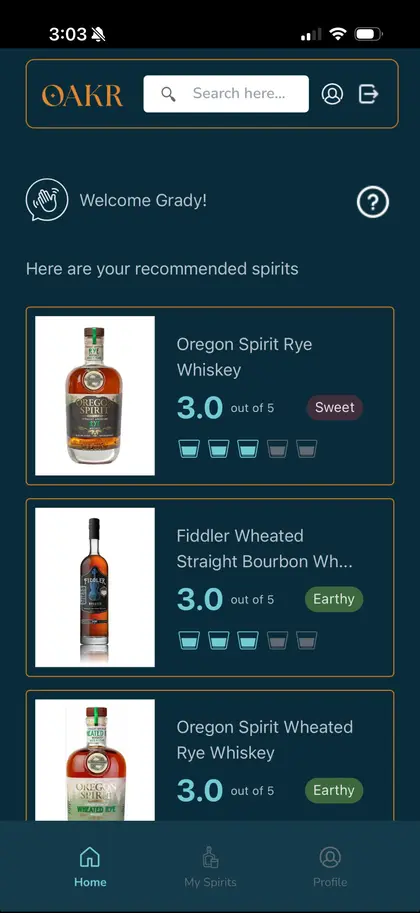
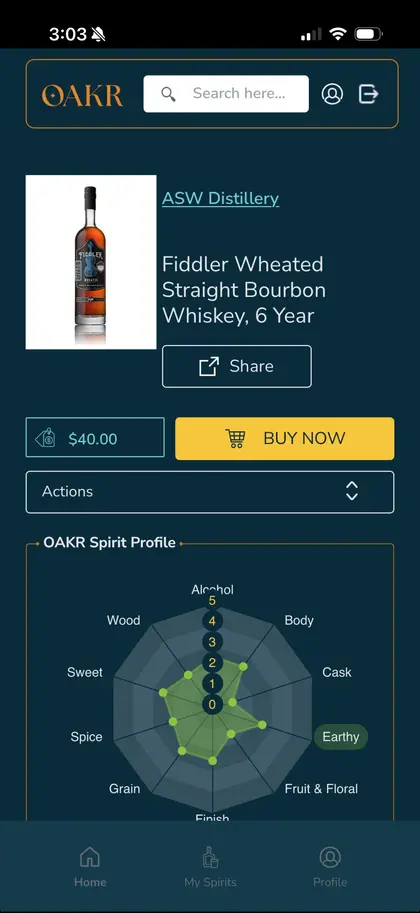
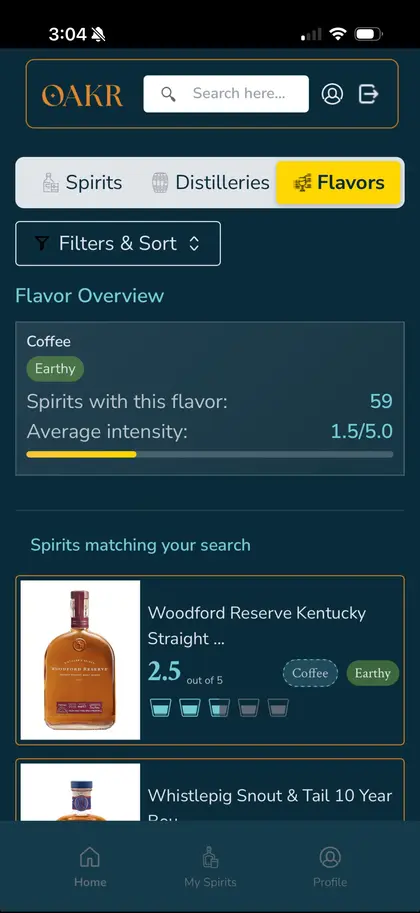
OAKR’s blind tasting panel evaluates every Maker’s Mark expression without knowing what is in the glass. The panel scores across 100+ flavor notes in 10 macro categories, which means the wheat-driven sweetness, the barrel-rotation consistency, and the stave-finishing variations are all captured independently. Your Spirit Match score tells you whether Maker’s Mark’s wheated architecture — the soft grain, the low entry proof, the barrel rotation — aligns with what your palate actually prefers. That is a palate question. The data answers it.
[Download OAKR free on iOS, Android, or web →]

Bourbon enthusiast, spirits industry analyst, and the voice behind OAKR's distillery guides, brand reviews, and bourbon education content. Visiting distilleries, dissecting mashbills, and translating the craft into data since 2024.
Maker’s Mark chose wheat over rye in 1954. That single grain swap created a completely different bourbon category. OAKR’s blind tasting data captures the wheated softness independently from rye-forward spice — your Spirit Match tells you which architecture fits.