
115 proof. That is the barrel entry proof at Wild Turkey — the proof at which new make spirit enters a new charred oak barrel for aging. The legal maximum is 125, and most large bourbon producers barrel at or near that ceiling because higher proof means fewer barrels needed per batch, which means lower storage costs and higher margins. Wild Turkey has historically entered at significantly lower proofs — 107 before 2004, 110 from 2004 to 2006, and 115 since 2006. Even at 115, Wild Turkey’s barrel entry is among the lowest in the industry. Lower entry proof means more water in the barrel, which means the bourbon retains more of the grain’s original flavor compounds rather than relying on the barrel to build character from a higher-proof, more neutral distillate. It also means less water needs to be added at bottling to reach the target proof — and since dilution mutes flavor, less dilution preserves more of what the barrel developed. This single number — 115 — explains why Wild Turkey 101 tastes bolder and more grain-forward than most mainstream bourbons at comparable price points.

Wild Turkey Distillery sits on a deep limestone shelf overlooking the Kentucky River in Lawrenceburg, Kentucky. The brand name came from a 1940 hunting trip: distillery executive Thomas McCarthy brought warehouse samples on a wild turkey hunt with friends. The following year, his friends asked for “some of that Wild Turkey whiskey,” and the name stuck. The distillery is now owned by the Campari Group, which purchased it from Pernod Ricard in 2009 for $575 million and has since invested over $100 million in facility upgrades including a new distillery, bottling hall, and visitor center completed in 2011.
The Lawrenceburg facility operates on the limestone shelf that provides naturally filtered, iron-free water — the same geological advantage that most Kentucky bourbon distilleries share. Wild Turkey currently maintains 29 rickhouses holding over 700,000 barrels of aging bourbon and rye. The operation runs a 52-foot column still and a 28,500-gallon doubler, fed by 23 stainless steel fermentation tanks (30,000 gallons each). Maximum annual capacity is 9.5 million proof gallons.
The distillery’s history is inseparable from the Russell family. Jimmy Russell started at Wild Turkey in 1954 at age 18, sweeping floors. He rose through every role to become Master Distiller and has now spent over 70 years at the same distillery — making him the longest-tenured active Master Distiller in the global spirits industry. His son Eddie joined in 1981 as a general helper and was named co-Master Distiller in 2015. Eddie’s son Bruce Russell now serves as Associate Blender, making it three generations of Russells actively shaping Wild Turkey’s bourbon. In 2023, all three collaborated for the first time on a single expression — Wild Turkey Generations, a blend of 9-, 12-, 14-, and 15-year-old bourbons.
Wild Turkey uses two mashbills. The bourbon mashbill is 75% corn, 13% rye, and 12% malted barley. The rye mashbill is 52% rye, 36% corn, and 12% malted barley. Both mashbills are used across the entire product range — the same bourbon mashbill produces Wild Turkey 81, Wild Turkey 101, Kentucky Spirit, Rare Breed, Russell’s Reserve, and the Master’s Keep releases. The difference between those products is aging, barrel selection, and proof — not recipe.
The 13% rye in the bourbon mashbill is moderate — higher than the 8-10% some distilleries use, but lower than the 18-28% in high-rye bourbons like Woodford Reserve or Bulleit. This puts Wild Turkey in the traditional Kentucky bourbon profile: enough rye to provide spice and structure, but not so much that it dominates the corn sweetness.
The yeast is a proprietary strain maintained at the distillery. Fermentation runs approximately three days in stainless steel tanks that replaced the original cypress wood vats in the 1990s.
The most useful way to understand Wild Turkey is to compare its two core expressions that target different drinkers.
Wild Turkey 101 is the flagship. Same 75/13/12 mashbill, bottled at 101 proof (50.5% ABV), blended from barrels aged six to eight years. It is one of the last remaining mainstream bourbons bottled above 100 proof at a sub-$25 price point. The flavor profile is direct: caramel, vanilla, baking spice, honey, leather, and a long, warm finish with noticeable rye pepper. There is nothing subtle about it. Wild Turkey 101 was built to taste like bourbon — not to be an approachable, low-proof gateway. Jimmy Russell’s philosophy was simple: he was trained by pre-Prohibition-style distillers who believed in full-proof, full-flavor bourbon, and when the industry pivoted to lighter, milder spirits in the 1970s and 1980s, Jimmy refused to dilute the product. Wild Turkey 101 survived the light-whiskey era because Jimmy did not change a thing.
Russell’s Reserve 10 Year is Eddie Russell’s creation. Same mashbill, bottled at 90 proof (45% ABV), aged a minimum of 10 years. Originally released in 2001 at 101 proof, it was later adjusted to 90 proof to let the extended aging speak for itself. The flavor profile is softer and more nuanced than the 101: vanilla, honey, dried fruit, leather, toasted oak, and a gentler spice note that unfolds rather than hits. Where Wild Turkey 101 is aggressive and confident, Russell’s Reserve is patient and layered. The extra aging rounds the edges and deepens the oak influence. Eddie designed it as a tribute to his father — bourbon that reflects Jimmy’s technique but carries Eddie’s preference for longer-aged, softer expressions.
The comparison reveals the production principle: same grain, same yeast, same stills, same barrel entry proof — different aging and different bottling proof. The liquid proves that time and dilution are the two most powerful tools a distiller has after the barrel is filled.
Wild Turkey distills on a 52-foot copper column still and runs the distillate through a doubler (a type of pot still used for the second distillation). The still proof — the proof of the spirit coming off the still — runs between 124 and 126, which is lower than many competitors. Lower still proof, like lower barrel entry proof, preserves more of the grain’s original flavor compounds. The philosophy is consistent throughout: keep the proof low, keep the flavor high.
The deep #4 “alligator” char on Wild Turkey’s barrels is the other signature. The heavy char creates a thick layer of activated carbon that filters harsh compounds while caramelizing wood sugars deep into the stave. The result is the bold caramel-toffee-spice profile that defines Wild Turkey across its entire lineup.
Wild Turkey uses new American white oak barrels with a #4 alligator char. The 29 rickhouses on the property provide the aging inventory for the full product range. Barrel position within the rickhouse — top floor vs. bottom floor — creates the variation that the blending team uses to build each expression. Top-floor barrels age faster and hotter, producing bolder, more oak-forward bourbon. Bottom-floor barrels age more slowly with softer, more nuanced results.
Rare Breed is a barrel-proof blend of 6-, 8-, and 12-year-old stocks — a marriage that captures different stages of maturation from different rickhouse positions in a single bottle. Kentucky Spirit is a single-barrel expression bottled at 101 proof. Russell’s Reserve Single Barrel is bottled at 110 proof, non-chill filtered. The Master’s Keep series pushes aging further — previous releases have included expressions aged 17 years and finished in sherry, cognac, and other casks.
Jimmy Russell — 70-plus years at Wild Turkey. Kentucky Bourbon Hall of Fame (2001). The longest-tenured Master Distiller in the world. Trained by pre-Prohibition-era distillers who believed that bourbon should be bold, full-proof, and unapologetic. His refusal to lighten Wild Turkey during the vodka era of the 1970s and 1980s is one of the most consequential decisions in bourbon history.
Eddie Russell — co-Master Distiller since 2015. Kentucky Bourbon Hall of Fame (2010). Creator of Russell’s Reserve and the Master’s Keep series. Where Jimmy resists experimentation, Eddie embraces it. The Master’s Keep releases — finished in sherry casks, cognac barrels, and other vessels — are Eddie’s work. The father prefers tradition. The son pushes boundaries. The bourbon benefits from both.
Bruce Russell — third generation. Associate Blender. Now involved in barrel selection and blending decisions. The 2023 Generations release was the first bottle to carry all three Russell signatures.
Wild Turkey 81 — 81 proof, the entry-level expression. Lighter and more approachable than the 101, designed for cocktail use. Typically $18–22.
Wild Turkey 101 — 101 proof, the flagship. Six-to-eight-year-old bourbon, blended from up to 1,500 barrels per batch. Caramel, vanilla, honey, leather, rye spice. Typically $22–26. One of the best values in bourbon — full stop.
Wild Turkey Rare Breed — Barrel proof, no water added. Proof varies by batch, typically 112–116. A blend of 6-, 8-, and 12-year-old stocks. More intense and complex than the 101, with deeper caramel, darker fruit, and more oak influence. Typically $40–45. The barrel-proof expression that most bourbon enthusiasts consider the sweet spot of the lineup.
Wild Turkey Rare Breed Rye — Barrel proof rye, 52/36/12 mashbill. Proof varies. Spice-forward, herbal, with dried fruit and baking spice.
Kentucky Spirit — Single barrel, 101 proof. Jimmy Russell’s baby. Individual barrel selection means each bottle varies. Typically $50–55.
Russell’s Reserve 10 Year — 90 proof, minimum 10-year age statement. Eddie’s tribute to Jimmy. Softer, more refined than the 101. Dried fruit, honey, vanilla, gentle oak. Typically $35–40.
Russell’s Reserve Single Barrel Bourbon — 110 proof, non-chill filtered. Eddie’s answer to the full-proof single-barrel category. Rich, oily, intense. Each barrel is unique. Typically $55–65. One of the most respected single-barrel programs in the industry.
Russell’s Reserve Single Barrel Rye — 104 proof, non-chill filtered. Six-year-old rye. Bold spice, herbal, floral.
Russell’s Reserve 13 Year — Barrel proof, 13-year-old bourbon. Released in limited quantities. This is the bottle that bourbon hunters are tracking — the proof varies by batch, the barrels are hand-selected by Eddie, and the 13 years of aging in Kentucky’s heat produces a bourbon with exceptional depth. Increasingly allocated and difficult to find at retail.
Master’s Keep — Ultra-limited annual releases. Eddie Russell’s experimental series. Previous editions have included 17-year bourbon, sherry-finished expressions, cognac-finished bourbon, and a “Cornerstone” rye. Proof and age vary. Typically $150+. These are the most collectible bottles in the Wild Turkey portfolio.
Wild Turkey Generations — The 2023 collaboration between Jimmy, Eddie, and Bruce. Blend of 9-, 12-, 14-, and 15-year-old bourbons. Extremely limited. The first and potentially only bottle to carry all three Russell signatures.
Wild Turkey’s core lineup — the 101, Rare Breed, Russell’s Reserve 10 Year — sits on shelves at reasonable prices. But the Russell’s Reserve 13 Year, Master’s Keep releases, and Generations are genuinely limited. The 13 Year in particular has become one of the most hunted barrel-proof bourbons in America. If you are spending time tracking it down, knowing whether the Wild Turkey flavor profile — the low-entry-proof boldness, the #4 char caramel, the Russell family’s grain-forward philosophy — aligns with your palate saves you from buying the wrong bottle at a marked-up price.
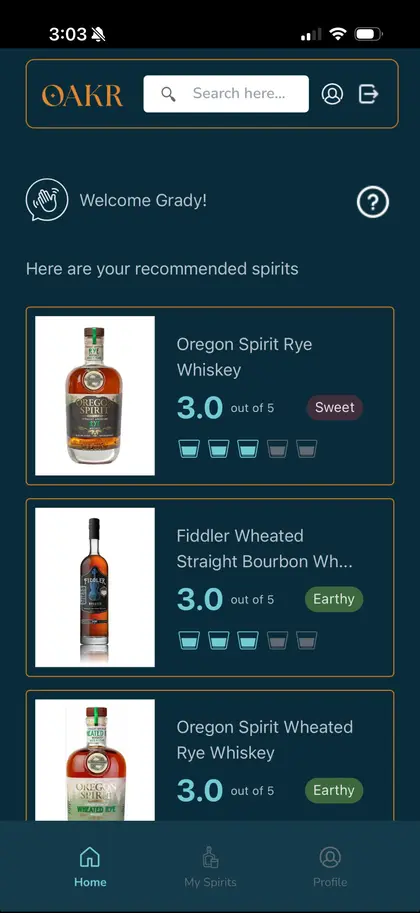
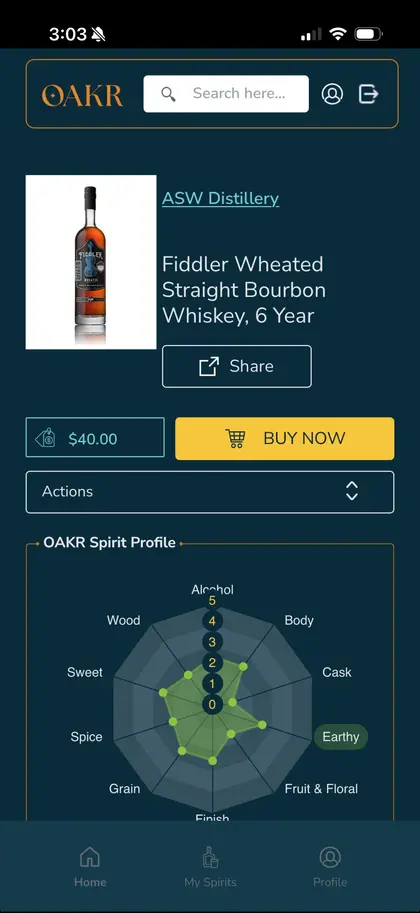
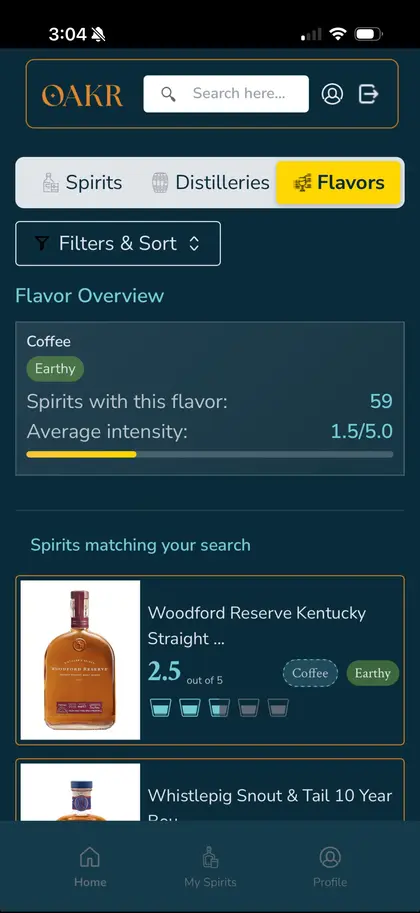
OAKR’s blind tasting panel evaluates Wild Turkey and Russell’s Reserve expressions without knowing what is in the glass. The panel scores across 100+ flavor notes in 10 macro categories, capturing both the aggressive 101-proof character and the refined 10-year softness independently. Your Spirit Match score tells you which end of the Russell family’s range your palate prefers — the bold side or the patient side — before you spend the time and money hunting the allocated bottles.
[Download OAKR free on iOS, Android, or web →]

Bourbon enthusiast, spirits industry analyst, and the voice behind OAKR's distillery guides, brand reviews, and bourbon education content. Visiting distilleries, dissecting mashbills, and translating the craft into data since 2024.
Wild Turkey 101 hits you with full-proof intensity. Russell’s Reserve 10 Year unfolds slowly. Same mashbill, same distillery, completely different drinking experiences. OAKR’s flavor data tells you which end of the Russell family range your palate prefers.