
65,000 barrels. 86% locally sourced grain. 170 contract clients. One 40-foot Vendome column still. Southern Distilling Company isn’t a craft distillery in the quaint, small-batch sense. It is one of the largest privately owned distilleries in America, and it operates from Statesville, North Carolina — a town that was once called the liquor capital of the world. Those numbers matter because they explain how a distillery founded in 2013 is already producing at a scale that rivals operations three times its age, while simultaneously making whiskey under its own Southern Star label that has won Best Overall Bourbon at the New York World Wine & Spirits Competition. Pete and Vienna Barger didn’t stumble into distilling. Pete was an engineer in industrial construction. Vienna managed statewide public health programs. They met at a Grateful Dead concert in Charlotte in 1989 when they were both supposed to be in class. The winery idea came first, but they realized the spirits industry was more scalable. When they looked at North Carolina’s pre-Prohibition distilling history — 450 licenses in the Statesville area alone before the state went dry early — the path was clear. They founded Southern Distilling Company in 2013 with a business plan that allocated 90% of production to contract distilling and 10% to building their own brand. The contract work is the flywheel that funds the brand.

Southern Distilling Company sits on a 20-acre campus at 211 Jennings Road in Statesville, North Carolina, along the I-77/I-40 interchange. Statesville’s distilling history predates Kentucky’s dominance of the industry. In the late 1800s, the area held more distilling licenses than most counties in the bourbon belt. Prohibition arrived in North Carolina earlier than in much of the country, and the industry vanished. The Bargers see their operation as a continuation of that interrupted tradition, not a new invention.
The facility includes a 36,000-square-foot distillery and multiple rickhouses across the campus. In 2025, the company formalized its contract distilling arm under the name Statesville Contract Distilling, a division that now supports more than 170 brands globally. The ADI named Southern Distilling Company its 2025 Distillery of the Year with the Bubble Cap Award.
Southern Distilling operates with multiple mashbill programs, which is one of the advantages of their scale and contract model. The two primary bourbon recipes are a wheated mashbill (70% corn, 16% wheat, 14% malted barley) used for the Southern Star Paragon line, and a high-rye mashbill (60% corn, 36% rye, 4% malted barley) used for the Southern Star Standard. They also produce a 95% rye mashbill and a 51/39/10 rye whiskey mashbill that became the Bottled-in-Bond Straight Rye released in 2025.
The grain sourcing is a genuine differentiator. Southern Distilling sources 86% of its grain from farms within 15 to 20 miles of the Statesville facility. This is not a marketing line — the company has publicly committed to regenerative agriculture partnerships with local Piedmont-region farmers, and all spent grains and water from the distillation process are returned to local farms for use as cattle feed and fertilizer.
The distillery runs two proprietary yeast strains. These are heat-tolerant strains that thrive in the warmer fermentation temperatures that can stress generic distiller’s yeast into producing off-flavors. Instead, Southern Distilling’s strains produce complex esters — the fruity, floral compounds that show up as orange marmalade, dried fruit, and honey notes in the finished bourbon. The fermentation tanks are tightly temperature-controlled, ensuring consistency across batches even at high volume.
The centerpiece of the operation is a Vendome Copper & Brass Works column still — a 40-foot continuous still capable of producing up to 60,000 barrels of annual production as of 2024. This is the workhorse. Column stills produce a cleaner, more refined distillate than pot stills, and at Southern Distilling’s scale, the consistency is exceptional.
But the column still is not the only equipment on campus. A 250-gallon batch distillation system functions as the distillery’s experimental lab — testing new mashbills, producing small-batch prototypes, and creating blending components that add complexity to the flagship products. Having both systems gives Southern Distilling a flexibility that most single-still operations lack.
Pete Barger’s engineering background shows in the production philosophy. The distillery runs chemistry on everything. Fermentation is monitored for ester development. The condenser temperature during distillation is controlled to leave volatile compounds like methanol and acetone behind, sacrificing a small amount of yield for a cleaner distillate. Barger’s line: “The barrel will atone for the sins of production, but if I haven’t sinned in production, I’m not asking the barrel to atone for all this additional time.” The barrel is there to mature the bourbon, not to fix it.
Southern Distilling sources barrels from multiple cooperages, selecting different char levels to match the flavor profile of each product. Standard char barrels produce the classic vanilla-caramel-oak spectrum. Heavier char barrels — sometimes called alligator char for the cracked surface pattern — deliver smokier, more intense caramel and toffee notes. The multi-cooperage approach provides flexibility for blending and ensures consistency across the brand’s growing lineup.
North Carolina’s climate is the other half of the aging equation. Statesville experiences significant temperature swings — hot, humid summers and cold winters — that drive aggressive barrel interaction. The heat forces bourbon deep into the wood staves, extracting color and flavor quickly. The cold pulls it back. This cycle runs faster in North Carolina than in more temperate climates, and the result is a bourbon that often tastes more mature than its age statement suggests.
The rickhouses currently hold over 65,000 barrels, with inventory ranging from new fill to barrels aged up to seven years. The top-floor barrels experience the most extreme heat and produce bolder, more oak-forward profiles. Lower-floor barrels age more slowly with softer, more nuanced results. The blending team uses this floor variation to build consistent profiles for the core Southern Star products and to select exceptional barrels for single-barrel releases.
Pete Barger is the co-founder and CEO. His background in engineering and industrial construction shaped the distillery’s data-driven approach. He designed the production systems to minimize error and maximize control, treating distilling more like precision manufacturing than folk art. Vienna Barger is the co-founder and COO. Her public health and social work background brought the operational and regulatory expertise needed to navigate North Carolina’s complex alcohol laws — including years of legislative work to win the right for distilleries to sell bottles directly.
The distillery does not publicize a single celebrity master distiller. Production is run by a team that reflects the founders’ philosophy: process over personality. The focus is on the systems, the chemistry, and the grain — not on building a personal brand around one name.
Southern Star Standard High Rye Straight Bourbon — 60/36/4 high-rye mashbill. Bottled at a moderate proof, this is the daily driver. The 36% rye content is aggressive by bourbon standards — most standard bourbons hover around 10-15% rye. The result is baking spice, black pepper, and cinnamon balanced against corn sweetness. Good in cocktails where the rye spice cuts through sugar, and perfectly drinkable neat.
Southern Star Paragon Wheated Bourbon Bottled-in-Bond — 70/16/14 wheated mashbill, 100 proof, aged at least four years. This is probably the best thing in the lineup. The wheat replaces rye, softening the profile into rich vanilla, cardamom, and sweet mint territory. At 100 proof it has enough structure to hold up neat but enough balance that the heat never overwhelms. The Bottled-in-Bond designation means it meets the strictest federal quality standards: single distillation season, single distillery, minimum four years of aging, bottled at exactly 100 proof.
Southern Star Paragon Cask Strength Single Barrel Wheated Bourbon — Same wheated mashbill, but bottled at barrel strength with no dilution. Proof varies by barrel. These are the “honey barrels” — individual casks selected (single barrel) because they tasted too good to blend away. This expression won Best Overall Bourbon at the 2022 NY World Wine & Spirits Competition. Expect the flavor volume turned significantly higher than the standard Paragon, with deeper caramel, oak, and fruit notes.
Southern Star Double Rye — A blend of a 95% rye mashbill with a lower-rye mashbill. The 95% rye delivers aggressive spice, while the blending component smooths it into something approachable. For rye drinkers, this is the bottle to try.
Southern Star Bottled-in-Bond Straight Rye Whiskey — Released in 2025. 51% rye, 39% corn, 10% malted barley. 100 proof. Aged four years. This is the newest core expression and signals Southern Distilling’s push into the rye category under the BiB standard.
Southern Star Bourbon Finished in Honey Barrels — Limited release, cask strength (108.4 proof). Finished in locally sourced wildflower honey-saturated barrels. Butterscotch, earthy spice, toasted oak on the nose, with toffee, honey, and floral notes on the palate. The second batch sold out quickly in late 2025.
Southern Star American Single Malt Whiskey — Released September 2025. Six years of aging, bottled at 114.8 proof. This limited expression entered the newly defined American Single Malt category and represents Southern Distilling’s decade of single malt production experience.
Bourbon is not one flavor. Southern Distilling Company makes that point more clearly than most — a wheated bourbon and a 36% high-rye bourbon from the same distillery taste like products from different planets. The Paragon is soft, sweet, and rich. The Standard is sharp, spicy, and assertive. The Double Rye is a different conversation entirely. Choosing between them is not a quality question. It is a palate question. And the gap between what a marketing description promises and what your palate actually prefers is exactly where most purchase regret lives.
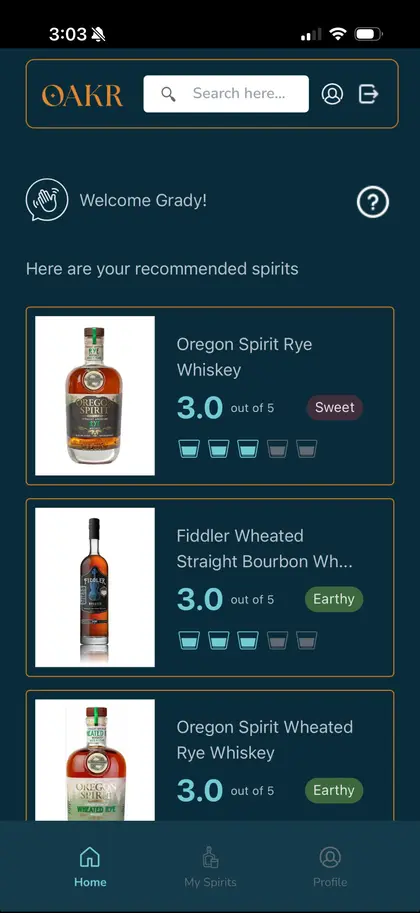
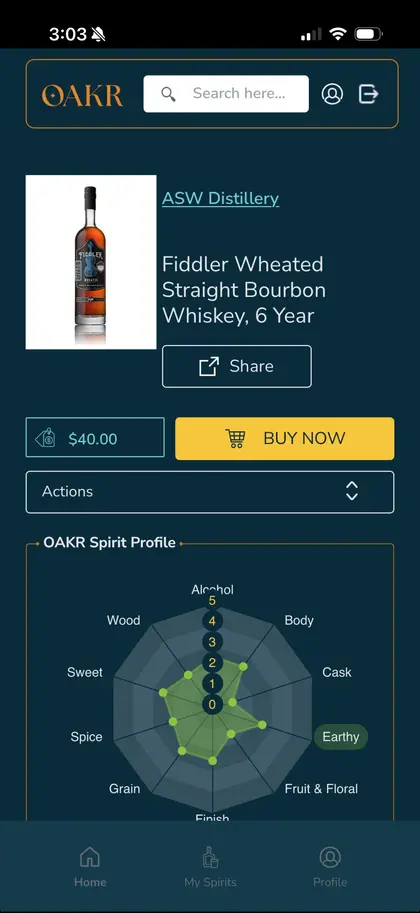
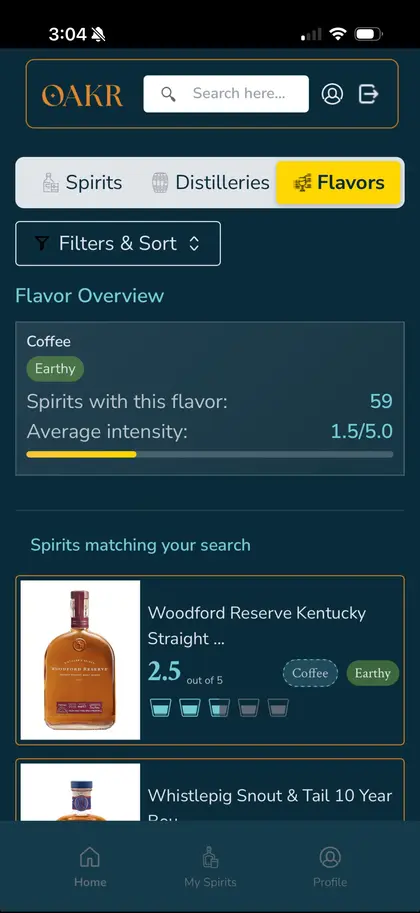
OAKR’s blind tasting panel evaluates each of these expressions without knowing what is in the glass. The panel scores across 100+ flavor notes organized into 10 macro categories, which means the wheated vanilla-cardamom profile of the Paragon and the high-rye baking spice of the Standard are captured in the same data framework. Your Spirit Match score tells you which end of Southern Distilling’s lineup aligns with what your palate actually prefers — not what the label says you should taste, but what blind data says the bourbon actually delivers. For a distillery with this much range, that data is the difference between finding your bottle and buying the wrong one.
[Download OAKR free on iOS, Android, or web →]

Bourbon enthusiast, spirits industry analyst, and the voice behind OAKR's distillery guides, brand reviews, and bourbon education content. Visiting distilleries, dissecting mashbills, and translating the craft into data since 2024.
Southern Distilling makes both — and they taste like products from different planets. OAKR’s blind tasting data maps your palate against both profiles so you grab the right bottle first time.