Location and History: A Rice Plant Becomes a Distillery
Giant Texas Distillers occupies the former Uncle Ben’s Rice processing facility in Houston, Texas. The building was designed for industrial food production — massive floor plans, heavy-duty infrastructure, and the kind of ceiling height and ventilation that a purpose-built distillery would cost a fortune to replicate. The founders looked at this decommissioned rice plant and saw a distillery that already had the bones for large-scale spirits production.
The Houston Ship Channel location provides logistical advantages: proximity to port shipping, access to the city’s industrial supply chain, and a massive footprint that allows for on-site grain processing, distillation, barrel storage, and bottling without the space constraints that limit most craft operations.
Houston’s climate is different from the Hill Country distilleries (Garrison Brothers, Firestone & Robertson) in one critical way: humidity. Houston is hot and wet. The combination of extreme heat and persistent humidity creates an aging environment that’s aggressive in a specific way — the sustained moisture in the air keeps the barrels from drying out as aggressively as they would in arid West Texas, while the heat still drives intense wood interaction.
The practical result is bourbon that picks up color, oak character, and complexity faster than Kentucky-aged bourbon, but with a slightly different extraction profile than bourbon aged in drier Texas climates. The humidity moderates the evaporation rate compared to Hill Country warehouses, which means slightly less angel’s share per year — a meaningful cost difference at the volumes Giant Texas produces.
Giant Texas uses Houston city water, sourced from the Trinity River, run through an aggressive on-site reverse osmosis filtration system. They strip the water down to a neutral base and rebuild the mineral profile for consistency.
Mashbills and Yeast: Multiple Grain Bills at Scale
Giant Texas runs multiple mashbills across their product line, which is unusual for a distillery at this scale. Most large-volume producers simplify operations by running one or two mashbills. Giant Texas produces both a traditional bourbon mashbill (corn-dominant with rye) and a wheated mashbill (corn-dominant with wheat replacing rye).
The flagship 100 Proof and 95 Proof expressions use a traditional bourbon mashbill — corn, rye, and malted barley. The exact percentages aren’t published, but the flavor profile reads as a classic American bourbon: caramel, vanilla, toasted oak, with rye spice providing structure. The corn is Texas-sourced, keeping the grain-to-glass identity intact despite the industrial scale.
The Cask Strength Wheated Bourbon swaps rye for wheat, producing a softer, sweeter profile — honey, baked bread, and vanilla without the rye’s peppery kick. Giant Texas uses a proprietary yeast strain. The fermentation is managed at scale — large fermenters producing consistent, high-volume output.
Bourbon Stills and Production: Column Stills Built for Volume
Giant Texas runs large column stills — not pot stills. This is the industrial configuration, designed for continuous operation and high throughput. Column stills produce a cleaner, lighter distillate than pot stills, with fewer congeners and less of the heavy, oily character that pot-still bourbon is known for.
The column-still choice is deliberate and consistent with the brand’s identity. Giant Texas isn’t trying to produce the heaviest, most complex bourbon in Texas — they’re trying to produce a well-made, consistent, approachable bourbon at a volume that puts it on shelves across the state and beyond.
Head Distiller Julian Giraldo oversees the production floor. Despite the industrial scale, Giant Texas maintains a grain-to-glass operation — they handle milling, mashing, fermenting, distilling, aging, and bottling on-site. They don’t source bourbon from contract distillers. The 100% Texas grain commitment means the supply chain is regional.
Barrels and Aging: Houston Heat and Humidity
Giant Texas ages in standard new charred American oak barrels in non-climate-controlled warehouses on the Houston Ship Channel. The Houston climate does the work.
The flagship 100 Proof Bourbon carries a minimum three-year age statement. In Houston’s climate, three years of aging produces bourbon with more wood character and color than three years in Kentucky would. The heat accelerates extraction; the humidity moderates evaporation. The combination produces bourbon that tastes more mature than its age suggests.
The Cask Strength Wheated expression is bottled without dilution, straight from the barrel. Cask strength bourbon is the most transparent expression a distillery can offer — there’s no water added to smooth rough edges or adjust proof. At Giant Texas, the cask strength releases show the full force of Houston aging: heavy caramel, deep vanilla, assertive oak tannins, and the softer, sweeter character that the wheated mashbill provides.
About the Distillers
Julian Giraldo serves as Head Distiller, managing the day-to-day production across Giant Texas’s multiple mashbills and product lines. The founding team’s background is entrepreneurial rather than generational distilling — they saw the opportunity in the former rice facility, understood the Texas whiskey market’s growth trajectory, and built an operation sized to capture a significant share of that market. The ambition isn’t to be the most exclusive Texas bourbon. It’s to be the most available one without sacrificing quality.
Flagship Products: The Buying Guide
Giant Texas 100 Proof Straight Bourbon — ~$35-40, 100 proof. The flagship. Traditional mashbill, minimum three years Texas-aged, bold and oaky with caramel, vanilla, and rye spice. The 100 proof provides structure without excessive heat. This is the bottle that shows what industrial-scale Texas bourbon tastes like when it’s done well.
Giant Texas 95 Proof Straight Bourbon — ~$30-35, 95 proof. The softer sibling. Same mashbill, slightly lower proof, slightly gentler presentation. A daily sipper for drinkers who want the Texas profile without the 100-proof intensity. Good cocktail base.
Cask Strength Wheated Straight Bourbon — varies, ~$50-60. The wheated mashbill at barrel strength — uncut, undiluted. Honey, sweet bread, baked goods, deep caramel. This is the bottle for flavor chasers who want to taste exactly what Houston heat does to a wheated bourbon in a charred oak barrel.
Cask Strength Honey — limited, ~$45-55. Cask-strength bourbon finished with real Texas honey. Not a sugar bomb — the honey integrates with the bourbon’s existing caramel and vanilla rather than burying it.
Maple Cask Finished Rye — limited, ~$50. Rye whiskey finished in barrels that held maple syrup. Black pepper and rye spice up front, mellowing into maple, brown sugar, and toasted oak.
Bigger Isn’t Always Better — But It Doesn’t Mean Worse
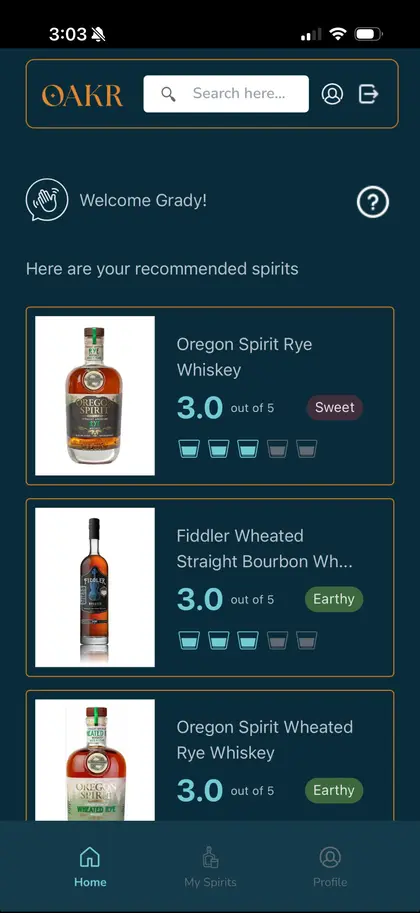
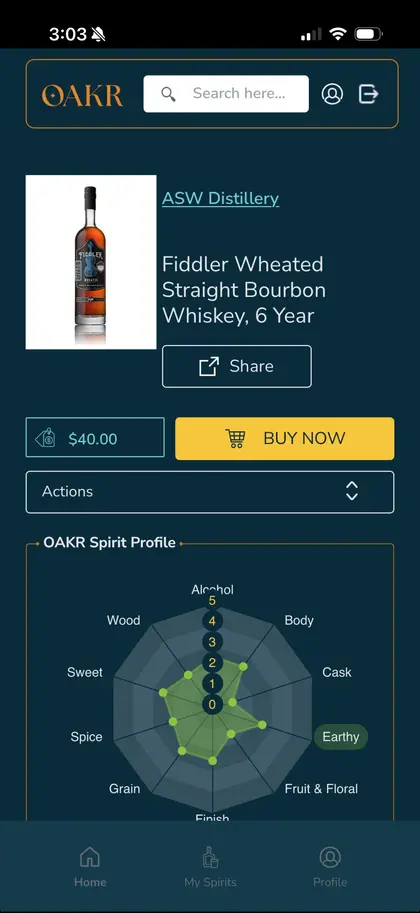
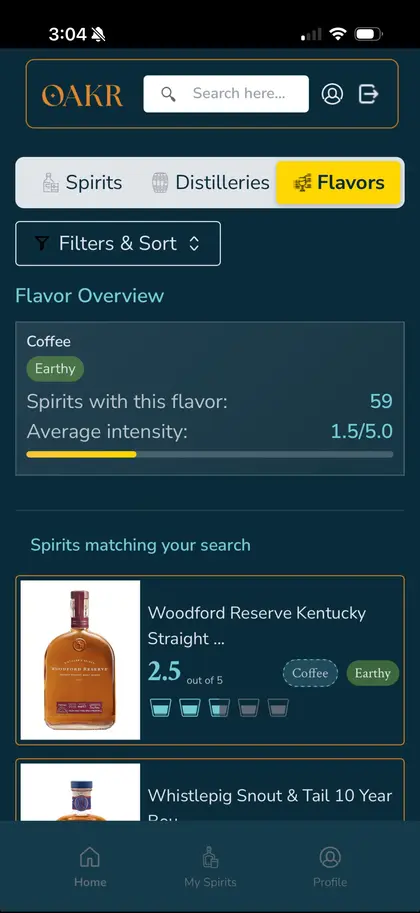
OAKR’s blind tasting panel scores every bourbon across more than 100 flavor notes, organized into 10 macro categories. No label size, no facility square footage, no rice-plant origin story influencing the scores — just the liquid. Add a few bottles you already know you love, and the AI shows you whether Giant Texas’s bold, oaky, Houston-aged profile matches what your palate actually wants.
[Download OAKR free on iOS, Android, or web →]