
A bottle of Jack Daniel's Old No. 7 costs about $25 and is available at every gas station, airport, and dive bar on the planet. A bottle of Jack Daniel's Single Barrel Barrel Proof costs roughly $65 and routinely shows up on "best whiskey of the year" lists next to bottles three times its price. Both come from the same mashbill, the same yeast, and the same distillery in a dry county in Tennessee. The difference between them is a masterclass in what production decisions — charcoal mellowing, barrel placement, proof management — actually do to a spirit. Most whiskey coverage treats Jack Daniel's as either a punchline or a given. It's too big to be interesting, too available to be respected. But that framing misses what's actually happening in Lynchburg: a distillery running one of the most controlled, vertically integrated production operations in American whiskey, producing everything from a $25 mixer to barrel-proof rye that competes with allocated Kentucky bourbon at a fraction of the hype. The gap between those two products tells you more about how whiskey works than most distillery tours ever will. Whether Jack Daniel's belongs on your shelf depends entirely on which Jack Daniel's you're talking about — and what you're comparing it to.

Jack Daniel’s was registered in 1866 in Lynchburg, Tennessee, making it the oldest registered distillery in the United States. The founder, Jasper Newton “Jack” Daniel, reportedly stood about 5’2″ and learned distilling from a preacher named Dan Call and an enslaved man named Nearest Green — a historical fact the distillery has publicly acknowledged and honored through a partnership with the Uncle Nearest brand.
The distillery sits in Moore County, which is a dry county. The place that produces enough whiskey to supply over 170 countries cannot legally sell it by the glass in its own town. The irony is real, but the reason the distillery stays put is geological, not cultural.
Cave Spring Hollow, located on the distillery grounds, pumps approximately 800 gallons of iron-free limestone water per minute. Limestone filtration strips out iron — which produces off-flavors in fermentation — and adds calcium and magnesium, minerals that support yeast health during fermentation. Every drop of water used in the mash comes from this source. It’s the kind of fixed geographical advantage that no amount of capital can replicate elsewhere.
The Lynchburg climate contributes the rest. Tennessee summers push temperatures well above 90°F with high humidity; winters drop below freezing. Those swings force the whiskey in and out of the barrel wood at a pace that accelerates maturation. For a distillery aging millions of barrels across dozens of rickhouses scattered over the surrounding hills, that climate consistency — paradoxically driven by its inconsistency — is a production asset.
The distillery is owned by Brown-Forman, one of the largest American-owned spirits companies. Jack Daniel’s is recognized by Interbrand as the most valuable spirits brand in the world. That scale matters: it funds the kind of vertical integration — owning the cooperage, the charcoal production, the grain sourcing — that gives them control most distilleries can only talk about.
The Jack Daniel’s mashbill is 80% corn, 12% malted barley, and 8% rye. It has not changed. That ratio is meaningfully different from most bourbon mashbills, which typically run 60-75% corn with 8-15% rye. Jack’s 80% corn content pushes the flavor profile firmly into sweet territory — caramel, vanilla, toasted corn — while the 8% rye keeps the spice at a background murmur rather than a shout.
This is a mashbill designed for approachability. It’s not trying to be spicy. It’s not trying to be complex. It’s trying to be consistent, recognizable, and sweet enough to work in a cocktail or over ice without challenging anyone’s palate. And for the standard Old No. 7 at 80 proof, that’s exactly what it delivers.
The more interesting story is the yeast. Jack Daniel’s maintains a proprietary yeast strain that has been in continuous cultivation for over a century. The culture is kept under literal lock and key, with backup strains stored in a secure lab. This isn’t marketing theater — proprietary yeast strains are one of the most significant and least discussed drivers of whiskey flavor.
During fermentation, yeast doesn’t just convert sugar to alcohol. It produces esters and congeners — chemical compounds that create fruit, floral, and spice aromas. Jack’s yeast strain is known for producing a distinctive banana ester. That faint but persistent banana note in Old No. 7 isn’t coming from the corn or the barrel. It’s the yeast’s signature, a biological fingerprint that no competitor can duplicate because no competitor has the same organism.
The yeast also enables the distillery’s defining production commitment: absolute batch-to-batch consistency. By using the same culture continuously, every fermentation produces the same ester profile. A bottle of Jack produced today should taste identical to one produced a decade ago. For a brand selling at this volume across 170+ countries, that biological consistency is the foundation everything else is built on.
Jack Daniel’s distills on massive copper column stills — the same continuous-distillation workhorses used across most of the bourbon industry. Column stills are efficient, running 24/7, and they produce a cleaner, lighter spirit than batch-process pot stills. The trade-off is that column stills can strip out some of the heavier flavor compounds that give whiskey body and grain character.
Jack compensates for this with a thumper (also called a doubler) — a secondary pot-still-like vessel that the vapor passes through after leaving the column still. The thumper provides an immediate second distillation that refines the spirit and raises the proof while retaining more of the oily, heavy congeners that would otherwise be lost. It’s a polishing step: it smooths without sterilizing.
Then comes the production step that defines the entire brand: the Lincoln County Process, also known as charcoal mellowing.
Before the white dog touches a barrel, it drips — slowly, over the course of days — through ten feet of sugar maple charcoal. Jack Daniel’s burns their own sugar maple ricks on-site to produce this charcoal. The process strips out harsh, soapy, and oily compounds from the fresh distillate, essentially pre-aging the spirit before barrel maturation begins. It also imparts a faint maple sweetness and a subtle smokiness that becomes part of the finished flavor profile.
This is the process that separates “Tennessee Whiskey” from “bourbon” — at least in Jack’s telling. Legally, Jack Daniel’s meets every criterion for bourbon: over 51% corn, new charred oak barrels, American-made. But the charcoal mellowing step is an additional filtration that most bourbon producers don’t use, and it meaningfully changes the character of the spirit entering the barrel. The distillate that goes into a Jack Daniel’s barrel is already mellowed and sweetened in ways that untreated bourbon distillate is not.
For drinkers who value that smoothness and approachability, the Lincoln County Process is the feature. For drinkers who want more raw grain character, more aggressive barrel influence, or more textural weight, it’s the thing that makes standard Jack feel too polite. Both readings are valid — it depends on what you’re looking for in a glass.
Jack Daniel’s is one of the only major distilleries in the world that makes its own barrels. They operate their own cooperage, sourcing American white oak, cutting and seasoning the staves, and charring the barrels to their proprietary specification. Most distilleries order barrels from independent cooperages like Independent Stave Company. Jack does it in-house, which gives them total control over the char level, toast profile, and wood quality going into every barrel.
Their char is deep — what the industry generally calls a #4 or “alligator char,” though Jack simply refers to it as “toasted and charred.” The heavy char creates a thick layer of caramelized wood sugar (the “red layer”) beneath the charred surface, which acts as both a flavor source and a secondary filter. It’s the primary origin of the vanilla, caramel, and toffee notes that define the Jack Daniel’s flavor profile. Spirits industry research consistently estimates that 60-80% of a whiskey’s final flavor comes from barrel interaction, which makes the cooperage control one of the most consequential operational decisions in the business.
Aging happens in multi-story rickhouses across the hills surrounding Lynchburg. Barrel placement within these rickhouses matters enormously. Top-floor barrels experience dramatically higher temperatures — sometimes exceeding 130°F in summer — which drives the whiskey deeper into the wood, accelerates extraction, and produces more concentrated, oak-heavy, tannic flavors. These barrels also lose more volume to evaporation (angel’s share). Lower-floor barrels age slower and more gently, producing lighter, more delicate character.
For Old No. 7, the distillery blends barrels from across all rickhouse locations and floors to achieve a uniform flavor profile. The individual personality of each barrel is intentionally averaged out. For the Single Barrel Select and Single Barrel Barrel Proof expressions, individual barrels — typically pulled from the upper floors — are bottled on their own, which is where the JD lineup starts to get genuinely interesting. The same production process that makes Old No. 7 predictable can produce barrel-proof whiskey of real complexity and power when the blending step is removed and the proof is left untouched.
Chris Fletcher became Jack Daniel’s Master Distiller in 2020 — only the eighth person to hold the title in over 150 years. His grandfather, Frank “Frog” Bobo, served as the fifth Master Distiller from 1966 to 1989, which means Fletcher grew up on the distillery grounds. He holds a chemistry degree and spent time in quality control at parent company Brown-Forman and working with other distilleries before returning to Jack Daniel’s in 2014 to lead the quality program.
In February 2026, Fletcher was named Master Distiller of the Year by Whisky Magazine — recognition that reflects both the consistency of the core lineup and the ambition of the recent limited releases. Fletcher’s role is fundamentally dual: protect Old No. 7 (changing it would be commercial suicide) while developing the age-stated, barrel-proof, and experimental releases that have repositioned Jack Daniel’s among serious whiskey drinkers.
The Master Distiller title at Jack Daniel’s is less about individual expression and more about institutional stewardship. Fletcher oversees everything from grain selection to barrel charring to final blending. His job is making sure the world’s most distributed whiskey tastes exactly the same every day, while simultaneously selecting the individual barrels and developing the new expressions that prove the distillery’s ceiling is far higher than its floor.
Lexie Phillips, appointed as Assistant Distiller in 2021, made history as the first woman to hold that position at Jack Daniel’s. The production team operates with the kind of institutional knowledge that only comes from running the same process, in the same place, with the same yeast, for over 150 years.
Jack Daniel’s Old No. 7 (Black Label) — 80 proof, approximately $22-28. This is the foundation. The 80% corn mashbill, proprietary yeast, charcoal mellowing, and blended-barrel approach produce a sweet, banana-forward, caramel-and-vanilla whiskey that finishes fast and clean. It’s not a sipping-neat experience for most seasoned drinkers — it’s a mixing whiskey, and one of the best in the world at that job. In a Jack and Coke, an Old Fashioned, or over ice, it does exactly what it’s supposed to do. The price-to-quality ratio is hard to argue with.
Gentleman Jack — 80 proof, approximately $28-35. The same whiskey as Old No. 7, run through the charcoal filter a second time after barrel aging. The double mellowing removes even more edge, producing an extremely approachable whiskey with light vanilla, honey, and apple notes. It’s the most beginner-friendly whiskey in the American market. The trade-off is that the second filtration can strip out some of the character and body that makes whiskey interesting. If you find Old No. 7 too rough, start here. If you find most whiskey too tame, skip it.
Jack Daniel’s Single Barrel Select — 94 proof, approximately $45-55. This is where the lineup shifts from reliable to genuinely good. Individual barrels — typically from the top floors of the rickhouses — are selected by the tasting panel and bottled without blending. The higher proof and single-barrel origin produce a richer, more complex pour: the banana note is still there, but it’s backed by toasted oak, brown sugar, and genuine spice. Barrel-to-barrel variation means you can find bottles with meaningfully different profiles, which makes it one of the more interesting single-barrel values on the market.
Jack Daniel’s Single Barrel Barrel Proof — typically 125-140 proof, approximately $55-70. The same single-barrel selection as the Select, bottled at whatever proof the barrel produced — no water added. This is the expression that changed how the whiskey world talks about Jack Daniel’s. At full proof, the charcoal mellowing and high-corn mashbill produce dark chocolate, heavy oak, roasted nut, and deep caramel notes with real textural weight. It’s intense, hot, and arguably one of the best values in American whiskey at any price point. If you’ve only ever had Old No. 7 and dismissed Jack, this is the bottle that will change your mind.
Jack Daniel’s Bonded — 100 proof, approximately $28-35. A Bottled-in-Bond expression (100 proof, single distilling season, minimum 4 years aged) that slots between Old No. 7 and Single Barrel Select. Oak-forward with an oily texture and more body than the standard offering. Outstanding cocktail whiskey — it holds up where Old No. 7 can get lost in a drink. The value here is exceptional.
Jack Daniel’s Aged Series (10, 12, 14 Year) — Limited annual releases, approximately $85-150. The 2026 Aged Series includes a 14-Year Batch 2 (117.6 proof), 12-Year Batch 4 (107 proof), and 10-Year Batch 5 (97 proof). These expressions demonstrate what extended Tennessee aging does to the Jack Daniel’s recipe: deeper oak, more concentrated flavors, and the kind of maturity that comes from a decade-plus in wood. The 14-Year, at barrel-proof levels, is the most ambitious release in the distillery’s modern history. Limited and allocated.
Bourbon isn’t one flavor — it’s ten macro categories with hundreds of variations, and Jack Daniel’s, despite technically being Tennessee Whiskey, touches more of that spectrum than most drinkers realize. Old No. 7 lives in the sweet, mellow, banana-caramel zone. The Barrel Proof occupies the dark, tannic, full-bodied territory that allocated Kentucky bourbons charge three times as much to reach. The Bonded hits the oak-forward, cocktail-weight middle. The Aged Series pushes into deeply mature, wood-driven complexity.
The challenge is that “Jack Daniel’s” means something different at every price point and proof level — and the bottle that matches your palate might not be the one you’ve already tried. If you dismissed Jack based on a college-era encounter with Old No. 7 and Coca-Cola, you’ve evaluated approximately 15% of what this distillery actually does.
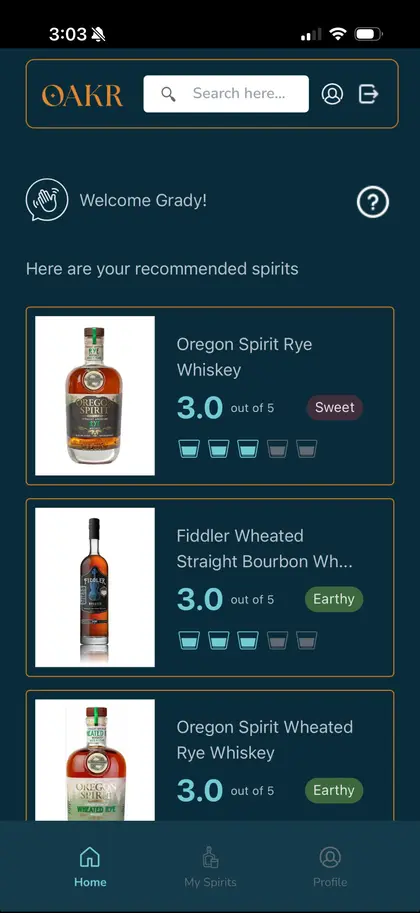
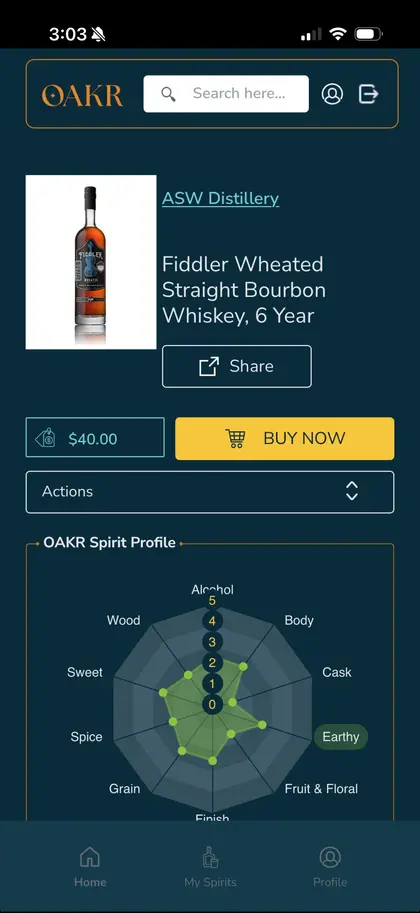
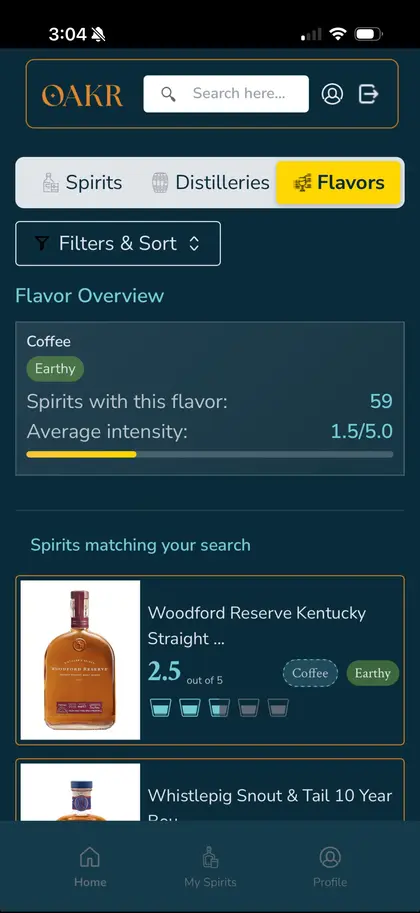
OAKR’s blind tasting panel scores every expression across 100+ individual flavor notes in 10 macro categories. Your Spirit Match score tells you whether the sweet, charcoal-mellowed profile of Old No. 7 is your thing — or whether the Barrel Proof’s dark chocolate and roasted oak intensity is a better fit — before you buy a single bottle. For a lineup this deep, with this much variation between products, that kind of precision saves real money and real disappointment.
[Download OAKR free on iOS, Android, or web →]

Bourbon enthusiast, spirits industry analyst, and the voice behind OAKR's distillery guides, brand reviews, and bourbon education content. Visiting distilleries, dissecting mashbills, and translating the craft into data since 2024.
From $25 Black Label to barrel-proof singles. Your Spirit Match score tells you which Jack Daniel’s expression actually fits your palate.