
Matt Cunningham chose Clarksville. That is the decision that defined everything Old Glory Distilling Co. became. He could have gone to Nashville, where the tourism foot traffic and the Instagram crowd would have generated immediate buzz. He could have gone to Kentucky, where the Bourbon Trail infrastructure does the marketing for you. Instead, the Clarksville native came home. He had spent four years as a full-time firefighter, using every 48-hour break between shifts to plan a distillery in the city where he grew up. When Old Glory opened in October 2016, it was not a Nashville vanity project or a retirement hobby. It was a bet on a hometown that, in Cunningham’s words, "doesn’t worship novelty or look favorably upon flashes in the pan." That decision to stay local threads through every aspect of the operation. The grains come from farmers Cunningham knows by name — the kind of accountability where bad corn means an awkward haircut at the barbershop. The distillery is built as a community destination, not just a production facility, with a full restaurant and an outdoor Silo Park that hosts live music and markets. Cunningham started this at 22 years old with a finance degree he had no intention of using. He is not "Mr. Cunningham" — that was his dad, and his grandfather before that. He is just Matt, and the distillery reflects that directness.

Old Glory Distilling Co. sits on Alfred Thun Road in Clarksville, Tennessee, just off Interstate 24. Clarksville is the fifth-largest city in Tennessee, home to Fort Campbell, and positioned about an hour northwest of Nashville. It is not a traditional whiskey destination, which is part of the point.
Cunningham grew up in Clarksville, attended the University of Arkansas for financial management and investments, and realized one semester before graduation that a desk job would be intolerable. He finished the degree, moved home, and became a firefighter. The 24-hours-on, 48-hours-off schedule gave him the time — and the work ethic — to develop the distillery concept during his off days. The distillery opened in 2016 with a simple operating principle: make everything on-site, from grinding grain to bottling the finished product. The tagline “From Grain to Glory” is not aspirational. It is the daily workflow.
Old Glory is a member of the Tennessee Whiskey Trail and produces both Tennessee Bourbon and Tennessee Whiskey. The distinction matters: Tennessee Whiskey requires the Lincoln County Process — filtering the new-make spirit through sugar maple charcoal before barreling — in addition to meeting all federal bourbon requirements. Old Glory applies this filtration to their Tennessee Whiskey and Tennessee Bourbon lines, which adds a mellowing step that smooths the spirit before it enters the barrel.
Old Glory’s bourbon mashbill is 73% corn, 19% rye, and 8% malted barley. The 19% rye content gives the bourbon a noticeable spice presence — black pepper, cinnamon, and herbal mint — without overwhelming the corn’s caramel and toffee foundation. This is a straightforward, well-balanced recipe that produces a spirit with enough backbone to stand up in cocktails and enough complexity to reward neat sipping.
For their Tennessee Whiskey, they swap the rye for wheat: 73% corn, 19% wheat, 8% malted barley. Wheat is a softer grain than rye, and it produces a gentler, rounder profile with more citrus and vanilla character. The two mashbills give drinkers a genuine choice between spicy and soft from the same distillery.
All grains are sourced locally from Tennessee farmers. This is not a marketing line — it is a supply chain decision that ties the flavor profile to the specific agricultural character of the region. Corn grown in Tennessee soil and weather has a different sugar and starch composition than corn from the Midwest, which contributes to a terroir effect in the finished spirit.
Old Glory uses a sweet mash recipe and operates with a fermentation program that prioritizes flavor development over speed. Their yeast strain works in concert with the mineral content of the local water and the proteins in the local grain to create ester compounds — the fruity and floral notes that emerge during fermentation and carry through distillation into the barrel. The combination of local grain, local water, and their specific yeast creates a flavor fingerprint that cannot be replicated by copying the mashbill alone.
Old Glory operates a hybrid distillation setup with both a copper column still and a copper pot still. The column still handles the initial stripping run, producing a clean, consistent base spirit from the fermented mash. The pot still serves as a doubler for the second distillation, adding back the oily texture and complex flavor compounds that copper pot distillation retains.
This two-stage approach gives them the efficiency and consistency of column distillation with the character and body of pot-still finishing. The all-copper construction is not decorative — copper catalyzes chemical reactions that remove sulfur compounds from the spirit, producing a cleaner, less metallic distillate.
The Lincoln County Process adds a third layer of refinement. Before entering the barrel, the new-make spirit is slowly filtered through sugar maple charcoal. This step does not add flavor — it subtracts harshness. The charcoal strips fusel oils and aggressive volatile compounds, mellowing the spirit so that the grain character and yeast-driven esters can express themselves cleanly during aging. By the time Old Glory’s distillate enters the barrel, it is already smoother than most unaged bourbons.
The entire operation runs from a single campus. Grain milling, mashing, fermentation, distillation, aging, and bottling all happen on-site. There is no sourced whiskey in the lineup. Every drop is produced at DSP in Clarksville.
Old Glory uses new charred American oak barrels with a No. 4 char — the deep “alligator char” that carbonizes the barrel interior significantly. The heavy char acts as an activated carbon filter for the young spirit while simultaneously caramelizing wood sugars deep in the staves. Those caramelized sugars are the source of the vanilla, toffee, and dark caramel notes that define the bourbon’s flavor.
The Tennessee climate provides an aggressive aging environment. Clarksville’s summers are hot and humid, pushing the bourbon deep into the charred wood and extracting color and flavor rapidly. Winters bring enough cold to contract the wood and pull the spirit back out, loaded with oak compounds, vanillin, and tannins. This cycling is more intense than many northern or coastal climates, which means Old Glory’s barrels develop flavor faster.
The high humidity in the Tennessee climate also influences the proof trajectory during aging. In humid environments, alcohol tends to evaporate faster than water, meaning the proof can decrease over time — the opposite of what happens in dry-climate aging. This produces a spirit that often mellows in strength during barrel maturation, contributing to a softer, more integrated final product.
Old Glory carefully grades and blends individual barrel samples for their Small Batch releases, selecting barrels that meet specific aroma, taste, and finish criteria. For Single Barrel releases, each barrel stands on its own at barrel proof, showcasing the full unblended character of a single cask.
Matt Cunningham is the founder and the driving force. He started the company at 22, funded it through firefighting shifts, and built it in his hometown because he believed Clarksville deserved something to be proud of. His financial management education shows up in the business structure, but his firefighter’s work ethic shows up in the production. He insists on doing things the hard way — grinding on-site, sourcing locally, distilling everything from scratch — because shortcuts produce mediocre spirits.
Cunningham’s approach is community-first. The distillery functions as a gathering place, with the restaurant, Silo Park, and event programming designed to make Old Glory part of Clarksville’s social infrastructure rather than just a production facility. The operational philosophy is simple: this is not his distillery. It is Clarksville’s distillery. He just runs it.
Small Batch Tennessee Bourbon — 90 proof. 73/19/8 mashbill. Toffee and caramel foundation with rye-driven black pepper, herbal mint, and a balanced finish. This is the entry point and the daily sipper. Approachable proof, clean texture from the charcoal filtration, and enough rye spice to keep it interesting.
Bottled-in-Bond Tennessee Bourbon — 100 proof. Same mashbill, minimum four years of aging, produced in a single distilling season at a single distillery. Meets every requirement of the Bottled-in-Bond Act of 1897, which remains one of the highest quality standards in American whiskey. The extra proof and age introduce more oak structure, brown sugar, cinnamon, cardamom, and a warming finish with black pepper lingering on the back end. This is the expression that shows what the production process can achieve with time and proof — the charcoal filtration keeps it smooth even at 100 proof, while the four-year minimum gives the heavy char enough time to contribute meaningful depth without overpowering the grain.
Single Barrel Tennessee Bourbon — Barrel proof, varying by barrel. Each release is unique and unblended, representing the full character of a single cask. Presented at the exact strength it left the barrel — no water added, no blending to average out the edges. Generally follows the toffee-caramel-pepper profile but amplified and intensified. The proof will be high, and each barrel has its own distinct personality. One might lean into dark fruit and heavy oak, the next into baking spice and toasted grain. These are the bottles you open slowly and revisit over weeks.
Small Batch Tennessee Whiskey — 90 proof. Wheated mashbill (73/19 wheat/8). The Lincoln County Process plus wheat grain produces a softer, sweeter, more citrus-forward profile than the bourbon. Toffee, vanilla, and a gentle finish with no rye bite at all. For drinkers who prefer smoothness over spice, this is the expression that removes the aggressive edge entirely and lets the barrel sweetness carry the flavor.
Bottled-in-Bond Tennessee Whiskey — 100 proof, wheated mashbill, minimum four years. Sweet tobacco, baked fruit, and a deceptively soft finish that conceals the proof. This is the dessert expression — rich, rounded, and dangerously easy to drink at a proof that should announce itself more than it does. The wheated grain bill combined with the charcoal filtration creates a texture that feels closer to 80 proof than 100.
Old Glory does not have national distribution. It is a regional Tennessee brand that most bourbon drinkers outside the mid-South have not encountered. If you are looking for something genuinely different from the Kentucky-dominated shelf — a Tennessee operation built by a firefighter on locally sourced grain with Lincoln County Process charcoal filtration — the brand is worth seeking out.
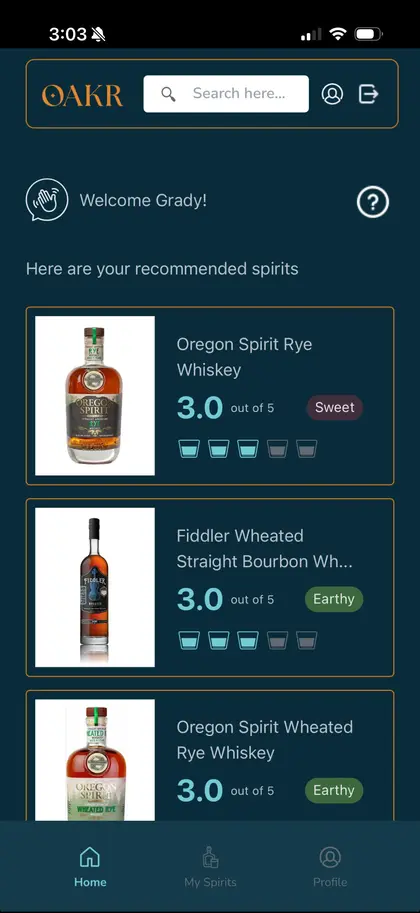
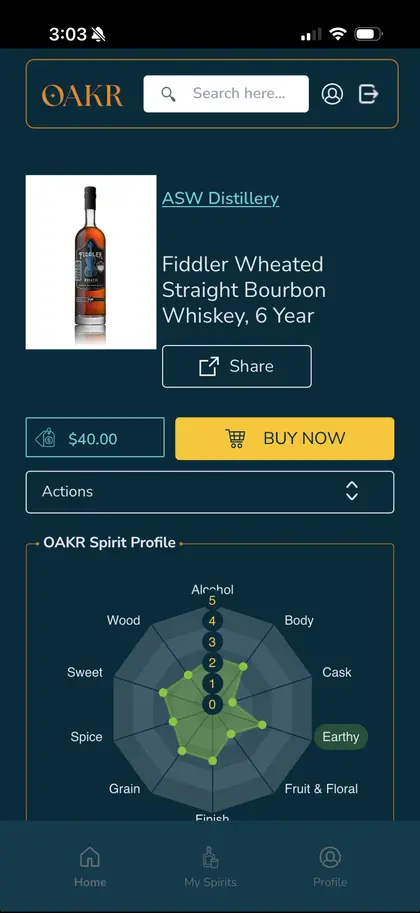
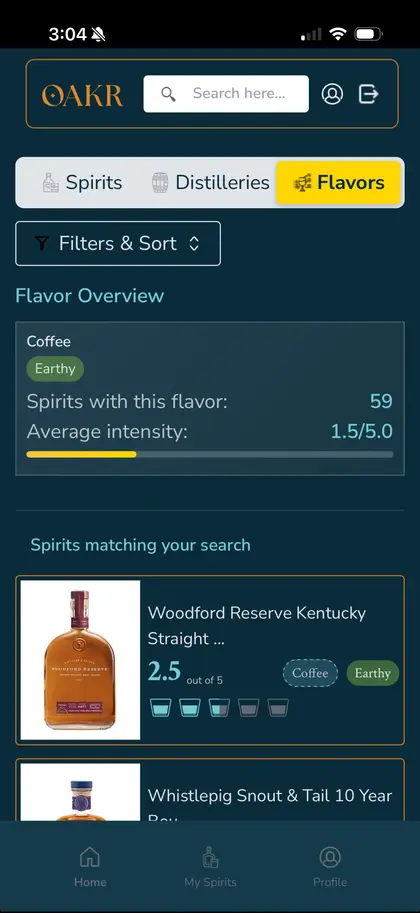
OAKR’s blind tasting panel evaluates spirits without knowing what is in the glass, scoring across 100+ flavor notes in 10 macro categories. For a regional brand this hard to find through normal channels, the data tells you whether the specific flavor architecture — the charcoal-smoothed texture, the rye or wheat grain character, the aggressive Tennessee barrel aging — aligns with what your palate actually enjoys. Your Spirit Match score maps your preferences against each Old Glory expression, so you can decide whether to chase the bourbon, the whiskey, or both before you commit to a purchase you may not be able to repeat easily.
[Download OAKR free on iOS, Android, or web →]

Bourbon enthusiast, spirits industry analyst, and the voice behind OAKR's distillery guides, brand reviews, and bourbon education content. Visiting distilleries, dissecting mashbills, and translating the craft into data since 2024.



Old Glory’s Tennessee bourbon and whiskey offer two different grain profiles from the same distillery. Your Spirit Match tells you which one fits.