
Take Few's Straight Bourbon and their Cold Cut Bourbon. Same distillery, same base spirit, same barrel program. The difference is what goes in at proofing: one uses water, the other uses cold brew coffee. The bourbon proofed with water gives you the expected spice-forward, rye-heavy profile Few is known for — baking spice, vanilla, a dry finish. The coffee-proofed version delivers the same bourbon backbone but with a roasted depth and subtle bitterness that transforms the drinking experience. Same liquid, different proofing medium, completely different whiskey. That kind of experimentation defines Few Spirits. Founded in 2011 in Evanston, Illinois — the birthplace of the American Temperance Movement and home of the Women's Christian Temperance Union — Few is a grain-to-glass operation that uses Lake Michigan water, air-dried oak barrels, and a willingness to break format that most traditional distilleries wouldn't consider. Coffee-proofed bourbon. Oolong-tea-proofed rye. A cherrywood-smoked malt blended with bourbon and rye. These aren't novelty products bolted onto a standard lineup — they're expressions of a production philosophy that treats the category as a canvas rather than a rulebook. This guide covers the distillery, the production, and every bottle worth your attention.

Few Spirits operates out of a 3,000-square-foot former automotive chop shop at 918 Chicago Avenue in Evanston, Illinois — a Chicago suburb that was legally dry from its founding until 1972. The Women’s Christian Temperance Union was established in Evanston in 1874, and the city served as the Temperance Movement’s national headquarters. Frances Elizabeth Willard, one of the movement’s most prominent leaders, is the name behind the “FEW” initials (a coincidence the distillery acknowledges with a wink).
Founder Paul Hletko opened Few in 2011 after changing local laws to allow distilling in Evanston for the first time in over a century. Hletko’s background is in engineering and patent law — he practiced as an attorney before deciding that making whiskey was a better use of his problem-solving instincts. The motivation was partly personal: his grandfather’s family had owned a major brewery in what is now the Czech Republic, which was confiscated by the Nazis during World War II. The family was murdered in the camps; only his grandfather survived. When his grandfather died, Hletko decided to revive the family’s connection to alcohol production.
In 2016, Hletko sold Few to Samson & Surrey, a high-end craft spirits portfolio company. Samson & Surrey was subsequently acquired by Heaven Hill in 2022, bringing Few under the umbrella of one of Kentucky’s largest family-owned distilleries. The acquisition provided resources for facility upgrades and expanded distribution (Few is now available in most of the 50 states and internationally), while the production team continues to operate from the original Evanston facility with its two copper pot stills.
The Evanston location influences the product directly. Lake Michigan water replaces the limestone-filtered Kentucky water that most bourbon producers use — a different mineral profile that creates a different canvas for fermentation and proofing. Illinois’ moody climate (humid summers, brutal winters) drives aggressive barrel cycling that develops distinct aging character. The combination produces spirits that taste definitively Midwestern — not Kentucky copies, not Scottish imitations, but whiskey shaped by Chicago-area water, weather, and grain.
Few uses locally sourced grains and a three-grain approach that leans into rye more aggressively than most bourbon producers.
Few Straight Bourbon uses a corn-heavy base (as required) but with a significant Northern rye charge. The rye content is high enough to define the bourbon’s character — it’s a spice-forward bourbon by design, not a sweet corn bomb. The malt component provides body and a biscuit quality that softens the rye’s assertiveness.
Few Straight Rye pushes the rye even further but retains enough corn to keep the spirit approachable. The rye is paired with air-dried oak aging, which reduces harsh tannin extraction and allows the fruity ester character to come through — apple, pear, plum alongside the expected pepper and spice.
Few American Straight Whiskey breaks format entirely: a blend of Few’s bourbon, rye, and a cherrywood-smoked malt whiskey. Three different grain programs and distillation approaches married into a single bottling.
Yeast and fermentation details are proprietary, but the flavor profiles — particularly the stone fruit notes in the rye and the grain-forward character across the lineup — suggest deliberate yeast selection and fermentation management designed to push grain character forward rather than produce a neutral base.
Few operates two copper pot stills in the Evanston facility. The grain-to-glass model means everything from mashing through bottling happens on-site in the 3,000-square-foot space. It’s a cramped, hands-on operation where the distillers are making cuts by nose and palate on every run.
The pot still approach retains heavier oils and flavor compounds that column stills strip out, producing a spirit with more weight, more grain character, and a thicker mouthfeel than the efficient column-distilled bourbons that dominate the mass market. Few’s distillation is designed to push the grain’s personality forward — you taste the rye, the corn, the malt as distinct flavors rather than as a homogenized “bourbon” profile.
The air-dried oak barrel program is a distinguishing production choice. Most distilleries use kiln-dried oak, which is faster but can produce harsher tannins. Air-drying (seasoning the staves outdoors for extended periods before cooperage) mellows the wood’s contribution, allowing fruit and vanilla notes to develop more cleanly during aging. It’s a more expensive, slower approach to cooperage that shows up as finesse in the finished spirit.
The experimental proofing program is Few’s most visible innovation. Standard practice in the industry is to proof whiskey down to bottling strength using water. Few developed Cold Cut Bourbon (proofed with cold brew coffee) and Immortal Rye (proofed with cold-extracted 8 Immortals oolong tea). These aren’t flavorings added after the fact — they replace the water in the proofing process, integrating the coffee or tea character at a molecular level rather than layering it on top.
New charred American oak barrels, air-dried. The air-drying distinction matters — it produces a gentler tannin profile that lets the grain and yeast character speak more clearly through the barrel influence. Few ages their whiskeys in the Evanston climate, where Chicago-area temperature swings drive the expansion-contraction cycling that extracts vanillins, tannins, and caramelized sugars from the oak.
The facility is small enough that barrel management is hands-on — the team monitors aging individually rather than applying warehouse-wide protocols. Multiple bottling sites across Evanston handle the final packaging.
The aging philosophy favors character over age statements. Few doesn’t chase long age statements — the goal is to bottle when the spirit has developed the intended profile, whether that’s at three years or seven. The air-dried oak and aggressive climate help develop complexity faster than the same barrels would in a milder, more controlled environment.
For the experimental expressions, the barrel program creates the base that the alternative proofing mediums then transform. The Cold Cut Bourbon starts as a standard barrel-aged bourbon — the coffee-proofing replaces the water that would normally bring it to bottling strength, which means the barrel character is fully developed before the cold brew enters the equation. The Immortal Rye is proofed with oolong tea at cask strength, so the tea character integrates with a more concentrated, undiluted spirit. In both cases, the barrel aging provides the structural foundation; the proofing medium adds the final layer of complexity.
Paul Hletko — Founder and Master Distiller. Engineering degree from University of Michigan, former patent attorney. His background in problem-solving and intellectual property law shows up in how he approaches production: every product is a design problem with specific parameters and an intended outcome. He served as President of the American Craft Spirits Association and sits on the Advisory Board of the Distilled Spirits Council. Named Sustainable Distillery of the Year by Whisky Magazine.
Hletko’s team is primarily artists, photographers, and former teachers trained from the ground up in distillation — a deliberate choice to staff the operation with creative problem-solvers rather than industry veterans who might default to convention. The team describes the operation as a “garage band” of craft distilling: scrappy, experimental, and defined by the constraints of working in 3,000 square feet.
The Heaven Hill ownership provides resources and distribution power, but the Evanston team continues to make production decisions independently. The brand identity — contrarian, experimental, built on the irony of making whiskey in Prohibition’s hometown — remains intact.
Few Straight Bourbon Whiskey — Three-grain, rye-forward. Baking spice, vanilla, caramel, dry crisp finish. The bourbon with a backbone — not sweet, not soft, not trying to disappear into a Coke. The flagship and best-seller. Works neat, works in cocktails.
Few Straight Rye Whiskey — Generous rye content with enough corn for approachability. Fruity — apple, pear, plum — with rye pepper and spice. Aged in air-dried oak to reduce tannin harshness. The bottle that built Few’s reputation. Makes an exceptional Boulevardier or Manhattan.
Few American Straight Whiskey — A blend of Few’s bourbon, rye, and cherrywood-smoked malt whiskey. Sweet, savory smoke (not peat), graham cracker, tart cherry, white pepper. The bottle you pour for the Scotch drinker who doesn’t know they like American whiskey.
Cold Cut Bourbon — Few’s bourbon proofed with cold brew coffee instead of water. Roasted depth, subtle bitterness, bourbon backbone. Does not taste like a coffee liqueur — tastes like bourbon with an extra dimension. Excellent in an Old Fashioned or over a large rock.
Immortal Rye — Cask-strength rye proofed with cold-extracted 8 Immortals oolong tea. Peach, honey, dragon fruit layered over rye spice. Earthy, herbal, exotic. The most polarizing bottle in the lineup — you’ll either find it revelatory or baffling. Try it at least once.
Few also produces gin and vodka from the same grain-to-glass approach. Explore the full Few Spirits lineup on OAKR to see tasting profiles and spirit data.
Few’s lineup covers standard bourbon, rye, smoked whiskey, coffee-proofed bourbon, and tea-proofed rye. That’s five fundamentally different flavor territories from a single distillery, and the gap between the most conventional expression (Straight Bourbon) and the most experimental (Immortal Rye) is enormous. Navigating that range without data is guesswork — and at $40-$60 per bottle, guesswork gets expensive.
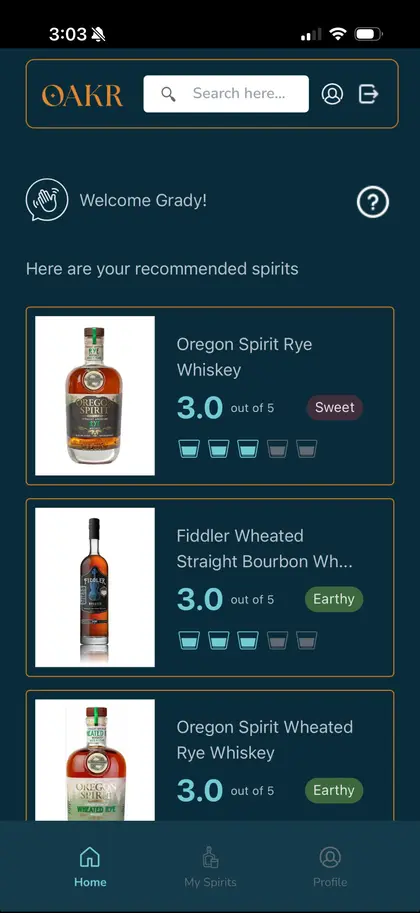
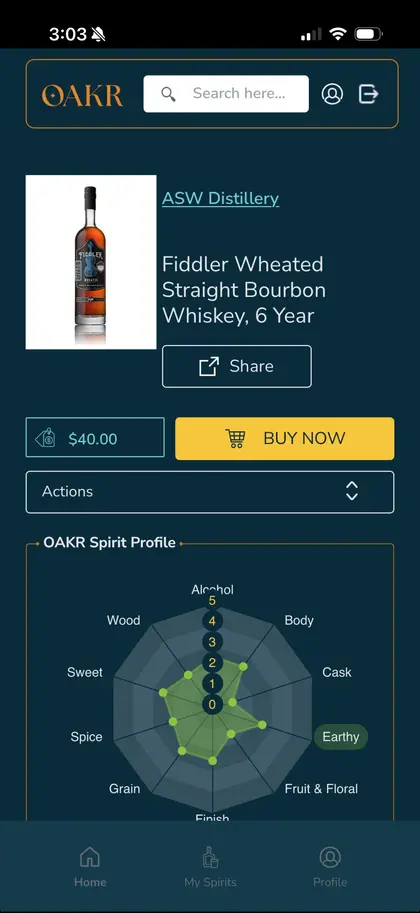
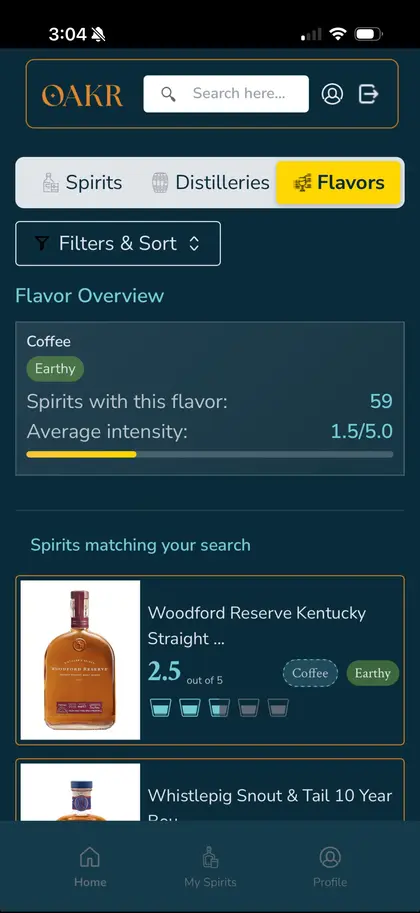
OAKR’s blind tasting panel evaluates every expression without knowing the brand, the backstory, or the production method. The panel scores across 100-plus individual flavor notes organized into 10 macro categories, producing profiles that show you exactly where each Few expression lands. The Straight Bourbon and the Immortal Rye will map to completely different flavor territories — and OAKR can tell you which one aligns with your preferences before you spend the money.
The Spirit Match score goes further. Rate a few bottles from any distillery, and OAKR’s AI palate profiling identifies patterns in what you enjoy. It can tell you whether you’re a Straight Bourbon drinker, a Cold Cut convert, or someone who should skip Few entirely and head in a different direction. Ten macro categories, infinite variation — and data to navigate it.
[Download OAKR free on iOS, Android, or web →]

Bourbon enthusiast, spirits industry analyst, and the voice behind OAKR's distillery guides, brand reviews, and bourbon education content. Visiting distilleries, dissecting mashbills, and translating the craft into data since 2024.
From classic bourbon to oolong-tea-proofed rye, Few’s range is wild. Don’t guess which one fits — let OAKR’s AI flavor matching tell you. Rate a few bottles you love and get personalized Spirit Match scores across the entire lineup.