
A bottle of Fenwicks' 1816 Indiana Rye runs around $40-$50. Their 5-Year Bourbon sits in a similar range. Their Region 5 Small Batch Straight Bourbon is listed at $45 at major retailers. For Indiana-sourced whiskey — which is what this is — those are mid-range craft prices. The question is whether the barrel selection, the hybrid distillation process, and the specific flavor profiles justify the price difference over a $25 Indiana bourbon that came from the same general production region. Based on the awards and the specs, the answer is nuanced: the rye is genuinely distinctive, the bourbon is solid, and the pricing is honest for what you're getting. Fenwicks Distillery opened in 2023 in Rensselaer, Indiana, as an extension of an existing brewery and pub operation. It's a young distillery with older stock — they source aged whiskey from Indiana's established distilling infrastructure (likely MGP in Lawrenceburg, whose 95% wheat whiskey and rye profiles appear across multiple Fenwicks expressions) and apply their own barrel selection, proofing, and bottling standards. The 1816 Indiana Rye has already picked up a Gold Medal from the American Distilling Institute and a Double Gold from the SIP Awards, which suggests the barrel-picking skills are real. This guide covers what's actually known about the operation, the award-winning rye, and whether the broader lineup merits shelf space.

Fenwicks Distillery is located at 201 E. Washington Street in Rensselaer, Indiana — a small city in Jasper County, about 90 miles southeast of Chicago. The distillery is part of the larger Fenwicks Brewery and Public House operation, which established the brand name and local following before the distillery arm launched in 2023.
Co-owner Kenneth VanHouten and the Fenwicks family built the distillery as an extension of the brewery’s community focus. The source docs for this guide referenced a founding date of 1872 and a founder named Elijah Fenwick. That narrative doesn’t appear in the distillery’s own official materials or independent reporting. The actual operation opened in 2023 — making it one of the newer entries on this list.
What Fenwicks does have is access to Indiana’s deep well of aged whiskey inventory. Indiana is home to some of the largest contract distilling operations in the country, and independent bottlers in the state can select barrels of bourbon, rye, and wheat whiskey at various ages and proof points. Fenwicks’ approach is to curate from this inventory — selecting barrels that meet their flavor standards, then proofing and bottling in-house.
The brewery and pub create a built-in community around the brand. Customers can try spirits alongside craft beer and food, which gives Fenwicks a local tasting-room advantage that purely online or distributed brands lack.
Because Fenwicks sources its whiskey, the mashbill and yeast decisions originate at the distilling facility — not in Rensselaer. What’s known from labels and reviews:
The 1816 Indiana Rye uses a high-rye mashbill — likely the well-known 95% rye / 5% malted barley recipe that defines Indiana rye production. At 101.6 proof, it’s bottled with enough strength to deliver the full rye character without dilution softening the edges.
The 5-Year Bourbon at 90 proof uses a standard bourbon mashbill with corn, rye, and malted barley. The five-year age statement gives it more barrel development than many craft releases — at five years in Indiana’s climate, the spirit has had enough seasonal cycles to develop integrated oak character without becoming over-extracted.
The Region 5 Small Batch Straight Bourbon is another expression in the lineup, available at major retailers like Binny’s for around $45. The “Region 5” designation ties the bourbon to its Indiana provenance — a geographic identity rather than a heritage mythology.
The 4-Year Wheat Whiskey appears to be MGP’s 95% wheat / 5% malted barley mashbill — a distinctive, bready, floral spirit that’s softer and sweeter than rye or bourbon. Independent reviewers have confirmed the MGP origin on this expression.
On yeast, no Fenwicks-specific information is available. The yeast strains were determined by the source distillery.
The source docs describe a hybrid column-to-pot distillation system at Fenwicks. This may refer to in-house distillation for some products (the distillery does hold a license and has equipment) or it may describe the source facility’s production method. What’s clear is that Fenwicks operates as both a bottler of sourced whiskey and potentially a distiller of original products — a common model for new Indiana distilleries building their own aged inventory while selling selected barrels in the interim.
The hybrid approach — column still for initial stripping, pot still for secondary distillation and cut refinement — produces a spirit that’s cleaner than a pure pot-still product but retains more body and grain character than a column-only distillate. It’s a practical middle path that balances efficiency with flavor retention.
Fenwicks emphasizes small-batch and single-barrel releases. Single-barrel bottling means each bottle represents one specific cask — introducing barrel-to-barrel variation but allowing the selection team to choose barrels with distinctive or exceptional character.
New charred American oak barrels, as required for straight bourbon and rye. The 5-Year Bourbon carries a meaningful age statement — five years gives the Indiana climate enough time to develop layered complexity without over-extracting. Indiana’s Ohio River Valley climate provides the seasonal cycling (hot summers, cold winters) that drives aggressive barrel interaction.
The 1816 Indiana Rye is aged in charred white oak and bottled at 101.6 proof — a strong bottling proof that preserves the barrel character without dilution. The rye’s award-winning profile — caramel, vanilla, sweet cooked fruit, with woodsy undertones and baking spice on the nose — reflects both the quality of the source distillate and Fenwicks’ barrel selection.
The 4-Year Wheat Whiskey at 90 proof uses the same new charred oak cooperage but produces a fundamentally different profile: soft, bready, floral, and sweet. The wheat mashbill interacts with barrel char differently than rye or bourbon, emphasizing sweetness and texture over spice. For drinkers who find rye too aggressive or bourbon too conventional, the wheat whiskey offers a genuinely different experience from the same Indiana production ecosystem.
Kenneth VanHouten is co-owner and a driving force behind the distillery’s direction. The team is small and family-oriented, with the brewery and pub staff providing the community foundation that supports the spirits operation.
Fenwicks doesn’t position itself around a celebrity distiller or a technical production narrative. The brand identity is built on Midwestern work ethic, community engagement, and the practical reality of making good whiskey available to local drinkers. Their tagline — “we see industry standards as the starting point, not the bar” — reflects an ambition to exceed baseline quality without the pretension that often accompanies craft spirits marketing. The awards — particularly the ADI Gold and SIP Double Gold for the 1816 Rye — are the strongest endorsements, earned through blind evaluation rather than marketing spend.
The connection to the brewery and pub is a genuine asset. Unlike distilleries that exist solely as production facilities, Fenwicks has a built-in gathering space where locals and visitors can try spirits alongside food and craft beer. That tasting-room-as-community-hub model builds loyalty and repeat visits that purely distributed brands can’t replicate.
1816 Indiana Rye Whiskey — The standout. High-rye mashbill (likely 95% rye). 101.6 proof. Gold Medal ADI 2024, Double Gold SIP Awards. Caramel, vanilla, sweet cooked fruit on the palate, with dried nuts, red apple, nutmeg, and cinnamon on the nose. Bold but controlled — the proof delivers intensity without scorching. This is the bottle to start with and the one that justifies attention.
5-Year Bourbon — 90 proof. Classic Indiana bourbon profile with five years of age. Caramel, vanilla, dried fruit, light rye spice. Approachable and balanced. A reliable daily drinker that performs well neat or in an Old Fashioned.
5-Year Cask Strength Bourbon — Same base as the 5-Year, bottled at barrel proof (varies by barrel). The amplified version — more intense caramel, vanilla, and dried fruit. For drinkers who want the bourbon at full power without proof reduction.
Limited Edition Tahitian Vanilla 1816 Indiana Rye — The 1816 Rye infused with a real Tahitian vanilla bean. Hand-numbered bottles. The infusion time is user-controlled — leave the bean in longer for more sweetness. Bold rye spice meets creamy vanilla. Limited annual production.
4-Year Wheat Whiskey — 90 proof. A 95% wheat mashbill. Soft, bready, floral, and sweet. The gentlest pour in the lineup. For whiskey newcomers or drinkers who find rye too aggressive.
The distillery also produces vodka, gin, and rum. Explore the full Fenwicks lineup on OAKR to see tasting profiles and spirit data.
At $40-$50 per bottle, Fenwicks sits in the zone where sourced Indiana whiskey starts competing with established brands on both price and quality. The 1816 Rye justifies its price tag through proof, age, and verified competition results. The bourbon expressions are solid but face more competition at the same price point from both sourced and estate-distilled alternatives.
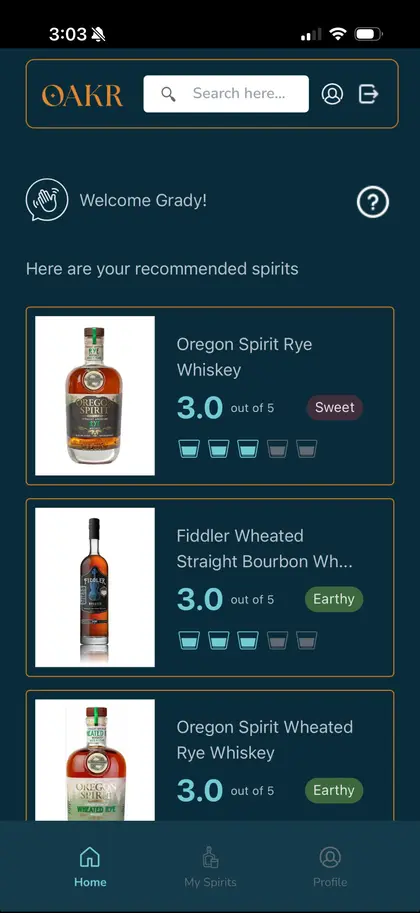
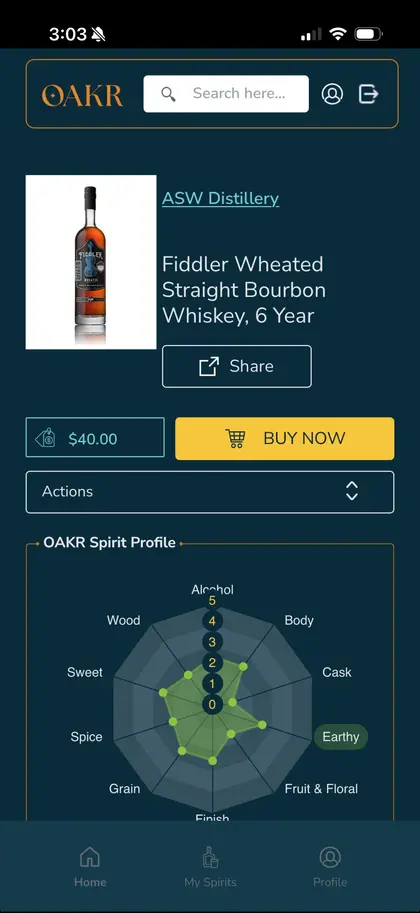
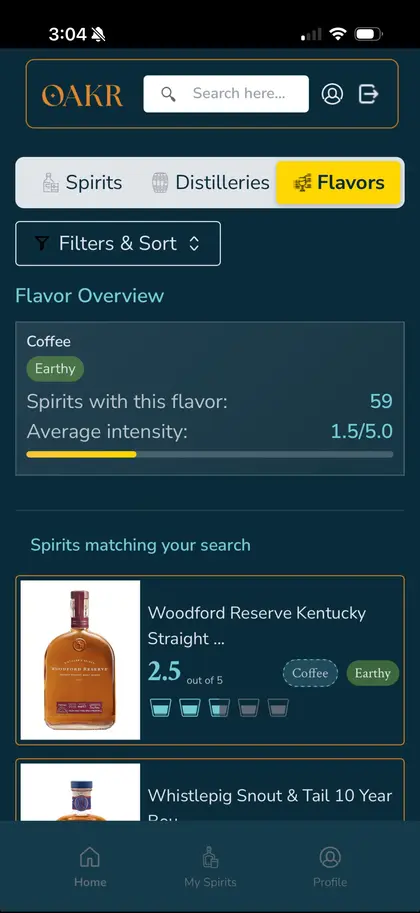
OAKR’s blind tasting panel evaluates every spirit without seeing the brand name, the price, or the origin story. The panel scores across 100-plus individual flavor notes, organized into 10 macro categories, producing a profile built on what’s in the glass. When you look up a Fenwicks expression on OAKR, you see exactly how the 1816 Rye compares to other high-proof rye whiskeys at similar price points — and whether the barrel selection delivers enough distinction to justify the price difference over less expensive Indiana rye options.
The Spirit Match score personalizes the comparison. At $40-$50 per bottle, knowing whether this specific rye or bourbon aligns with your flavor preferences before you buy is the difference between a bottle that earns its shelf space and one you forget about.
[Download OAKR free on iOS, Android, or web →]

Bourbon enthusiast, spirits industry analyst, and the voice behind OAKR's distillery guides, brand reviews, and bourbon education content. Visiting distilleries, dissecting mashbills, and translating the craft into data since 2024.
Fenwicks’ 1816 Rye won Gold at ADI and Double Gold at SIP. But does it match YOUR palate? OAKR scores every spirit blind across 100+ flavor notes so you know before you buy.