Location and History: A Bloomington Distillery Built on Pragmatism
Cardinal Spirits was founded in 2013, opened to the public in 2015, and is located at 922 S. Morton Street in Bloomington, Indiana. The founders — Jeff Wuslich, Jason Fruge, and Adam Quirk — weren’t distilling heirs. They were professionals from outside the spirits industry who built the operation from scratch.
Cardinal sources corn from Glick Seed in Columbus, Indiana, and malted barley from Sugar Creek Malt Co. in Lebanon, Indiana. The water comes from Lake Monroe, run through reverse osmosis for complete control over water chemistry batch to batch.
Mashbill: Four Grains, All Indiana
Cardinal’s house bourbon uses a four-grain mashbill: 60% yellow corn, 20% malted 6-row barley, with the remaining 20% split between wheat and rye. The four-grain approach creates a more complex base spirit before any barrel aging happens. The corn provides sweetness, the barley contributes a biscuity, malty character, the wheat softens, and the rye adds spice.
The 12-barrel experiment tells you more about Cardinal’s philosophy than anything else: they filled 12 barrels from the same cooperage, with the same mashbill, at the same time. When they went back to taste, they had 12 different-tasting bourbons. Cardinal releases them individually, each on its own timeline, when the distiller judges that specific barrel is ready.
Yeast and Fermentation
Cardinal’s fermentation approach focuses on clean, controlled fermentation that lets the grain express itself rather than imposing a heavy ester profile from the yeast. The result is a bourbon where the four-grain complexity comes through clearly.
Bourbon Stills and Production
Cardinal operates as a true grain-to-glass distillery — every step happens on-site. They don’t supplement with sourced whiskey from MGP or any other contract distillery.
Cardinal uses a hybrid pot-and-column still. For the bourbon specifically, the pot still is the relevant equipment. The cuts are made by taste and smell.
Barrels and Aging
Indiana’s climate provides genuine aging advantages. Bloomington sees summer highs in the upper 80s to low 90s and winter lows in the teens — a temperature range that forces aggressive barrel interaction. Cardinal ages in standard new charred American oak barrels on-site.
A three-year-old Indiana bourbon can read with the maturity of a five-year-old Kentucky bourbon, depending on barrel position and climate exposure. Cardinal monitors individual barrels and makes release decisions barrel by barrel rather than batch by batch.
About the Distillers
The production team includes distillers Rick Mellinger and Justin Hughey. Hughey’s background includes chemistry coursework at Indiana University’s Kelley School of Business.
Flagship Products: The Buying Guide
Cardinal Spirits Four Grain Bourbon — 92 proof, ~$40-50. The house bourbon. 60% corn, 20% barley, plus wheat and rye. Grain-to-glass, no sourcing. Each release comes from individual barrels, so batch variation is real and intentional.
Cardinal Spirits Straight Rye Whiskey — ~$35-45. House-distilled rye with a spicy, peppery profile. Good in a Manhattan or neat.
Tiki Rum — Rated 92 points and “Best Buy” by Wine Enthusiast.
Songbird Coffee Liqueur — Made with locally roasted coffee from Hopscotch in Bloomington.
Flavor Data, Made To Simplify Bourbon Selection
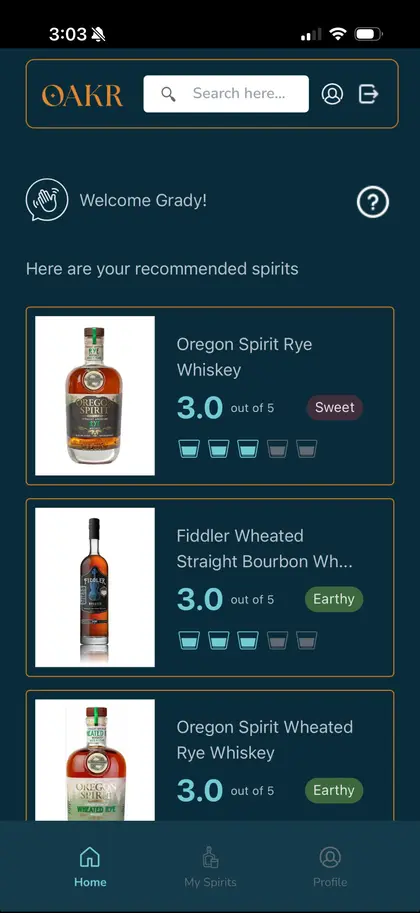
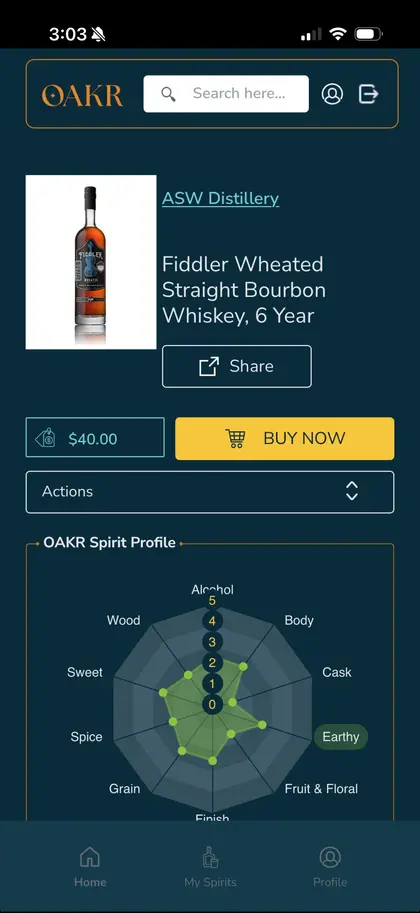
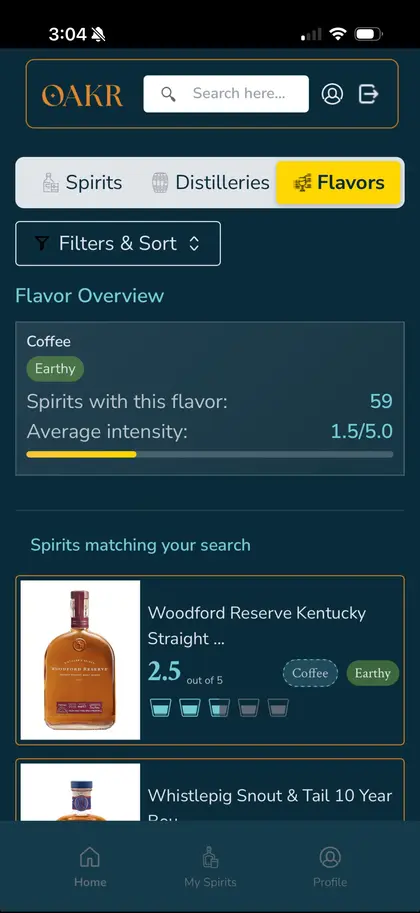
OAKR’s blind tasting panel scores every bourbon across more than 100 flavor notes, organized into 10 macro categories. Spirit Match scores show you whether Cardinal’s four-grain, grain-to-glass approach is likely to produce bourbon that matches your taste.
[Download OAKR free on iOS, Android, or web →]