
Most contract distilleries hand you a menu of existing recipes and a price list. Bardstown Bourbon Company hands you 500 dials and says, "Tell us what you want." Built from scratch on 400 acres in the heart of Kentucky's bourbon country, this facility was purpose-designed to do one thing better than anyone else: make someone else's whiskey exactly the way they want it. With 300+ brand partners, 30+ active mashbills, 18 million proof gallons of annual capacity, and a newly formed parent company called Lofted Spirits uniting it with Green River Distilling, Bardstown Bourbon Company is not just a contract distiller. It is the infrastructure layer beneath a significant chunk of the modern bourbon market.

Bardstown Bourbon Company sits on 400 acres of farmland in Bardstown, Kentucky, the self-proclaimed Bourbon Capital of the World. The location is not incidental. Bardstown has been home to bourbon production since the late 1700s, and the surrounding area houses more active distilleries per square mile than anywhere else on the planet. Building a new distillery here in the 2010s was both a nod to tradition and a calculated bet that the bourbon boom had room to grow.
Construction began in 2014 under founder Peter Loftin, with the first mash cooking in September 2016. The timing was deliberate. The American whiskey market was surging, craft brands were proliferating, and the gap between demand for aged Kentucky bourbon and available supply was widening by the year. Dozens of new brands wanted to sell bourbon, but building and aging your own takes four years minimum, often much longer. Bardstown Bourbon Company was purpose-built to fill that gap, offering what they called a “Collaborative Distilling Program” from day one.
The growth since has been staggering. Initial capacity was 1.5 million proof gallons per year. A 2018 expansion pushed that to nearly 7 million. A second full distillery came online in October 2024, bringing total capacity to over 18 million proof gallons annually. To put that in context, that is not far behind Jim Beam, the single largest bourbon producer in the world, which runs at roughly 25 million. In less than a decade, Bardstown Bourbon Company went from an empty field to one of the ten largest whiskey distilleries in America.
In 2022, private equity firm Pritzker Private Capital invested $28.7 million and Bardstown acquired Green River Distilling Company in Owensboro, Kentucky. Then in March 2025, the company restructured under a new parent brand called Lofted Spirits, uniting Bardstown Bourbon Company, Green River Distilling, and a newly named contract arm called Lofted Custom Spirits under one roof. CEO Mark Erwin now leads all three divisions.
When Bardstown Bourbon Company says they serve “300+ custom distillation and bottling partners,” that number is not marketing inflation. The collaborative distilling program was the founding purpose of this facility, and contract production still accounts for the majority of output.
Unlike MGP, which built its contract business on top of a legacy distillery with established recipes, Bardstown was designed from scratch to be maximally flexible for clients. The proprietary distillery management system tracks over 500 points of production customization, from mashbill composition and yeast strain selection to fermentation parameters, distillation cut points, barrel specifications, and warehouse placement. A client does not pick from a menu of existing recipes. They build their own.
The following brands have been publicly confirmed as sourcing new make, aged stock, finishing, or bottling services through Bardstown Bourbon Company:
Penelope Bourbon contracted with Bardstown for new make before being acquired by MGP in 2023. Barrell Craft Spirits and its sister brand Stellum use Bardstown as both a source distillery and blending partner. Calumet Farm signed a collaborative distilling contract in 2017, with Bourbon Hall of Fame distiller Steve Nally leading the program. Buzzard’s Roost sources new make from Bardstown (and Green River), with all finishing and bottling handled on the Bardstown campus. 15 Stars has been contract distilling heirloom corn mashbills at Bardstown since approximately 2020. And Four Gate Whiskey Company uses the facility for all barrel finishing, re-racking, and storage.
Beyond what is confirmed on OAKR’s spirits database, publicly reported contract clients include Jefferson’s, Blue Run, Hirsch, Five Trail (Molson Coors), Pursuit United, Forbidden, and Misunderstood Brands. In December 2025, Lofted Spirits announced a strategic partnership with Misunderstood Brands making the Bardstown distillery their primary production hub across multiple product lines.
Bardstown draws a distinction between “collaborative distilling” and traditional contract work. In the traditional model, a client selects from existing recipes and receives barrels of a standard product. Bardstown’s collaborative model gives the client control over virtually every production variable. They can bring their own grain sourcing preferences, select specific yeast strains, adjust fermentation timing, choose distillation parameters, specify barrel char levels and wood types, and even designate warehouse locations for aging.
In early 2025, Bardstown took this a step further with an Alternating Proprietorship program. Under this arrangement, permitted under the Craft Beverage Modernization Act, other brands can distill their own whiskey at the Bardstown facility under their own Distilled Spirits Producer permit. This reduces federal excise taxes and operational expenses for the partner brand while giving them hands-on production control that traditional contract distilling does not offer.
The Bardstown campus now houses two complete distilleries on its 400-acre property. The production infrastructure includes three 50-foot column stills manufactured by Vendome Copper & Brass Works, 48 fermentation tanks (each holding 12,500 gallons), and multiple mash cookers. The distillery runs 24/7 across three shifts.
The scale of the fermentation program alone is remarkable. At full capacity, the facility turns over roughly 70 fermenters per week, each batch tracked through the proprietary management system with coded identifiers linking every fermenter to its specific client, mashbill, yeast strain, and production schedule. Visitors on the distillery tour can see live industrial control data displayed on monitors throughout the facility, a transparency choice that reflects the company’s broader philosophy.
The production team carries serious pedigree. Bourbon Hall of Famer Steve Nally, former Master Distiller at Maker’s Mark, has been with Bardstown since the early days. John Hargrove, executive director of distillery operations, is the former master distiller and distillery manager at Sazerac’s Barton 1792 distillery. That combination of Maker’s Mark precision and Barton scale gives the operation a unique blend of craft sensibility and industrial capability.
Where MGP runs a library of established recipes, Bardstown runs whatever a client needs. The distillery currently produces over 30 different mashbills, and that number continues to grow. Clients can specify corn-to-rye-to-barley ratios down to the percentage point, introduce heirloom grain varieties, or request entirely custom grain bills. This flexibility is part of why the 500-point production control system exists. It is not enough to just cook a recipe; you need to track which recipe is in which fermenter for which client at which stage of production, simultaneously, across dozens of concurrent batches.
The Bardstown campus currently houses on-site warehousing capacity for over 1 million barrels, with a stated goal of expanding to 2 million barrels in the coming years. The warehouses use traditional racked rickhouse construction, and clients can specify warehouse placement for their barrels, choosing higher floors for more aggressive aging profiles or lower positions for slower, more controlled maturation.
Barrel customization follows the same philosophy as everything else at Bardstown: the client decides. Char level, stave selection, entry proof, and even cooperage sourcing can all be specified. For brands doing barrel finishing, Bardstown handles the re-racking and monitoring on site. Four Gate Whiskey Company, for example, sources barrels from multiple distilleries but does all of its finishing work at the Bardstown facility.
The bottling operation is equally substantial. In late 2025, Lofted Spirits broke ground on a facility expansion that will double the bottling footprint and push annual capacity from 10 million to 35 million bottles across all sizes. That expansion was expected to be fully operational by early Q2 2026.
One area where Bardstown separates itself from nearly every other contract distillery is operational efficiency. Despite doubling production since 2018, the facility uses 30% less energy today than it did six years ago, achieved primarily by capturing and redeploying heat produced during distillation. The distillery purifies and recycles 90% of its operational water for reuse across the property.
In November 2023, Bardstown was one of just eight distilleries nationally to earn the EPA’s first-ever ENERGY STAR certification for distilleries. The operation also holds ISO 9001 certification for quality management standards and FSSC 22000 certification for food safety. These are not awards you see hanging on the wall at most Kentucky distilleries, and they signal the kind of industrial rigor that large-volume contract clients require.
If MGP represents the old model of contract distilling, where a legacy facility produces established recipes that brands bottle under their own labels, Bardstown Bourbon Company represents a new model. The collaborative approach means that two brands sourcing from Bardstown can end up with wildly different products, not just because of barrel selection or finishing, but because the mashbill itself, the yeast, the fermentation, and the distillation parameters were all different from the start.
This makes the “is it sourced?” question even less useful than it already was. A bourbon distilled at Bardstown under a client’s custom recipe, to their specifications, with their preferred grain, yeast, and barrel choices is, practically speaking, that brand’s whiskey. Bardstown provided the infrastructure, the expertise, and the quality control. The client provided the blueprint.
The Alternating Proprietorship program pushes this further still. Under that arrangement, the brand is literally distilling their own whiskey, just at someone else’s facility. The line between “sourced” and “self-distilled” gets blurrier every year, and Bardstown is at the leading edge of that evolution.
Transparency remains the differentiator. Brands working with Bardstown tend to be more open about the relationship than the industry average. When your contract distiller has a Napa Valley-style visitor experience, a James Beard-nominated restaurant on site, and invites your sales team to tour the production floor, secrecy stops making sense.
While contract production drives the majority of volume, Bardstown’s own brand portfolio has become one of the most respected in American whiskey.
Discovery Series is the flagship blending showcase. Each release is a different blend of sourced and Bardstown-distilled bourbon, designed to highlight the art of blending. Discovery Series 9 and 10 are both available on OAKR.
Fusion Series blends Bardstown’s own young distillate with older sourced bourbon, openly documenting the transition from sourced to self-distilled. As the house distillate ages, the proportion of Bardstown-made whiskey in each Fusion release increases. It is one of the most transparent product lines in the industry.
Origin Series is 100% Bardstown-distilled bourbon, available in traditional bourbon, wheated bourbon, bottled in bond, and rye expressions. This is the purest expression of what Bardstown’s own distillery produces.
The Collaborative Series (formerly Collabor&tion) partners with other brands to create finished whiskey products. Past partners have included Copper & Kings, Château de Laubade, and Phifer Pavitt Wine.
The March 2025 restructuring under Lofted Spirits is significant for anyone following the contract distilling landscape. By uniting Bardstown Bourbon Company, Green River Distilling, and Lofted Custom Spirits under one parent, the company created the largest independent contract whiskey operation in Kentucky. Combined capacity across both distilleries approaches 18 million proof gallons, with warehousing for over a million barrels and bottling capacity scaling to 35 million bottles per year.
For NDP brands evaluating contract partners, the Lofted Spirits structure offers something unique: access to two distinct distillery locations (Bardstown and Owensboro), each with its own terroir, water source, and production character, managed by a single operations team. A brand could conceivably distill different expressions at each facility and bottle both through the same logistics pipeline.
The bourbon industry’s current inventory overhang, which prompted MGP to idle its Kentucky facilities in early 2026, has not slowed Bardstown’s expansion. Mark Erwin has publicly stated that Lofted Spirits sees “substantial growth opportunities” ahead, citing premiumization and tourism as long-term tailwinds. Whether that optimism proves correct will play out over the next decade, but the infrastructure to deliver on it is already built.
Bardstown Bourbon Company rewrote the rules of contract distilling by making transparency and customization the product, not just the whiskey. Whether you are sipping a Discovery Series blend, a Calumet Farm expression distilled under Steve Nally’s supervision, or a 15 Stars heirloom corn release, the liquid traces back to the same 400-acre campus in the Bourbon Capital of the World.
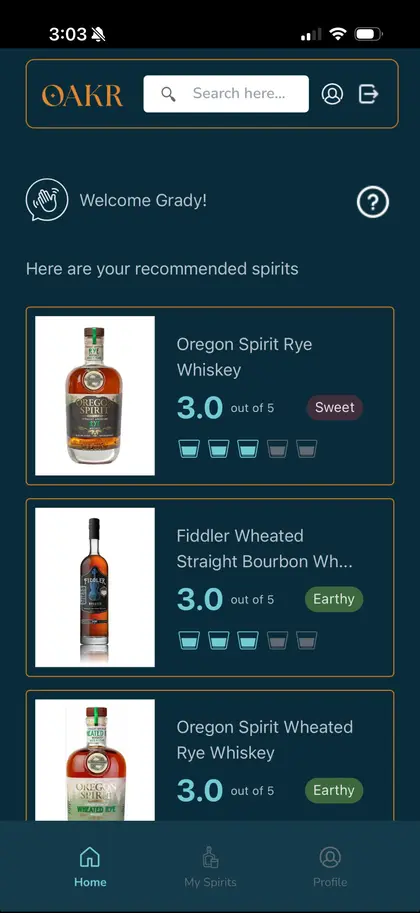
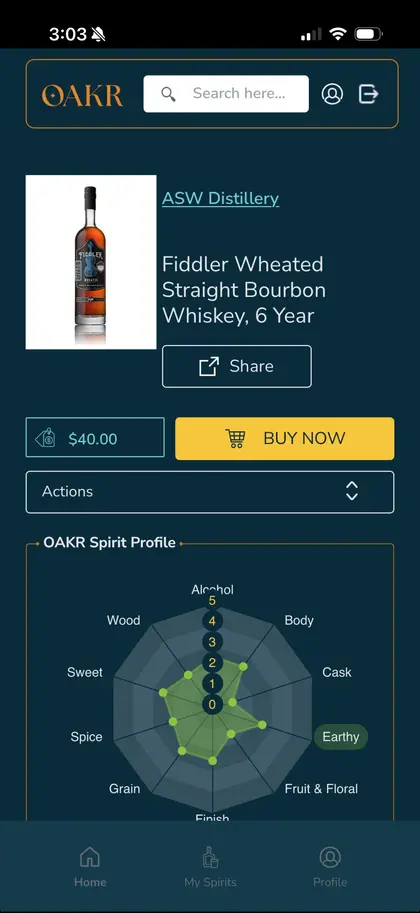
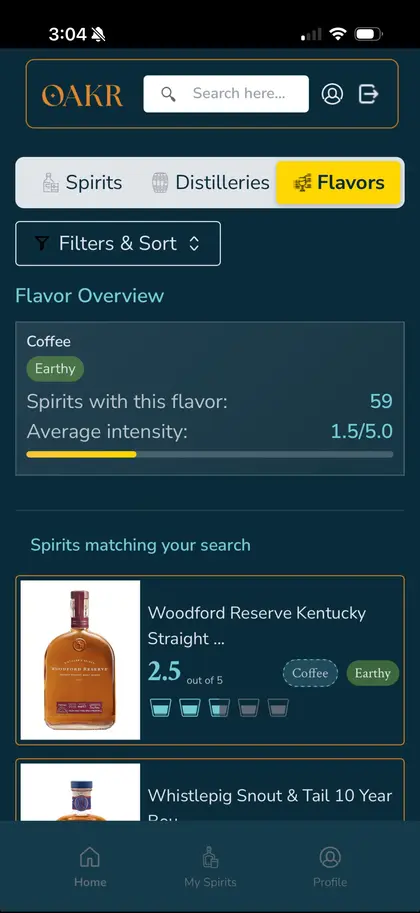
But the same question applies here as everywhere else: what does it actually taste like to you? OAKR’s blind tasting panel scores every spirit on 100+ flavor notes across 10 macro categories, stripping away the marketing, the brand story, and the label design. With spirits data built from objective tasting methodology, OAKR can tell you whether Bardstown’s own Origin Series or a BBC-contracted NDP brand is the better match for your personal palate.
Because at the end of the day, it does not matter who distilled it. It matters how it tastes in your glass.

Bourbon enthusiast, spirits industry analyst, and the voice behind OAKR's distillery guides, brand reviews, and bourbon education content. Visiting distilleries, dissecting mashbills, and translating the craft into data since 2024.
Bardstown Bourbon Company distills custom whiskey for 300+ brands, each with a different recipe. OAKR’s blind tasting data cuts through the noise to tell you which bottles actually match your palate, regardless of who made them.