
Michter's US*1 Kentucky Straight Bourbon costs about $45-50. The Toasted Barrel Finish Bourbon costs about $60. The 10 Year Single Barrel runs $100-120 when you can find it. The 20 Year is over $700. The 25 Year approaches $1,000. And the Celebration Sour Mash — the 2013 release was 273 bottles — sells at auction for five figures. These are not prices justified by brand heritage alone. They are prices justified by six specific production decisions that Michter's makes — and publicly documents — that most bourbon producers do not. The question for a buyer standing in front of any Michter's bottle is whether those six decisions produce $45 worth of difference in the US*1, $100 worth of difference in the 10 Year, or $700 worth of difference in the 20 Year. That is a palate question layered on top of a value question, and the answer is genuinely different for every drinker. Michter's traces its heritage to 1753, when John Shenk began distilling in Schaefferstown, Pennsylvania. The operation was later known as Bomberger's Distillery and then, in the 1950s, renamed Michter's — a combination of the owner's sons' names, Michael and Peter. The Pennsylvania distillery closed in 1989. The modern Michter's was revived by Joseph Magliocco, who launched the brand with sourced Kentucky whiskey and built it into one of the most respected names in American spirits. The company is 100% family-owned.

Michter’s currently operates across three Kentucky locations. The Shively Distillery — an 87,000-square-foot production facility in the Shively section of Louisville — handles primary distilling and aging. The Fort Nelson Distillery at 801 West Main Street in downtown Louisville, housed in a restored 1890 building on Whiskey Row, serves as the brand’s public-facing distillery and tourism destination. The 205-acre Michter’s Farm in Springfield, Kentucky, provides additional aging and production space. Fort Nelson opened to the public in February 2019 and includes The Bar at Fort Nelson, a cocktail bar curated by James Beard Award-winning cocktail historian David Wondrich.
Michter’s does not publicly disclose its mashbills in precise percentages. The US*1 Bourbon uses a corn-dominant recipe with rye and malted barley. The US*1 Rye uses a rye-dominant recipe. The US*1 Sour Mash uses corn, rye, and malted barley with no grain in the majority — it is technically neither a bourbon nor a rye, but a whiskey that sits between the two categories.
All grain is non-GMO, USDA Grade #1 — the highest agricultural grade. Corn comes from Kentucky and Indiana. Rye is sourced from Minnesota. Barley comes from the Dakotas and Montana. The grain is milled using custom-built cage mills — a more expensive milling method that uses two opposing wheels spinning at high speed. The grain falls into the hopper and shears against itself rather than being crushed by metal hammers, which avoids the friction heat that can degrade grain quality. The cage mill produces a more consistent particle size with less burnt flavor transfer.
Michter’s publicly identifies six production techniques that constitute its “cost be damned” philosophy. Each one is a deliberate choice to sacrifice efficiency for flavor.
1. Extended wood seasoning. Michter’s specifies that the oak staves for its barrels be air-dried outdoors for 18 to 60 months — up to five years. Standard practice at most cooperages is kiln drying, which takes days rather than years. Extended open-air seasoning reduces bitter tannin compounds in the wood naturally, producing staves that release sweeter, more nuanced flavors during aging. The cost is time and inventory: five years of stave seasoning means five years of capital tied up in wood before a single barrel is built.
2. Toasting before charring. All bourbon barrels are legally required to be charred. Michter’s adds a toasting step before the char. During toasting, heat breaks down the lignin layer of the wood into vanillin — the compound responsible for vanilla and spice notes. The sugars in the wood caramelize and concentrate into what coopers call the “red line” — a visible layer in the stave cross-section. When the barrel is then charred, the char creates a carbon filter on top of the caramelized red line. During aging, bourbon soaks through the char layer and interacts with the concentrated sugars in the red line. The result is more flavor, more color, and a richer mouthfeel than charring alone produces.
3. Low barrel entry proof — 103. This is the most expensive single decision in Michter’s production. Most bourbon producers enter barrels at or near the legal maximum of 125 proof. Michter’s enters at 103 — the lowest barrel entry proof among major producers, even lower than Wild Turkey’s 115 or Maker’s Mark’s 110. At 103, the ratio inside the barrel is approximately 75% whiskey to 25% water. The water acts as a solvent, allowing the concentrated sugars in the toasted-and-charred wood to dissolve more readily into the distillate. The lower proof also means more water evaporates during aging (increasing the angel’s share) and more barrels are needed to produce the same volume of finished whiskey. Former Master Distiller Willie Pratt championed this approach as the historical gold standard in pre-Prohibition Kentucky distilling.
4. Heat cycling. Kentucky’s natural seasonal temperature changes drive about six expansion-and-contraction cycles per year — the push-and-pull of bourbon into and out of the barrel staves that extracts flavor from the wood. Michter’s adds additional cycles during winter by heating its warehouses and then allowing them to cool naturally. The artificially induced cycles accelerate maturation and increase the bourbon’s interaction with the wood. The tradeoff is a higher angel’s share — more whiskey lost to evaporation — and significant energy costs. Michter’s estimates that heat cycling can make a six-year-old whiskey present more like a nine-year-old.
5. Maximum 20-barrel small batches. All Michter’s whiskeys are either single barrel or batched in custom holding tanks designed to hold no more than 20 full barrels. This is not a marketing claim — it is an engineering constraint. The small batch size means every barrel must meet quality standards because there is no volume to blend away imperfection. A 20-barrel tank cannot hide a weak barrel the way a 200-barrel tank can.
6. Customized filtration. Instead of using a single filtration protocol across all products, Michter’s uses different filtration mediums, temperatures, and timing for each individual whiskey expression. When production switches from bourbon to rye, all filtration equipment is changed. The goal is to preserve the specific flavor compounds that define each expression rather than applying a one-size-fits-all filter that optimizes for production speed.
The barrel program is where the first three production decisions converge. Extended wood seasoning reduces bitterness. Toasting creates the caramelized red line. Low entry proof allows the whiskey to extract those caramelized sugars more effectively. The three steps work together as a system — removing any one of them changes the final product.
Michter’s ages at its Shively facility and Springfield farm. The 10 Year and 20 Year expressions are single barrel, bottled at individual barrel proof. The 20 Year barrels receive extraordinary attention: Michter’s considers 17 to 20 years the “fork in the road” period when certain barrels achieve exceptional quality while others begin to deteriorate from over-extraction. Master Distiller Dan McKee personally selects the barrels that make the cut for the 20 Year release.
The Toasted Barrel Finish series takes the concept further: fully matured whiskey is transferred into a second barrel that has been toasted but not charred. The second barrel adds additional vanilla, caramel, and baking spice without the smoky carbon-filter effect of charring.
Joseph Magliocco is the President and the architect of the modern Michter’s brand. His vision — build the most quality-obsessive American whiskey company regardless of cost — defines every production decision. Dan McKee is the current Master Distiller, overseeing production at Shively. Andrea Wilson serves as Master of Maturation, managing the aging and barrel selection programs. Willie Pratt, the former Master Distiller who established the 103 barrel entry proof and many of the production protocols, shaped the foundational techniques still in use.
Michter’s US*1 Kentucky Straight Bourbon — Small batch (max 20 barrels), 91.4 proof. The entry point. Toasted-then-charred barrels, 103 entry proof, heat cycled. Caramel, vanilla, dried fruit, light smoke, and a rich mouthfeel. Typically $45-50. This is the bottle that demonstrates what the six production techniques produce — and the starting point for deciding whether the Michter’s approach aligns with your palate.
Michter’s US*1 Kentucky Straight Rye — Single barrel, 84.8 proof. Same production techniques applied to rye grain. Butterscotch, cinnamon, cherry, toasty vanilla, with a dry oaky spice finish. Typically $45-50.
Michter’s US*1 American Whiskey (Sour Mash) — Small batch, 86 proof. A blend of corn, rye, and malted barley with no grain in the majority. Named “Whisky of the Year” for 2019 by The Whisky Exchange — the first American-made whiskey to receive that honor. Opens like a bourbon, finishes like a rye. Typically $40-45.
Michter’s US*1 Toasted Barrel Finish Bourbon — Fully matured US*1 Bourbon transferred to a second barrel that is toasted but not charred. 91.4 proof. Additional vanilla, caramel, and baking spice depth from the toasted secondary barrel. Typically $55-65. Limited quantities.
Michter’s US*1 Toasted Barrel Finish Rye — Same secondary-barrel treatment applied to rye. Enhanced spice, chocolate, honey, roasted nuts, crème brûlée. Limited quantities.
Michter’s 10 Year Single Barrel Kentucky Straight Bourbon — Single barrel, 94.4 proof. Released approximately twice a year in limited quantities. The US*1 bourbon with a decade of heat-cycled maturation. Deeper viscosity, more pronounced vanilla, butterscotch, and smoke. Typically $100-120 when available at retail. Frequently sold above suggested retail.
Michter’s 10 Year Single Barrel Kentucky Straight Rye — Same treatment, rye expression. Extremely limited.
Michter’s 20 Year Kentucky Straight Bourbon — Single barrel, proof varies (recent release: 114.2 proof). The “fork in the road” barrels — individually selected by Dan McKee from a narrow window of peak maturation. Black cherry, molasses, honeysuckle, roasted pecans, toasted charred oak. SRP $700+. One of the most sought-after aged bourbons in America.
Michter’s 25 Year Kentucky Straight Bourbon — Even more limited than the 20 Year. SRP approaching $1,000.
Michter’s Celebration Sour Mash — Ultra-limited blend of the best bourbon and rye barrels, some aged over 30 years. The 2013 release was 273 bottles. Auction prices in five figures.
Bomberger’s Declaration Bourbon — 108 proof, matured in special barrels including some made from Chinkapin oak air-dried over three years. An homage to the original Bomberger’s Distillery name.
Shenk’s Homestead Sour Mash — Named for the original 1753 founder. A modern release honoring the brand’s Pennsylvania roots.
The US*1 Bourbon at $45-50 is not an unreasonable price for a bourbon produced with 103 barrel entry proof, toasted-then-charred barrels, heat-cycled aging, and 20-barrel maximum batching. The production techniques are real, documented, and verifiable. The question is not whether the bourbon is well-made. The question is whether the specific flavor profile those techniques produce — the rich mouthfeel from low entry proof, the caramel depth from the toasted red line, the accelerated maturity from heat cycling — is what your palate actually wants at that price point.
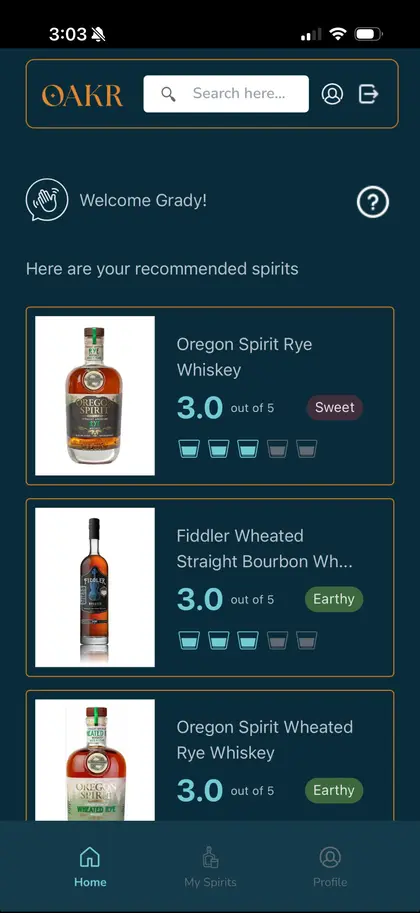
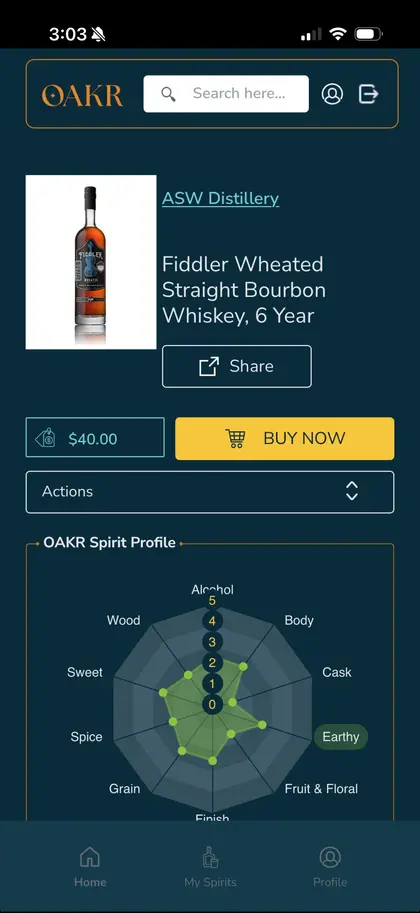
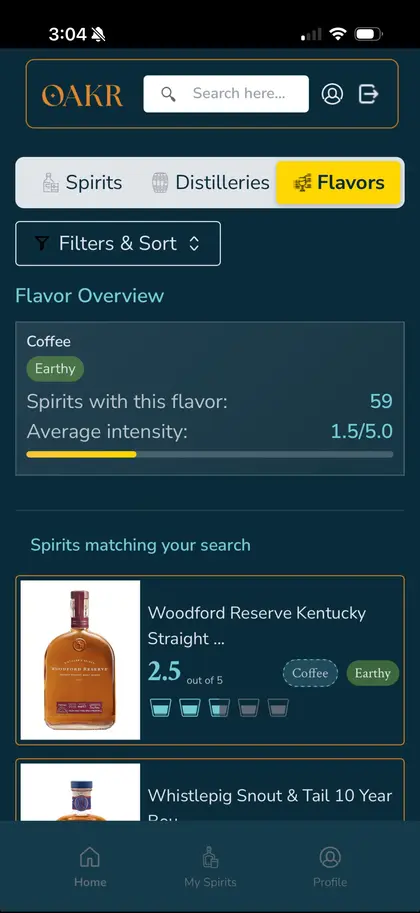
OAKR’s blind tasting panel evaluates Michter’s expressions without knowing what is in the glass. The panel scores across 100+ flavor notes in 10 macro categories, capturing the toasted-barrel sweetness, the low-entry-proof richness, and the heat-cycled maturity independently. Your Spirit Match score tells you whether Michter’s specific production architecture aligns with what your palate prefers — before you spend $45 on the US*1, $100 on the 10 Year, or make a decision you cannot take back on the 20 Year.
[Download OAKR free on iOS, Android, or web →]

Bourbon enthusiast, spirits industry analyst, and the voice behind OAKR's distillery guides, brand reviews, and bourbon education content. Visiting distilleries, dissecting mashbills, and translating the craft into data since 2024.
Michter’s “cost be damned” approach produces a specific flavor signature. Is it yours? OAKR’s blind tasting data and AI palate matching tell you before you spend.