
Most coverage of Crowell Spirits leads with the bricks. The family made brick molds for eight generations. They found a Prohibition-era still under the factory floor. The bottle is shaped like a brick. It's a nice story, and it's true — but it tells you nothing about what the bourbon actually tastes like. The brick molds don't go into the mash tun. The Prohibition still isn't running the operation. What goes into your glass is a four-grain bourbon distilled through a custom column-to-pot-to-column system, aged in charred oak in the volatile Hudson Valley climate, and built on limestone aquifer water drawn from beneath the family property in Ulster County, New York. That's the part worth understanding. American Brick Straight Bourbon Whiskey is a 92-proof, four-grain wheater that has picked up two international gold medals — and the production method behind it is genuinely unusual. This guide covers the process, the people, and whether the bottle justifies a spot on your shelf.

Crowell Spirits operates out of Wallkill, Ulster County, New York. The Crowell family’s original business, J.B. Crowell & Son, spent generations manufacturing wooden brick molds — the kind used by builders during the industrial revolution to shape the literal foundations of New York City. When demand for handmade brick molds declined (as it tends to), Brian and Kevin Crowell, father and son, pivoted to distilling.
The pivot had a footnote from history: rumors of a Prohibition-era whiskey still hidden beneath the factory floorboards, reportedly used to make hooch for factory workers and local farmers. Whether the still was fully operational or mostly folklore, the Crowells took it as a sign and made the family’s unofficial tradition official.
The distillery draws water from a deep limestone aquifer beneath the family property. Limestone-filtered water removes iron (which turns whiskey metallic and dark) and adds calcium — the same geological advantage Kentucky distillers reference constantly. Having that water source on-site in New York is a legitimate production asset.
Aging happens in the Hudson Valley’s volatile climate. Ulster County delivers sweltering, humid summers and bone-chilling, dry winters — temperature swings that force aggressive barrel cycling. The spirit pushes deep into the charred oak during summer heat and contracts back out during winter cold, extracting wood sugars, vanillins, and tannins at an accelerated rate. The humidity fluctuations of the Hudson Valley also affect the angel’s share unpredictably, alternating between alcohol-dominant and water-dominant evaporation. The net effect is a spirit that develops mature flavors faster than it would in a more temperate environment.
American Brick Bourbon uses a four-grain mashbill: 60% corn, 20% wheat, 11% malted barley, and 9% rye. Four-grain bourbon is less common than the standard three-grain formula. Most bourbons choose either wheat or rye as the secondary flavor grain; Crowell uses both.
The 20% wheat makes this a “wheater” in the same category as Maker’s Mark or the Weller line — softer, sweeter, and creamier than high-rye bourbons. But the 9% rye prevents the spirit from becoming one-dimensional; it adds a peppery edge that cuts through the wheat’s softness and keeps the finish interesting. The 11% malted barley is higher than the typical 5-8%, contributing bready, biscuit character and additional enzymatic power for starch conversion.
The balance is the point. This isn’t a bourbon designed around a single aggressive grain. It’s engineered for complexity through moderation — multiple grains at moderate percentages, each contributing a distinct flavor note without dominating.
The mashbill dates to the 19th century, according to the distillery — which, given the Prohibition-era still and the family’s documented history in Ulster County, is at least plausible. Four-grain recipes were more common in pre-Prohibition American whiskey than they are today, when most distillers have settled into three-grain formulas. Whether the recipe is genuinely historical or a modern construction built on a historical concept, the grain balance works. The corn provides foundational sweetness and body, the wheat smooths out any harsh edges and adds a creamy, bready texture, the rye prevents sweetness from tipping into cloying, and the malted barley provides both enzymatic function and a subtle nutty complexity.
Specific yeast strain details aren’t published. The flavor profile — fruit esters alongside grain sweetness and barrel spice — suggests a carefully selected culture, but the distillery keeps that card close.
This is Crowell’s most distinctive production feature: a custom “column to pot to column” distillation system. It’s a three-stage process that combines equipment most distilleries use separately.
First pass through a column still strips the harshest compounds and creates a clean, high-proof base. The spirit then moves to a pot still, where it picks up the heavier oils, esters, and flavor compounds that pot distillation is famous for — the textured, full-bodied character that column stills alone tend to strip out. Finally, a second column pass polishes the spirit, refining it without removing the complexity added by the pot still stage.
The result is a bourbon that aims to be both clean and complex — the crispness of multiple column distillations married to the depth and weight of a pot-still spirit. It’s double-distilled through this hybrid path, which adds refinement without sacrificing grain character.
This approach is genuinely uncommon. Most distilleries commit to either pot or column distillation. Running spirit through both, in sequence, requires custom equipment and adds time and cost to each batch. Whether it produces a measurably different spirit than a single method is debatable, but the flavor profile — clean finish with noticeable depth — suggests the process is doing what Crowell intends.
New charred American oak barrels, as required for straight bourbon. The char level isn’t officially published, but the flavor profile — deep leather, butterscotch, heavy vanilla — suggests a #3 or #4 char. Heavy char creates a carbon layer that filters harsh compounds while the toasted wood beneath releases caramelized sugars and vanillins.
The New York climate is the barrel program’s primary differentiator. The aggressive temperature cycling in the Hudson Valley produces a spirit that tastes older than its time in wood. The expansion-contraction cycle forces deep penetration into the oak staves, extracting compounds that milder climates access more slowly. The charred oak and wheat mashbill work together here: wheat provides a soft, creamy foundation, and the aggressive aging adds spice, leather, and dark fruit on top without creating the astringency that a high-rye mashbill might produce under the same wood-forward conditions.
The humidity swings in the Hudson Valley add another layer. High humidity during summer accelerates alcohol evaporation (the angel’s share), while dry winter air reverses the equation. This chaotic alternation affects the proof trajectory of the aging spirit — sometimes concentrating, sometimes diluting — in patterns that differ meaningfully from the steadier humidity of central Kentucky. The practical result is a bourbon with a flavor development curve specific to its location. American Brick doesn’t taste like a Kentucky wheater aged in New York; it tastes like a New York bourbon, because the weather shaped it differently from the start.
The limestone aquifer water used for proofing also contributes to the final mouthfeel — the mineral content creates a distinct cleanness that lets the barrel-derived flavors present clearly.
Brian and Kevin Crowell are founders, not career distillers. Their expertise is in making things — the family spent generations manufacturing precision products (brick molds, specifically) and that maker’s sensibility carries into the distillery. They’re less “lab coat scientists” and more hands-on builders who designed their production process through research and experimentation rather than inherited tradition.
The decision to build a custom column-to-pot-to-column distillation system reflects this engineering mindset. Rather than buying a standard pot still or column still and adapting their process to the equipment, they designed the equipment around the flavor profile they wanted to produce. That’s a maker’s approach — start with the desired outcome and build the tools to achieve it.
The bottle design reflects the family history: the brick-shaped bottle with a screw-shaped stopper references both the mold-making legacy and the precision manufacturing the Crowells came from. It’s a detail that signals genuine pride of origin rather than manufactured nostalgia.
The operation is small, family-run, and based in the same Ulster County property where the Crowells have worked for generations. The team handles everything from grain selection through bottling, with the hands-on involvement that small operations demand and that large ones can’t replicate. There’s no corporate parent, no outside investors driving production decisions — just a father and son who decided that making bourbon was a better use of their family’s property, water source, and building than continuing to manufacture a product the world had moved past.
American Brick Straight Bourbon Whiskey — The flagship and only core expression. Four-grain mashbill (60/20/11/9 corn/wheat/barley/rye). 92 proof. Aged in charred oak in Ulster County, New York. Column-to-pot-to-column distilled. Two-time international gold medal winner.
On the nose: charred oak and worn leather, transitioning to butterscotch and candied orange. On the palate: oak and dark cherry up front, followed by vanilla, baking spices, and a crème brûlée note (burnt sugar meeting vanilla custard). The finish is medium-length — vanilla and leather lingering without overstaying.
This is a balanced, well-rounded bourbon that doesn’t chase extremes. It’s not a high-proof bruiser, not a one-note sweetness bomb, and not an experimental oddity. It’s the kind of bottle you pour for a guest who knows bourbon and doesn’t need to be impressed by gimmicks. Reliable, in the bourbon world, is high praise.
The 92-proof bottling sits at a sweet spot — strong enough to carry the four-grain complexity without masking it behind heat, approachable enough to drink neat without needing a water back. The four-grain balance means it also performs well in cocktails, particularly Old Fashioneds, where the wheat-derived creaminess holds up against sugar and bitters while the rye adds enough backbone to keep the drink from going flat.
Potential future releases to watch for: cask-strength and single-barrel versions of American Brick, which would showcase the spirit at full intensity and highlight barrel-to-barrel variation. Neither has been confirmed as of this writing, but they’re logical extensions of the program. A cask-strength American Brick would be particularly interesting — the column-to-pot-to-column process already produces a clean, refined spirit, and removing the proofing water would let the full weight of the barrel influence show through. A single-barrel release would introduce the variance that the current blended product deliberately avoids, which could produce either the best or the most divisive bottles in the lineup.
The bricks are interesting. The Prohibition still is a good detail. But none of that matters if the bourbon doesn’t deliver — and at $50-plus per bottle, you want to know it fits your palate before you commit.
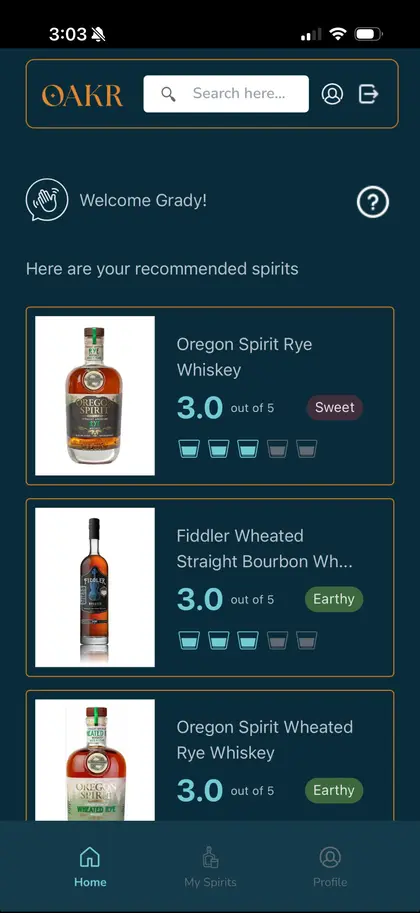
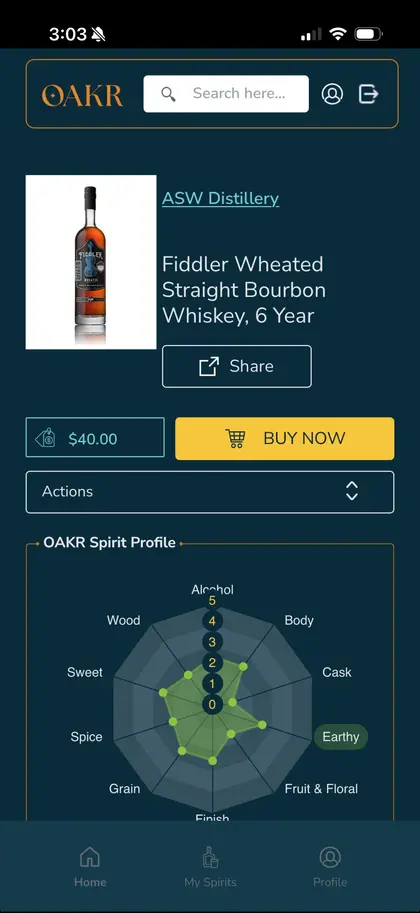
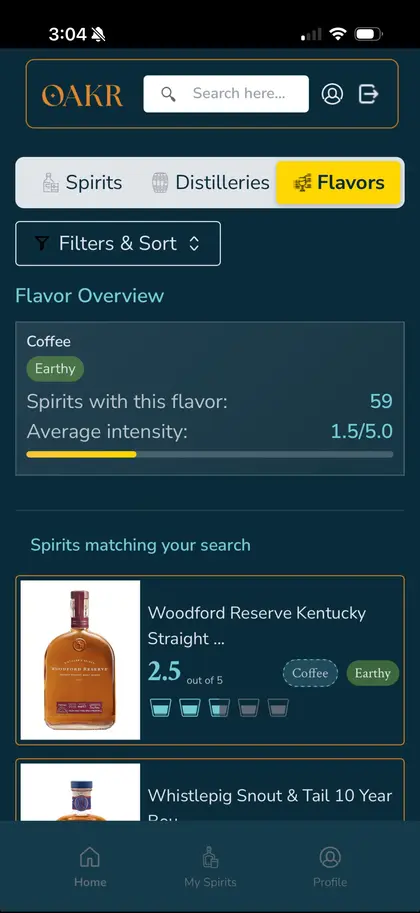
OAKR’s blind tasting panel evaluates every spirit without knowing the brand story, the family history, or the price. The panel scores across 100-plus individual flavor notes organized into 10 macro categories, producing a profile built entirely on what’s in the glass. When you look up American Brick on OAKR, you see exactly where the four-grain profile lands — how the wheat softness compares to other wheaters, whether the rye adds enough spice for your preferences, how the New York aging character stacks up against Kentucky-aged bourbons at the same price.
The Spirit Match score goes further. Rate a few bottles, and OAKR’s AI palate profiling maps your preferences. At $50-plus, knowing whether this specific bourbon aligns with your flavor territory before you buy is the difference between a bottle you finish and one that gathers dust. That’s the kind of data that pays for itself immediately.
Explore Crowell Spirits on OAKR to see their full lineup and tasting data.
[Download OAKR free on iOS, Android, or web →]

Bourbon enthusiast, spirits industry analyst, and the voice behind OAKR's distillery guides, brand reviews, and bourbon education content. Visiting distilleries, dissecting mashbills, and translating the craft into data since 2024.
Is American Brick’s four-grain balance right for your palate? Skip the guesswork. OAKR maps your flavor preferences across 10 macro categories and tells you exactly how this bourbon compares to the bottles you already love.