Traditional Bourbon: The Safe Bet
This is the baseline for most bourbon drinkers. By law, it must be at least 51% corn, but traditional recipes usually hover around 70-80% corn, balanced with rye and malted barley. Think Jim Beam, Wild Turkey, or Elijah Craig.
- Pros: It’s classic. It’s sweet, caramel-forward, and rarely a bad decision. It’s the reliable friend who always shows up on time.
- Cons: It can be predictable. If you’re looking for a flavor explosion that actively challenges your palate, traditional recipes can feel a bit like vanilla ice cream, delicious, but vanilla.
- Who is it for? If you want a solid, sweet pour that tastes like America, stick here.
High-Rye Bourbon: The Spicy Cousin
When a distiller cranks the rye content (usually above 20-35%), the bourbon gets an attitude. Rye is the grain that brings the spice, the pepper, and a kick. Brands like Bulleit or Four Roses Single Barrel live in this high rye lane. Basil Hayden is another classic example—light-bodied but rye-forward enough to stand out.
- Pros: It has personality. It cuts through a cocktail and stands up to ice without losing its backbone. It wakes up your palate.
- Cons: If you prefer smooth sugar-water, high-rye bourbon might feel like licking a peppercorn. It’s aggressive and not for the faint of heart.
- Who is it for? Drinkers who think standard bourbon is “too sweet” and want a finish that lingers longer than an awkward silence.
Wheated Bourbon: The Soft Touch
Wheat replaces rye as the secondary grain, offering a softer, gentler, and creamy profile. It allows the corn’s sweetness to shine without the peppery bite. This is the wheated category that includes the infamous Pappy Van Winkle and W.L. Weller. Maker’s Mark is the most accessible wheated bourbon on the shelf—produced by Beam Suntory at their Loretto, KY facility.
- Pros: It’s incredibly smooth. It drinks easier than water and has a rich, bready sweetness.
- Cons: Good luck finding it. Because Pappy made wheaters famous, everyone hunts these. You will pay a premium for “smoothness,” often for bottles that aren’t actually worth the secondary market markup.
- Who is it for? People who want to sip neat without making “whiskey face,” or those willing to put in the time and money for the softer profile.
Cask Strength / Barrel Proof: The Heavy Hitter
This isn’t a mash bill type, but a proof type. This is bourbon bottled straight from the barrel without adding water to cut the proof down. It’s high octane, usually ranging from 110 to 140 proof.
- Pros: Flavor density. Because it hasn’t been watered down, you get the purest, most intense version of the spirit. It’s oily, rich, and explodes with flavor.
- Cons: It burns. If you aren’t used to high proof, your throat will file a formal complaint. It can numb your taste buds if you aren’t careful.
- Who is it for? Flavor chasers who want maximum impact and are experienced enough to handle the heat.
Tennessee Whiskey: The Loophole
Technically, Tennessee Whiskey (like Jack Daniel’s) fits almost all the legal requirements to be bourbon. The difference is the “Lincoln County Process,” where the spirit is filtered through sugar maple charcoal before aging, a step not required for standard bourbon.
- Pros: That charcoal mellowing makes it incredibly easy to drink and removes some harsh impurities.
- Cons: It often lacks the complexity of a non-filtered bourbon because some flavor oils get stripped out.
- Who is it for? People who want consistency and don’t care to argue the finer points of legal definitions.
Stop Guessing, Start Knowing with OAKR
Look, we just listed the categories, but let’s be real, palates are weird. Your “spicy” might be my “mild,” and your “smooth” might be my “boring.” Everyone has a unique tasting experience. What other people call “an autumnal whisper of the forest floor,” we call tannin migration from the barrel staves. We’re interested in the proof, not the poetry.
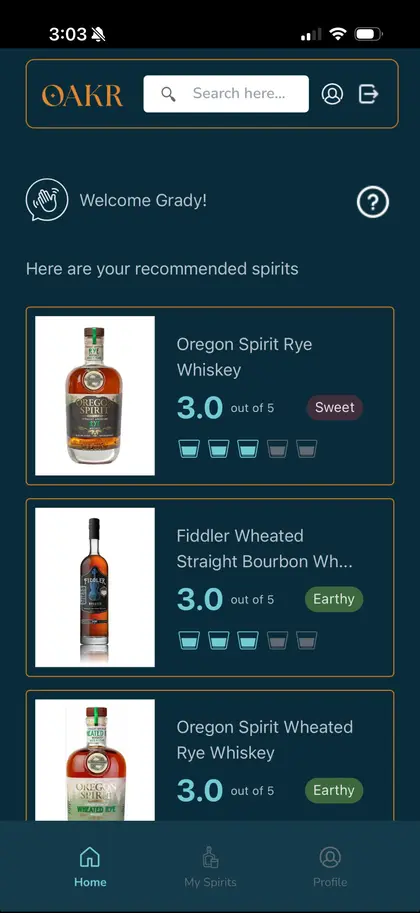
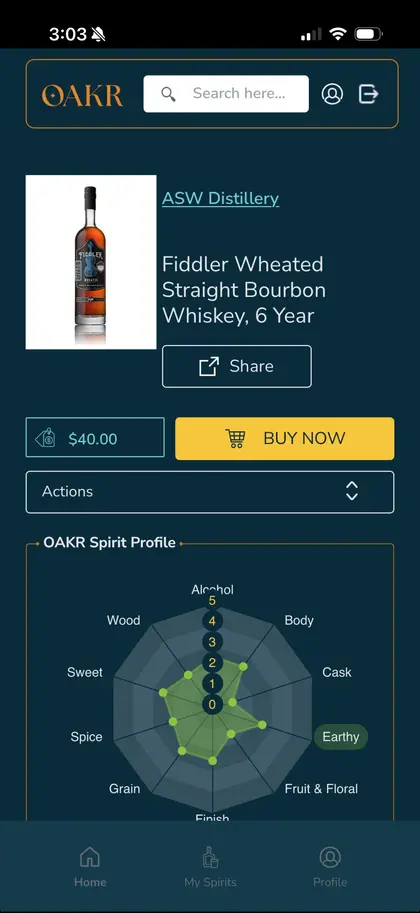
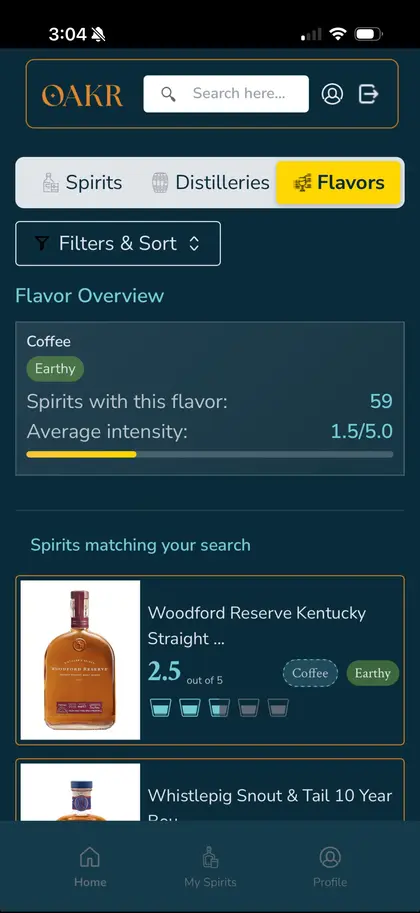
This is where OAKR comes in. It’s the best bourbon sommelier app on the market because it ignores the marketing fluff. OAKR does the leg work of aggregating tasting data from blind tasting panelists. It showcases actual flavor nuances before you buy, so you aren’t guessing if that “High-Rye” is actually spicy or just marketed that way.
Don’t wander the aisles aimlessly. Explore our spirits data, discover in-depth flavor profiles, and get personalized recommendations that actually fit your taste, not just what the liquor store clerk is trying to offload.