Who’s Actually Behind Jefferson’s
Jefferson’s has been playing the sourcing game longer than almost anybody currently doing it, since 1997, back when bourbon was so unfashionable that Trey Zoeller could buy well-aged barrels for next to nothing. He started the brand with his father Chet, a bourbon historian, under the original company name McClain & Kyne. The Jefferson’s name was pure pragmatism, Zoeller has said he had no marketing budget and just wanted a recognizable historical face that suggested curiosity and experimentation. The family whiskey streak runs deep, all the way back to an eighth-generation grandmother who got arrested in 1799 for making and selling spirits.
What made Jefferson’s matter was that Zoeller treated blending as a craft when the word blend was practically an insult in bourbon circles. He called it marrying to dodge the association with blended Scotch, and he leaned into wild aging experiments, most famously Jefferson’s Ocean, which loads barrels onto cargo ships and sends them around the world. In 2019 the brand became part of Pernod Ricard through the Castle Brands acquisition, which gave it global muscle. Pernod even announced a big new Kentucky distillery, though as of late 2025 that project is delayed amid a tougher market.
Where the Whiskey Really Comes From
Jefferson’s is sourced whiskey, and it started life as a pure non-distiller producer buying barrels from whoever would sell. That multi-distillery approach is still the backbone of the brand, which is exactly what lets Zoeller blend across different mashbills, ages, and barrel profiles.
The confirmed home base is Kentucky Artisan Distillery in Crestwood, where Jefferson’s does its distilling, blending, and bottling, and which the brand has been tied to since around 2012. But here is the key number: only about a quarter of the barrels Jefferson’s ages were made at Kentucky Artisan. The other three-quarters come from independent Kentucky distilleries the brand does not name. So the honest picture is one known home plus a rotating cast of undisclosed Kentucky sources, which is why the chart below shows a named slice and an undisclosed one.
Source Split
Where Jefferson’s gets its whiskey
Jefferson’s distills and blends at its home distillery but sources most of its barrels from unnamed Kentucky distilleries. Slices are even because exact proportions aren’t public, and the badge shows how confident the sourcing is. Tap the linked slice to read the full guide.
What Jefferson’s Actually Does With It
If any brand makes the case that buying barrels is a craft, it is this one. Jefferson’s barely talks about distilling because, in Zoeller’s own framing, distilling is not the interesting part to him. The interesting part is what happens after.
Two things define the brand. The first is blending, the very small batch marriages of straight bourbons that Zoeller pioneered before it was respectable, building flavor by combining stocks the way a chef builds a dish. The second is environmental experimentation, the thing nobody else was really doing. Ocean Aged at Sea sends barrels across the equator multiple times so wave motion and temperature swings hammer the whiskey into something darker and brinier. Tropics does it with equatorial heat and humidity. The wood and finishing experiments started over a decade ago, before finishing was on every shelf. That restless, what-if streak is the actual product, and the sourced barrels are just the raw material.
The Lineup: What to Buy and Where to Start
The range is deep, with dozens of expressions over the years, but the core is easy to navigate.
Start with the small batch Very Small Batch, the easygoing, affordable entry around thirty-five to forty dollars that shows the house blending style. Step up to Jefferson’s Reserve, the older, richer core bourbon and the best argument for the brand’s blending chops. Then there is the famous one, Ocean Aged at Sea, the salty, dark, polarizing bourbon that put Jefferson’s on the map and still divides people into fans and skeptics. The Reserve and Ocean tend to sit in the seventy to ninety dollar range.
The Bottles Worth Chasing
Each numbered voyage of Ocean is its own release, and the older or more unusual voyages develop a following, so collectors track specific batches. The Tropics line scratches a similar experimental itch with heat-aged barrels. At the top sits Marian McLain, a luxury five-bourbon blend named for that bootlegging ancestor, which is the brand’s flex bottle and priced accordingly. None of this is lottery-ticket allocated, but the limited voyages and special blends move steadily, so grab one that interests you when it shows up.
Will You Actually Like It? Here’s the Only Way to Know
I could throw tasting notes at you, but I will skip it, because the notes you read online are one palate on one night, which tells you almost nothing about whether you, specifically, will love a bottle or quietly pass it along. Ocean is the perfect example, people genuinely split on that briny profile.
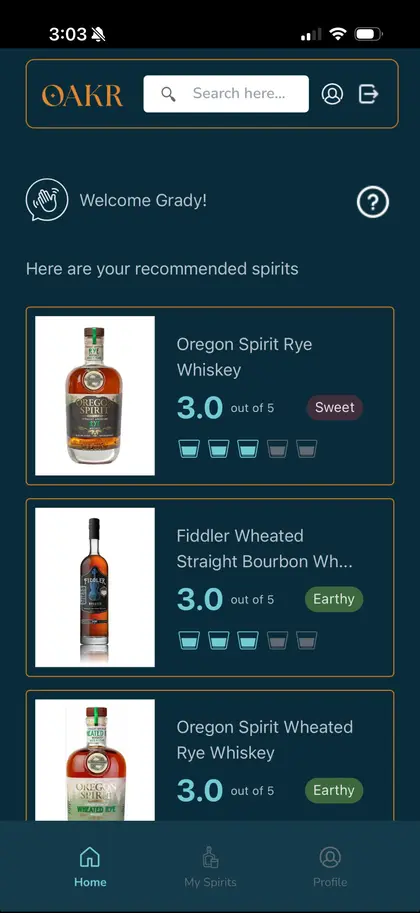
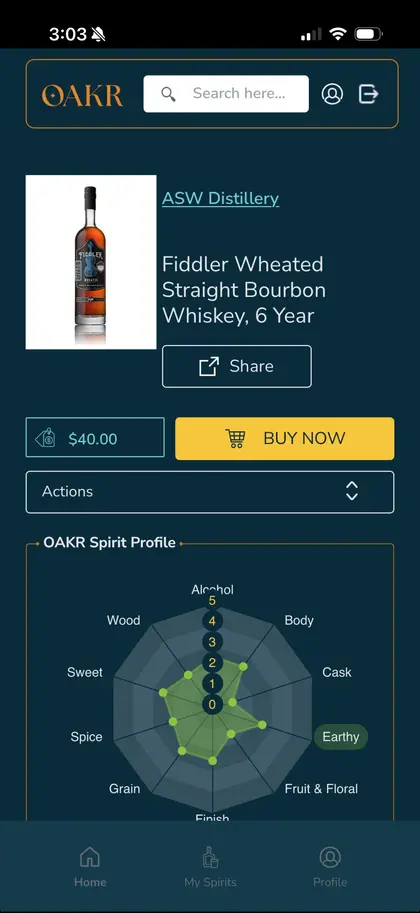
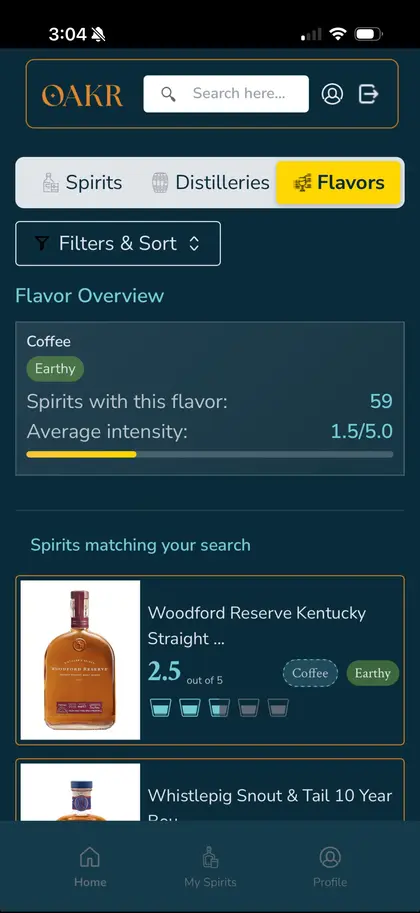
You might ask, “Grady, how do you know that?” Welp, one, I have been doing this a long time, and two, we built OAKR to settle it. Every bottle gets poured past a blind tasting panel and scored across more than a hundred flavor notes in ten big categories, no labels, no hype in the room. Then the app reads your palate, the flavors you actually chase, and gives you a Spirit Match score for any bottle, the whole Jefferson’s range included. So before you gamble on Ocean or grab a Reserve, you find out whether it fits your taste. That is the difference between buying the famous bottle and buying the right one.
Jefferson’s Bourbon FAQ
Is Jefferson’s sourced?
Yes. Jefferson’s began as a pure non-distiller producer and still sources roughly three-quarters of its barrels from undisclosed independent Kentucky distilleries, with the rest distilled at its home, Kentucky Artisan Distillery.
Who makes Jefferson’s?
The brand was founded in 1997 by Trey Zoeller and his father Chet, and has been owned by Pernod Ricard since 2019. Distilling, blending, and bottling happen at Kentucky Artisan Distillery in Crestwood, Kentucky, alongside sourced barrels from other Kentucky producers.
Where is Jefferson’s distilled?
At Kentucky Artisan Distillery for the portion it makes in-house, and at unnamed independent Kentucky distilleries for the majority of its barrels. A new Pernod Ricard distillery in Kentucky has been announced but delayed.
Is Jefferson’s worth the money?
The Very Small Batch is a fair everyday bourbon, and Reserve rewards the step up. Ocean is worth trying once to see which side of the debate you land on. Value is solid across the core, with the luxury blends priced for enthusiasts.
What is the best Jefferson’s to start with?
Very Small Batch for an easy, affordable intro, or Reserve if you want the fuller blend. Try Ocean when you are curious about the experiment. Run any of them through OAKR first to see how they match your taste.
A Bourbon Is Only as Good as Your Palate Says It Is
Jefferson’s built a 25-year career out of treating sourcing and blending as an art form, then aging the results in places no sane distiller would try. The only question left is whether that experimental style fits your taste, and that is exactly what OAKR was built to answer. Match your palate against Jefferson’s on OAKR before you spend a dime.
[Download OAKR free on iOS, Android, or web →]