
Short answer, yes. TinCup's whiskey is high-rye bourbon sourced from MGP in Indiana, even though the bottle is wrapped head to toe in Colorado mining imagery and topped with a tin cup. There is a real Colorado angle, the brand was created by a Stranahan's founder and finished with Rocky Mountain water, but the juice itself comes from the same Indiana distillery as half the craft shelf. Pour one and let me walk you through what's Colorado, what's Indiana, and whether it belongs in your glass.

TinCup is the Colorado whiskey that mostly comes from Indiana, and to its credit, it has never been especially cagey about that. The brand is the work of Jess Graber, a genuine Colorado distilling figure who co-founded Stranahan’s, the state’s first legal distillery since Prohibition. After Stranahan’s was acquired by Proximo Spirits, Graber wanted to make a more accessible, rye-forward, everyday whiskey for the masses, and in 2014 TinCup was born under that same Proximo umbrella.
Everything about the bottle leans into Colorado: the name nods to Tin Cup, an old mining town; the cap is a functional tin cup; the hexagonal glass is shaped so it supposedly will not roll downhill; and it is famously cut with Rocky Mountain water. It is terrific packaging tied to a real Colorado figure. The whiskey inside, though, has an Indiana zip code.
TinCup is sourced whiskey, which makes Proximo a non-distiller producer for this brand. The core is high-rye bourbon distilled and aged at MGP in Lawrenceburg, Indiana, built on a proprietary mashbill of 64 percent corn, 32 percent rye, and 4 percent malted barley, more rye than a typical bourbon.
Here is the Colorado wrinkle that is actually real: once that MGP bourbon arrives in Denver, the team blends in a small amount, under five percent, of Stranahan’s Colorado single malt, then cuts it with Rocky Mountain water before bottling at the Stranahan’s facility. That malt splash is why TinCup wears the label “American Whiskey” instead of “bourbon,” and it nudges the flavor slightly away from a straight MGP profile. So the honest picture is overwhelmingly MGP, finished with a Colorado accent, which is why the chart below shows one primary source.
Source Split
TinCup’s whiskey is overwhelmingly from one distillery, then blended with a small splash of Colorado single malt and Rocky Mountain water before bottling. Tap the slice to read the full guide.
TinCup’s value-add is modest and, refreshingly, the brand does not pretend otherwise. The Colorado finishing steps, the Stranahan’s malt and the Rocky Mountain water, are real but small touches on top of standard MGP stock. The bigger contributions are choosing a higher-rye recipe than the usual bourbon, dialing in a deliberately easy 84 proof, and wrapping it in some of the best packaging in the price tier.
The result is a gentle, sweet, low-proof whiskey aimed squarely at newcomers and mixers rather than barrel-proof hunters. That is not a criticism, it is a target market. TinCup is built to be the friendly house bottle that makes a good cocktail and does not scare anyone off, and at its price it does that job well. Just go in knowing the Colorado story is mostly atmosphere over an Indiana base.
The range is small and easy to navigate.
Start with the Original, the 84-proof flagship that usually sits around twenty-five to thirty dollars and is one of the better cheap mixers and gateway whiskeys out there. When you want more depth, TinCup 10 Year takes the same blend and adds six more years in oak for a richer, woodier pour, and it is the one I would point a curious drinker toward. There is also a 95 percent rye, again MGP-sourced, for cocktail duty, and newer bourbon releases like the Fourteener that push into more serious territory.
TinCup is not really an allocation brand, which suits its everyday personality. The 10 Year is the value-depth pick worth seeking out, and the Fourteener releases are the most interesting attempt to give the line a higher-proof, more flavorful flagship for people who found the Original too light. None of these are hard to find, so there is no chase, just pick the proof and age that match how you drink.
I could give you tasting notes, but I will not, because the notes you read online are one person’s palate on one night. TinCup is a textbook case where the easy Original and the older, bolder 10 Year or Fourteener are different experiences, and a great-looking bottle can sway your judgment before you even pour.
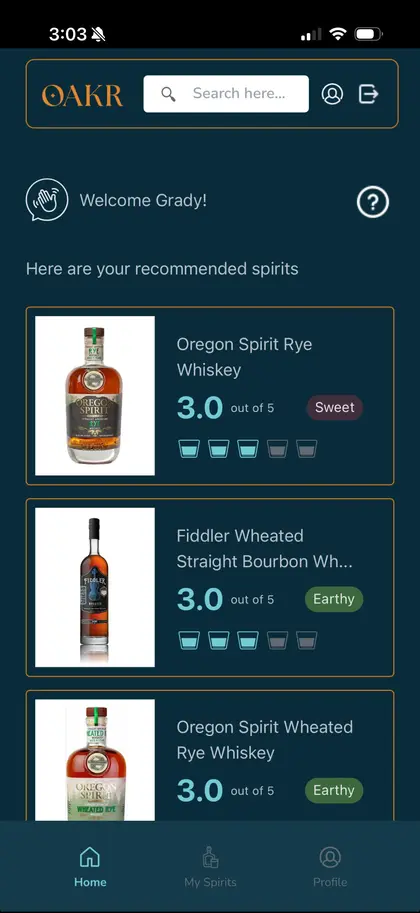
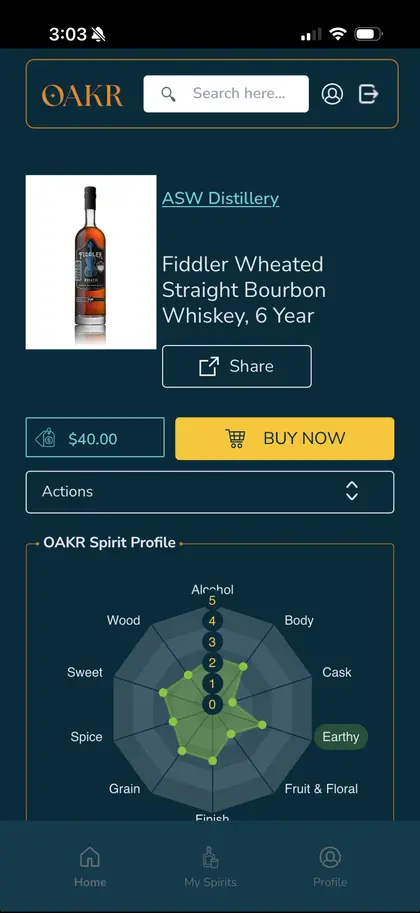
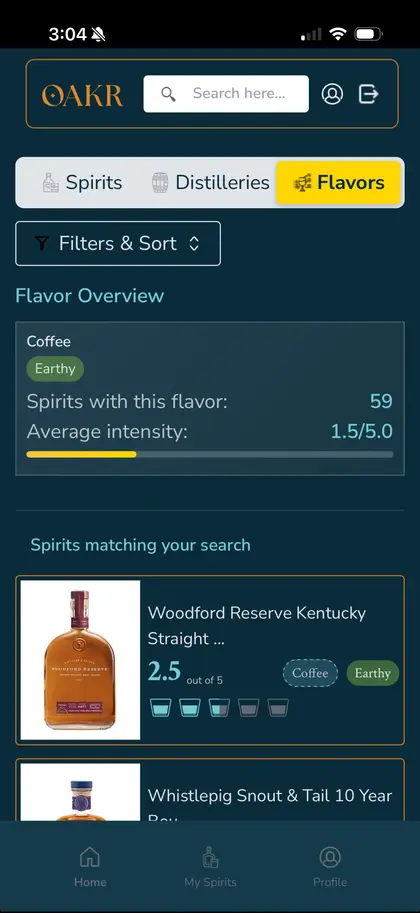
You might ask, “Grady, how do you know that?” Welp, one, I have been doing this a long time, and two, we built OAKR exactly for this. Every bottle gets poured past a blind tasting panel and scored across more than a hundred flavor notes in ten big categories, no labels, no tin cup on top to distract anyone. Then the app reads your palate, the flavors you actually chase, and hands you a Spirit Match score for any bottle, the whole TinCup range included. So before you make it your house pour or step up to the 10 Year, you find out whether that gentle, slightly malty profile is yours. That is the difference between buying the cool bottle and buying the right one.
Is TinCup Whiskey sourced?
Yes. TinCup’s core is high-rye bourbon sourced from MGP in Indiana, then blended with a small amount of Colorado single malt and cut with Rocky Mountain water before bottling.
Who makes TinCup Whiskey?
It was created by Jess Graber, co-founder of Stranahan’s, and is owned by Proximo Spirits. The whiskey is distilled at MGP in Indiana and bottled in Colorado.
Where is TinCup distilled?
At MGP in Lawrenceburg, Indiana. The blending, water-cutting, and bottling happen at the Stranahan’s facility in Denver, Colorado.
Why is TinCup called American Whiskey and not bourbon?
Because a small amount of Colorado single malt is blended in, the label uses “American Whiskey,” though the base is a bourbon-style high-rye MGP whiskey.
What is the best TinCup to start with?
The Original for an affordable, easy mixer, or TinCup 10 Year if you want more oak and depth. Run either through OAKR first to see how it matches your taste.
TinCup is honest, affordable, well-packaged MGP whiskey with a genuine Colorado finishing touch, built to be easy rather than intense. The only question left is whether that gentle style fits your taste, and that is exactly what OAKR was built to answer. Match your palate against TinCup on OAKR before you spend a dime.
[Download OAKR free on iOS, Android, or web →]

Bourbon enthusiast, spirits industry analyst, and the voice behind OAKR's distillery guides, brand reviews, and bourbon education content. Visiting distilleries, dissecting mashbills, and translating the craft into data since 2024.
TinCup is gentle, sourced, and easy. OAKR’s blind-panel flavor data shows you whether its light profile actually fits your taste.